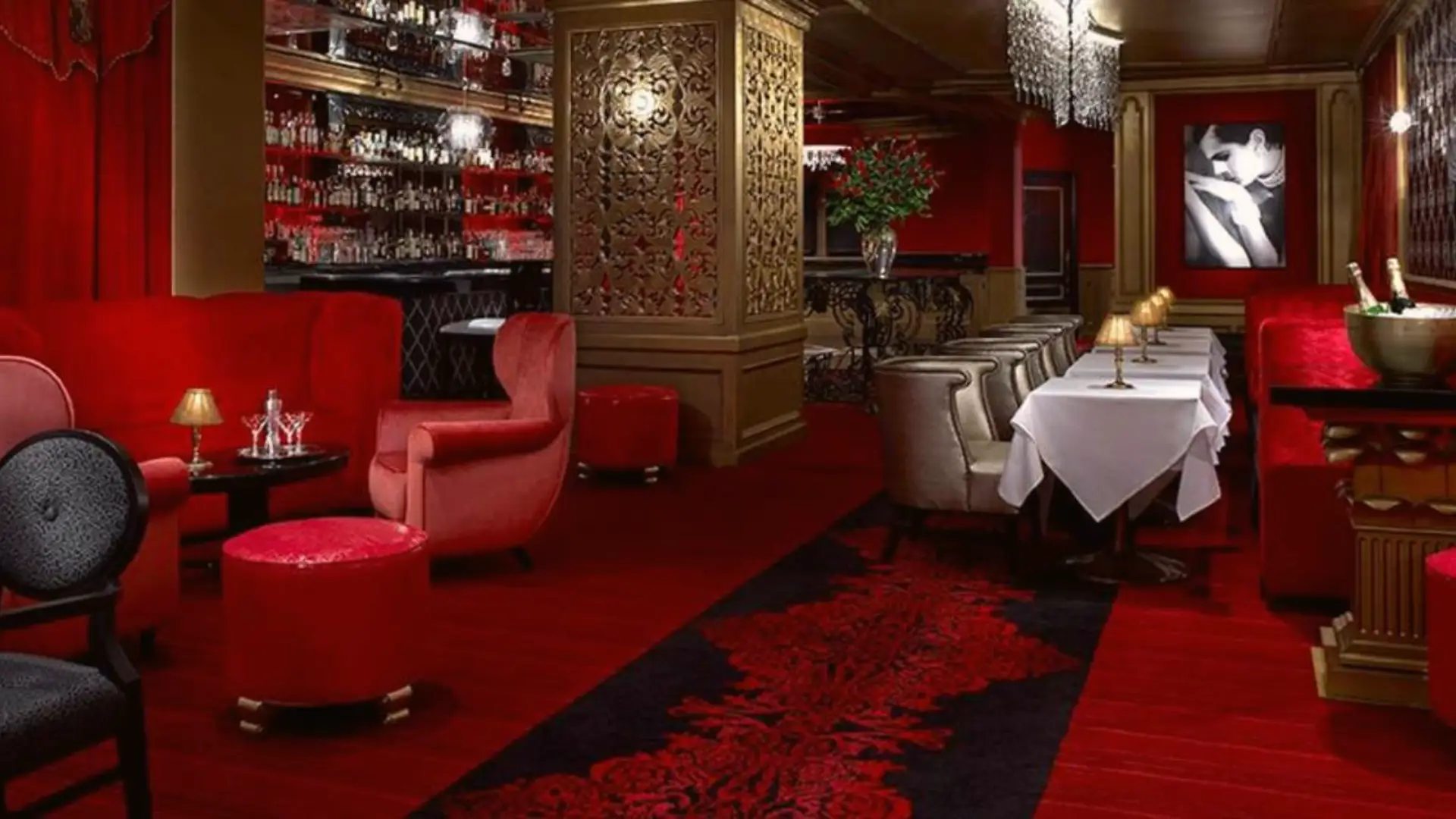
A liqueur conceived in monastic silence, distilled from a guarded manuscript and shaped by alpine botanicals, rarely finds itself at the centre of a tropical drink. Yet in early 2000s San Francisco, that is precisely what happened. The Chartreuse Swizzle, created by Marcovaldo Dionysos, made its first menu appearance in 2003 at Harry Denton’s Starlight Room, redefining how one of the most complex spirits in the world could behave inside a crushed ice cocktail.
Rather than softening or disguising intensity, the drink embraces it. What emerges is not a tiki derivative, but a structural hybrid where herbal concentration meets controlled dilution, producing a cocktail that feels both vivid and deliberate.
A Monastic Formula in a Modern Bar Context
Green Chartreuse originates from a manuscript delivered to the Carthusian Order in 1605, later interpreted into a liqueur composed of 130 botanicals. Produced in France and bottled at 55% ABV, it carries a density and aromatic range that few spirits can match. Historically consumed as a digestif, it was never intended for tropical formats or high-volume mixing.
Its introduction into cocktails evolved gradually, appearing in classics such as the Last Word, where it functioned as a balancing modifier. The Chartreuse Swizzle disrupts this tradition. Here, the liqueur is not supporting structure. It is the structure.
This shift is significant. It marks one of the rare instances where a historically protected formulation becomes central to a modern cocktail, transforming Chartreuse from a component into a defining base.
The Mechanics of the Swizzle
Crushed ice defines the rhythm of a swizzle. Unlike shaking or stirring, the technique relies on agitation within the glass to chill, dilute and aerate simultaneously. The result is not static. It evolves continuously as the ice breaks down.
In the Chartreuse Swizzle, this method performs a precise function. Green Chartreuse, in its undiluted state, is intense and tightly coiled. The swizzle format gradually releases its layers, allowing mint, alpine herbs, citrus peel and spice to emerge in sequence. Lime juice provides immediate structure, while sweetness tempers the liqueur’s assertiveness.
The aromatic surface of the drink is not merely decorative. It shapes the first impression, creating a multi-stage sensory experience that shifts from nose to palate.
San Francisco and the Expansion of Tiki Logic
To understand the Chartreuse Swizzle, it is necessary to look beyond the drink itself and into the early 2000s San Francisco cocktail scene. Marcovaldo Dionysos developed the drink in that environment, and Harry Denton’s Starlight Room gave it its first menu setting. Its later visibility at Clock Bar, where it appeared on the debut menu after the bar opened in 2008, helped move the drink from local creation toward modern classic recognition.
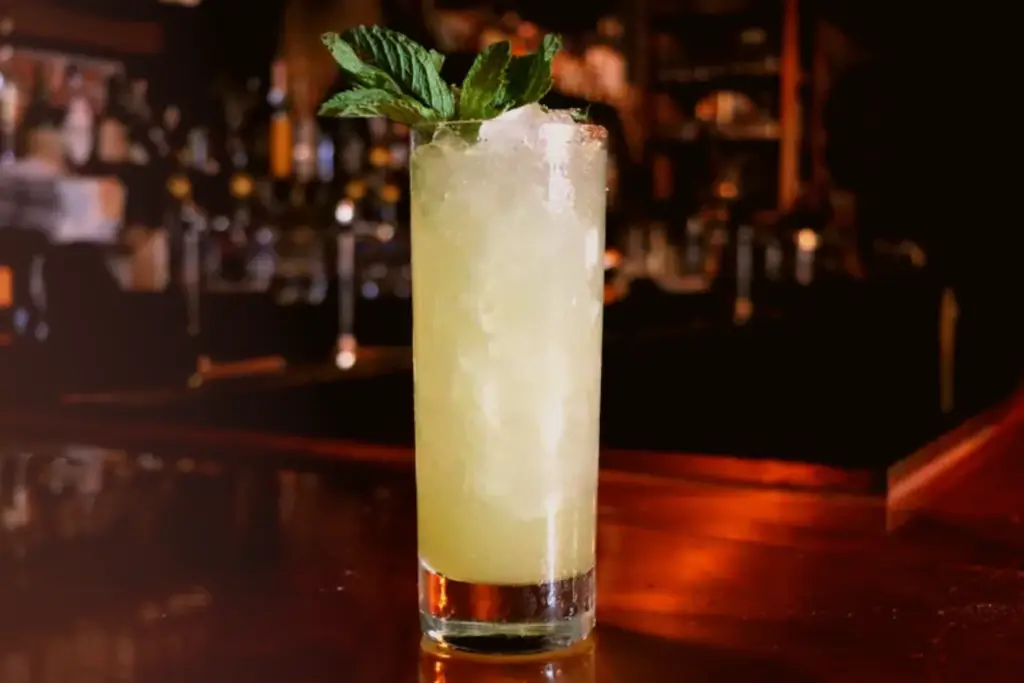
Traditional tiki relied heavily on rum blends, citrus and spice-driven syrups. The introduction of Chartreuse into this framework represents a departure. It replaces layered rum complexity with a single, highly concentrated botanical source. The result is a drink that maintains the cooling, crushed ice format associated with tropical service while redefining its flavour architecture.
Rather than expanding ingredients, the cocktail compresses them into one dominant element, supported by precise balancing components.
Botanical Density and Controlled Dilution
Few cocktails rely so heavily on dilution as a structural tool. In the Chartreuse Swizzle, water is not a byproduct of technique. It is an active ingredient introduced through ice. Without sufficient dilution, the liqueur remains closed and overpowering. With it, the drink opens into something layered and accessible.
This dynamic places unusual importance on ice quality and agitation speed. Crushed ice increases surface area, accelerating dilution while softening texture. The balance must be exact. Too little dilution results in intensity without clarity. Too much reduces the drink to sweetness and acidity.
This is where the cocktail reveals its precision. It is not simply mixed. It is engineered through temperature and time, requiring attention to detail at every stage.
From Niche Creation to Global Reference
Although created within a specific San Francisco bar environment, the Chartreuse Swizzle quickly moved beyond its first setting, appearing on menus that prioritize technique driven cocktails. Its rise reflects a broader modern interest in drinks where strong flavour identity is controlled through structure rather than softened into neutrality.
The cocktail’s modern reputation does not depend on association with every influential contemporary bar. Its importance rests on the way it solved a difficult structural problem: making Green Chartreuse function as the central force in a drink that still reads as refreshing, layered and balanced.
Its adoption beyond San Francisco confirms its status not just as a modern classic, but as a technical reference point for contemporary cocktail construction.
Scarcity, Production Limits and Cultural Impact
In recent years, Green Chartreuse has become increasingly difficult to source. The Carthusian Order has chosen not to increase production in response to rising demand, prioritising monastic life and long-term sustainability over commercial expansion. This decision has had a direct impact on bars, forcing some to remove or adapt cocktails that rely on the liqueur.
The Chartreuse Swizzle is particularly affected because substitution is difficult. Few spirits replicate the same combination of herbal intensity, sweetness and alcohol strength. As a result, the drink has become more than a recipe. It is now tied to availability, reinforcing its identity as a cocktail defined by a singular, irreplaceable ingredient.
Details That Define the Drink
The Chartreuse Swizzle carries a higher effective alcohol content than its refreshing appearance suggests. The perception of lightness comes from dilution and temperature, not from reduced strength. This contrast is central to its appeal.
The aromatic top layer changes as the drink evolves. Each sip can differ slightly from the last, depending on how the layers integrate.
Even its visual identity, the gradient of green beneath deeper aromatic accents, has become recognisable within cocktail culture, marking it as one of the few modern drinks where presentation and structure are inseparable.

Renowned international hospitality consultant, founder of Barpartners, and IBA Vice President of Classic Mixology, bringing over 25 years of luxury hotel bar operations.

In partnership with International Bartenders Association
The International Bartenders’ Association stands at the crossroads of exchange between new and established generations of professionals.

Bar
Bar Cock has been a fixture of Madrid since its founding in 1921, making it one of the…
Bar
Starlight Rooftop Bar is a high-rise retreat that has become known for combining panoramic city views with a…
Bar
Last Word is a distinguished cocktail bar nestled in Singapore’s downtown core, known for its sophisticated and intimate…
Cocktail
The Gin Swizzle is a vibrant and refreshing cocktail that highlights the crisp botanical character of gin while…
Spirit
Ben Nevis 1966 50 YO Calvados Cask Finish Single Malt Whisky
The Ben Nevis 50 Year Old Calvados Cask Finish Single Malt Whisky is a remarkable expression that showcases…
Spirit
Tiki Lovers Coffee Rum is a distinctive spirit that masterfully integrates a blend of well-aged rums derived from…
Spirit
Tiki Lovers Banana Rum is a uniquely crafted spirit that marries the richness of Caribbean rums with the…
Discovery and Education
The Private Label Spirits Shift: How Supermarkets Are Challenging Brand Power
For decades, spirits brands were protected by something stronger than shelf space. Private label spirits are beginning to test one of the drinks industry’s strongest assumptions: that recognised brands will always hold the consumer’s trust on the supermarket shelf. A recognised label carried trust, memory, status, and a promise that the liquid inside had been […]
July 3, 2026
Distilleries & Producers
The Revival of Irish Whiskey: How Cooley Distillery Challenged an Industry in Decline
By the late 1980s, Irish whiskey carried a celebrated past but supported very little competition. An industry that had once included dozens of distilleries had contracted to two working production sites controlled by the same company. Historic distilleries had closed, regional distinctions had weakened, and the possibility of establishing an independent Irish whiskey producer appeared […]
June 10, 2026
Partnership
Illegal Cocktail: The Mezcal Cocktail That Reframes the Daiquiri Structure
The Illegal cocktail follows a familiar outline, but the result is distinctly different. Built around mezcal, lime, falernum, maraschino, simple syrup, and a measure of Jamaican overproof rum, it takes the logic of a sour and shifts it into a drier, more aromatic profile. The drink is credited to Italian bartender Samuele Ambrosi, with its […]
September 24, 2026