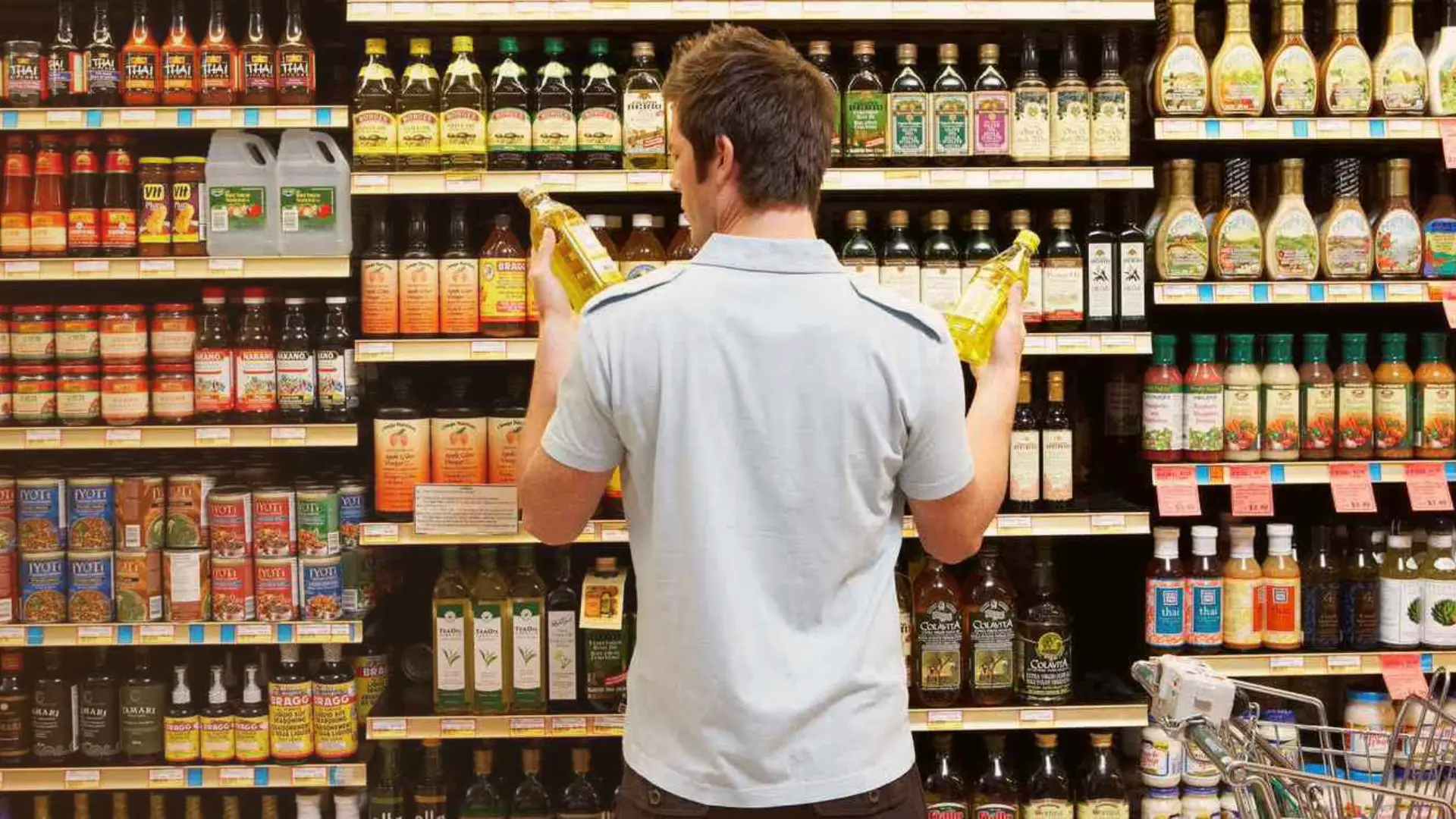
For decades, spirits brands were protected by something stronger than shelf space. Private label spirits are beginning to test one of the drinks industry’s strongest assumptions: that recognised brands will always hold the consumer’s trust on the supermarket shelf.
A recognised label carried trust, memory, status, and a promise that the liquid inside had been made by people who understood the category. That promise mattered more in spirits than in many grocery aisles because the product was expensive, long-lasting, and often bought with a degree of risk. A consumer could easily compare two bags of pasta, but judging a bottle of gin, vodka, whisky, rum, or liqueur required more confidence.
Supermarkets are now testing that protection. Across global alcohol retail, own-label products are no longer confined to the lowest price tier or treated as poor substitutes for famous brands. Retailers are investing in packaging, product development, premium ranges, canned formats, and contract production systems that allow them to behave less like passive sellers and more like brand owners.
For spirits, the shift is still uneven. Wine and beer have moved faster, while aged and heritage-led categories remain harder to replace. Yet the direction is clear enough to matter. Own-label alcohol is moving into spaces once defended by brand reputation, and spirits producers can no longer assume that supermarket shelves belong to them by right.
From Cheap Substitute to Retail Brand
Private label began with a simple promise – a lower price.
In food and household goods, supermarket own-label products gained ground by offering practical alternatives to branded staples. Over time, retailers used that trust to move into more discretionary categories, where design, quality, and identity mattered alongside value.
Alcohol was slower to change because it carried different forms of risk. A bottle could be a gift, a party purchase, a dinner table statement, or an expression of personal taste. Brand names helped consumers avoid uncertainty.
That advantage has weakened. Supermarkets have become more sophisticated in how they design and position own-label products, while shoppers have become more willing to accept retailer brands as credible. The cost-of-living pressure has accelerated this change, but it did not create it alone.
The more important development is trust. Once a retailer convinces consumers that its own label products can compete in quality, it gains permission to move beyond essentials into categories where brands once looked safer.
Why Alcohol Is Becoming a Target
According to Mintel data cited by BeverageDaily, private label accounted for only 2 per cent of global alcohol innovation in 2000. By 2025, that figure had reached 8 per cent.
The rise was especially sharp in the UK, where private label alcohol innovation moved from 8 per cent in 2000 to 32 per cent in 2025. China was even higher at 41 per cent of alcohol launches in 2025, while the United States remained below the global average at 4 per cent.
These numbers show that the shift is not universal. Retail structure, consumer trust, regulation, drinking culture, and the strength of domestic brands all affect how far supermarkets can move.
Still, the broader pattern is significant. Alcohol has become part of the same retail logic that already reshaped food, household goods, and everyday consumer categories.
For supermarkets, the attraction is obvious. Own-label products can improve margins, strengthen customer loyalty, provide faster response to trends, and reduce dependence on large brand owners. For spirits companies, the implication is more uncomfortable. The retailer is no longer only the route to market. It is becoming a competitor.
Spirits Remain Protected, but Not Untouchable
Spirits have resisted private label pressure more strongly than wine or beer. The growth of private label spirits does not mean supermarkets can replace every established distillery or heritage brand, but it does show that retail trust is becoming a serious competitor to traditional brand loyalty.
Wine is fragmented, difficult for many consumers to navigate, and often chosen from a crowded shelf where a retailer can simplify the decision. Beer has become more varied through innovation in craft, flavour, and style, giving supermarkets room to create credible alternatives.
Spirits carry stronger brand identities. Gin, vodka, rum, whisky, tequila, and liqueur often depend on origin, production method, history, bottle design, and a sense of trust built over time. That makes the category harder for own-label products to penetrate.
The data reflects this resistance. Private label ready-to-drink launches reached 10 per cent in 2025, while whisky declined from 4 per cent in 2012 to 2 per cent in 2025. That gap shows where retailers find easier routes into alcohol.
A canned cocktail or ready-to-drink spirit product can be built around format, flavour, convenience, and price. A whisky must carry a more demanding story about maturation, provenance, continuity, and production. This does not mean whisky is safe forever. It means the barrier is higher.
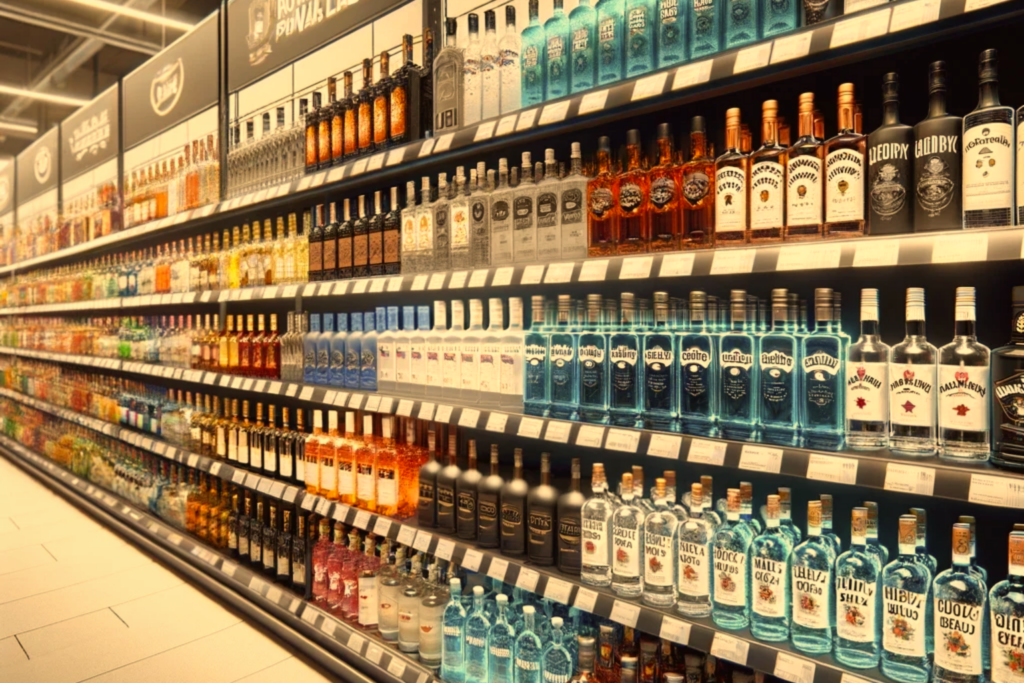
RTDs Open the Door
Ready-to-drink products are the easiest spirits-adjacent category for supermarkets to enter.
The format suits retail control. It has defined portions, clear packaging, fast product development, and a lower total purchase price than a full bottle. A retailer can create flavours around seasonal demand, social occasions, lighter drinking, or convenience without asking consumers to make a large commitment.
RTDs also reduce the importance of traditional spirits knowledge. The buyer does not need to understand distillation, maturation, cask type, botanical selection, or category history. The product explains itself through flavour, format, and occasion.
That makes private label more credible. A supermarket does not need to defeat a century-old whisky house on heritage. It only needs to create a convenient product that feels well-made, fairly priced, and suitable for a specific moment.
For brand owners, this is a different kind of competition. The threat is not always a cheaper copy of a flagship bottle. It may be a product that changes the occasion entirely. If a consumer chooses a supermarket canned serve instead of buying a bottle of spirit and a mixer, the brand has lost not just a sale but a place in the ritual of preparation.
Gin, Vodka, and the Exposed Middle
Gin and vodka are more exposed to private label competition than many aged spirits.
Vodka has often competed through purity, smoothness, packaging, price, and brand image rather than visible production complexity. Gin has stronger botanical storytelling, but the category also expanded rapidly during the recent craft boom, creating a crowded field in which consumers already face too much choice.
This is where supermarket brands can operate effectively. They can simplify the shelf by offering value, standard, and premium tiers under a retailer identity that shoppers already trust.
The exposed area is the middle of the market. Cheap own-label spirits have existed for years, and luxury spirits retain stronger protection through scarcity, age, origin, or prestige. The more vulnerable space sits between those points, where many brands rely on marketing, packaging, and broad claims of quality rather than a truly distinctive production story.
That does not make private label products automatically better or worse. It changes the question. If a branded product cannot explain why it deserves a higher price, the retailer has an opening. The pressure is not only economic. It is editorial. Brands must tell a clearer truth about what they are, how they are made, and why their identity matters.
Why Aged Spirits Are Harder to Copy
Aged spirits are more difficult for supermarkets to build quickly.
Whisky, Cognac, Armagnac, aged rum, and some brandies depend on time. Maturation ties the present bottle to decisions made years earlier, while cask management, warehouse conditions, evaporation, blending skill, and stock ownership all shape the final spirit.
A retailer can commission an aged spirit, but it cannot easily create mature inventory from nothing. It must work with producers, brokers, blenders, or companies holding suitable stocks. That dependence gives established producers some protection. A supermarket may control packaging and price, but the liquid still comes from a production network with its own limitations.
This is why private label whisky remains a more complicated proposition than private label RTDs or neutral spirit categories. The supermarket can compete on value, but it must also persuade consumers that the product carries sufficient authenticity.
The challenge grows sharper in premium tiers. Aged spirits ask consumers to believe in provenance. That belief cannot be manufactured entirely through label design.
The Contract Producer Behind the Label
Private label alcohol depends on a production system that many consumers rarely see.
Behind supermarket labels sit breweries, wineries, distilleries, blenders, bottlers, flavour houses, packaging suppliers, and logistics companies. Some are large industrial producers with the scale to deliver national volume, while others specialise in smaller, premium or innovative projects.
For producers, supermarket contracts can offer access to distribution that would otherwise be difficult to secure. A small or mid-sized drinks business may gain national reach through one retail relationship. The trade-off is visibility. The supermarket often owns the label, the customer relationship, and much of the public value. The producer may supply the expertise while remaining largely invisible.
This creates a quiet shift in power. Production skills become essential, but brand ownership moves towards the retailer. For some producers, that arrangement is attractive. For others, it risks turning distilling, blending, or product development into anonymous manufacturing behind another company’s name.
The Retailer as Curator
Supermarkets are becoming curators of alcohol categories.
A retailer can observe sales data, compare regional behaviour, monitor social media, test formats, and adjust product ranges quickly. It can remove a weak line, launch a seasonal alternative, or use its own loyalty data to understand who buys what and when.
Large brand owners also use data, but they do not control the shelf in the same way. The retailer decides how products are displayed, which price points are visible, and how much space is given to own-label alternatives. That shelf power matters in spirits because discovery is often difficult. A consumer faced with too many bottles may choose the name they recognise, the bottle they trust, or the option that appears easiest to understand.
Private label can simplify that moment. It can be said, in effect, that the supermarket has made the decision easier. This is especially powerful when the retailer has built credibility in premium food and drink. The own label then carries not only price value, but editorial authority.
Premium Own Label Changes the Threat
The old private label model competed mainly at the bottom of the market. The newer model competes across tiers. Economy ranges still matter, but premium own-label products allow supermarkets to challenge brands on quality perception as well as price.
This is more threatening because it narrows the psychological distance between retailer and brand. If a supermarket can present a product with credible packaging, specialist language, better ingredients, and a convincing price, the branded competitor must work harder.
The strongest premium own-label ranges do not say “cheap”. They say “selected”, “crafted”, “exclusive”, or “limited”. Those words can be overused, but they show how far the category has moved from plain discounting.
For spirits, the premium private label remains uneven because authenticity is harder to establish. Still, the direction is worth watching. If supermarkets can use RTDs, gin, vodka, liqueurs, and selected whisky products to build trust, they may gradually extend their authority into more protected categories.
The Limits of the Supermarket Model
Private label alcohol is not guaranteed to grow smoothly.
Alcohol consumption is under pressure in many markets. Moderation, health concerns, lower alcohol formats, and economic caution all affect the category. Some data cited in the source indicates that own-label alcohol continues to struggle across major categories, even while smaller segments, particularly RTD spirits, show growth.
Supermarkets also face credibility limits. A retailer can produce a strong own-label product, but it may struggle to create the emotional connection associated with a distillery, family company, historic brand, or named place of origin. Spirits are not purely functional products. Even when a bottle is affordable, the story attached to it still matters.
Private label works best when the consumer wants convenience, value, or simplicity. It becomes more difficult when the purchase depends on identity, gifting, collecting, hospitality prestige, or deep category knowledge. That is why brand owners should not panic, but they should pay attention.
What Spirits Brands Must Defend
The rise of private label forces spirits brands to clarify what they actually own.
Some own production heritage. Some own distinctive liquid. Some own distribution. Some own design, advertising memory, bartender loyalty, regional identity, or the trust built through decades of consistency. Brands that rely only on a higher price and familiar packaging are more vulnerable.
The answer is not simply louder marketing. It is a sharper differentiation. A spirit must make its production, origin, purpose, and role in the market easier to understand.
For aged spirits, that may mean clearer discussion of maturation, blending, cask management, and provenance. For gin and vodka, it may mean a more honest account of botanicals, base spirit, process, and style. For RTDs, it may mean explaining why a branded serve offers more than convenience alone.
Private label will not replace every spirits brand. It will expose the ones whose brand value is thinner than their price suggests. The growth of own-label alcohol is often described as a supermarket story. For spirits, it is really a story about power.
The retailer now understands consumers directly, controls the shelf, builds its own labels, commissions products, and uses data to respond quickly to changing demand. Brand owners still bring production knowledge, heritage, liquid quality, and cultural authority, but they no longer operate in a market where those advantages are automatically protected.
The strongest pressure will come where the purchase is casual, price sensitive, and format driven. RTDs, gin, vodka, liqueurs, and selected value-led spirits are natural entry points. Aged whisky, Cognac, Armagnac, and other heritage categories remain harder to challenge, though not impossible.
The more important change is psychological. Supermarket alcohol is no longer always treated as a compromise. In some markets, it is becoming a trusted part of how consumers navigate choice. A bottle’s future may be decided as much by shelf architecture, contract production, and data as by the reputation printed on its label.
The private label shift does not end brand power. It asks brands to prove that their power still means something.
Cocktail
The Amaretto Tea is a warm, comforting cocktail that elegantly combines the nutty sweetness of amaretto with the…
Cocktail
The Cantarito is a vibrant and citrus-driven cocktail rooted in the traditions of Jalisco, Mexico, where tequila culture…
Cocktail
Apple Cider Punch is a festive beverage that highlights the crisp and comforting flavors of apples, making it…
Distillery
Akkeshi Distillery is a pioneering force in the world of Japanese whisky, harmonizing traditional Scottish distilling practices with…
Distillery
ABD Maestro Pvt. Ltd. is the super-premium and luxury spirits arm of Allied Blenders and Distillers (ABD), one…
Spirit
Connoisseurs Choice Blair Athol 2005 Single Malt Scotch Whisky
Connoisseurs Choice Blair Athol 2005 Single Malt Scotch Whisky is a distinguished release from the Highland region of…
Spirit
Château de Laubade XF Bas Armagnac
Château de Laubade XF Bas Armagnac is a distinguished expression of tradition and craftsmanship in the world of…
Spirit
Ben Nevis 1966 50 YO Calvados Cask Finish Single Malt Whisky
The Ben Nevis 50 Year Old Calvados Cask Finish Single Malt Whisky is a remarkable expression that showcases…

Partnership
Boban Lazarević: Built in a Training Room, Proven on a World Stage in 20224
Before Boban Lazarević won the title, before the stage lights, there was repetition. In Belgrade, bartending doesn’t always begin behind a busy counter. For many, it begins in a classroom. Inside Bar Central Belgrade, run by the Bartenders Association of Serbia, drinks are broken down long before they are served. Recipes are practised until they […]
August 17, 2026

Partnership
Jigger and Pony: The Craft of Hospitality Behind Asia’s Most Consistent Cocktail Bar
Energy carries the room at Jigger and Pony. Not noise, not spectacle, but a steady, deliberate rhythm shaped by people who understand that a bar lives or dies by how it makes guests feel. Set within Amara Singapore in Singapore, the bar has built its reputation not on a single defining drink or concept, but […]
August 15, 2026
Trends and Innovations
International Beer Day 2026: The History of the World’s Most Social Drink
On the first Friday of August, International Beer Day brings breweries, bars, restaurants and beer drinkers together around one of the world’s oldest fermented beverages. The celebration itself is relatively recent, having been established in Santa Cruz, California, in 2008 by Jesse Avshalomov and a group of friends. It was initially held on 5 August […]
August 7, 2026