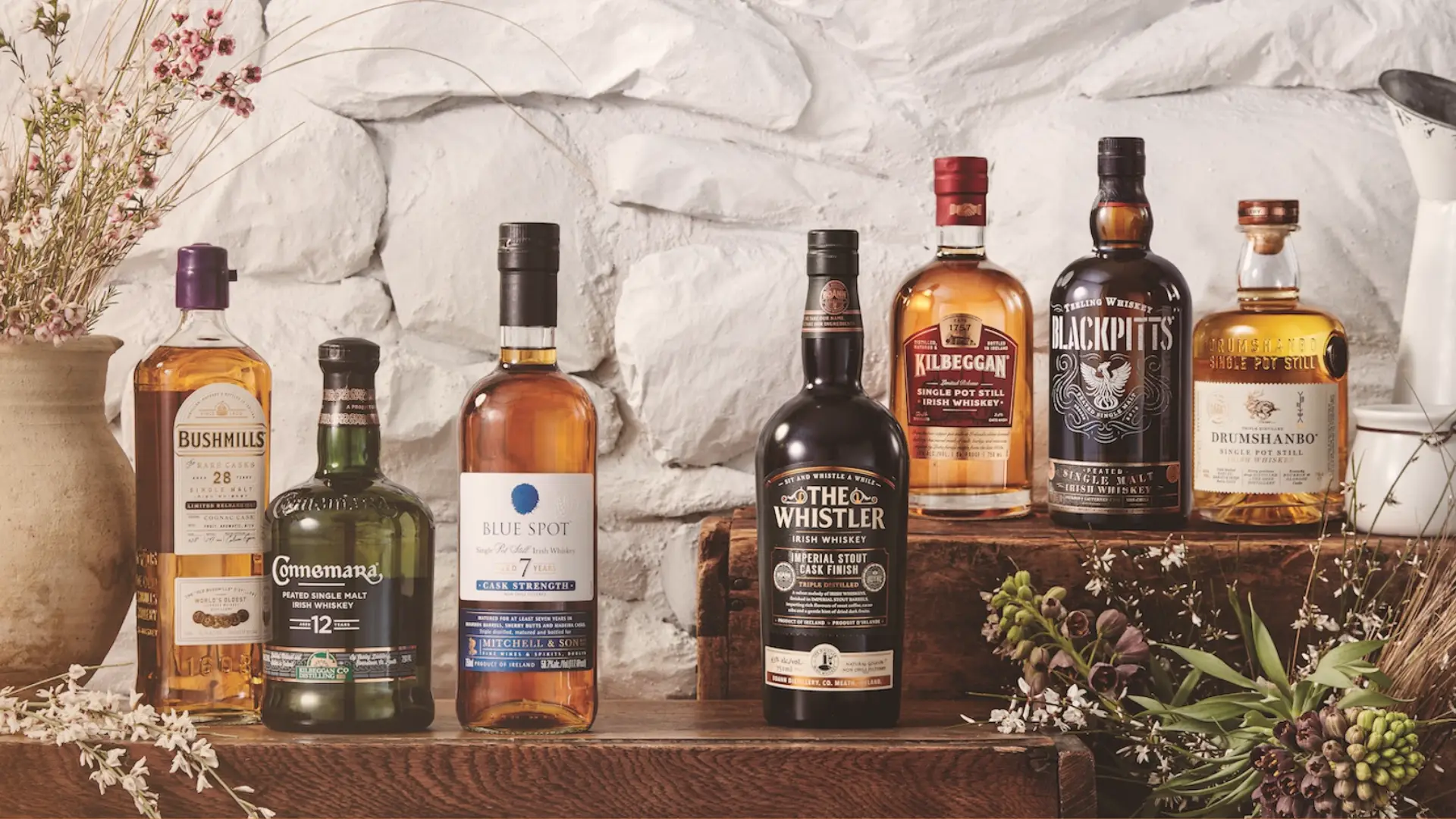
By the late 1980s, Irish whiskey carried a celebrated past but supported very little competition. An industry that had once included dozens of distilleries had contracted to two working production sites controlled by the same company. Historic distilleries had closed, regional distinctions had weakened, and the possibility of establishing an independent Irish whiskey producer appeared commercially remote.
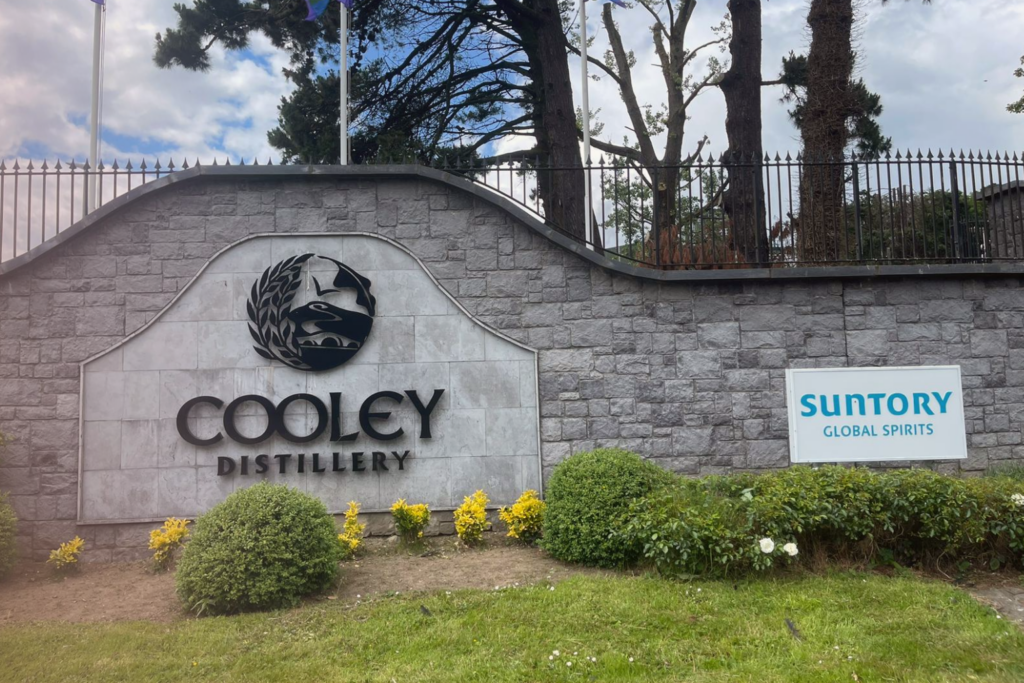
John Teeling challenged that condition when he established Cooley Distillery on the Cooley Peninsula in County Louth in 1987.
Cooley did not revive Irish whiskey alone. Irish Distillers, acquired by Pernod Ricard in 1988, rebuilt global demand through brands led by Jameson and provided the scale that helped return the category to international prominence. Cooley’s contribution was different. It ended the single producer structure, restored dormant whiskey names, brought greater attention to peated and double distilled Irish malt, and demonstrated that the industry could support several production identities. Cooley made diversity possible again.
From International Strength to Two Distilleries
Irish whiskey entered the late 1800s with a substantial production base and a strong export reputation. When Alfred Barnard documented the distilleries of Britain and Ireland in 1887, he recorded 28 operating whiskey distilleries in Ireland. The contraction that followed developed through several pressures. Political upheaval, war, the loss of important export markets, American Prohibition, changing trade relationships, the growth of blended Scotch whisky, and disagreements over the use of column stills all contributed.
Distilleries closed in Dublin, Belfast, Cork, Derry, Tullamore, Monasterevin, and other established centres. Some brands continued after their original distilleries disappeared, but ownership and production became increasingly concentrated.
In 1966, John Jameson and Son, John Power and Son, and Cork Distilleries Company merged to form Irish Distillers. Bushmills joined the group in 1972. Production in the Republic of Ireland was later consolidated at the new Midleton distillery in County Cork, which opened in 1975, while Old Bushmills continued operating in County Antrim. By the middle of the 1970s, New Midleton and Old Bushmills were the only active whiskey distilleries on the island, and both belonged to Irish Distillers.
Consolidation preserved important brands and production knowledge during a difficult period. It also left the industry without an independent distilling competitor.
John Teeling and the Cooley Project
John Teeling began studying the economics of Irish whiskey while completing academic work at Harvard during the early 1970s. At the time, the category showed little evidence of rapid recovery. Opening a whiskey distillery required significant investment long before mature stock could be sold. Equipment, grain, energy, warehouses, casks, staff, distribution, and years of maturation all had to be financed in advance. A new company would also be competing against an established producer that controlled nearly all Irish whiskey distillation.
Teeling nevertheless believed that the industry’s contraction had created an opening. In 1985, he acquired a former state owned industrial alcohol plant at Riverstown on the Cooley Peninsula. The site had practical infrastructure but no romantic association with a historic whiskey house. It offered an affordable foundation on which a new distillery could be built.
Cooley Distillery was established in 1987. After the plant was converted for whiskey production, its first distillation was completed in 1989. The distillery began as an industrial and financial challenge rather than a heritage restoration. Its purpose was to prove that independent Irish whiskey production could become commercially viable again.
Production Beyond One Irish Style
Cooley was designed to produce both grain whiskey and malt whiskey. Column stills supported grain production, while copper pot stills produced malt spirit. This flexibility allowed the company to create components for blended whiskey while developing single grain and single malt releases.
Its malt production also challenged the assumption that Irish whiskey should always be distilled three times. Cooley used double distillation for much of its malt spirit, retaining greater weight and presenting a different technical approach from the lighter style commonly associated with triple distillation. This did not make double distillation more authentic or historically superior. It showed that Irish whiskey had room for more than one production method.
Connemara made the distinction especially visible. Its use of peated malt returned smoke to the public image of Irish whiskey at a time when the category was largely associated with unpeated blends and triple distilled spirit. Peat had historical precedent in Irish distilling, although its use had never been universal. Cooley did not recreate one lost national style. It restored a production possibility that had become difficult to find in modern Irish whiskey.
Restoring Historic Names
New spirit needed time to mature, while a young independent distillery needed names that could carry historical recognition. Cooley, therefore, acquired and revived several brands associated with earlier Irish whiskey producers.
The Tyrconnell had once been the best known whiskey of the Watt family’s distilling business in Derry. Its name came from a racehorse owned by Andrew Alexander Watt that achieved a celebrated victory in 1876. The original distillery closed in 1925, and the brand later fell dormant.
Cooley acquired the name and returned The Tyrconnell as a single malt. Whiskey from Cooley’s first distillation was released under the brand in 1994, connecting a new distillery in County Louth with the memory of an older Northern Irish producer.
Kilbeggan provided a more direct connection to a surviving production site. The former Locke’s Distillery in County Westmeath had ceased operating in 1957, but local preservation efforts prevented the buildings and licence from disappearing completely.
Cooley acquired the distillery’s assets in 1987 and revived the Kilbeggan and Locke’s names. Distillation recommenced at Kilbeggan in 2007, marking the site’s 250th anniversary. Further equipment was installed, and the distillery became fully operational again in 2010. The restoration gave Cooley something more substantial than an inherited label. It returned whiskey production to a place where it had once been central to local life.
Connemara, Greenore, and The Tyrconnell
Cooley’s portfolio widened the visible boundaries of Irish whiskey. Connemara presented a peated, double-distilled Irish single malt. The Tyrconnell restored a historic single malt identity. Greenore brought single grain whiskey into public view as a named product rather than leaving grain spirit known mainly as a component of blended whiskey. Kilbeggan provided the company with a blended whiskey identity and a connection to one of Ireland’s oldest licensed distilling sites.
These releases were technically and commercially different. Together, they showed that modern Irish whiskey could include grain whiskey, blended whiskey, unpeated single malt, peated single malt, double distillation, and several approaches to maturation. Cooley’s importance rested partly on this range. It did not try to replace the established identity of Irish whiskey. It made the category less narrow.
Competition and Financial Pressure
Breaking the existing production structure did not make Cooley immediately successful. The company had to finance distillation and maturation without the international distribution network available to Irish Distillers. It took more than a decade to achieve annual profitability, and the business encountered repeated periods of financial pressure.
After Pernod Ricard acquired Irish Distillers in 1988, Irish Distillers attempted to purchase Cooley. The proposed acquisition was blocked by Irish competition regulators. Had it proceeded, Cooley was expected to close, returning the industry to a single producer structure. Cooley survived through a combination of investment, advance stock sales, exports, independent bottling arrangements, and whiskey supplied to outside brands.
Its survival changed the competitive character of Irish whiskey. Irish Distillers could concentrate on rebuilding established brands at international scale, while Cooley explored styles and commercial relationships that would have been difficult within a single company system. The category’s later recovery drew strength from both approaches.
Irish Distillers and the Wider Revival
Cooley’s history should not be presented as the only force behind the revival of Irish whiskey. Pernod Ricard’s acquisition of Irish Distillers in 1988 brought international distribution, marketing investment, and long term commercial support. Jameson became the category’s leading global brand, while Midleton continued producing names including Powers, Redbreast, and the Spot whiskeys. Irish Distillers supplied scale and international visibility. Cooley supplied competition and stylistic range.
The relationship was not balanced in size, but both contributions were important. A category in decline needed a major producer capable of rebuilding demand. It also needed an independent challenger capable of questioning established assumptions. Irish whiskey recovered as its strongest producer expanded and its new competitor proved that the production landscape could become plural again.
Acquisition and the Continuing Teeling Legacy
By the early 2000s, Cooley had built mature stocks, recognised brands, and an international reputation. It had shown that an independent company could enter the whiskey industry, endure the long maturation cycle, and create commercially credible products. Beam announced its agreement to acquire Cooley in December 2011 for approximately €71 million. The transaction was completed on 17 January 2012.
The sale ended Cooley’s period as Ireland’s leading independent whiskey distiller, but it confirmed the value created since the company’s establishment in 1987. The former industrial alcohol plant had become an internationally significant distilling operation. Suntory acquired Beam in 2014. Cooley now operates within Suntory Global Spirits.
The acquisition did not end the Teeling family’s involvement in Irish whiskey. John Teeling later established Great Northern Distillery in Dundalk. Jack and Stephen Teeling developed the Teeling Whiskey Company and opened a new distillery in Dublin in 2015. Cooley’s influence, therefore, continued beyond the ownership of the original site. It carried forward through people, production experience, mature whiskey stocks, and the businesses that followed.
Cooley did not revive Irish whiskey through market dominance. It restored competition to an industry that had survived through consolidation. That distinction gives the distillery its historical importance. John Teeling showed that an independent producer could enter a declining category, produce malt and grain whiskey, use double distillation, restore peated spirit, revive dormant names, and return production to a silent distillery.
The revival that followed became much larger than Cooley. New distilleries opened across Ireland, historic brands returned, and international investment transformed the scale of the category. Cooley nevertheless remains one of the decisive structural moments in that recovery. Irish whiskey had been reduced to two active distilleries under one producer. Cooley made an alternative future credible.

Distillery
Kilbeggan Co. Distillery, established in 1757, proudly holds the title of the oldest licensed distillery in Ireland, nestled…
Distillery
Pernod Ricard stands as a celebrated titan in the global spirits landscape, embodying the phrase "Créateurs de Convivialité,"…
Distillery
Great Northern Distillery, located in Dundalk, County Louth, Ireland, stands as the largest independent distillery in the country.…
Distillery
Irish Distillers is a flagship producer of Irish whiskey renowned for its commitment to craftsmanship and innovation. Located…
Distillery
Cooley Distillery, located on the picturesque Cooley Peninsula in County Louth, Ireland, is renowned for its artisan approach…
Distillery
Teeling Whiskey Distillery stands as a beacon of innovation and craftsmanship in the realm of Irish whiskey, embodying…
Spirit
Kusshh Grape Spirit Barrique Brandy
Kusshh Grape Spirit Barrique Brandy is a distinguished spirit crafted from the finest grapes native to Croatia. This…
Spirit
Jacsi Martinique Rum is a historical rum that hails from the renowned region of Martinique. Crafted during a…
Spirit
Ben Nevis 1966 50 YO Calvados Cask Finish Single Malt Whisky
The Ben Nevis 50 Year Old Calvados Cask Finish Single Malt Whisky is a remarkable expression that showcases…
Spirit
Kavalan Ex Bourbon Cask Strength Selected by The Nectar Single Malt Whisky
Kavalan Ex-Bourbon Cask Strength Selected by The Nectar is a testament to the artistry inherent in the craftsmanship…
Distilleries & Producers
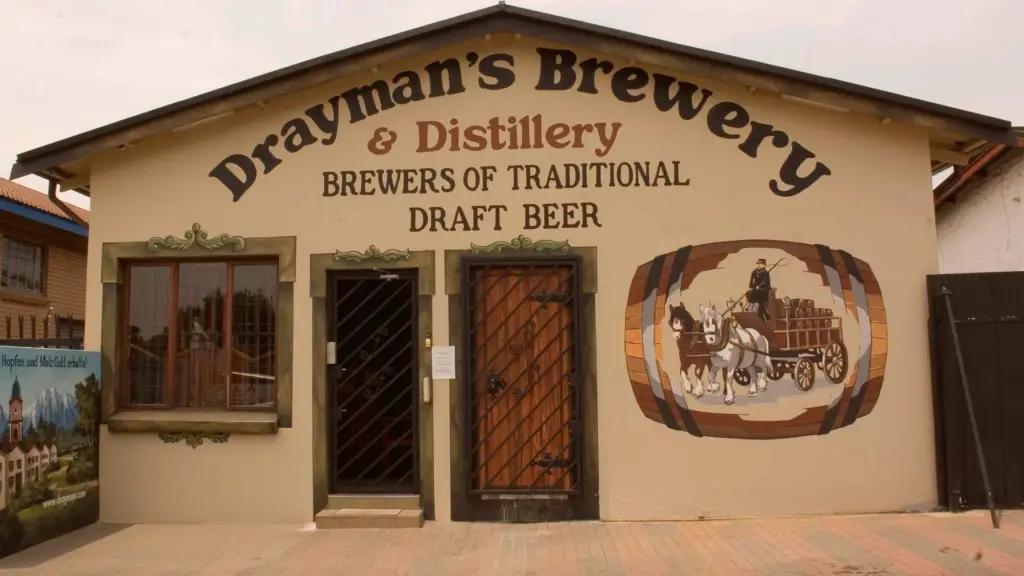
Drayman’s Brewery & Distillery: How Pretoria Put the Highveld on the Whisky Map
The story of Drayman’s Brewery & Distillery begins not in Scotland, Ireland or one of the traditional centres of whisky production, but in Pretoria, South Africa. The brewery was registered in 1997, beginning on a small scale in the Kallmeyer family’s home garage before moving to its present property in Silverton in 2002. That early […]
July 24, 2026
Partnership
Chartreuse Swizzle: The Cocktail That Brought Alpine Liqueur into Tiki Culture
A liqueur conceived in monastic silence, distilled from a guarded manuscript and shaped by alpine botanicals, rarely finds itself at the centre of a tropical drink. Yet in early 2000s San Francisco, that is precisely what happened. The Chartreuse Swizzle, created by Marcovaldo Dionysos, made its first menu appearance in 2003 at Harry Denton’s Starlight […]
July 23, 2026

Discovery and Education
The Private Label Spirits Shift: How Supermarkets Are Challenging Brand Power
For decades, spirits brands were protected by something stronger than shelf space. Private label spirits are beginning to test one of the drinks industry’s strongest assumptions: that recognised brands will always hold the consumer’s trust on the supermarket shelf. A recognised label carried trust, memory, status, and a promise that the liquid inside had been […]
July 3, 2026