Rye Whiskey tells one of the clearest stories in American spirits history because its rise, disappearance, and revival follow the country’s own shifts in agriculture, law, migration, industry, and bar culture. Before Bourbon became the dominant American Whiskey reference, rye stood at the center of distilling in the Northeast. It belonged to farms, river towns, merchant networks, taverns, and early commercial distilleries that turned surplus grain into a product with economic and cultural weight.
Its decline was not caused by a single event. Prohibition damaged the industry, but Rye had already begun facing pressure from changing tastes, market consolidation, and the growing strength of bourbon. By the late twentieth century, many historical rye styles had nearly disappeared from public memory.
The revival came slowly. It was driven by bartenders, historians, legacy brands, craft distillers, and drinkers interested in recovering an older American Whiskey language. Rye returned not as nostalgia alone, but as a category rebuilt through law, history, and renewed production.
Rye Before Bourbon Became the National Reference
Rye grain arrived in North America through European settlement and adapted well to the colder climate and soils of the northeastern colonies. In Pennsylvania, Maryland, New York, and Virginia, rye became practical for farmers seeking a resilient crop and a means to preserve agricultural value.
Distilling gave rye a second life. Grain was bulky, perishable, and difficult to move over poor roads. Whiskey was more durable and easier to transport. This made rye whiskey part of the early rural economy rather than only a beverage category.
By the late 18th century, rye whiskey was closely associated with Pennsylvania’s Monongahela region and Maryland’s distilling culture. These were not identical styles. Pennsylvania rye was generally understood as firm, dry, and grain-driven, while Maryland Rye later became associated with a softer and more rounded profile. Rye was not peripheral to early American whiskey. In many regions, it was the foundation.
George Washington and the Scale of Early Rye Production
One of the most important early references is George Washington’s Distillery at Mount Vernon. After leaving the presidency, Washington entered whiskey production under the guidance of his Scottish farm manager, James Anderson. The distillery was completed in 1797 and became one of the largest whiskey operations in the United States by 1799.
Washington’s common mash bill is often cited as 60 percent rye, 35 percent corn, and 5 percent malted barley. That structure matters because it shows rye functioning as the dominant grain, with corn adding fermentable sweetness and barley contributing enzymes for starch conversion.
Mount Vernon was not a symbolic footnote. Its 1799 production of around 11,000 gallons shows that rye whiskey had already entered serious commercial scale before the nineteenth century fully began. This early history makes rye one of America’s foundational whiskey grains.
Pennsylvania, Maryland, and Regional Identity
During the nineteenth century, rye developed strong regional identities. Pennsylvania’s Monongahela Rye became one of the most respected styles, associated with the western part of the state and the river systems around Pittsburgh. It was built around rye grain as the central agricultural and sensory marker.
Maryland Rye followed a different path. It became known for a gentler profile and was tied to port access, urban markets, and a different commercial culture around Baltimore and the Chesapeake region.
These regional styles gave rye whiskey a diversity that is often overlooked today. Before national brands flattened the market, American rye was not one thing. It was a family of styles shaped by grain availability, local preferences, distillery practice, and market access. That regional language would later become one of the losses of rye’s decline.
Law, Definition, and Production Structure
Modern American Rye whiskey is legally defined by its mash bill and production standards. Under United States federal standards, rye whiskey must be made from a fermented mash of at least 51 percent rye grain, distilled at no more than 160 proof, and stored in new charred oak barrels at no more than 125 proof. Straight rye whiskey must meet the same grain requirement and be stored for at least two years.
These legal definitions matter because they preserve a minimum structural identity. Rye cannot be reduced to flavor language alone. It is a regulated production category built around grain, distillation proof, barrel type, and aging. The law does not recreate historical Pennsylvania or Maryland styles, but it protects the baseline that makes American rye distinct.
Prohibition and the Collapse of Continuity
National Prohibition began in 1920 and severely damaged American whiskey production. Distilleries closed, equipment was dismantled, stocks disappeared, and legal distribution systems broke down. Rye was especially vulnerable because many of its strongest regional centers were already under pressure from industrial consolidation and changing consumer preferences.
When Prohibition ended in 1933, the industry did not simply return to its earlier form. Many smaller distilleries were gone. Regional styles had lost continuity. Bourbon and lighter blended whiskies became more commercially dominant in the decades that followed.
Some rye labels survived, but survival did not mean historical continuity remained intact. Brands such as Old Overholt and Rittenhouse carried important names forward, yet production geography and style changed over time as American whiskey consolidated around larger Kentucky and industrial systems. The category did not vanish completely, but it lost much of its regional depth.
Rye in the Cocktail Memory of America
Rye’s decline was especially important for cocktail history. Many classic American drinks were built in a period when rye was a common whiskey base in bars. The Manhattan, the Old Fashioned, the Whiskey Sour, and other 19th-century whiskey drinks emerged in a culture where Rye had a strong presence.
As Rye became less available, bourbon and Canadian whisky often filled the space. This changed the structure of many drinks over time, because rye and bourbon do not behave identically. Rye’s grain character historically gave cocktails a drier and more angular base, while corn-based bourbon generally moved the balance toward greater sweetness.
The Slow Revival of Rye Whiskey
The revival of Rye began through several overlapping forces. Bartenders during the late twentieth and early 21st century cocktail revival began looking back to older drink structures. Whiskey historians and writers gave new attention to pre-Prohibition styles. Legacy producers reintroduced or expanded rye expressions. Craft distillers began treating rye not as a forgotten category, but as a place where American whiskey could recover regional identity.
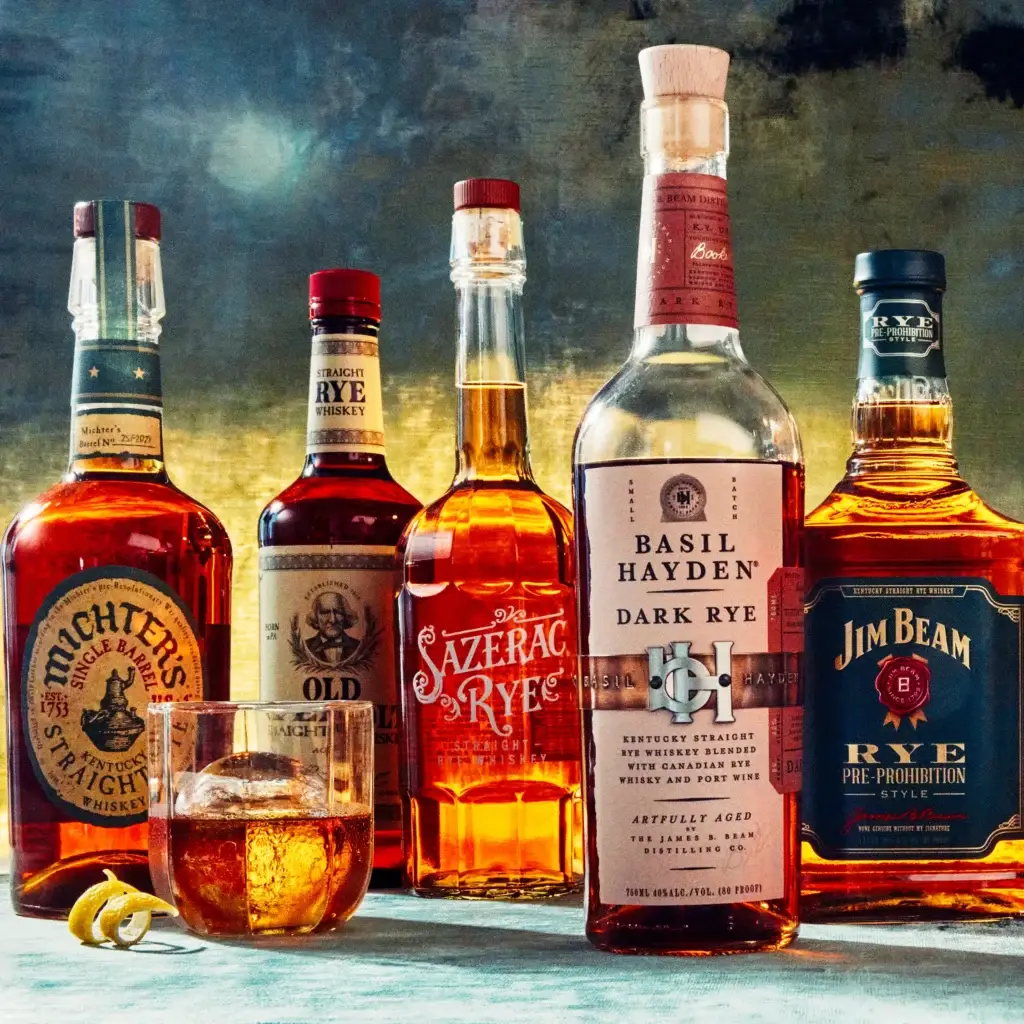
Large producers played an important role in making rye visible again. Brands such as Sazerac Rye, Rittenhouse Rye, Old Overholt, Wild Turkey Rye, Pikesville Rye, and Knob Creek Rye helped keep or restore rye on shelves and in bars. At the same time, producers such as MGP in Indiana became important suppliers of high rye whiskey to multiple brands, shaping much of the modern market.
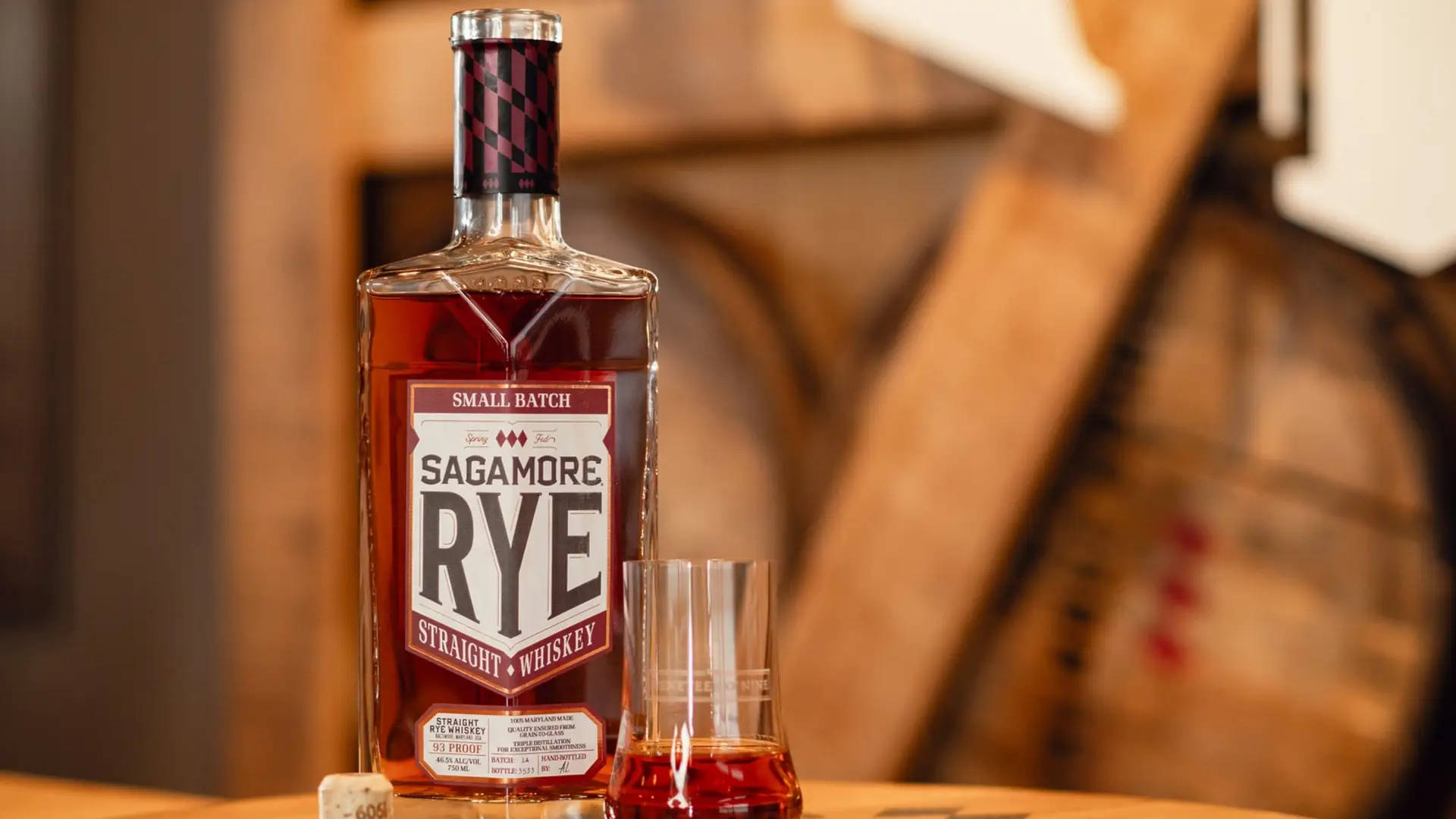
Craft distilleries added another layer. Dad’s Hat in Pennsylvania, New York Distilling Company in Brooklyn, Sagamore Spirit in Maryland, and Mount Vernon’s reconstructed distillery all connected modern production to older regional narratives.
The revival was not a return to one fixed past. It was a reconstruction built from legal standards, surviving labels, historical memory, and new production choices. Rye whiskey’s story is not only about a grain. It is about how American spirits categories rise and fall within systems.
Its rise was agricultural and regional. Its fall was legal, industrial, and cultural. Its revival has been historical, technical, and partly corrective. Each stage reveals something about how spirits survive beyond taste alone.
Rye matters because it shows how a category can lose its place in public culture without losing its structural meaning. The legal definition remained. The old names remained. The cocktails remembered it. Eventually, producers and bartenders found their way back to it. In American Whiskey, Rye is not simply revived. It is being reassembled from memory, law, and production.


Cocktail
The Manhattan is one of the most distinguished and enduring cocktails in history, often placed alongside the Martini…

Cocktail
The Old Fashioned is widely regarded as the original cocktail, a simple yet profound combination that has endured…

Distillery
Sagamore Spirit Distillery is a premier distillery located in the heart of Baltimore, Maryland. Known for its commitment…
Distillery
The New York Distilling Company, located in Williamsburg, Brooklyn, is a pioneering craft distillery that embodies the rich…
Distillery
Old Distiller stands as a celebrated brand within the American Whiskey landscape, particularly recognized for its high-quality Kentucky…
Spirit
Sazerac Straight Rye Whiskey epitomizes the artistry and heritage of American rye whiskey production, particularly reflecting the deep-rooted…
Spirit
Kinsey Pennsylvania 4 YO Single Mash Rye Whiskey
Kinsey Pennsylvania 4 YO Single Mash Rye Whiskey embodies the revitalization of an iconic Pennsylvania spirit that dates…
Spirit
Dad’s Hat Pennsylvania Rye Small Batch Whiskey
Dad's Hat Pennsylvania Rye Small Batch Whiskey is a handcrafted spirit that pays homage to the rich tradition…
Spirit
Tenth Ward Maryland Rye Whiskey
Tenth Ward Maryland Rye is a pioneering spirit that embodies the craftsmanship and heritage of Maryland distilling. Made…
Spirit
Gun Fighter American Port Cask Rye Whisky
Gun Fighter American Rye Port Cask Whisky is an embodiment of meticulous craftsmanship hailing from the Golden Moon…
Spirit
BootLeg Distilling's Sweet Cinn Rum
BootLeg Distilling's Sweet Cinn Rum is a flavorful homage to the warmth of cinnamon, expertly crafted to deliver…
Cocktail
The Manhattan is one of the most distinguished and enduring cocktails in history, often placed alongside the Martini…
Cocktail
The Old Fashioned is widely regarded as the original cocktail, a simple yet profound combination that has endured…
Distillery
Sagamore Spirit Distillery is a premier distillery located in the heart of Baltimore, Maryland. Known for its commitment…
Distillery
The New York Distilling Company, located in Williamsburg, Brooklyn, is a pioneering craft distillery that embodies the rich…
Spirit
Tenth Ward Maryland Rye Whiskey
Tenth Ward Maryland Rye is a pioneering spirit that embodies the craftsmanship and heritage of Maryland distilling. Made…

Partnership
Dilution and the Hidden Structure of the Cocktail
Dilution begins as soon as ice and liquid exchange heat, but its importance extends far beyond the simple addition of water. It changes alcoholic strength, temperature, aroma, sweetness, bitterness and texture, helping separate ingredients become a coherent drink. Because the process is usually invisible, it can be mistaken for a side effect of chilling. In […]
August 4, 2026

Partnership
Craft and the Discipline Behind Modern Bartending
Craft in bartending is sometimes presented as a recent movement, but the habits it describes are much older than the modern language surrounding them. Careful preparation, command of tools, responsible handling of ingredients and consistency during service have long distinguished serious bar work. Craft is therefore best understood not as a fashion or visual style, […]
July 21, 2026
Partnership
Balance and the Structural Language of the Cocktail
Balance is one of the central ideas in bartending, yet it is rarely experienced as a single flavour or technique. It is recognised through the way a drink holds together: strength does not suppress aroma, sweetness does not obscure acidity, bitterness remains purposeful, and water gives the ingredients room to unfold. For the bartender, balance […]
July 7, 2026