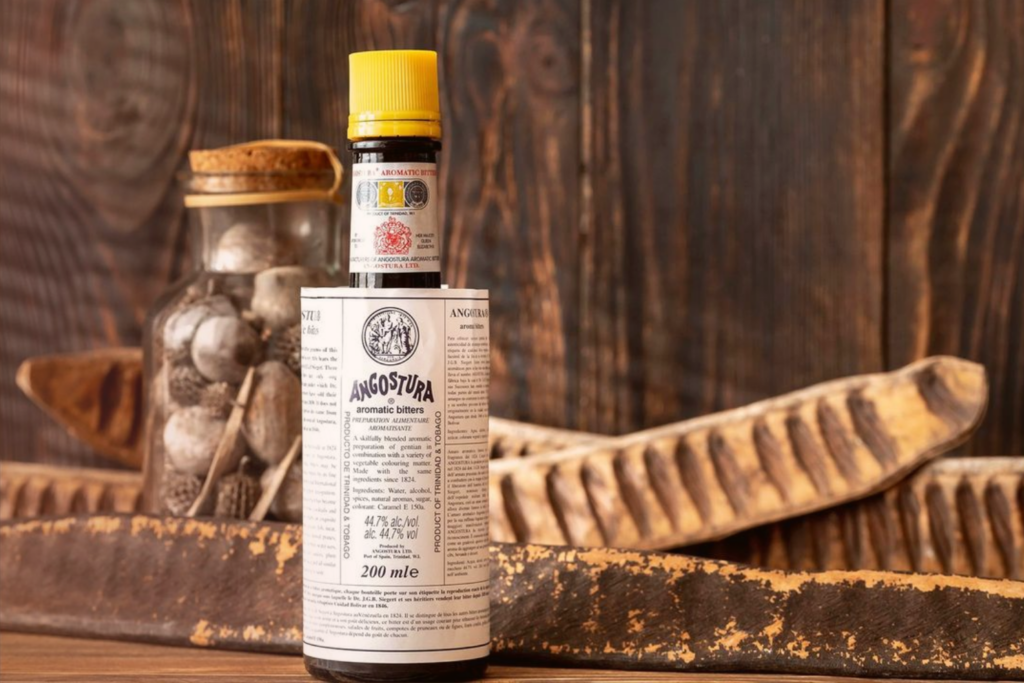
Set a bottle of Angostura bitters beside almost anything else in a bar and it looks slightly misprinted. The label is too large for the glass, the type is densely packed, and the yellow cap seems almost defiantly plain. Nothing about it follows the quiet visual order usually expected of a product that has survived for two centuries.
The story behind that bottle began in 1824 in Angostura, a Venezuelan river town now called Ciudad Bolívar. There, the German physician Johann Gottlieb Benjamin Siegert developed a concentrated botanical preparation while working in the military medical system connected with Simón Bolívar’s independence movement.
Its first identity belonged to medicine. It’s lasting one would be made elsewhere. As the bitters travelled through shipping routes and export markets, their concentrated aroma found a place beyond the pharmacy. By the late 1800s, bartenders were working with a product whose character could remain distinct even when used in a very small quantity. A preparation born beside the Orinoco River became part of the working language of the modern cocktail.
Angostura Bitter: A Physician on the Orinoco
Siegert worked in Angostura during a period of political upheaval and military conflict across northern South America. The town occupied an important position on the Orinoco, where the river narrowed before continuing towards the Atlantic. That geography gave the settlement its name. Angostura is derived from a Spanish word for a narrowing or constricted passage.
Like many physicians of his time, Siegert worked within a medical culture where herbal preparations, pharmacy, distillation, and household remedies often crossed into one another. Botanical tonics were commonly associated with appetite and digestion, although such claims belonged to medical standards very different from those used today.
In 1824, he completed the preparation that became known as Amargo Aromático. It was concentrated, bitter, and aromatic, with enough stability to be stored and transported. Its early reputation grew through use rather than modern clinical evidence. What ultimately secured its future was not the medical claim attached to it, but the unusual intensity and consistency of the liquid itself.
Angostura Bitter: The Town, Not the Bark
The name Angostura has confused much of the product’s history. Angostura bark was a recognised material in the medicinal trade of the 1800s, and several preparations were made from it. It is therefore easy to assume that Angostura aromatic bitters took its name from the bark or relied on it as a defining ingredient.
The bitters were named after the town where Siegert developed them, and the formula does not contain angostura bark. That distinction became increasingly important once rival manufacturers began using the same geographical word for other products, some of which did contain the bark. The original bitters drew their identity from the Siegert family, the town of origin, the guarded formula, and the reputation built around the bottle. No single botanical defined them publicly.
Gentian is identified among the ingredients, but the complete combination of herbs and spices has never been disclosed. Proposed formulas have circulated for generations, though most amount to educated guesswork rather than confirmed production information.
A Family Business Goes Abroad
The bitters gradually moved beyond their local setting. By the middle of the 1800s, they were reaching overseas markets through the river and maritime trade that connected Angostura with the Caribbean, Europe, and North America. Siegert developed a commercial operation around the formula, and his family later continued the business as J.G.B. Siegert & Sons. The company grew at a time when international exhibitions could transform a regional product into a recognised export product.
These exhibitions were not merely public displays. They brought together medicines, foods, machinery, manufactured goods, and agricultural products before merchants, officials, and potential distributors. In 1873, the bitters received recognition at the international exhibition in Vienna. The medal, together with an image of Emperor Franz Joseph I, later became part of the visual material crowded onto the bottle’s label. The award gave the company something more durable than publicity. It provided evidence of international recognition at a time when imitation was becoming a serious commercial problem.
Angostura Bitter Expansion: From Venezuela to Trinidad
Johann Siegert died in 1870. His sons continued the business and transferred production to Port of Spain in Trinidad in 1875. The move created the product’s unusual geographical identity. Its formula had been developed in Venezuela, its name belonged to a former name of Ciudad Bolívar, and its lasting production home became Trinidad and Tobago.
The family retained the name because it had already become valuable. By then, Angostura no longer meant only a place on a map. For buyers in export markets, it increasingly referred to one particular bottle and one particular family formula. The company later developed into the House of Angostura, broadening its operations into rum and other products. Yet the aromatic bitters remained its clearest international signature. The Venezuelan origin was not erased by the move. It travelled with the name, while Trinidad supplied the industrial and commercial base from which the product continued to expand.
The Label That Refused to Fit
The oversized label has become almost as familiar as the liquid. According to a long-repeated company story, members of the Siegert family divided responsibility for preparing the bottle for an exhibition. One arranged the glass while another ordered the label. When the two arrived, the measurements did not match.
The family supposedly used them anyway. It is a good story, but not a firmly documented one. It belongs to company lore, and the precise circumstances behind the design have never been conclusively established. The label’s commercial effect is easier to prove. It makes the bottle immediately visible, gives it a silhouette unlike competing bitters, and carries a dense record of awards, text, borders, signatures, and claims.
What looks like disorder is carefully preserved recognition. Changing the label to fit the bottle would now make the product less familiar, not more polished. The supposed mistake became part of the identity.
Fighting for the Angostura Name
International success brought imitation. Competing manufacturers produced their own aromatic bitters, sometimes using the word Angostura because it was a geographical name and sometimes because angostura bark appeared in their formulas. The Siegert family argued that customers had come to associate the name with their product.
A series of legal disputes followed during the 1870s. The best known was Siegert v Findlater, decided in Britain in 1878. The case helped establish that a name could gain protection through public association and commercial reputation, even when the word had begun as a geographical term.
The dispute belongs to the early history of modern trade marks. It shows how a product could become larger than the place from which its name had been taken. The family could not remove Angostura from geography, but it could defend the commercial meaning built around Siegert’s bitters. Packaging, reputation, awards, and formula secrecy all became parts of that defence.
How Bitters Entered Cocktail Culture
Bitters were already part of mixed drink culture before Angostura became an international brand. Early definitions of the cocktail brought together spirit, sugar, water, and bitters, giving the category a structure in which concentrated botanical preparations played an essential role. Commercial bitters offered something a bar’s own mixture might not. They arrived with a recognisable flavour and a degree of consistency from one bottle to the next.
Angostura aromatic bitters became associated with drinks including the Pink Gin, Manhattan, Old Fashioned, and Champagne Cocktail. These belonged to different places and traditions, but the bitters performed a similar task within each. They supplied aroma, bitterness, and spice without displacing the principal ingredients. Their value came from definition rather than volume.
This adaptability helped the product cross borders. It could appear in British naval drinking culture, American whiskey cocktails, European hotel bars, and Caribbean traditions without belonging exclusively to any one of them. The bottle became familiar because it was useful in several different systems at once.
The Formula Behind the Secrecy
The complete formula remains confidential. The public information is deliberately limited. Gentian is acknowledged, while the remaining botanical composition, proportions, and processing details are protected within the company. Recent accounts of production describe a tightly controlled system in which only a small authorised group handles the secret mixture. Even within the factory, access to that part of the process is restricted.
A list of ingredients would not reveal everything. Botanical materials differ according to climate, source, harvest, storage, and age. Grinding, extraction, blending, resting, and filtration also affect the finished product. The secret is therefore not simply a written recipe locked away somewhere. It is a body of production knowledge. That distinction helps explain why imitation has remained difficult. Identifying a few likely spices would not recreate the way the original is made.
A Bottle That Survived the Breaks in Bar History
Many ingredients found in cocktail manuals of the 1800s disappeared during the following century. Companies closed. Recipes changed. American Prohibition disrupted production and distribution. Traditional hotel bars lost influence, and numerous liqueurs, bitters, and spirit styles became difficult to find. Angostura aromatic bitters remained in production.
Its survival owed much to its range. It was not tied to one fashionable drink or one category of spirit. It continued to appear in different markets and different forms of bar service, even when wider cocktail culture was in decline. When bartenders and historians returned to old manuals during the late 1990s and early 2000s, they often had to search for replacements for vanished products. Some ingredients were recreated from historical descriptions. Others returned under new owners and revised formulas.
Angostura required no reconstruction. It had remained part of the working bar. That continuity is more important than the mystery built around the label. The product is not a modern interpretation of something lost. It is one of the surviving links to the period when the cocktail acquired its recognised form.
Angostura aromatic bitters began as a botanical preparation made by a German physician in a Venezuelan river town. It became a family export, moved to Trinidad, survived legal disputes, and entered cocktail culture without abandoning the name of its birthplace. Its history belongs to more than one country and more than one profession. Medicine provided the original setting. Maritime trade carried it abroad. International exhibitions strengthened their reputation. Bartenders gave it a new purpose.
The label still hangs beyond the edges of the bottle, and the formula remains guarded in Port of Spain. The name of an old Venezuelan town continues to travel through modern bar culture. That continuity, rather than any single legend, is what makes the bottle remarkable.

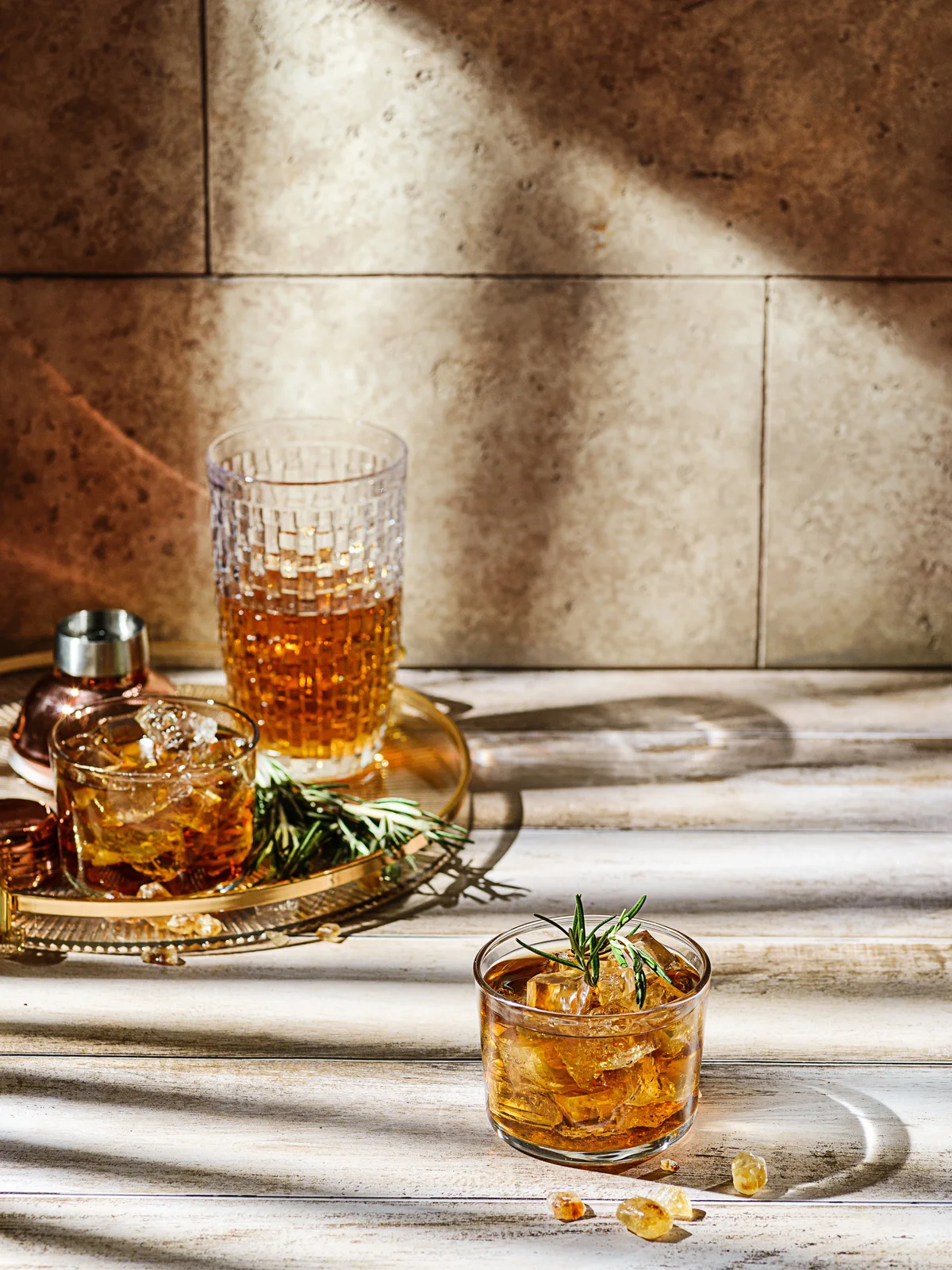
Cocktail
The Manhattan is one of the most distinguished and enduring cocktails in history, often placed alongside the Martini…
Cocktail
The Champagne Cocktail is a timeless and elegant drink that showcases the effervescence, crispness, and refined flavors of…
Cocktail
The Pink Gin is one of the simplest and most elegant cocktails in existence, a drink that owes…
Cocktail
The Old Fashioned is widely regarded as the original cocktail, a simple yet profound combination that has endured…
Spirit
Angostura 1919 Premium Caribbean Rum
Angostura 1919 Premium Caribbean Rum is a distinguished spirit that exemplifies the rich tradition and skill of Caribbean…
Spirit
Angostura 1919 Caribbean Rum is a premium rum that epitomizes the rich heritage of Trinidadian rum-making traditions. This…
Spirit
Angostura 1787 15 YO Caribbean Rum
Angostura 15 Year Old Rum is a distinguished spirit that embodies the rich heritage and craftsmanship of Angostura,…
Spirit
Angostura 17 YO Single Cask Trinidad & Tobago Caribbean Rum
Angostura 17 YO Single Cask Trinidad & Tobago Caribbean Rum is an extraordinary expression that showcases the artistry…
Spirit
Angostura 1824 Hand Casked Premium 12 YO Rum
Angostura 1824 Hand Casked Premium 12 YO Rum represents the pinnacle of rum craftsmanship, blending tradition and innovation…
Partnership
Dilution and the Hidden Structure of the Cocktail
Dilution begins as soon as ice and liquid exchange heat, but its importance extends far beyond the simple addition of water. It changes alcoholic strength, temperature, aroma, sweetness, bitterness and texture, helping separate ingredients become a coherent drink. Because the process is usually invisible, it can be mistaken for a side effect of chilling. In […]
August 4, 2026
Partnership
Craft and the Discipline Behind Modern Bartending
Craft in bartending is sometimes presented as a recent movement, but the habits it describes are much older than the modern language surrounding them. Careful preparation, command of tools, responsible handling of ingredients and consistency during service have long distinguished serious bar work. Craft is therefore best understood not as a fashion or visual style, […]
July 21, 2026
Partnership
Balance and the Structural Language of the Cocktail
Balance is one of the central ideas in bartending, yet it is rarely experienced as a single flavour or technique. It is recognised through the way a drink holds together: strength does not suppress aroma, sweetness does not obscure acidity, bitterness remains purposeful, and water gives the ingredients room to unfold. For the bartender, balance […]
July 7, 2026