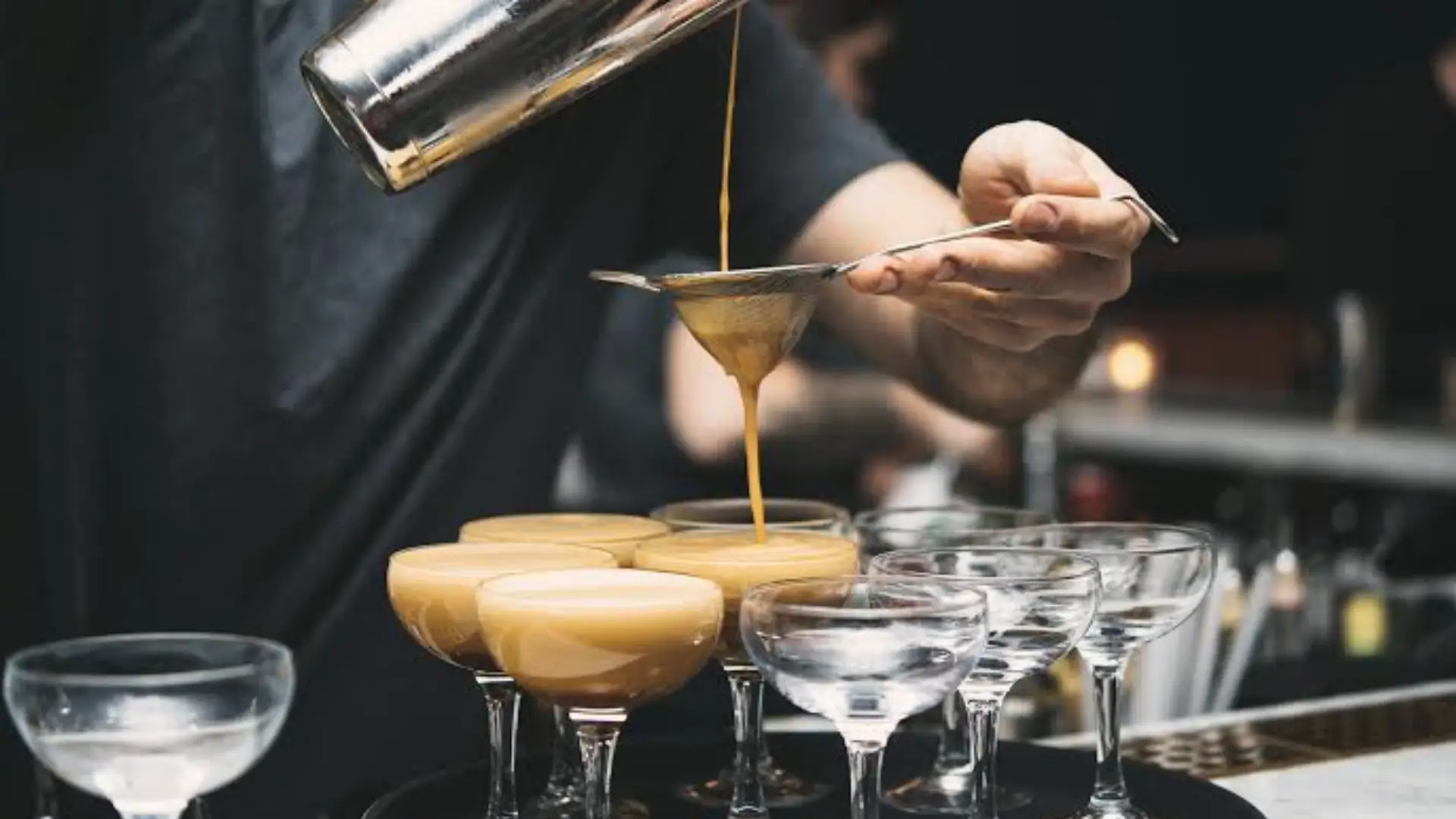
Despite its name, the Espresso Martini does not belong to the Martini family. It contains no vermouth and shares none of the structural logic associated with classic stirred cocktails. Its identity is instead rooted in the late 20th-century shift toward ingredient-driven mixing, where fresh components and immediate preparation replaced pre-batched simplicity.
The drink initially appeared under different names, including the “Vodka Espresso,” reflecting its straightforward composition. Its eventual naming aligns more with presentation than lineage, served in a stemmed glass with a polished surface and crema-like foam.
This distinction is important. The Espresso Martini represents a moment when cocktail naming moved beyond strict classification, embracing form, perception, and cultural context as defining elements.
A Cocktail Defined by Context Rather Than Category
A request in a Soho bar in the mid-1980s has since become one of the most cited origin stories in modern cocktail culture. In accounts associated with Dick Bradsell’s London work, a guest asked for a drink that would both stimulate and intoxicate. The response drew on what was close at hand: coffee, vodka, sugar, and coffee liqueur, combined into a cocktail that would ultimately redefine how coffee functions behind the bar.
What began as a practical solution evolved into a global standard. The Espresso Martini is not simply a flavoured cocktail. It is a study in bitterness, texture, and controlled energy, where caffeine and alcohol are balanced through technique rather than excess.
Coffee as Structure, Not Flavour
The defining characteristic of the Espresso Martini is its use of freshly brewed espresso rather than coffee flavouring alone. Espresso contributes bitterness, acidity, oils, and dissolved solids, creating a complex base that interacts dynamically with alcohol and sugar.
Coffee brands such as Illy and Lavazza illustrate how roast profile, consistency, and extraction style can alter the drink’s outcome, though the specific coffee choice remains only one part of the structure.
The role of coffee here extends beyond taste. It defines texture. When shaken with ice, espresso can produce a stable foam, similar to crema, which sits on the surface of the drink. This foam is not decorative. It is a textural layer that carries aroma and signals correct execution.
Vodka and the Question of Neutrality
Vodka serves as the structural backbone of the Espresso Martini, yet its neutrality is often misunderstood. While designed to be clean and unobtrusive, different vodkas introduce subtle variations in mouthfeel and finish.
Expressions such as Ketel One Vodka, associated with the Nolet Distillery in Schiedam, can provide a slightly richer texture. In contrast, Absolut Vodka, produced in Åhus, Sweden, offers a cleaner, more linear profile.
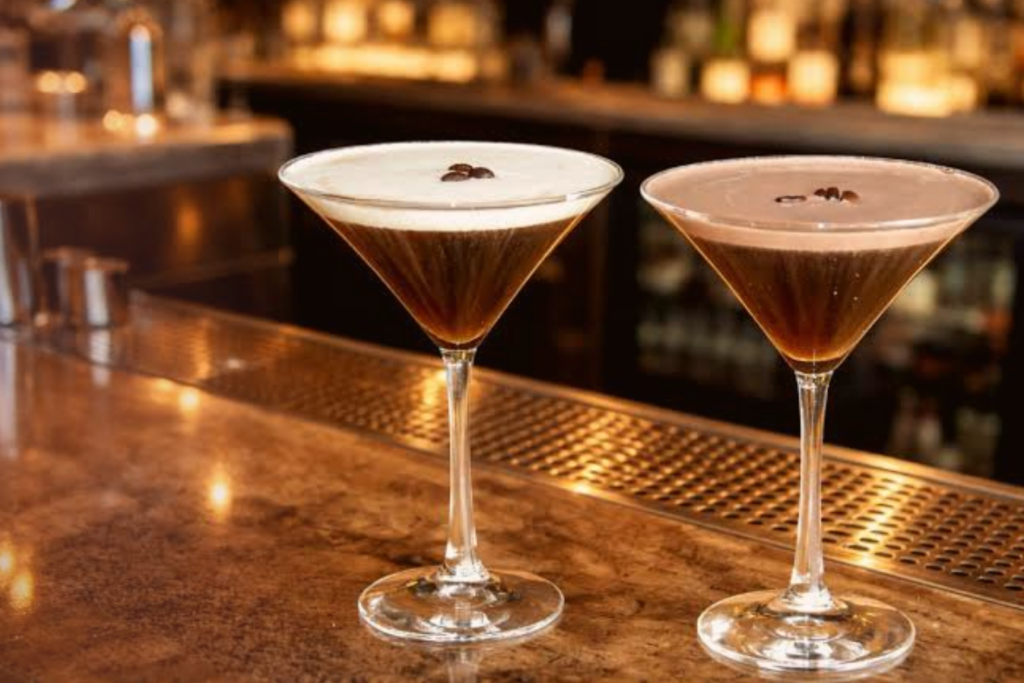
These differences matter. In a cocktail where bitterness and sweetness are tightly calibrated, even minor shifts in spirit texture can influence the overall balance. Vodka, in this context, is not invisible. It is a framework that supports and shapes the drink’s structure.
Coffee Liqueur and Controlled Sweetness
Coffee liqueur introduces both sweetness and depth, acting as a bridge between espresso and vodka. Kahlúa, originally produced in Mexico in 1936, remains one of the most widely recognised expressions, offering notes of roasted coffee, vanilla, and caramel.
The interaction between liqueur and sugar is critical. Too much sweetness flattens the drink, masking its bitterness and reducing complexity. Too little leaves the espresso dominant and unbalanced. The goal is not sweetness itself, but calibrated contrast, where bitterness remains present yet integrated.
The Mechanics of Foam and Temperature
One of the most technically revealing aspects of the Espresso Martini is its foam. Achieving a stable, fine layer depends on freshly prepared coffee, proper shaking technique, and controlled dilution. Compounds in the coffee interact with air during shaking, creating a surface that can hold briefly above the drink.
Temperature plays an equally important role. Fresh espresso brings aromatic intensity, but excessive heat can affect dilution and texture during preparation. This balance is often overlooked, yet it defines the difference between a flat drink and one with clarity, texture, and visual precision.
The three coffee beans traditionally placed on top are often described as a garnish symbolising health, wealth, and happiness. While largely symbolic, they also reinforce the drink’s identity as a coffee-led cocktail.
From Soho to Global Standard
Following its emergence from Dick Bradsell’s London bar work, the Espresso Martini spread through London and into international bars, becoming one of the defining drinks of the modern cocktail revival.
Its continued presence reflects its adaptability. The drink can be executed traditionally or reinterpreted through modern systems, yet its core remains intact: coffee, vodka, sweetness, temperature, and texture working within a tightly controlled frame.
This is where its modern relevance becomes clear. The Espresso Martini does not depend on a single contemporary bar interpretation to prove its value. Its importance lies in how widely the structure has been adopted, refined, and recognised across different styles of service.
Energy, Culture, and Modern Relevance
The Espresso Martini occupies a unique position within cocktail culture. It is both a stimulant and a social drink, often associated with late-night consumption and transitions between dining and nightlife.
This duality has contributed to its resurgence in recent years, particularly as bars explore drinks that combine function with experience. Unlike purely spirit-forward cocktails, it offers a sensory and physiological dimension, linking flavour with energy.
Less discussed, however, is the balance required to keep this effect controlled. The interaction between coffee bitterness, sweetness, alcohol, and texture must remain measured rather than excessive.
Details That Continue to Define the Drink
The Espresso Martini is often simplified in casual settings, yet its execution remains demanding. Fresh espresso, precise balance, and proper shaking are central to achieving its intended profile.
Another overlooked detail is dilution. Because the drink is shaken with force, it requires careful control to avoid over-watering, which can flatten both texture and flavour. The goal is a tight, integrated structure, where each component is clearly expressed.
Even its name, now globally recognised, reflects a moment when cocktail culture began to embrace narrative and identity alongside technique. It is not a Martini in structure, but it carries the visual and cultural cues of one, bridging tradition and modernity.

Renowned international hospitality consultant, founder of Barpartners, and IBA Vice President of Classic Mixology, bringing over 25 years of luxury hotel bar operations.

In partnership with International Bartenders Association
The International Bartenders’ Association stands at the crossroads of exchange between new and established generations of professionals.

Bar
On London’s Old Street, in the vibrant heart of Shoreditch, a glass-fronted space draws in the curious —…
Bar
In the heart of Mayfair, behind the storied façade of The Connaught Hotel, stands the Connaught Bar —…

Cocktail
The Amaretto Tea is a warm, comforting cocktail that elegantly combines the nutty sweetness of amaretto with the…
Cocktail
The Martini is perhaps the most iconic cocktail in the world, a symbol of elegance, sophistication, and modernity.…
Cocktail
The Espresso Martini is a modern classic that combines the rich, bold flavor of freshly brewed espresso with…
Distillery
Nestled in the charming municipality of Schiedam, Netherlands, the Nolet Distillery stands as an emblem of heritage and…
Spirit
Absolut Vodka is a distinguished Swedish vodka produced in Åhus, a town in southern Sweden that has a…
Spirit
Vermouth Del Professore Caroni Cask Finish Edition Rum
Vermouth Del Professore Caroni Cask Finish Edition Rum is an artisan vermouth produced by Antica Distilleria Quaglia in…
Bars and Cocktails
Hospitality and Cocktail Culture: The Foundation of Bartending
A well-made cocktail may earn attention, but hospitality determines the meaning of the exchange. It begins before an order is taken, in the way a guest is acknowledged, understood and given a place within the room. Bartending becomes hospitality when technical skill is directed towards another person rather than displayed for its own sake. Service […]
September 29, 2026
Partnership
Illegal Cocktail: The Mezcal Cocktail That Reframes the Daiquiri Structure
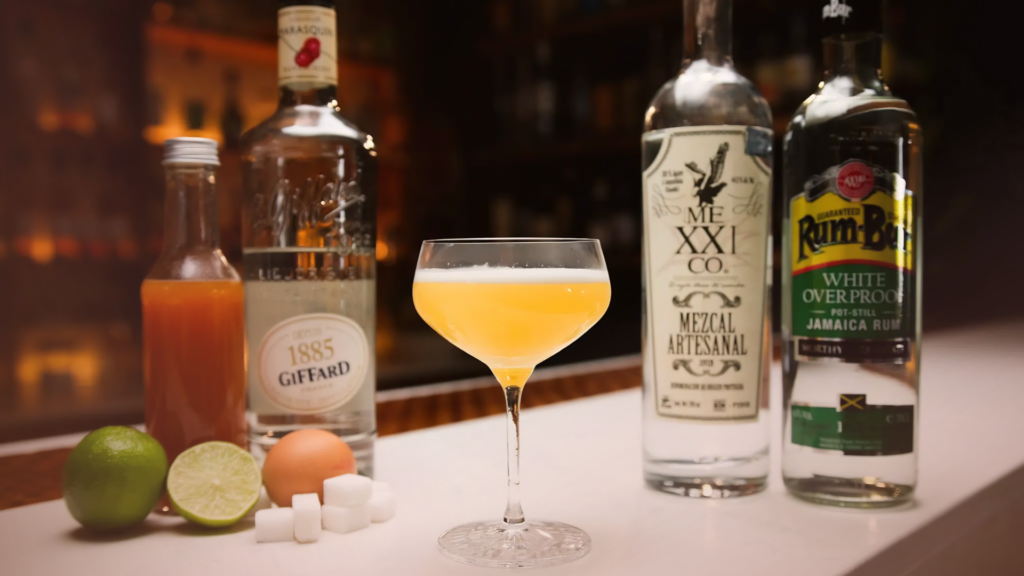
The Illegal cocktail follows a familiar outline, but the result is distinctly different. Built around mezcal, lime, falernum, maraschino, simple syrup, and a measure of Jamaican overproof rum, it takes the logic of a sour and shifts it into a drier, more aromatic profile. The drink is credited to Italian bartender Samuele Ambrosi, with its […]
September 24, 2026
Partnership
IBA Tiki: Codifying Tropical Structure Within Modern Cocktail Standards
Tiki has never been a single drink, but in this case the name points to one specific modern cocktail. The IBA Tiki is not a broad label for tropical classics such as the Mai Tai or the Zombie. It is a defined drink connected to the International Bartenders Association, Cuban bartending culture, and a recent […]
September 17, 2026