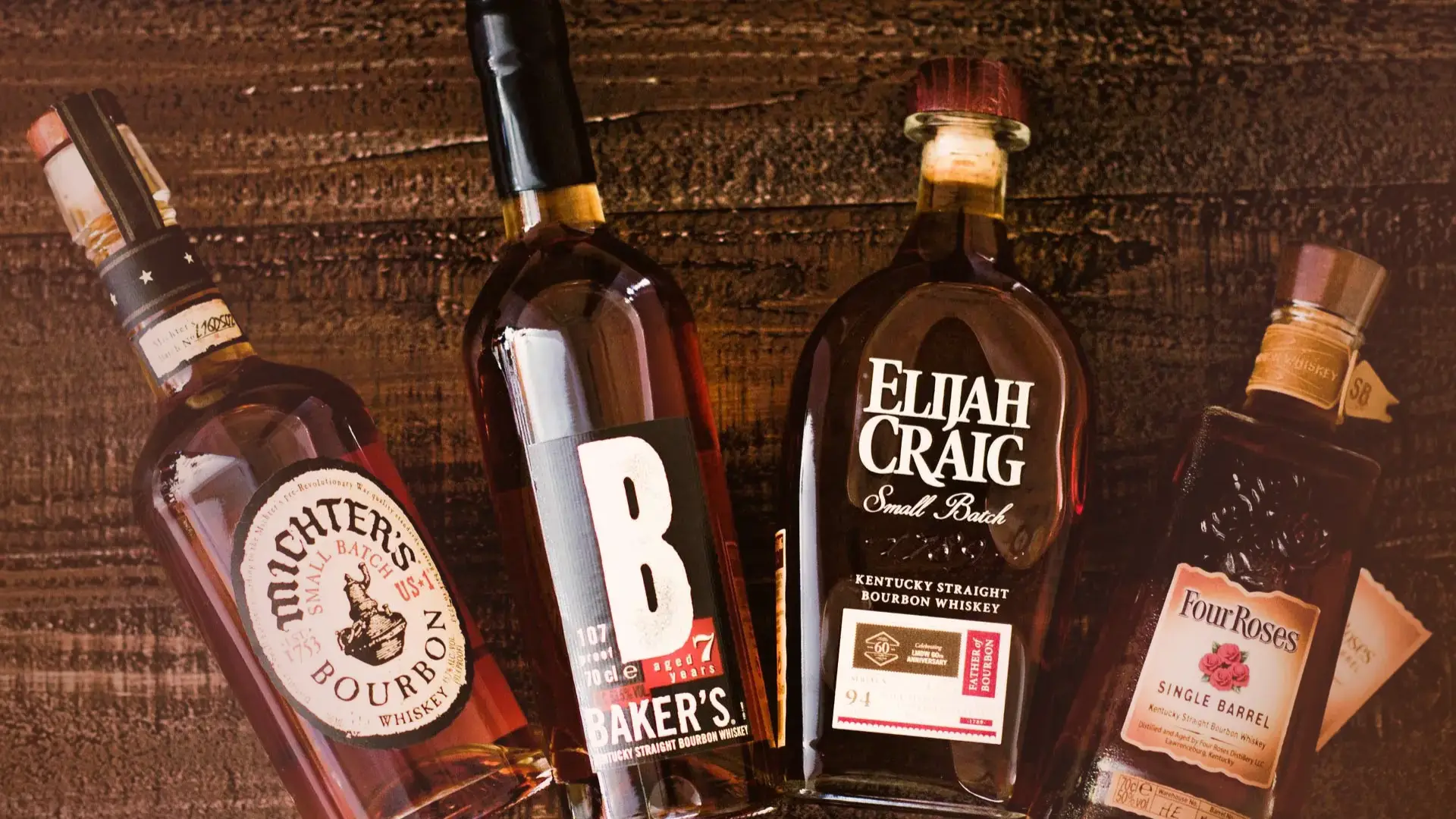
Bourbon did not begin as a luxury category like other American Whiskey. It began with grain, settlement, transport, and the need to turn agricultural surplus into something stable enough to move and sell. In early American farming regions, corn was abundant, bulky, and perishable. Whiskey gave it value beyond the field.
Over time, that practical rural spirit became one of the most legally defined categories in American drink culture. Bourbon is often associated with Kentucky, and Kentucky remains central to its history and production identity, but the legal category is broader than one state. Bourbon is a national production standard of the United States, not a geographical indication and not an appellation in the European sense.
Its identity is created through law rather than a protected regional boundary. The system defines where it must be made, what grain must dominate the mash, how strong it may be distilled, what kind of wood it must enter, and how it may be labelled. Bourbon became protected not by limiting itself to a small territory, but by turning a style of American whiskey into a regulated national category.
Corn, Frontier Farming, and a Spirit of Practicality
The early history of Bourbon belongs to American grain agriculture. Corn grew well in many parts of the young United States, especially in regions where settlers needed a crop that could feed households, livestock, and local trade. Distilling was one way to concentrate that crop into a product with higher value and easier transport.
Kentucky became especially important because of its farming conditions, river access, and early whiskey culture. The Ohio River and Mississippi River systems helped move whiskey from inland farms toward wider markets. Barrels did not only store whiskey. They helped carry it.
The name is historically linked to Bourbon County and the broader old Bourbon region of Kentucky, although the modern legal category is not restricted to that county or even to Kentucky. This distinction matters. Bourbon has a powerful regional mythology, but its legal identity belongs to the United States as a whole.
By the nineteenth century, American whiskey was already tied to questions of tax, trade, authenticity, and public trust. The Whiskey Rebellion of the 1790s showed how deeply distilled spirits were connected to federal authority and rural economics. Later, fraud and inconsistent quality pushed American whiskey toward stronger legal controls.
A Category Shaped by Consumer Protection
Before modern labelling standards, whiskey could be altered, blended, coloured, or sold with claims that were difficult for consumers to verify. This problem helped shape one of the most important American whiskey laws, the Bottled in Bond Act of 1897.
Bottled in Bond was not created only for it, but it became deeply connected to American whiskey culture. The designation established a system of trust around origin, production season, ageing, and bottling strength. A bonded whiskey must come from one distilling season, one distiller, and one distillery, then age for at least four years and be bottled at 100 proof.
This law showed a key idea that later became central to Bourbon. American whiskey identity was not only about flavour. It was also about verifiable production. The federal government became part of how consumers understood authenticity.
It’s later legal recognition followed the same logic. It turned a familiar whiskey style into a controlled category with defined production limits.
The United States as Legal Territory
Bourbon is sometimes described casually as Kentucky whiskey, but the law says something more precise. Bourbon must be distilled and aged in the United States. It may be produced in Kentucky, Tennessee, New York, Texas, California, or any other U.S. state where distillation is legally permitted.
This makes it different from a European appellation. Cognac must come from the Cognac region. Scotch Whisky must be made in Scotland. Bourbon must come from the United States, but its legal geography is national rather than regional.
In 1964, the U.S. Congress recognised Bourbon as a distinctive product of the United States. That recognition gave Bourbon a form of national identity in trade and labelling terms. It did not create a Kentucky-only designation. It reinforced Bourbon as an American product protected from foreign imitation.
This national status is one of the most important points in understanding Bourbon correctly. It is a legally defined American whiskey category. It is not a GI and not an appellation tied to one delimited local territory.
The Mash Bill as Legal Identity
The first technical rule of Bourbon is agricultural. The fermented mash must contain at least 51 per cent corn. That threshold is what separates Bourbon from rye whiskey, wheat whiskey, malt whiskey, and other American grain whiskey types.
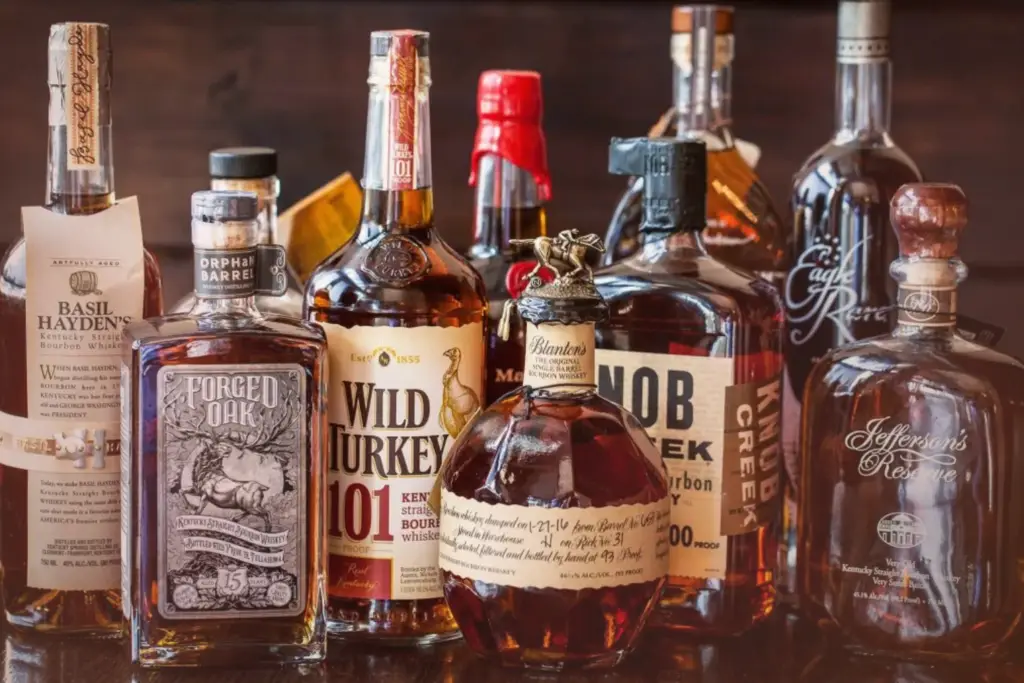
Corn gives Bourbon its legal foundation, but most Bourbon is not made from corn alone. Producers commonly use rye, wheat, and malted barley as supporting grains. Rye can add spice and structure. Wheat may create a softer profile. Malted barley often supports fermentation through its enzymes.
The law does not require one fixed recipe beyond the corn minimum. This leaves room for regional and producer identity while keeping the category anchored in corn. Bourbon therefore combines legal clarity with stylistic flexibility.
The 51 per cent rule is not only a recipe point. It reflects the agricultural history of the spirit. It became Bourbon because corn shaped the American whiskey landscape.
Strength Limits and the Preservation of Character
Bourbon law controls how strong the spirit may be distilled. It cannot be distilled above 80 per cent alcohol by volume, or 160 proof. This limit matters because distillation strength affects how much grain character remains in the new spirit.
A spirit distilled to very high strength becomes more neutral. It is not supposed to be neutral. It must retain the taste, aroma, and character of whiskey. The legal ceiling helps preserve that identity.
The law also controls barrel entry strength. Bourbon must enter new charred oak at no more than 62.5 per cent alcohol by volume, or 125 proof. This rule affects extraction from wood, maturation, texture, and balance.
Unlike Cognac, Bourbon is not legally tied to one traditional still type. Many producers use column stills, often with a doubler or thumper, while others may use pot stills. The law focuses on the result and the limits rather than prescribing one single distillation apparatus.
New Charred Oak and the American Barrel Economy
One of Bourbon’s defining rules is its required use of new charred oak containers. This requirement has shaped not only flavour, but the economics of American whiskey and the global spirits trade.
Because Bourbon barrels are used only once for production, they often find later lives in the maturation of Scotch Whisky, Irish Whiskey, rum, tequila, mezcal, beer, and other drinks. The Bourbon rule therefore extends beyond the United States. It influences cask supply across the world.
Charring transforms the inside of the barrel. The heat changes the wood surface, creating layers that interact with the spirit during maturation. The result can include colour, sweetness, spice, vanilla, toasted notes, and structure. These sensory details are not added from flavouring. They come from the interaction between whiskey, oak, time, and climate.
The law also matters here because Bourbon whisky cannot use colouring or flavouring materials to create its identity. The barrel is not decorative. It is the central legal and sensory instrument of maturation.
Ageing Without a Fixed Minimum
Bourbon must be stored in new charred oak, but standard Bourbon does not have a fixed minimum ageing period under the basic category rule. This can surprise readers because many well-known bourbons age for several years.
The stricter term is Straight Bourbon Whiskey. Straight Bourbon must be aged for at least two years in new charred oak. If a straight whiskey is young, labelling rules may require clearer age information, but the core distinction remains simple. It defines the category. Straight Bourbon adds a minimum age standard.
The broader whiskey class also requires bottling at a minimum of 40 per cent alcohol by volume, or 80 proof. Many Bourbons are bottled above that strength, but the legal floor protects the category from being diluted below the standard identity of whiskey.
These rules show how Bourbon law works. It does not impose one flavour profile. It sets boundaries for raw material, origin, distillation strength, barrel entry, wood type, additives, and bottling strength.
Kentucky as Cultural Centre, Not Legal Boundary: American Whiskey
Kentucky’s importance cannot be removed from Bourbon’s story. The state holds a historic concentration of distilleries, warehouses, brands, and technical knowledge. Its climate, limestone-rich water sources, corn agriculture, and river trade all contributed to Bourbon’s development.
Yet Kentucky should not be confused with the legal boundary of Bourbon itself. A whiskey may be Bourbon if it is made in the United States and follows the federal rules. A label such as Kentucky Bourbon carries a more specific geographic claim because the whiskey must be distilled and aged in Kentucky.
This distinction helps avoid one of the most common misunderstandings in spirits writing. Kentucky is the cultural and historical heartland of Bourbon. The United States is the legal territory.
The difference is important for an appellation project because Bourbon is not protected in the same way as Cognac, Calvados, or Tequila. Its system is national, federal, and category-based.
A National Standard With Regional Memory
Bourbon became legally important because it solved several problems at once. It protected a name. It clarified a production method. It gave consumers a reliable category. It allowed American whiskey to carry a clear identity in domestic and international markets.
The system is distinctive because it protects production rules rather than one small landscape. It does not erase place. Kentucky, Tennessee, and other states still shape how Bourbon is made and understood. But the legal identity of Bourbon rests on national standards.
That balance is what makes the whisky such an important case in the study of protected spirit systems. It shows that legal identity does not always require a European-style appellation. Sometimes it is built through federal definitions, trade recognition, and technical rules that turn a rural agricultural whiskey into a national category.
Bourbon’s protected meaning comes from corn, oak, law, and repetition. It is American not only because of where it is made, but because its rules reflect the agricultural history, commercial conflicts, and regulatory habits of the United States.

Renowned freelance spirits consultant, award-winning author, and international spirits judge, recognized globally as a leading authority on spirits selection, historical distillates, and market innovation.


Distillery
Bourbon Distilled is a modern craft distillery located in the vibrant heart of Colorado Springs, Colorado, renowned for…

Spirit
Kentucky Grit Corn Whiskey is crafted with a dedication to traditional whiskey-making principles, utilizing locally sourced grains from…

Spirit
Bourbon Barrel Aged Four Peel Gin
Bourbon Barrel Aged Four Peel Gin is a remarkable artisanal spirit that stands out in the crowded world…
Spirit
Bourbon Barreled Big London Dry Gin
Bourbon Barreled Big Gin is a distinct variant of Captive Spirits' flagship London dry-style gin that has taken…
Spirit
Bourbon Barrel Aged Kentucky Wild Gin
Bourbon Barrel Aged Kentucky Wild Gin from New Riff Distilling represents a unique intersection of traditional gin-making techniques…
Partnership

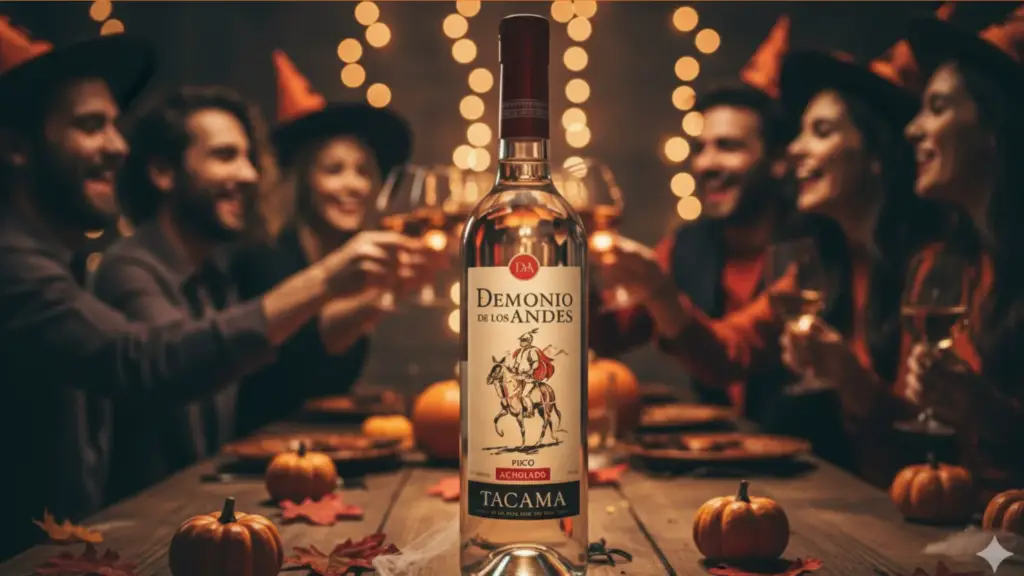
Pisco: A Spirit Claimed by Two Nations
Pisco is one of the few spirits whose identity is divided by national borders rather than defined by them. Both Peru and Chile claim pisco as a national spirit, each supported by legal frameworks, historical narratives, and active production. This dual claim is not a modern branding dispute. It is the outcome of colonial administration, […]
October 7, 2026
Partnership
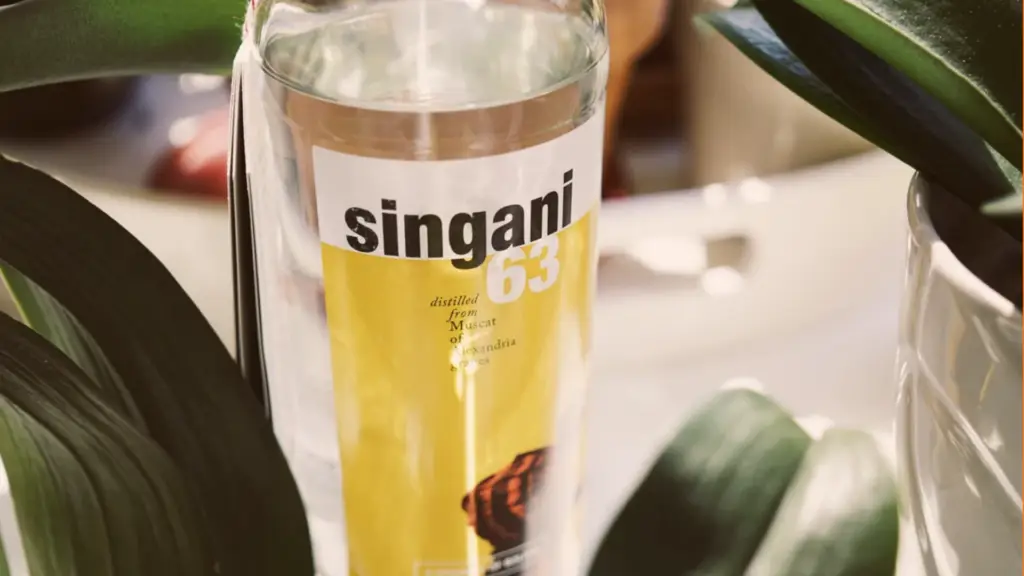
Singani: Bolivia’s High-Altitude Spirit and a Forgotten Andean Heritage
Singani is one of the least understood legally protected spirits in the world. Despite centuries of continuous production in Bolivia, it remains largely absent from global spirits discourse. This absence is not due to ambiguity or lack of definition. Singani is one of the most tightly structured grape distillates in existence, defined by altitude, grape […]
September 30, 2026
Partnership
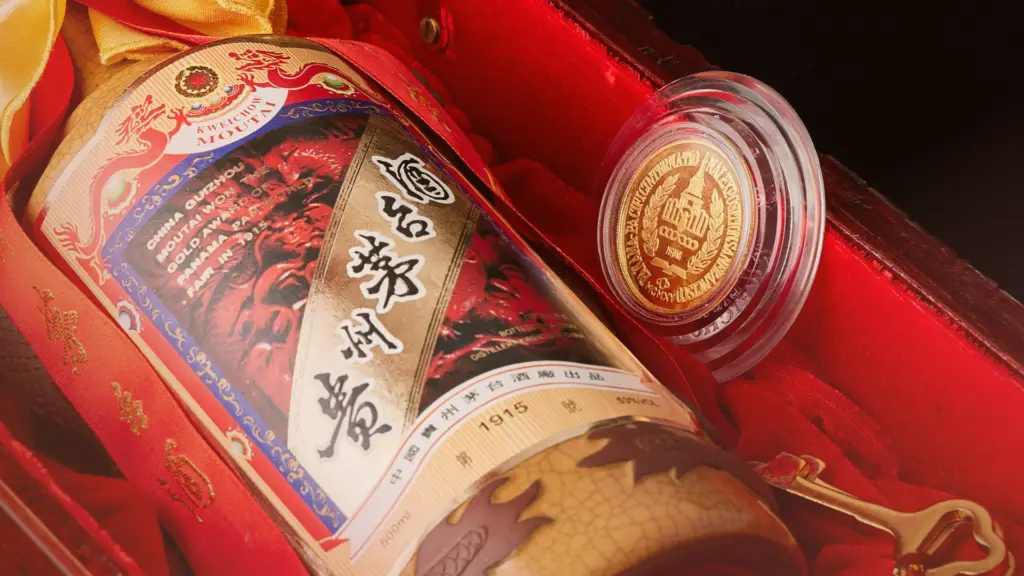
Kweichow Moutai: The Protected Origin of Sauce Aroma Baijiu
Moutai begins in a bend of the Chishui River, in a town where geography has been asked to explain taste for generations. The river, the valley heat, the purple-red soils, the surrounding hills, and the microbial life of Maotai Town are all part of the story people tell when they try to explain why this […]
September 27, 2026