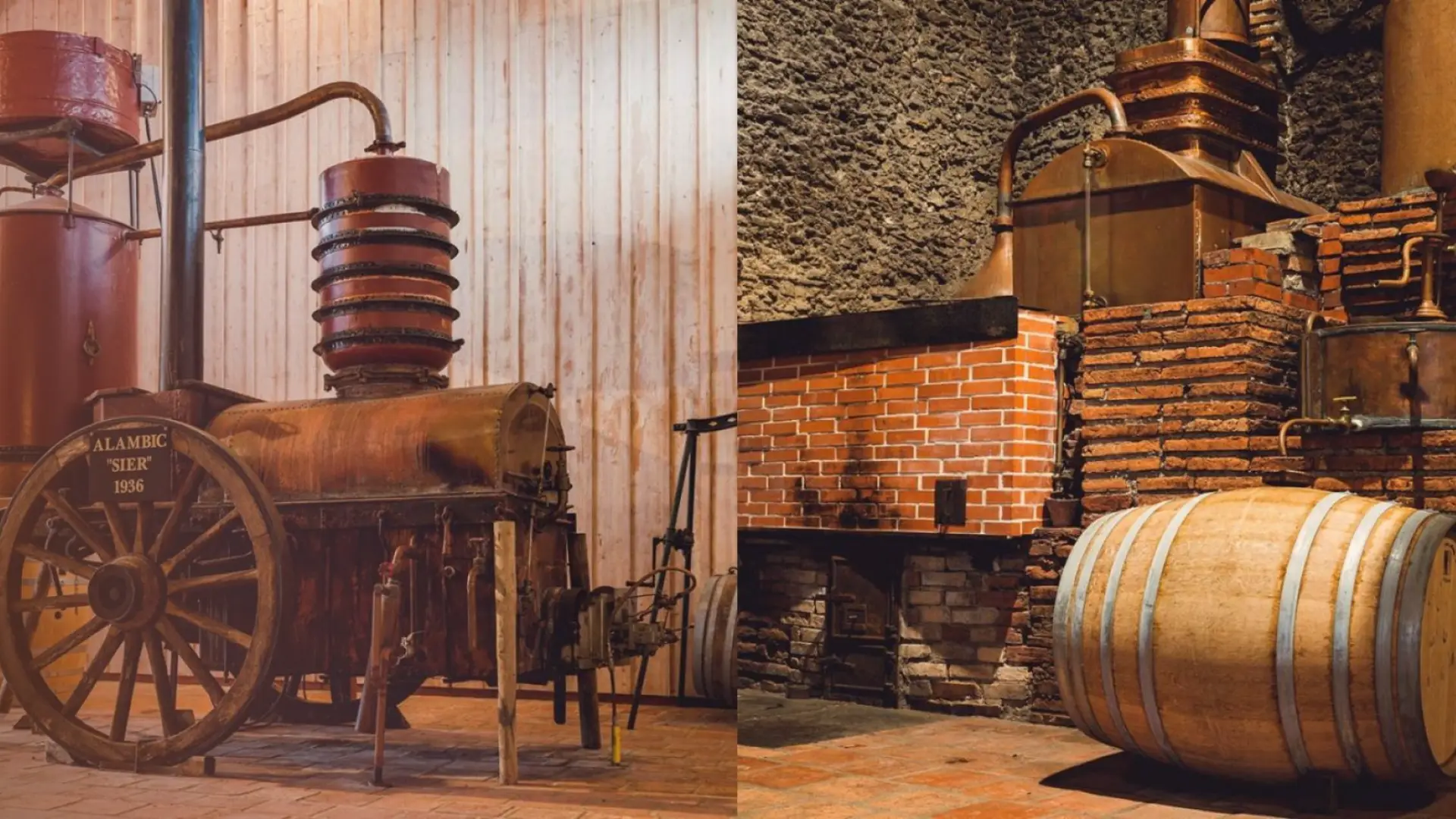
In Gascony, wine and distillation developed together long before Armagnac became a protected name. The region was rural, mixed, and agricultural, shaped by vines, forests, cereals, livestock, local markets, and routes that connected inland producers with wider trade. Distilling wine gave this landscape a durable product that could travel, age, and carry value beyond the harvest.
Armagnac became one of France’s oldest and most distinctive wine spirits because it grew from that environment. Its identity is not built only on age statements or old bottles. It comes from Gascon vineyards, white wines made for distillation, an Armagnac still, oak ageing, and a legal framework that protects the relationship between place and method.
Today, Armagnac is protected as an Appellation d’Origine Contrôlée. The system covers the name Armagnac and its recognised geographic expressions, including Bas Armagnac, Armagnac Ténarèze, and Haut Armagnac. It is a protected wine spirit shaped by a particular part of southwest France and by production rules that keep the name tied to Gascony.
A Wine Country Before a Spirit Name
The roots of Armagnac lie in the wine country of Gascony. Vines have been present in the region since ancient and medieval periods, and the landscape remained one of mixed agriculture rather than a single-crop monoculture. Vineyards sat beside woods, fields, farms, and villages.
Distillation became important because white wines from the area could be transformed into eau de vie. This gave growers and merchants a product that was easier to preserve and transport than fragile wine. By the fourteenth century, references to eaux de vie in Gascony had become part of the region’s written history.
Commercial development accelerated over time. Dutch merchants played a role in buying and moving distilled wine, while local markets in towns such as Mont de Marsan and Aire sur l’Adour became part of the early trade. Armagnac therefore developed through both local production and external demand.
The legal story arrived later. A decree in 1909 delimited the production area and identified the main regions of it. In 1936, another decree defined the Appellation d’Origine Contrôlée and its conditions of production. These dates matter because they show how a historic wine spirit became a legally organised production system.
Three Names Inside One Gascon Landscape
Armagnac is not a single uniform landscape. The appellation is commonly understood through three principal geographic expressions: Bas Armagnac, Armagnac Ténarèze, and Haut Armagnac.
Bas Armagnac lies in the western part of the region. It is associated with sandy and acidic soils, including the famous sables fauves, often translated as tawny sands. These soils are strongly connected with the reputation of delicate, fruity, and elegant eaux de vie.
Armagnac Ténarèze sits in the central part of the area. Its soils include clay-limestone formations and transitional land between the western and eastern influences of the region. Eaux de vie from this area are often described as more structured and capable of long maturation.
Haut Armagnac extends across the southern and eastern parts of the appellation. It is larger on the map than in actual vineyard concentration, with more scattered vines and limestone or clay-limestone hills.
These names do not function like brand families. They are geographic references within the protected system. They help explain how soil, climate, and local practice create different expressions inside the same appellation.
Grapes Chosen for Distillation
Armagnac begins with white wine, but not wine designed primarily for table drinking. The base wine must have the acidity and low alcohol profile needed for distillation.
The appellation authorises several grape varieties, but four have historically carried most of the production identity. Ugni blanc is widely used because it gives acidic, low alcohol wines that distil well. Folle blanche is the historic variety of Armagnac and is valued for fine, floral eaux de vie, although it became much rarer after phylloxera. Colombard contributes fruit and spice but is used less frequently for distillation than for local wine. Baco, also known historically as Baco 22A, is especially important because it is a hybrid variety created after phylloxera and remains closely associated with Armagnac.
Baco gives the category one of its most distinctive agricultural stories. Created by François Baco, a schoolteacher from the Landes, it became adapted to the sandy soils of Bas Armagnac and gained a place in the appellation despite the unusual status of hybrid varieties in French wine law.
The wider list of authorised varieties preserves older regional diversity, but the modern identity rests mainly on the interaction between Ugni blanc, Baco, Folle blanche, Colombard, and the soils of Gascony.
Wine Made for the Still
The wine used for Armagnac is not enriched or corrected into a polished table wine. Its purpose is distillation. The official production rules prohibit enrichment and sulphiting of the harvest, musts, and wines. The wines are distilled without coarse lees, but they must retain fine lees.
This is important because the base wine must remain suitable for the still. High acidity and low alcohol help preserve freshness before distillation. The absence of heavy intervention keeps the wine close to its agricultural and fermentation origin.
Distillation must be completed by March 31 of the year following the harvest. This seasonal deadline links the production calendar to the grape year. Armagnac is not made from anonymous stored alcohol. It comes from a harvest, a wine, and a winter distillation rhythm.
The legal system therefore controls the wine before it ever becomes spirit. The appellation begins in the vineyard and in the cellar where wine is prepared for transformation.
The Armagnac Still as Regional Signature
The most recognisable technical feature of Armagnac is the alambic armagnacais, a continuous still traditionally used in the region. Official rules allow distillation through Armagnac-type continuous stills as the principal method, while double distillation in a pot still system is permitted as an accessory type.
In practice, Armagnac is strongly associated with single continuous distillation in the Armagnac still. The still is made with essential copper parts and works in a way that preserves aromatic character from the wine. The spirit is not distilled to neutrality.
The official strength range for Armagnac eau de vie leaving the still is between 52 and 72.4 per cent alcohol by volume. This relatively moderate distillation range is central to the category because it allows the distillate to retain fruit, floral, wine, and textural elements that can develop through ageing.
The Armagnac still is therefore more than a piece of equipment. It is part of the region’s legal and sensory identity. It explains why Armagnac often carries a different structure from wine spirits made through other distillation traditions.
Oak, Cellars, and the First Year
Aged Armagnac must spend time in oak. The official rule requires at least one year in oak containers, counted from April 1 following the harvest, for Armagnac intended for direct human consumption.
This minimum is only the beginning. Many Armagnacs age much longer, developing colour, roundness, and aromas that may move from fresh fruit and flowers toward cooked fruit, spice, wood, rancio, and deeper oxidative complexity.
The wood historically used in the region may include local Gascon oak as well as other suitable oak sources. Cellar conditions also matter. Temperature, humidity, air movement, cask history, and time all influence the evolution of the eau de vie.
The appellation system controls not only the fact of ageing, but also the identification of cellars and production tools. That control gives the AOC traceability from plot to still to cask.
Blanche Armagnac and the Clear Exception
The Armagnac system also includes Blanche Armagnac, a white, unaged expression protected as an AOC within the same regional family. It is not aged in oak and must remain colourless. Instead, it is matured in inert containers for at least three months.
Blanche Armagnac is important because it shows that the appellation is not only about old brown spirit. It also protects a clear expression of the distillate, where fresh fruit and floral notes remain closer to the newly distilled eau de vie.
This separate category helps clarify the wider legal structure. Aged Armagnac and Blanche Armagnac share the Gascon origin and wine spirit foundation, but they follow different maturation rules. One expresses oak and time. The other preserves clarity and freshness through inert maturation.
Age Language and Vintage Memory
Armagnac labels often use age indications, but the category also has a strong tradition of vintage bottlings. This makes Armagnac different from many blended spirit systems.
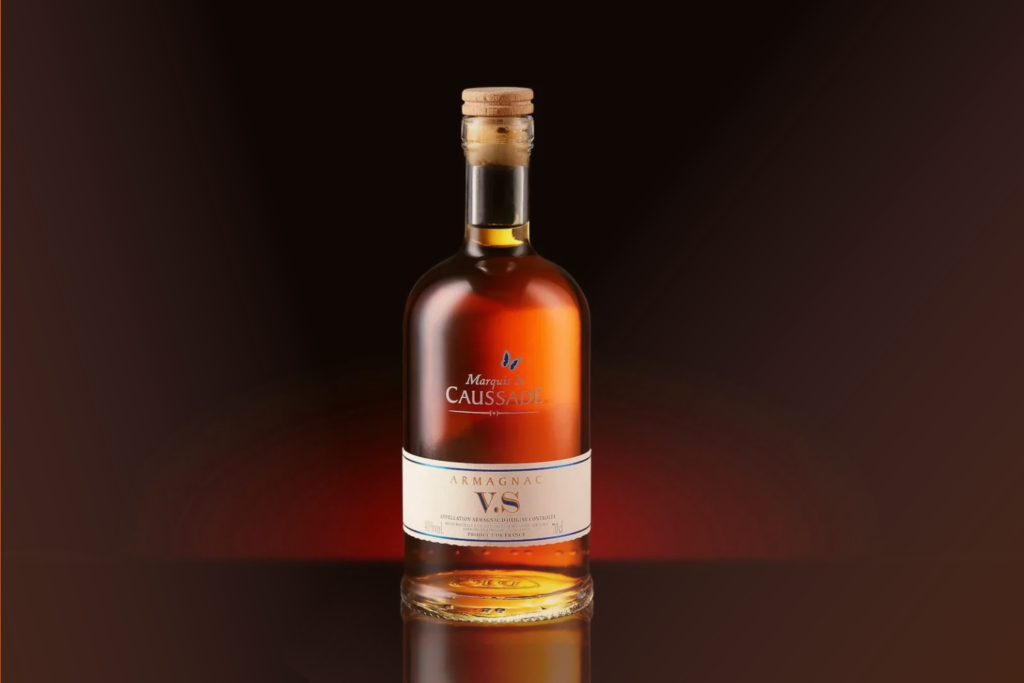
For blended Armagnac, the age indication refers to the youngest eau de vie in the blend. VS or three-star Armagnac refers to a young expression where the youngest component has spent at least one year in wood. VSOP requires at least four years. XO and Hors d’Age require at least ten years for the youngest eau de vie.
Vintage Armagnac follows another logic. It refers to a single harvest year and is closely connected to Armagnac’s grower and estate culture. Because many producers are smaller vineyard-based estates, the year of harvest can carry special importance. The vintage does not simply decorate the label. It connects the spirit to one agricultural cycle.
This is one of the reasons Armagnac often feels close to wine culture. Its identity comes from grapes, harvest years, soils, cellars, and ageing, even after the wine has been transformed into eau de vie.
INAO, BNIA, and Appellation Control
Armagnac is protected through French appellation law. The Institut National de l’Origine et de la Qualité oversees the French origin and quality system, while the Bureau National Interprofessionnel de l’Armagnac represents the Armagnac sector and supports the collective defence and development of the appellation.
The legal framework covers the production area, authorised varieties, vineyard rules, winemaking conditions, distillation, ageing, product controls, and minimum alcohol strength. Armagnac released to the consumer must present at least 40 per cent alcohol by volume.
This control matters because Armagnac is a historic name with international recognition. Without legal protection, the name could become separated from the Gascon vineyards, stills, and cellars that created it.
The AOC keeps the spirit accountable to its origin. It protects both producers and consumers by making the name Armagnac a production claim, not simply a style claim.
A Gascon Spirit Written Into Law
Armagnac became protected because its character is inseparable from Gascony. The region’s white wines, sandy and clay limestone soils, grape varieties, mobile distillation culture, Armagnac stills, oak cellars, and vintage memory all contribute to the identity of the spirit.
The appellation does not reduce Armagnac to one flavour or one house style. It protects a framework in which regional diversity can exist. Bas Armagnac, Armagnac Ténarèze, Haut Armagnac, aged Armagnac, Blanche Armagnac, blends, and vintages all belong to a larger legal and cultural system.
That system is what makes Armagnac one of the most important spirit appellations in France. It shows how a rural wine region turned distillation into heritage, and how law gave that heritage a durable form.

Renowned freelance spirits consultant, award-winning author, and international spirits judge, recognized globally as a leading authority on spirits selection, historical distillates, and market innovation.

Distillery
Armagnac Delord is a storied distillery located in Lannepax, in the heart of the Bas-Armagnac region of France,…
Spirit
Eau de vie de Poires Michel Gillet Redu
Eau de Vie de Poires Michel Gillet is an exquisite representation of artisanal pear brandy, crafted in the…
Spirit
Armagnac De Neulimont is a distinguished expression of traditional French spirits, proudly bearing the designation of controlled origin.…
Spirit
Armagnac J. De Malliac Hors D'age
Armagnac Hors d'Age J. de Malliac represents a pinnacle of artisanal craft in the field of brandy production…
Spirit
Armagnac du Collectionneur is a prestigious expression of the ancient craft of Armagnac production, notable for its rich…
Spirit
Armagnac De Malliac Hors D'Age Brandy
J de Malliac Hors D'âge Armagnac is a venerable expression from the historic region of Armagnac in Gascony,…
Partnership
Calvados: The Apple Brandy of Normandy Defined by Appellation Law
Normandy’s orchards gave Calvados its meaning before law gave it protection. In this part of northern France, apples and pears were not minor crops. They shaped farm landscapes, hedgerows, local drinks, rural economies, and the way agricultural value moved from fruit to cider, then from cider to spirit. Calvados belongs to that orchard world. Its […]
August 16, 2026
Discovery and Education
Armagnac Cognac and Calvados: France’s Three Visions of Time
France did not create just one great aged spirit. It created three. Armagnac, Cognac, and Calvados emerge from different soils, different raw materials, and different philosophies of maturation, yet all are bound by an unwavering respect for time. In each region, oak is not merely a storage. It is a collaborator. What differs is the […]
March 2, 2026
Partnership

Pisco: A Spirit Claimed by Two Nations
Pisco is one of the few spirits whose identity is divided by national borders rather than defined by them. Both Peru and Chile claim pisco as a national spirit, each supported by legal frameworks, historical narratives, and active production. This dual claim is not a modern branding dispute. It is the outcome of colonial administration, […]
October 7, 2026