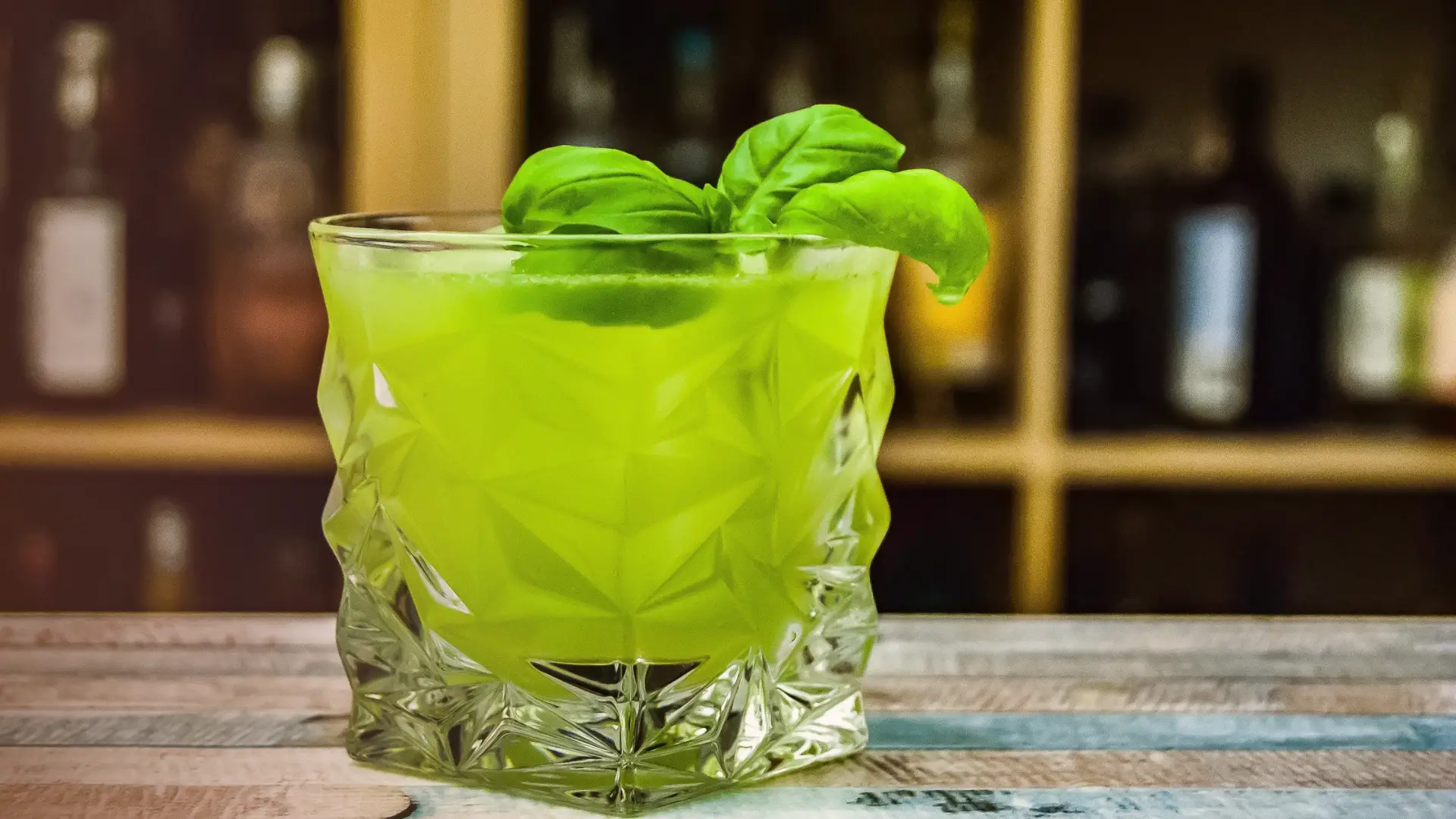
When Jörg Meyer introduced the Gin Basil Smash at Le Lion in Hamburg in 2008, it wasn’t framed as a revival or a twist on a known template. It first appeared under the name “Gin Pesto,” before settling into the name by which it became internationally known. The idea was direct: make a drink where freshness is unmistakable from the first second. That clarity is what allowed it to travel far beyond Hamburg and settle into the modern canon without needing reinterpretation.
The recipe is short. The margin for error is not.
Despite the name, the drink should not be confused with the loose, muddled Smashes of the 19th century. Its ancestry is better understood through the broader Smash idea, but its behaviour is closer to a tight sour. Gin forms the base, lemon sets the acidity, sugar brings balance, and basil carries the defining aroma. There are no liqueurs or modifiers to soften mistakes, which means proportion and dilution do all the heavy lifting.
In practice, this makes the Gin Basil Smash more demanding than it looks. A slight shift in citrus or sugar moves it off balance immediately. The drink works because each element is measured, not adjusted by feel.
Basil in the Glass
Basil is the reason the drink exists, and it is also where most versions go wrong. Its aromatic profile comes largely from eugenol, a compound shared with clove that gives basil its soft spice beneath the green notes. That compound is easily damaged. Overwork the leaves and the flavour can turn heavy; treat them too lightly and the aroma remains incomplete.
The goal is controlled extraction, not pulverisation. The basil needs to be opened enough to release aroma, while still preserving the green lift that defines the drink. What you end up with is a liquid that looks slightly opaque, not bright or filtered, with fine particles suspended throughout it. That texture isn’t a flaw. It’s part of the drink’s identity and a sign that the basil has been handled with precision.
Choosing the Gin
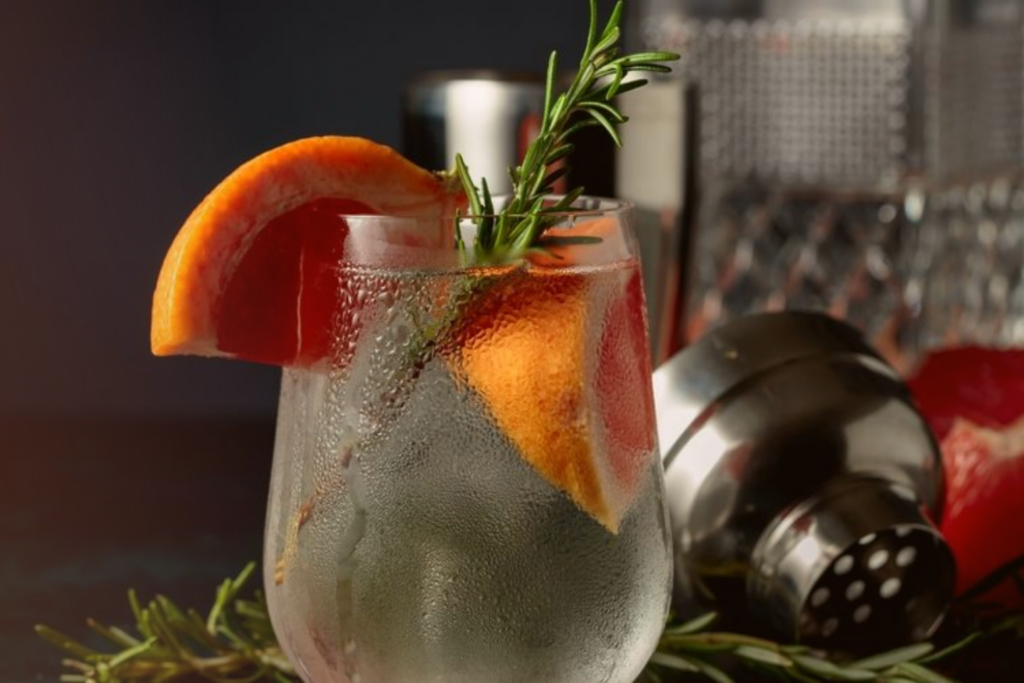
The spirit doesn’t sit in the background here. It shapes how the basil reads. A juniper-led profile such as Tanqueray London Dry Gin brings definition and edge, pushing the drink toward a drier, more angular finish. A softer style like Bombay Sapphire lets the herb spread more evenly across the palate, giving a rounder impression.
Neither direction is inherently better, but switching between them changes the drink more than many expect. The balance stays the same; the emphasis shifts.
Dilution and Service
This is a drink that depends on the shake. It needs enough force to chill quickly, integrate the sugar fully, and pull the basil through the liquid without overworking it. If it is not shaken enough, the edges stay sharp. Overdo it and the drink thins out.
It is commonly served strained into a chilled glass, though some bar specifications present it over ice. In either format, there’s no advantage in preparing it ahead of time. Basil fades quickly, both in colour and aroma, so the drink has to be made and served in one continuous motion.
How It Holds Up
The Gin Basil Smash spread at a time when bartenders were beginning to share recipes and ideas more quickly through blogs and online networks, rather than waiting for books or competitions to formalise them. That helped, but it wouldn’t have lasted if the structure didn’t hold.
A correct version is easy to recognise: a muted green colour, a clear basil aroma before the first sip, and a balance where neither citrus nor sugar dominates. When those elements line up, the drink doesn’t need explanation. It simply works, which is why it remains closely tied to the idea first introduced behind the bar at Le Lion in Hamburg.

Renowned international hospitality consultant, founder of Barpartners, and IBA Vice President of Classic Mixology, bringing over 25 years of luxury hotel bar operations.

In partnership with International Bartenders Association
The International Bartenders’ Association stands at the crossroads of exchange between new and established generations of professionals.

Bar
Le Lion Bar de Paris is an elegant and intimate cocktail sanctuary located at Rathausstraße 3 in the…

Cocktail
The Gin Basil Smash is a modern classic cocktail known for its vibrant green color and intensely fresh…
Spirit
Tanqueray London Dry Gin is a quintessential spirit that has stood the test of time, recognized globally as…
Spirit
Bombay Sapphire & Tonic Gin is a refreshing drink that showcases the famed Bombay Sapphire Gin, a premium…
Spirit
Tanqueray Charles Tanqueray & Co 1830 London Dry Gin is a timeless classic that has become synonymous with…

Bars and Cocktails
Hospitality and Cocktail Culture: The Foundation of Bartending
A well-made cocktail may earn attention, but hospitality determines the meaning of the exchange. It begins before an order is taken, in the way a guest is acknowledged, understood and given a place within the room. Bartending becomes hospitality when technical skill is directed towards another person rather than displayed for its own sake. Service […]
September 29, 2026
Partnership
Illegal Cocktail: The Mezcal Cocktail That Reframes the Daiquiri Structure
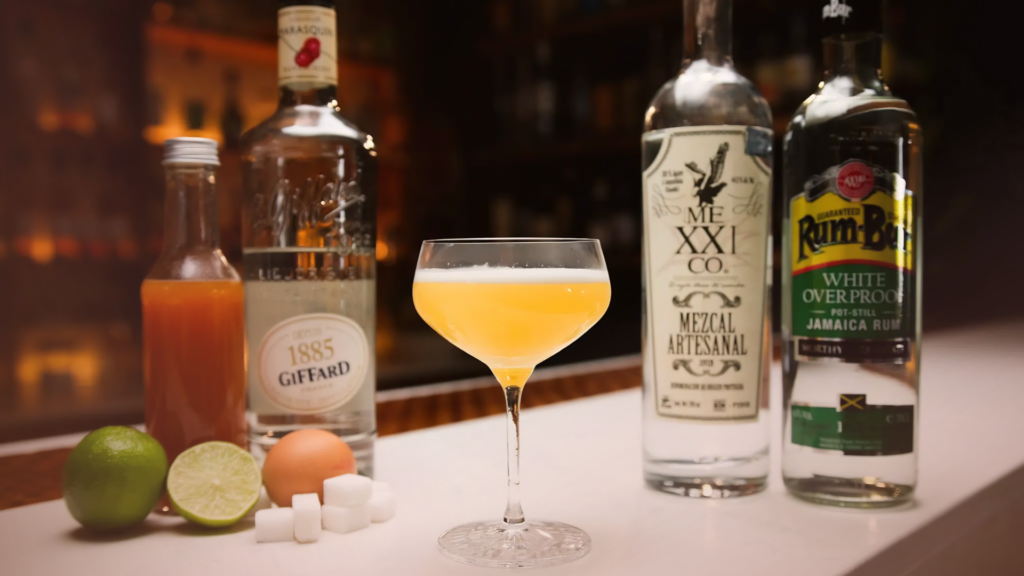
The Illegal cocktail follows a familiar outline, but the result is distinctly different. Built around mezcal, lime, falernum, maraschino, simple syrup, and a measure of Jamaican overproof rum, it takes the logic of a sour and shifts it into a drier, more aromatic profile. The drink is credited to Italian bartender Samuele Ambrosi, with its […]
September 24, 2026

Partnership
IBA Tiki: Codifying Tropical Structure Within Modern Cocktail Standards
Tiki has never been a single drink, but in this case the name points to one specific modern cocktail. The IBA Tiki is not a broad label for tropical classics such as the Mai Tai or the Zombie. It is a defined drink connected to the International Bartenders Association, Cuban bartending culture, and a recent […]
September 17, 2026