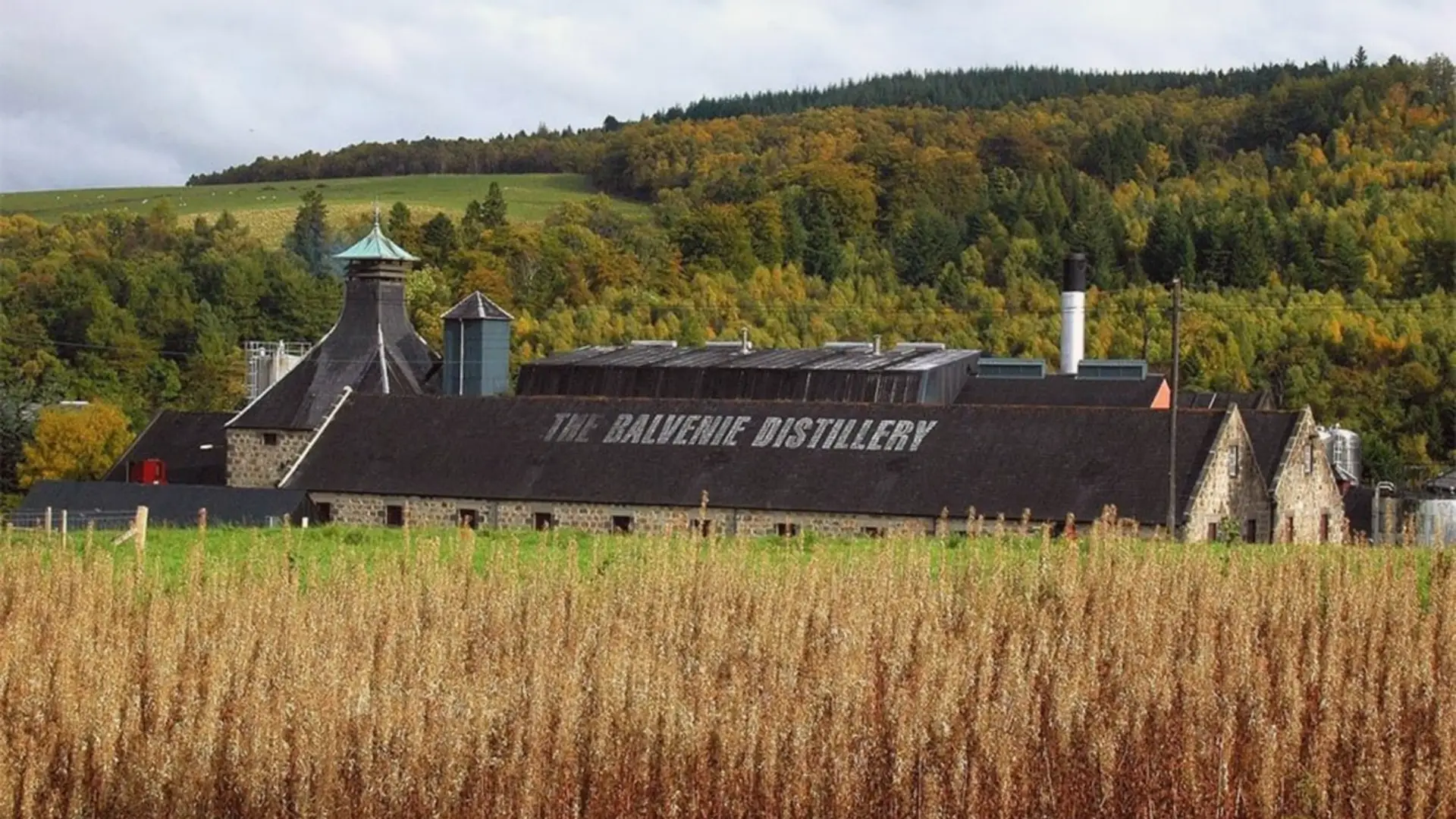
In contemporary Scotch whisky production, floor maltings are an economically inefficient choice. Most distilleries rely on industrial maltsters for scale, consistency, and cost reduction. Energy efficiency, labour minimisation, and predictable output all favour centralised maltings.
At The Balvenie in Speyside, floor maltings remain operational. This is not nostalgia or marketing. It is a deliberate technical choice reflecting the distillery’s commitment to process control, structural consistency, and technical continuity.
The Floor Malting Process
Floor malting is the traditional method of preparing barley for whisky. Barley is steeped in water to initiate germination, then spread onto a malting floor. Workers turn the grain manually to regulate temperature and airflow. After germination, the barley is kilned to halt the process at the desired modification level.
Historically, distillation was conducted in small copper pot stills heated by wood fire, producing a robust and unrefined spirit. Today, production is largely concentrated in column distilleries that preserve cane juice character while offering greater consistency and control. Maintaining floor maltings allows The Balvenie to retain structural control over enzyme development and subtle variation in barley modification.
Scale and Integration
Floor maltings at The Balvenie do not supply the full annual malt requirement. Some barley is sourced from commercial maltsters to ensure production continuity. The on-site floor maltings operate as a calibrated technical input, providing controlled variability and oversight rather than total supply infrastructure.
Reasons for Retention
On-site floor malting enables direct management of barley variety, steeping duration, germination levels, and kilning regime. Industrial maltsters offer consistency, but in-house malting allows micro-adjustments aligned with distillery style. Manual floor malting produces minor batch variation in barley modification and enzyme activity. Over long maturation, these incremental differences influence wort characteristics and fermentation efficiency, subtly affecting texture and malt character. Maintaining floor maltings also preserves rare skills in manual turning, germination assessment, and kiln timing that are difficult to reconstruct once lost.
Sensory and Structural Implications
The direct impact on flavour is measured and technical in nature. Biochemical goals, such as starch conversion to fermentable sugars, are equivalent in floor and pneumatic maltings. Subtle differences in wort composition influence fermentation dynamics and texture. Peating and cask influence dominate final flavour over floor malting alone. Floor maltings produce incremental effects that compound with time but do not singularly define the whisky profile.
Economic Context
Operating floor maltings increases labour costs, reduces energy efficiency, and yields less predictable output per tonne. Maintaining this system is a strategic choice rather than an operational necessity. It allows The Balvenie to retain control and structural integrity over a key stage in production.
Speyside Tradition and Production Signalling
Few Speyside distilleries retain operational floor maltings at a commercial scale. The Balvenie’s decision communicates structural continuity, manual intervention in raw material preparation, and the preservation of pre-industrial techniques alongside modern mash tuns, stainless steel washbacks, and contemporary cask management. Floor malting coexists with modern efficiency rather than replacing it, serving as a controlled structural input within the distillery system.
Structural Meaning of Inefficiency
Efficiency reduces cost and variation, but total efficiency limits differentiation. By maintaining floor maltings, The Balvenie preserves manual oversight in barley processing, incremental process variation, and controlled, deliberate technical intervention. This is not a resistance to modernisation but a formal method for signalling identity and production philosophy.
The Balvenie’s floor maltings are an integrated component of production, not a staged display for marketing purposes. While efficiency is cheaper elsewhere, maintaining this labour-intensive process ensures structural oversight, preserves rare skills, and aligns production with the distillery’s broader philosophy of controlled craftsmanship.


Distillery
The Balvenie Distillery, nestled in the heart of Dufftown in Speyside, Scotland, is a beacon of traditional whisky…
Spirit
The Balvenie Tun 1509 Single Malt Scotch Whisky
The Balvenie Tun 1509 is a remarkable expression of craftsmanship that showcases the distillery's dedication to traditional techniques…

Spirit
The Balvenie 25 YO Triple Cask Single Malt Scotch Whisky
Balvenie Triple Cask Scotch whisky represents an impressive showcase of the craftsmanship and expertise of the Balvenie Distillery,…
Distilleries & Producers
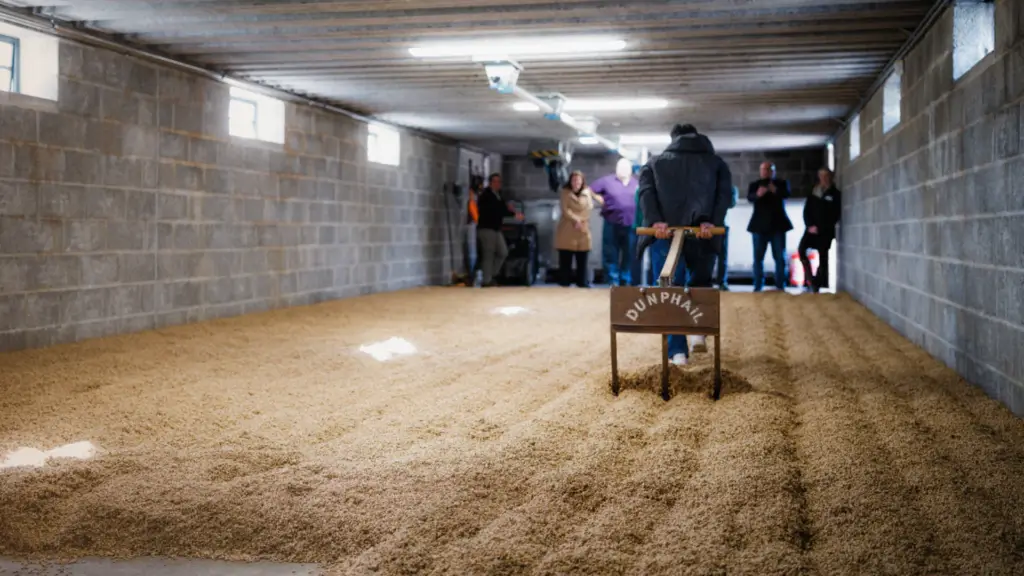
The Last Days of Floor Maltings: When Scotch Distilleries Made Their Own Malt
Floor Maltings History: Where Whisky Began Before stainless steel vessels, automated temperature control, and industrial malt plants, a Scotch whisky distillery often began its work on a stone or concrete floor. Barley was steeped in water, spread in a shallow layer, and turned repeatedly by hand as it germinated. The process demanded time, judgement, space, […]
June 18, 2026

Distilleries & Producers
Roseisle Distillery: The High-Tech Speyside Giant Behind a New Generation of Whisky
In Speyside, where whisky is often associated with generations of tradition, Roseisle Distillery represents something very different. Built by Diageo near Elgin and officially opened in 2010, Roseisle was designed as a modern, large-scale malt whisky distillery, combining traditional pot-still production with advanced engineering, energy recovery and unusual flexibility in how its spirit can be […]
September 2, 2026
Distilleries & Producers
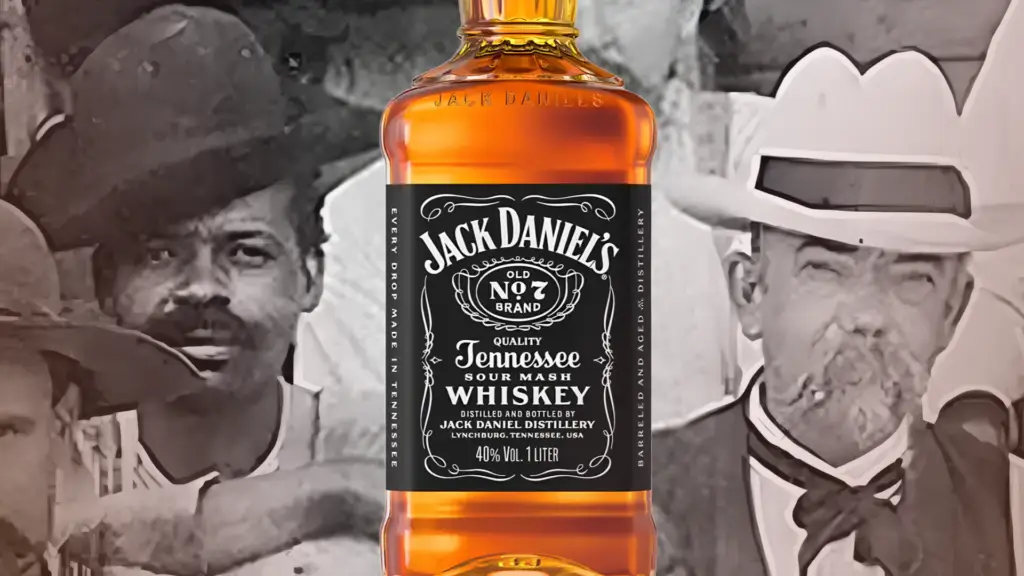
Nathan Nearest Green: The Forgotten Father of American Whiskey
Long before Tennessee whiskey became an internationally recognised category, the hills around Lynchburg, Tennessee, were home to a network of farms, mills and small distilling operations where whiskey-making knowledge was passed from one generation to another. Among the distillers working in this community was Nathan “Nearest” Green, an African American whiskey maker whose name would […]
August 11, 2026