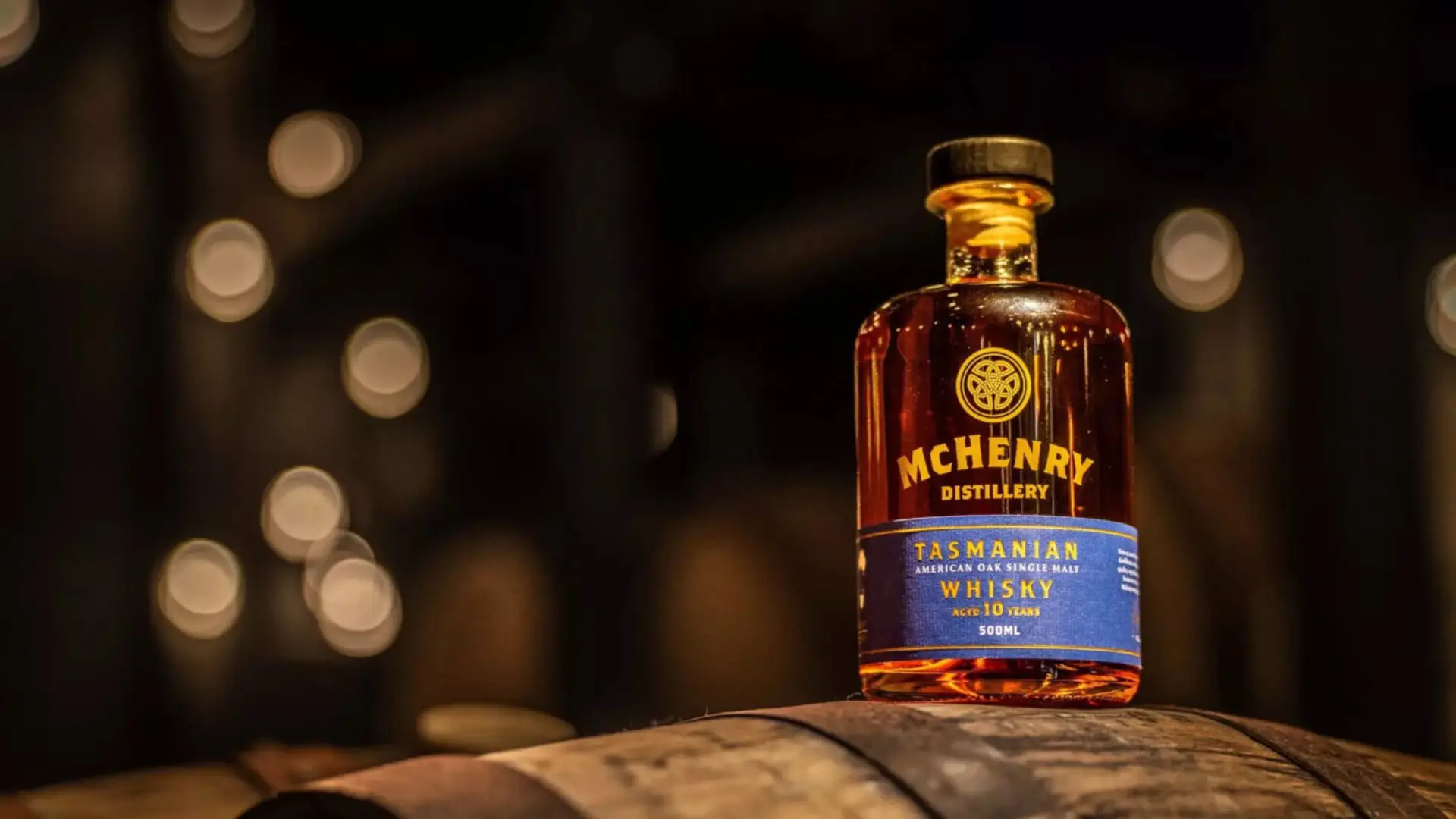
There is a point on the Tasman Peninsula where the land gives way almost entirely to the ocean. At 43 degrees south, the air has travelled uninterrupted across the Southern Ocean before reaching the coast. It is here that McHenry Distillery was established in 2010 by Bill and Alison McHenry, creating what is widely regarded as the southernmost whisky distillery in Australia and one of the southernmost family-run distilleries globally.
The location is not incidental. It defines the distillery before any grain is milled or any spirit is drawn. The environment at this latitude is not a background condition. It becomes part of the production system itself.
Tasmania and the re-emergence of whisky
Tasmania’s whisky history is defined by interruption. Distillation largely disappeared during the 20th century before re-emerging in the 1990s with producers such as Lark Distillery, which reintroduced single malt whisky to Australia.
By the time McHenry Distillery began production, Tasmania had entered a phase of cautious expansion. Small distilleries were exploring the possibilities of climate, water, and cask maturation, gradually forming what would become a recognised regional identity.
McHenry Distillery belongs to this formative period. It did not inherit an established system. It developed alongside it.
A distillery shaped by water and air
One of the defining characteristics of McHenry Distillery is its water source. The site sits on five natural springs, with water flowing directly through the property from Mount Arthur. This provides a consistent, mineral-balanced base for mashing and dilution, eliminating the need for external treatment.
The surrounding air, often described as among the cleanest measured globally, contributes to maturation conditions in a way that is difficult to replicate elsewhere. Airflow, humidity, and temperature shifts combine to influence how the spirit interacts with the oak over time. In this context, terroir is not an abstract idea. It is measurable through water, air, and climate.
From science to distillation
The distillery’s founder, Bill McHenry, did not come from a traditional whisky background. His earlier career in international pharmaceutical companies introduced a different approach to process, one grounded in measurement, control, and repeatability.
That influence remains visible in production. Fermentation, distillation, and maturation are treated as systems to be understood rather than routines to be followed. The scale remains deliberately small, but the level of control reflects a technical mindset more commonly associated with scientific fields than with heritage distilling.
Craft here is supported by precision rather than opposed to it.
Waiting for whisky, defining identity through gin
Like many distilleries established in the early 2010s, McHenry faced the practical reality of whisky maturation. Its first single malt releases would not appear until 2016, requiring several years of production without aged stock.
During this period, the distillery became known for gin, establishing a reputation that extended beyond Tasmania. Rather than functioning as a temporary product, gin became part of the distillery’s identity.
The Stargazer Solera Gin reflects this approach. Matured in 24 American oak ex-bourbon barrels using a solera system, it recreates a style closer to pre-industrial gin production, where ageing and blending formed part of the process. This was not a substitute for whisky. It was a parallel development of style.
Whisky production and maturation philosophy
McHenry Distillery produces single malt Australian whisky using locally sourced barley and traditional copper pot-still distillation. The production structure follows established principles, but Tasmania’s climate shapes the interpretation.
Rather than accelerating maturation, the distillery focuses on extended ageing. Many releases aim for 10 to 12 years in cask, allowing for the gradual integration of spirit and wood.
Cask selection includes French oak and American oak, with French oak in particular contributing tannin structure and spice. A notable expression, the McHenry 10-Year-Old French Oak Single Malt, illustrates this approach, balancing oak influence with a clean, fruit-driven spirit. Time is treated as a variable to be respected rather than compressed.
Recognition and international standing
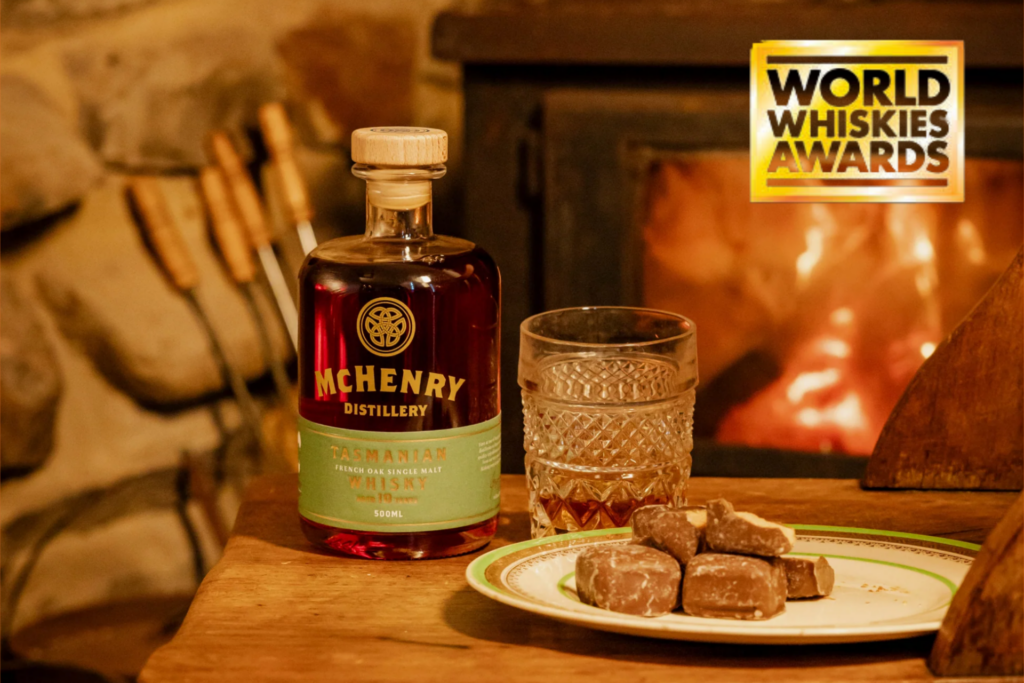
Recognition for McHenry Distillery has developed alongside Tasmania’s growing reputation. Its 10-Year-Old French Oak release received a Gold award at the 2026 World Whiskies Awards, placing it within a competitive international field.
Earlier distinctions include its Sloe Gin being named Australia’s Best at the 2020 World Gin Awards, while its Navy Strength Gin has been recognised multiple times as the best in its category within Australia.
Across these awards, the emphasis has remained consistent. The distillery’s output is recognised not for scale, but for clarity of profile and consistency of production. Awards in this context reflect alignment between method, environment, and result.
Collaboration and broader presence
McHenry Distillery’s role extends beyond its own releases. Collaborations have formed part of its development, including work with chef Matt Moran through the Further South Spirits project, and the production of Federation Gin for Government House.
These projects position the distillery within a wider cultural and culinary context, linking spirits production to hospitality and national identity.
McHenry Distillery illustrates how whisky production can be rebuilt in a region without a continuous tradition. Its significance lies not in replicating established models, but in adapting them to a different environment.
By combining precise process control, extended maturation, and a strong connection to place, the distillery contributes to a Tasmanian whisky identity that is distinct but technically grounded.
The revival of Tasmanian whisky is not defined by speed or scale. It is defined by adaptation to the environment and time. In that process, McHenry Distillery demonstrates that location, when fully integrated into production, becomes more than context. It becomes a structure.

Distillery
McHenry Distillery, proudly recognized as Australia’s southernmost distillery, is located on the beautifully scenic Tasman Peninsula. This family-owned…
Distillery
Backwoods Distilling Co Yackandandah
Nestled in the scenic town of Yackandandah in Victoria, Backwoods Distilling Co is a family-owned establishment dedicated to…
Distillery
Lark Distillery, nestled in the lush landscape of Tasmania, reigns as the state's oldest single malt whisky distillery,…
Spirit
Lark Chinotto Cask II Single Malt Whisky
Lark Chinotto Cask II Single Malt Whisky is an exceptional Australian whisky that reflects the passion and innovation…
Spirit
McHenry Distillery Tasmanian French Oak 10 YO Single Malt Whisky
The McHenry Distillery Tasmanian French Oak 10 Year Old Single Malt Whisky is a remarkable expression of Tasmanian…
Spirit
Lark Cask Strength Single Malt Whiskey
Lark Cask Strength Single Malt Whiskey embodies a bold representation of Tasmanian craftsmanship. Each bottle delivers the unique…
Spirit
Muchoté Reposado Tequila is a distinguished tequila recognized for its craftsmanship and depth of flavor. The tequila is…
Spirit
Lark Australian Single Malt Whisky
Lark Australian Single Malt Whisky is a pioneering expression of Tasmanian craftsmanship, establishing a remarkable presence in the…
Spirit
Lark 2016 Berry Bros & Rudd Tasmanian Single Malt Whisky
Lark 2016 Berry Bros & Rudd Single Cask Tasmanian Single Malt Whisky represents a remarkable expression of Tasmanian…
Distillery
McHenry Distillery, proudly recognized as Australia’s southernmost distillery, is located on the beautifully scenic Tasman Peninsula. This family-owned…
Distillery
Backwoods Distilling Co Yackandandah
Nestled in the scenic town of Yackandandah in Victoria, Backwoods Distilling Co is a family-owned establishment dedicated to…
Distillery
Lark Distillery, nestled in the lush landscape of Tasmania, reigns as the state's oldest single malt whisky distillery,…
Spirit
Lark Chinotto Cask II Single Malt Whisky
Lark Chinotto Cask II Single Malt Whisky is an exceptional Australian whisky that reflects the passion and innovation…
Spirit
McHenry Distillery Tasmanian French Oak 10 YO Single Malt Whisky
The McHenry Distillery Tasmanian French Oak 10 Year Old Single Malt Whisky is a remarkable expression of Tasmanian…
Spirit
Lark Cask Strength Single Malt Whiskey
Lark Cask Strength Single Malt Whiskey embodies a bold representation of Tasmanian craftsmanship. Each bottle delivers the unique…
Spirit
Muchoté Reposado Tequila is a distinguished tequila recognized for its craftsmanship and depth of flavor. The tequila is…
Spirit
Lark Australian Single Malt Whisky
Lark Australian Single Malt Whisky is a pioneering expression of Tasmanian craftsmanship, establishing a remarkable presence in the…
Spirit
Lark 2016 Berry Bros & Rudd Tasmanian Single Malt Whisky
Lark 2016 Berry Bros & Rudd Single Cask Tasmanian Single Malt Whisky represents a remarkable expression of Tasmanian…

Distilleries & Producers
Roseisle Distillery: The High-Tech Speyside Giant Behind a New Generation of Whisky
In Speyside, where whisky is often associated with generations of tradition, Roseisle Distillery represents something very different. Built by Diageo near Elgin and officially opened in 2010, Roseisle was designed as a modern, large-scale malt whisky distillery, combining traditional pot-still production with advanced engineering, energy recovery and unusual flexibility in how its spirit can be […]
September 2, 2026
Distilleries & Producers
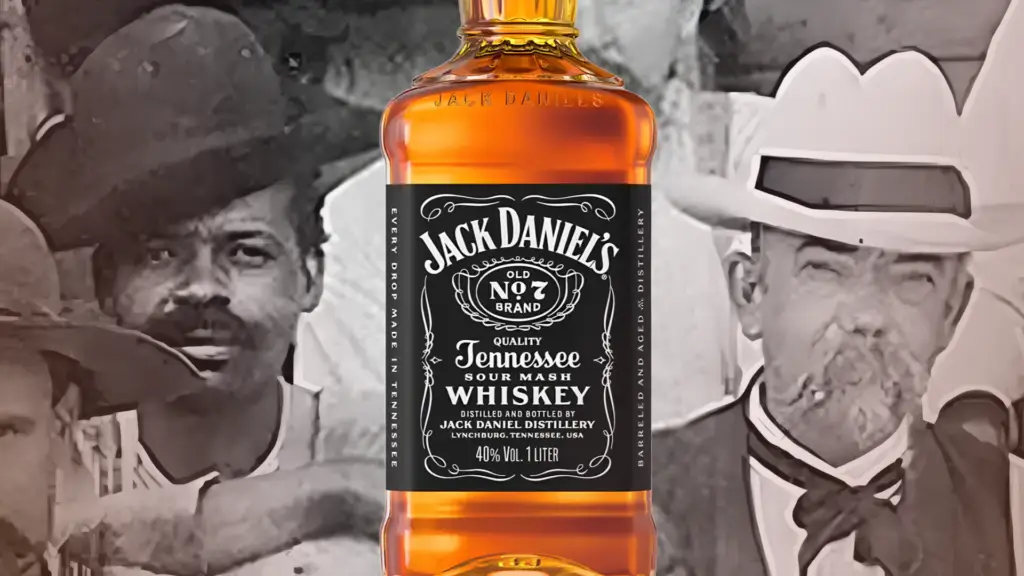
Nathan Nearest Green: The Forgotten Father of American Whiskey
Long before Tennessee whiskey became an internationally recognised category, the hills around Lynchburg, Tennessee, were home to a network of farms, mills and small distilling operations where whiskey-making knowledge was passed from one generation to another. Among the distillers working in this community was Nathan “Nearest” Green, an African American whiskey maker whose name would […]
August 11, 2026
Distilleries & Producers
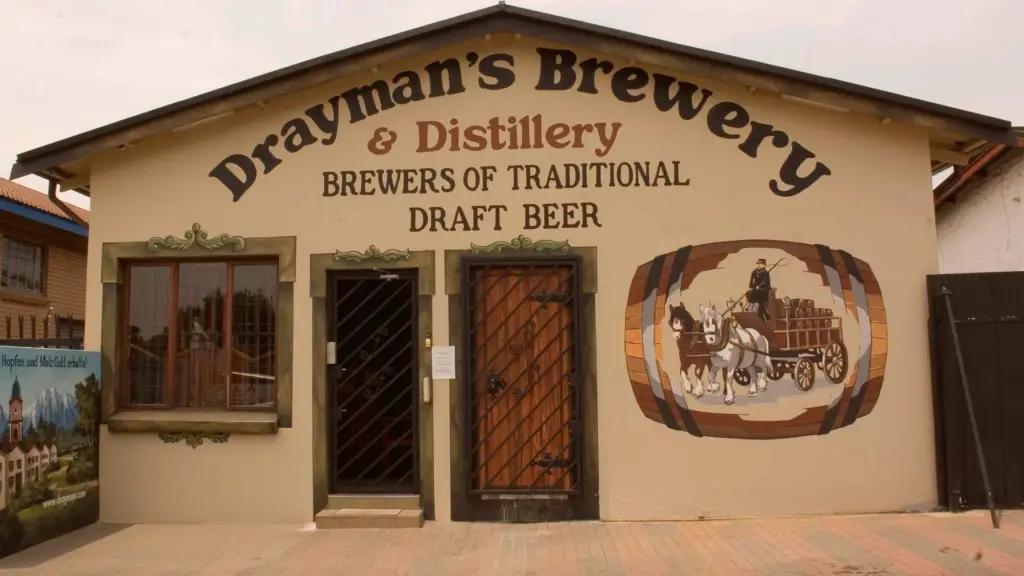
Drayman’s Brewery & Distillery: How Pretoria Put the Highveld on the Whisky Map
The story of Drayman’s Brewery & Distillery begins not in Scotland, Ireland or one of the traditional centres of whisky production, but in Pretoria, South Africa. The brewery was registered in 1997, beginning on a small scale in the Kallmeyer family’s home garage before moving to its present property in Silverton in 2002. That early […]
July 24, 2026