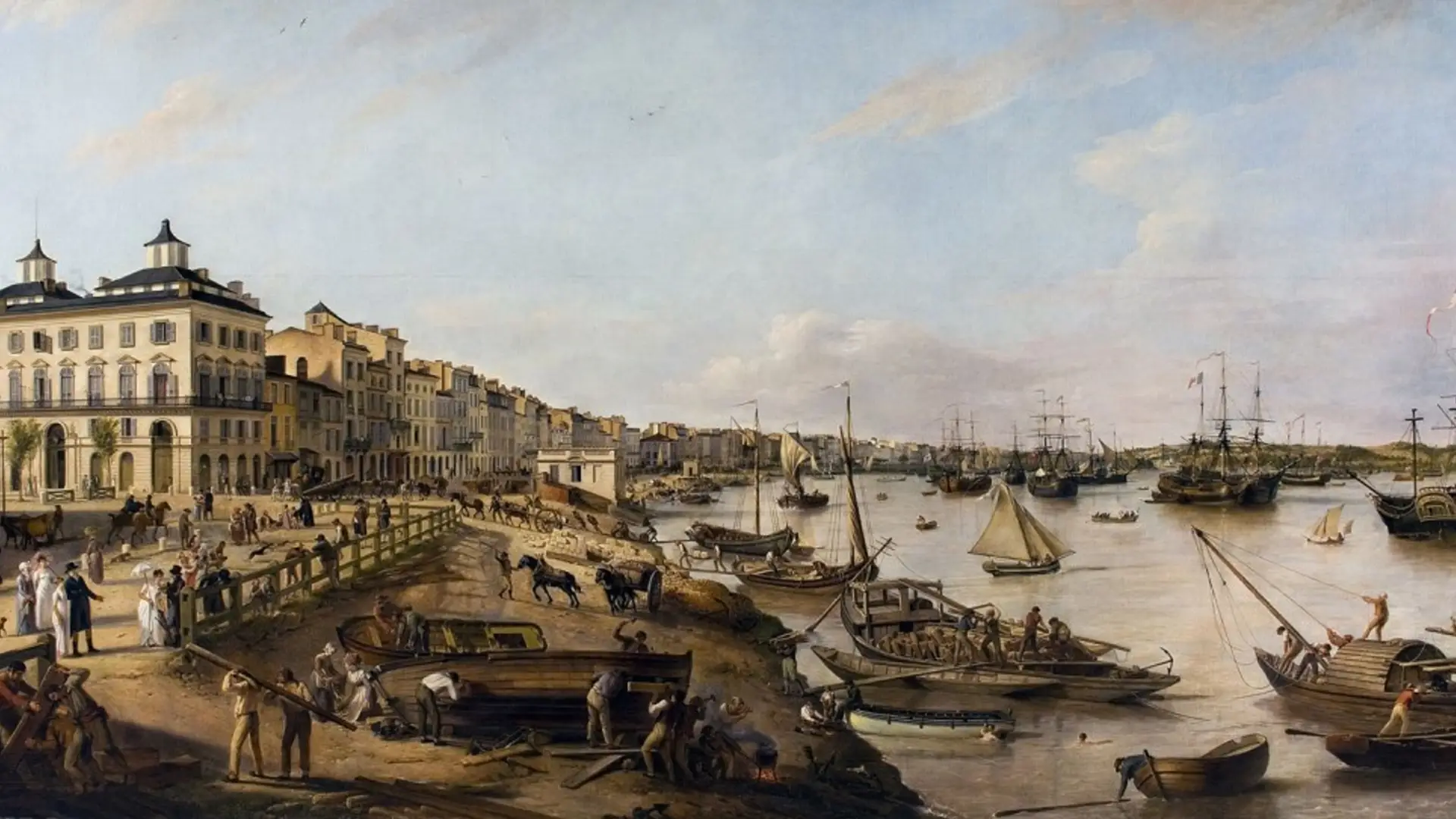
Cognac did not become a global spirit because of vineyards alone. Its rise depended on water, ships, and merchants long before it depended on distilleries. The identity of Cognac was shaped as much by the port of Bordeaux as by the chalk soils of Charente. Without Bordeaux’s access to Atlantic trade routes, cognac would likely have remained a regional eau de vie rather than an international commodity.
Understanding how cognac became global requires following barrels downstream from the Charente River to the quays of Bordeaux and outward to Northern Europe, the British Isles, and eventually the Americas.
Port of Bordeaux as a Commercial Gateway
By the late 16th century, Bordeaux had already established itself as one of Europe’s most important wine ports. Located on the Garonne River with direct Atlantic access, the port served as a commercial hinge between inland agricultural regions and maritime trade networks.
The Charente River, navigable from the town of Cognac to the Atlantic, connected inland distillers directly to Bordeaux’s export infrastructure. Barrels of wine and distilled spirit were transported by flat-bottomed boats known as gabares, moving slowly but reliably downstream.
This riverine access solved a critical problem. Wine from the Charente region did not travel well. Distillation emerged as a practical solution, concentrating value and reducing spoilage during long sea journeys.
Dutch Merchants and the Birth of Distilled Trade
The earliest large-scale demand for distilled Charente wine came from Dutch traders in the early 17th century. The Dutch Republic dominated European shipping at the time and sought stable alcoholic cargo for northern markets.
They referred to distilled wine as brandewijn, meaning burnt wine. This term eventually evolved into brandy. Dutch merchants encouraged local producers to distil wine not for refinement but for transport efficiency.
Bordeaux merchants facilitated this trade by aggregating cargo, financing shipments, and connecting producers to northern ports such as Amsterdam, Rotterdam, and Hamburg. Distillation was initially utilitarian rather than cultural.
Double Distillation and Structural Identity
By the late 17th century, producers in the Cognac region refined their technique through double distillation in copper pot stills. This method produced a cleaner and more stable spirit that responded better to ageing.
Barrels stored in Bordeaux warehouses revealed another discovery. The spirit improved over time in oak casks. This transformation was not planned but observed. Ageing turned a transport solution into a luxury product.
By the early 18th century, cognac had moved beyond bulk spirit trade and entered structured commercial production. Bordeaux merchants played a decisive role in this transition by standardising storage, shipment timing, and quality expectations.
The Rise of Cognac Houses Through Bordeaux
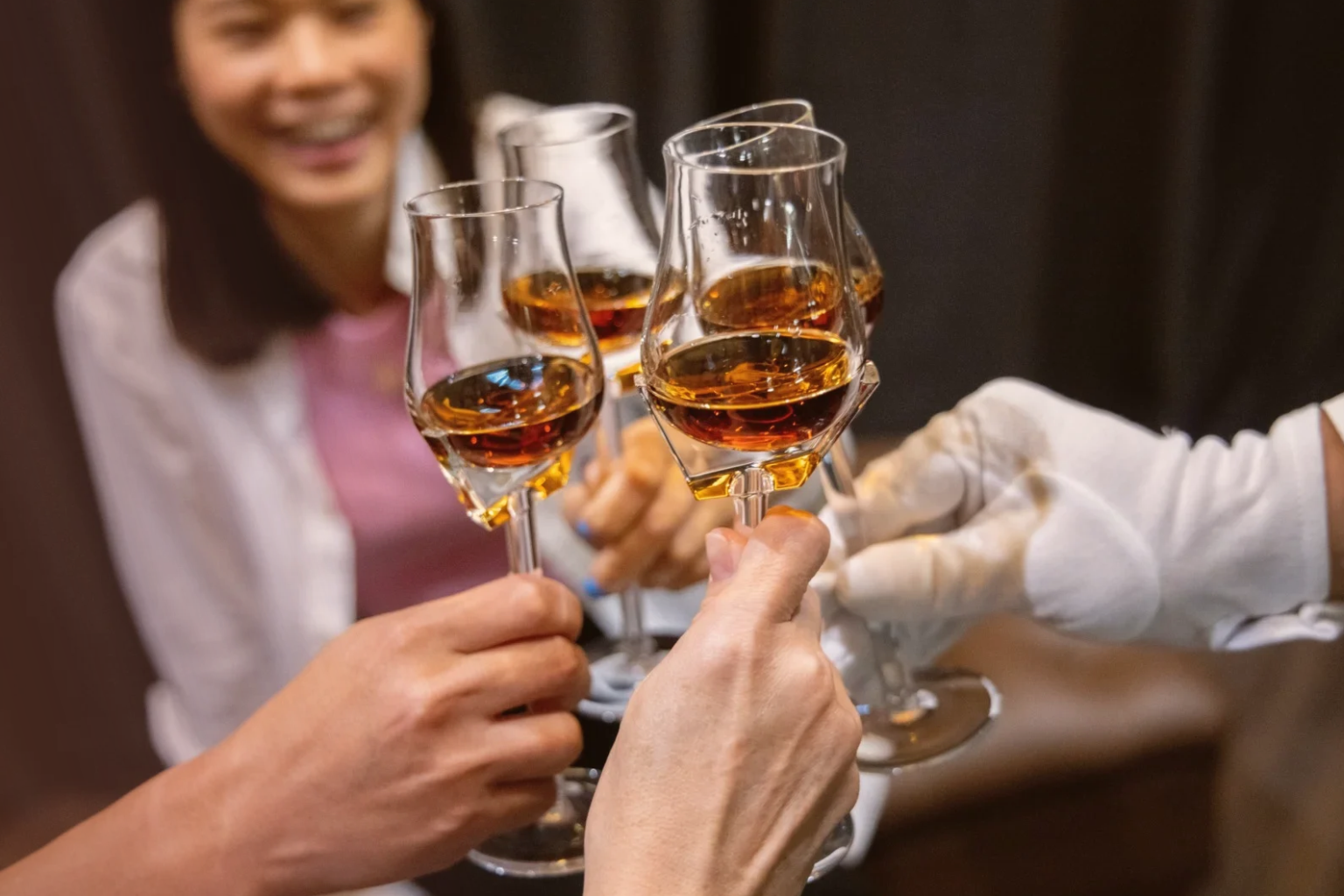
Many of the most important cognac houses emerged directly from Bordeaux-linked trade families. Martell, founded in 1715 by Jean Martell, relied heavily on export routes through Bordeaux to supply Britain and northern Europe.
Hennessy, established by Richard Hennessy, expanded rapidly through Irish and British trade connections facilitated by Bordeaux shipping networks. Rémy Martin benefited from the same logistics, exporting eaux de vie that matured during sea transport and warehouse storage.
These houses did not operate in isolation. They depended on Bordeaux’s merchants, insurers, shipbuilders, and financiers to scale production beyond regional consumption.
British Influence and Market Expansion
By the 18th century, Britain had become one of cognac’s most important markets. Political alignment and trade treaties enabled steady export flow.
Bordeaux functioned as the neutral commercial intermediary. Even during periods of Anglo-French tension, the port remained active through merchant networks that transcended national rivalry. Cognac shipped through Bordeaux reached London, Bristol, and Liverpool, where it entered elite drinking culture. Over time, British preference for aged spirits reinforced the practice of long maturation in oak.
19th Century Industrialisation and Trade Stability
The 19th century marked the consolidation of cognac as a regulated export product. Bordeaux warehouses expanded. Shipping schedules stabilised. Insurance systems reduced risk.
Even during the phylloxera crisis between 1863 and 1890, Bordeaux remained essential. As vineyards collapsed, existing stocks aged in warehouses maintained commercial continuity. Without Bordeaux’s storage and trade capacity, many cognac houses would not have survived.
The port provided not only access but resilience.
Decline of Bordeaux’s Centrality and Lasting Impact
In the 20th century, modern transport and bottling infrastructure reduced Bordeaux’s direct role in cognac logistics. Rail and road replaced river barges. Bottling increasingly occurred closer to production sites.
Yet Bordeaux’s historical role remains embedded in cognac’s structure. Export orientation, ageing discipline, and international commercial mindset all originate from this maritime phase. Cognac is not merely a vineyard product. It is a river- and port-born spirit shaped by centuries of trade logic.
By tracing cognac through Bordeaux’s trade routes, Barlist frames spirits as systems of movement rather than static products. Cognac became global not through myth or branding, but through rivers, ships, and merchant judgment. The port of Bordeaux did not just export cognac. It taught cognac how to exist in the world.

Global spirits authority, author of the Spirits Guidelines, and Director of the Spirits Selection by CMB, bringing 25+ years of international category expertise to Barlist.

In partnership with Spirits Selection
Spirits Selection is a global spirits competition and editorial partner of Barlist, contributing expertise, tasting insights, and institutional credibility to selected stories and guides.

Distillery
Hennessy Cognac is renowned as the world's leading producer of cognac, representing a harmonious blend of tradition and…
Distillery
Maison Martell, established in 1715, stands as the oldest of the prestigious cognac houses located in the heart…
Distillery
Rémy Martin is a prestigious French distillery renowned for its exceptional production of cognac, with a rich heritage…
Distillery
Cognac Chabasse is a prestigious distillery located in the heart of the Cognac region of France, on a…
Spirit
Cognac Famille Cabanne Lot 68 Cognac Brandy
Cognac Famille Cabanne Lot 68 is an exceptional offering from the renowned Famille Cabanne house, showcasing the intricate…
Spirit
Martell 1972 Collection Millesimes Cognac
Martell 1972 Collection Millésime Cognac represents a unique offering from one of the oldest and most esteemed cognac…
Spirit
Cognac Frapin Château Fontpinot XO Cognac
Cognac Frapin Château Fontpinot XO is a distinguished offering from the renowned Frapin distillery, celebrated for its exceptional…
Spirit
Cognac Des Paysans Charentais Brandy
Cognac des Paysans Charentais represents a traditional craftsmanship deeply rooted in the Charente region of France. This cognac…
Spirit
Martell Blue Swift is a groundbreaking spirit that marries the rich heritage of cognac with the bold character…
Partnership
Jamaica Rum and the Sugar Estate Landscape Behind a Protected GI
Jamaica’s Rum story begins with sugar estates, limestone water, heavy fermentations, coastal trade, and a landscape where cane became both wealth and memory. The island’s reputation was not made by one house or one parish. It grew across estates, distilleries, ports, and rural communities where sugar production and rum making became inseparable from the country’s […]
September 13, 2026
Partnership
From Porto da Cruz to Calheta: The Distilleries That Define Madeiran Rum
Madeiran rum exists within a narrow technical and geographic framework that resists abstraction. Unlike Caribbean or Latin American rum traditions shaped by scale and export, rum production on Madeira remains tied to fresh sugarcane juice, seasonal distillation, and localised milling. From the northern coast at Porto da Cruz to the southern town of Calheta, a […]
September 9, 2026
Partnership
Ron de Venezuela and the National System Behind a Protected Cane Spirit
Venezuela’s Rum identity grew from sugarcane, climate, trade, and the long conversion of cane byproducts into aged spirit. The country’s geography offered heat, sunlight, fertile cane areas, and a tropical maturation environment that gave rum a different economic and cultural role from wine spirits, grain spirits, or orchard spirits. Ron de Venezuela became legally important […]
September 6, 2026