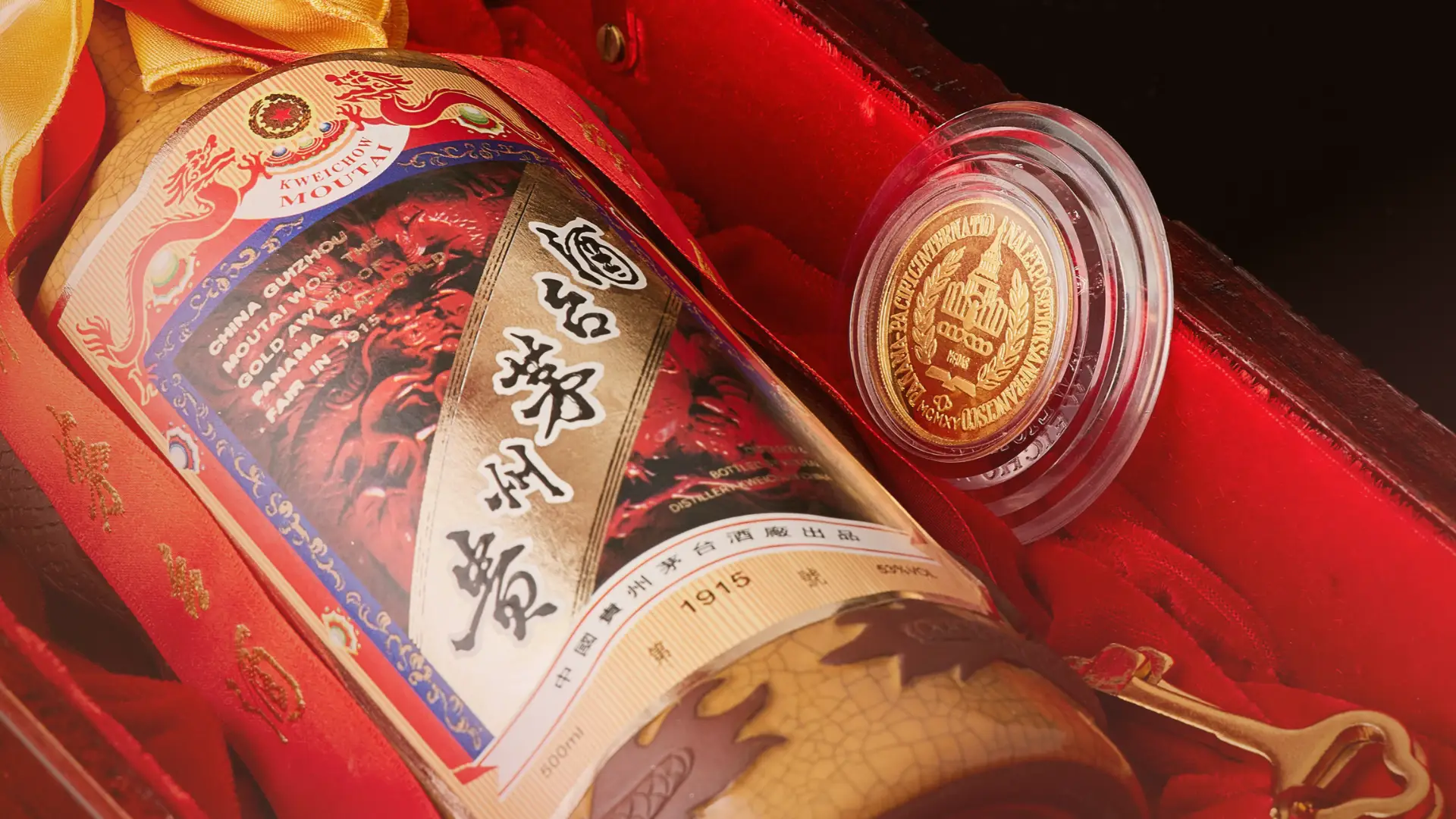
Moutai begins in a bend of the Chishui River, in a town where geography has been asked to explain taste for generations. The river, the valley heat, the purple-red soils, the surrounding hills, and the microbial life of Maotai Town are all part of the story people tell when they try to explain why this spirit became so closely tied to one place.
The name is also easy to misunderstand. Kweichow Moutai is widely known as a company and a famous commercial label, but the appellation question is not simply about a brand. The protected system concerns Moutai jiu, also known as Kweichow Moutai liquor, recognised in China as a geographical indication product and regulated by national standards.
A River Town Before a National Symbol
Maotai Town sits in Renhuai City, Guizhou Province, close to the Chishui River. The setting is not incidental. Chinese sources repeatedly connect Moutai’s identity to the river valley, the local climate, and the long presence of brewing microorganisms in the production environment.
This is a mountain river landscape, not a broad grain plain. Heat, humidity, valley air, water, soil, and built-up brewing history all became part of the way Moutai was understood. Over time, the town’s name became attached to a particular expression of baijiu: jiangxiang, commonly translated as sauce aroma.
Before Moutai became a national emblem, it was a local spirit shaped by place. Its rise into state banquets, diplomacy, collectable bottles, and global recognition came later. The protected origin begins with the town and its production culture.
The Brand and the Protected Product
Any article on Kweichow Moutai has to separate three things. There is Maotai Town, the place. There is Moutai jiu, a protected geographical indication product. There is Kweichow Moutai, the dominant company and brand most people recognise internationally.
Those layers overlap, but they are not identical. The company has enormous importance, yet the legal and cultural subject here is the protected product system. China’s national standard uses the wording Product of geographical indication, Kweichow Moutai liquor in the 2007 standard, while the 2026 replacement standard uses Quality requirements for product of geographical indication, Moutai jiu, Kweichow Moutai jiu.
That wording shows why precision is necessary. Moutai should not be treated as a generic baijiu style made anywhere. It is protected through a Chinese geographical indication product framework. At the same time, it should not be reduced to a marketing article about one corporation.
Sorghum, Wheat, and Daqu Culture
Moutai belongs to the world of grain fermentation. Its raw-material identity centres on sorghum- and wheat-based daqu. Sorghum gives the spirit its grain base, while daqu carries the microbial and enzymatic culture needed for fermentation.
Daqu is difficult to translate neatly for readers unfamiliar with baijiu. It is often described as a fermentation starter, but that phrase can feel too small. In sauce aroma baijiu, daqu is part ingredient, part microbial carrier, part technical inheritance. It links grain, heat, fermentation rooms, seasonal rhythm, and cellar knowledge.
The official intangible cultural heritage record describes Moutai liquor as a representative of Chinese daqu sauce aroma baijiu. That matters because the category is not defined by raw material alone. The relationship between sorghum, wheat daqu, place, and a distinctive fermentation culture defines it.
Chishui River and the Local Environment
The Chishui River appears repeatedly in accounts of Moutai because the spirit’s reputation is tied to the valley around it. The official intangible heritage description places the distillery area on the eastern bank of the Chishui River and notes water quality, the surrounding terrain, climate, and the microbial richness of the local environment.
This is where the protected origin logic becomes clearest. Moutai’s identity depends on a belief, supported by long production experience, that the local environment contributes to the spirit’s character. The river valley is not background scenery. It is part of the reason the name became protected.
The geographical indication framework gives legal language to that connection. It turns the claim of place into a standardised origin system.
Sauce Aroma as a Protected Identity
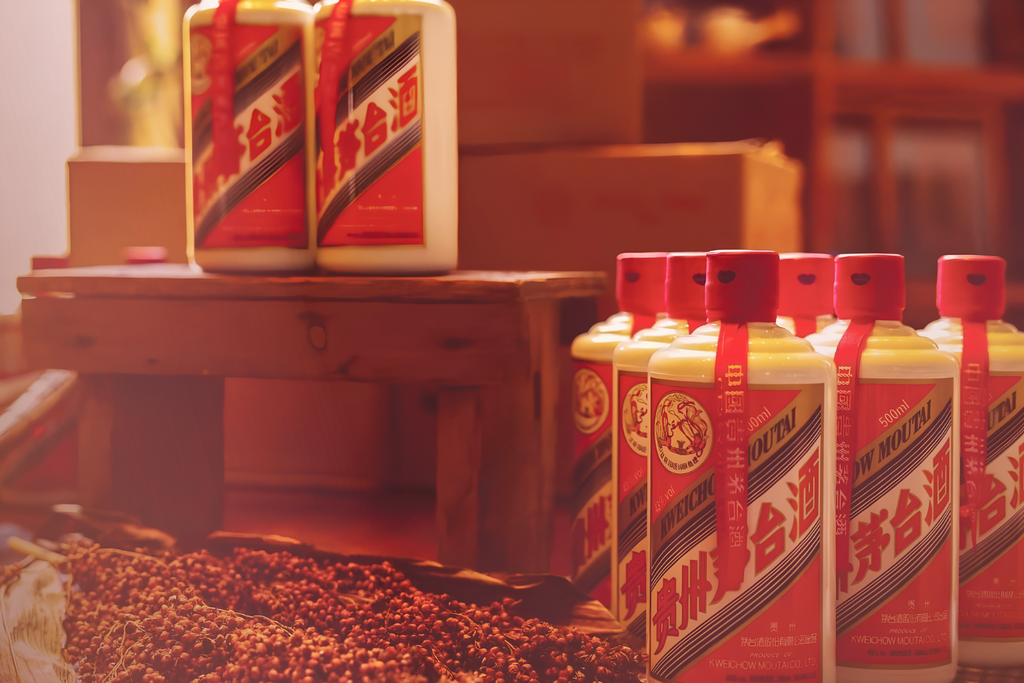
Baijiu is not one flavour family. It is divided into aroma types, and Moutai is strongly associated with sauce aroma, or jiangxiang. This style carries a reputation for depth, savoury complexity, grain character, and layered fermentation notes.
For an appellation article, the aroma of the sauce should not be described only as taste. It is a production identity. It reflects raw material, daqu, fermentation environment, distillation tradition, storage, and blending knowledge.
The official intangible heritage record connects Moutai’s distinctive style to practices such as solid-state fermentation and high-temperature daqu making. The purpose here is not to turn the article into a production manual. The editorial point is that Moutai’s protected reputation comes from a technical culture shaped over time in one place.
A National Standard for a GI Product
Kweichow Moutai liquor is governed through China’s national standard system for geographical indication products. GB/T 18356-2007 is listed as the current national standard for the product of geographical indication, Kweichow Moutai liquor. A newer standard, GB/T 18356-2026, has been published under the title Quality requirements for products of geographical indication, Moutai jiu, Kweichow Moutai jiu, and is listed as scheduled to replace the 2007 standard.
This standard-based structure is different from a French AOC or a European DOP. The correct language is Chinese geographical indication product and national standard, not AOC and not DOP. The standard gives the protected product a legal and technical frame. It identifies the product as a geographical indication product, links it to competent national intellectual property and standardisation authorities, and creates quality requirements for use of the name.
Intangible Heritage and Technical Memory
Moutai liquor brewing technique was included in China’s first national intangible cultural heritage list in 2006. This cultural recognition sits beside the geographical indication system rather than replacing it.
The distinction is useful. The GI product framework protects the name and origin linked to Moutai jiu. The intangible heritage listing recognises the brewing technique as a cultural practice transmitted through people, workshops, and generations of experience.
The official record names the Moutai liquor brewing technique as a traditional craft from Guizhou. It describes a method shaped by local natural conditions and long accumulated practice. In human terms, this means Moutai is not only a regulated product. It is also a body of inherited knowledge carried by brewers, technicians, tasters, and recognised cultural heritage transmitters.
Ji Keliang and the Language of Continuity
Among the named figures connected to Moutai’s technical memory, Ji Keliang is especially important. The Chinese intangible cultural heritage platform identifies him as a representative inheritor of the Moutai liquor brewing technique. His career is closely associated with research, quality improvement, and the systematisation of Moutai production knowledge.
Mentioning him is not about turning the article into a biography. It helps show that protected origin systems rely on people as well as documents. Standards and GI recognition give legal form to a category, but continuity often depends on experts who interpret, teach, refine, and preserve the tradition.
Moutai’s reputation was built by place, but it was maintained by people who understood how the place behaved through grain, daqu, fermentation, storage, and selection.
A Protected Origin With Corporate Weight
Kweichow Moutai Co. is unavoidable in the modern story. The company is the best-known producer associated with Moutai and has made the name visible across China and internationally. Its scale, prestige, and symbolic role have given Moutai a public presence far beyond Guizhou.
Still, the article must stay focused on the protected system. The existence of a powerful company does not make Moutai only a brand. The geographical indication framework, national standards, Maotai Town environment, and intangible heritage all show a more complex identity.
This is why Moutai is a useful case in an appellation series. It sits at the crossing point of origin protection, state symbolism, corporate power, and living craft knowledge.
A Chinese Model of Protected Spirit Identity
Kweichow Moutai does not fit neatly into European appellation language. It is not Cognac, not Tequila, and not a rum GI. It belongs to China’s own system of geographical indication products, national standards, and intangible cultural heritage recognition.
Its protected meaning comes from the Chishui River valley, Maotai Town, sorghum, wheat daqu, sauce aroma baijiu technique, and the authority of national standards. The spirit’s modern fame may be global, but the legal and cultural argument remains local.
Moutai shows how a spirit can become protected through an unusually dense relationship between town, technique, state recognition, and national memory. The name carries a product, but also a place that China has chosen to write into law.

Distillery
Kweichow Moutai Distillery Group
Kweichow Moutai Distillery Group is a world-renowned producer of baijiu, often referred to as Maotai, which is celebrated…

Spirit
Moutai Flying Fairy, also known in Chinese as '茅台飞天' (Moutai Feitian), is a prestigious Baijiu that epitomizes the…
Spirit
Baijiu Moutai Chun 1992 is a quintessential expression of China's most celebrated spirits, embodying a sophisticated balance of…
Spirit
Moutai Chun 2008 is a distinguished example of Baijiu, a traditional Chinese spirit renowned for its unique complexity…
Spirit
Kweichow Moutai Year of the Rabbit Liquor
Kweichow Moutai Year of the Rabbit Baijiu is a celebrated representation of Chinese baijiu, renowned as the country’s…
Spirit
Baijiu Moutai Year of the Dog 2018
Baijiu Moutai Year of the Dog 2018 is an exquisite limited-edition spirit released by the renowned Kweichow Moutai…
Partnership

The Shipwreck That Turned Rum Into a Time Capsule
Rum was not designed to be preserved. It was designed to move. For most of its early history, rum existed as cargo rather than a collectable, shipped in bulk or sealed bottles across the Atlantic as part of a vast commercial system linking sugar plantations, ports, navies, and merchants. When sealed bottles of 19th century […]
September 23, 2026

People & Innovation
San Diego Spirits Festival: A Celebration of Craft, Creativity, and Connection
Along the coastline of Southern California, where creativity meets hospitality, the world of spirits comes together through one of America’s most recognised celebrations of cocktails and craftsmanship. The San Diego Spirits Festival has become a gathering place for spirits enthusiasts, bartenders, producers, and industry professionals who share a passion for discovering new flavours and celebrating […]
September 22, 2026

Trending
California Rum Fest 2026: Exploring the Craft, Culture, and Revival of Rum
California Rum Fest 2026: Across the Caribbean, Latin America, and beyond, rum has always carried the stories of landscapes, agriculture, and generations of craftsmanship. Born from sugarcane and shaped by the traditions of different regions, rum is one of the world’s most diverse spirits, offering expressions that range from light and elegant to rich, complex, […]
September 20, 2026