The most interesting bartenders of 2026 are not necessarily the people making the most elaborate drinks. They are the bartenders changing what the profession expects from itself.
Across Mexico City, Singapore, Hong Kong, New York, Atlanta, Los Angeles, Washington, D.C., Sydney and other major drinking cities, a new generation is combining technical skill with hospitality, cultural identity, sustainability, local ingredients and a more open approach to knowledge. Some have emerged through major international competitions, while others are gaining attention through the bars where they work and the communities they are building around them.
The timing is significant. The global cocktail industry has become more sophisticated, but it has also become more conscious of its responsibilities. Bartenders are increasingly expected to understand not only spirits and technique, but also sourcing, waste, business, staff development and the social role of the bar.
That broader definition of the profession is evident in the people who are attracting attention in 2026.
The following ten bartenders represent different stages and styles of that development. They are not presented as a definitive ranking. Instead, they form a snapshot of the people whose work and recent recognition make them particularly worth watching now.
The New Generation Is Being Defined by More Than Technique
Yayo Nava and the Rise of a More Personal Mexican Bar Culture
Few current bartenders have received a stronger international endorsement in 2026 than Yayo Nava of Bar Mauro in Mexico City. In July, Nava won the International Bartender of the Year award at the 2026 Spirited Awards, placing him at the centre of an increasingly influential Mexican cocktail scene. Bar Mauro was also among the four finalists for International Bar Team, reinforcing the strength of the environment in which Nava works.
Nava‘s recognition is important because Mexico City has developed into one of the world’s most closely watched cocktail capitals. Mexican ingredients, agave spirits and regional culinary traditions have become increasingly influential internationally, but the most interesting bartenders are moving beyond simply incorporating familiar ingredients.
The recognition of Nava and Bar Mauro suggests that Mexican bartending is increasingly being judged on its own terms, rather than as an interpretation of European or American cocktail culture. Nava represents a particularly important figure to follow because his 2026 award is not simply a competition result. It reflects the growing international influence of Mexico City’s bar community.
Shelley Tai and the Importance of Hospitality
In 2026, Shelley Tai received the Altos Bartenders’ Bartender Award at Asia’s 50 Best Bars, an accolade voted for within the regional bar community rather than awarded for a single competition performance. Asia’s 50 Best described her recognition in terms of meticulous bartending, mentorship and dedication to fundamentals.
That distinction matters.
The contemporary bartender is increasingly evaluated by peers as much for the environment they create as for the drinks they produce. Tai’s career demonstrates how technical development, management, mentorship and hospitality can combine into a broader professional identity.
Her recognition also reflects the continuing strength of Hong Kong‘s cocktail scene. In the 2026 Asia’s 50 Best Bars ranking, Hong Kong placed seven bars, while Mius entered the extended list at No.36.
Takashi Matsumoto and the Global Competition Circuit
Takashi Matsumoto entered 2026 with one of the year’s most significant competition achievements. The Sydney-based bartender won the global Nikka Perfect Serve final, defeating competitors from several major international cocktail markets.
The competition tested hospitality, communication, product knowledge, creativity and cocktail technique, with contestants required to prepare multiple drinks around the theme “Bridging Time and Taste”. Matsumoto’s victory therefore demonstrates a combination of skills rather than a single technical speciality.
His story is particularly relevant because international competitions increasingly function as global showcases for bartenders who might otherwise be known mainly within their local scenes.
Sydney has developed a strong reputation for contemporary cocktail culture, and Matsumoto’s success gives the city another internationally recognised figure at a time when Australian bartending continues to attract attention.
Alexis Ortega and the American Competition Pipeline
In the United States, Alexis Ortega became the 2026 U.S. Bartender of the Year through the World Class national competition. Representing Philadelphia, Ortega won after three days of competition in Chicago, competing through a series of challenges designed to test creativity, precision, hospitality and cocktail storytelling.
Ortega is particularly interesting because his victory comes through one of the most competitive professional development systems in the American bar industry. The World Class circuit exposes bartenders to a range of technical challenges while also requiring them to communicate a coherent personal approach.
The global final in Scotland is scheduled for September 2026, so Ortega‘s international position is still developing. That makes him precisely the kind of figure worth following during the remainder of the year rather than retrospectively after his career has already reached its peak.
Jakob McCabe-Johnston and the Local Cocktail
At Kimball House in Atlanta, Jakob McCabe-Johnston represents a different route to recognition.
A third-generation bartender, McCabe-Johnston developed his career at his family’s restaurant before moving behind the bar at Kimball House. His current work with beverage director Miles Macquarrie places strong emphasis on seasonal and local produce, including herbs and flowers grown in the restaurant’s garden.
His inclusion in Punch’s Best New Bartenders of 2026 reflects an important direction in contemporary bartending. Locality and seasonality are no longer simply supporting details on a cocktail menu. They can become the organising principles of a drinks programme.
His Blueberry Bijou, for example, keeps the gin and green Chartreuse structure of the classic while introducing a blueberry cordial made from seasonal fruit. The remaining fruit pulp is transformed into vinegar, demonstrating how flavour development and waste reduction can operate within the same cocktail.
McCabe-Johnston‘s work shows that technical creativity does not necessarily require obscure ingredients. Sometimes it comes from understanding one local ingredient deeply enough to use it several ways.
Princess Johnson and Cultural Memory in the Glass
Princess “PJ” Johnson, based in Washington, D.C., is another of Punch’s Best New Bartenders of 2026. Her work demonstrates how personal and cultural identity can become a serious source of cocktail development.
One of her drinks, 1962, draws directly on her West Indian heritage. The cocktail uses Caribbean rum alongside flavours including soursop and ackee, with its name referring to the year Trinidad and Tobago gained independence.
The significance is greater than the individual recipe.
Contemporary bartending increasingly allows practitioners to use drinks as a way of documenting family histories, migration, regional ingredients and cultural memory. Johnson’s approach demonstrates how a cocktail can carry historical information without becoming merely an exercise in nostalgia.
That is one of the defining characteristics of the new generation. Identity is not being added to cocktails as decoration. It is becoming part of the reasoning behind them.
Miley Aryucharoen and the Return of Historical Technique
In Los Angeles, Miley Aryucharoen is exploring another increasingly important direction: the revival of historic drinks through modern culinary technique.
At Tomat, Aryucharoen has been working with the flip, one of the older families of cocktails. Her version draws from the historic Boston Flip, traditionally made with rye, Madeira, sugar and egg, but approaches the structure through a contemporary culinary process.
Her adaptation uses a custard-like preparation involving roasted pistachios, dairy, spices, brandy and dehydrated egg yolk, while maintaining a spirit-forward structure.
The result illustrates an important shift in modern cocktail culture. Historical research and technical experimentation no longer need to exist separately. A bartender can study an old recipe, understand its original structure and then use contemporary methods to reinterpret it without losing the historical connection.
Ronald Cruz Takes Filipino Bartending to the World Stage
Ronald Cruz became the 2026 World Class Philippines Bartender of the Year in June after winning the national final in Manila. Working at Fat Cat in Makati, Cruz earned the opportunity to represent the Philippines at the World Class global final in Scotland in September.
His progression matters because the international competition circuit increasingly provides a platform for bartenders from markets that were historically less visible in global cocktail media. The Philippines has a deep hospitality culture and an increasingly sophisticated cocktail community. Cruz’s success gives that scene another international representative while demonstrating how bartending competitions can become channels through which regional techniques, ingredients and hospitality traditions reach wider audiences.
His global result is still to come, making him one of the most interesting developing names to watch through the end of 2026.
Tone Arasa and the New Language of Sustainability
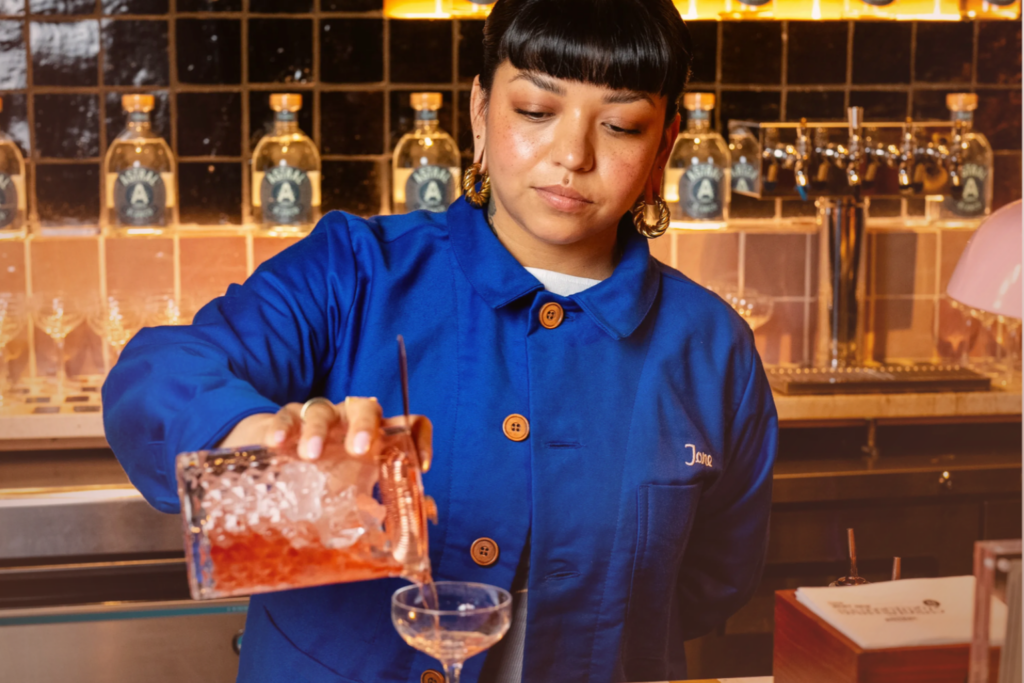
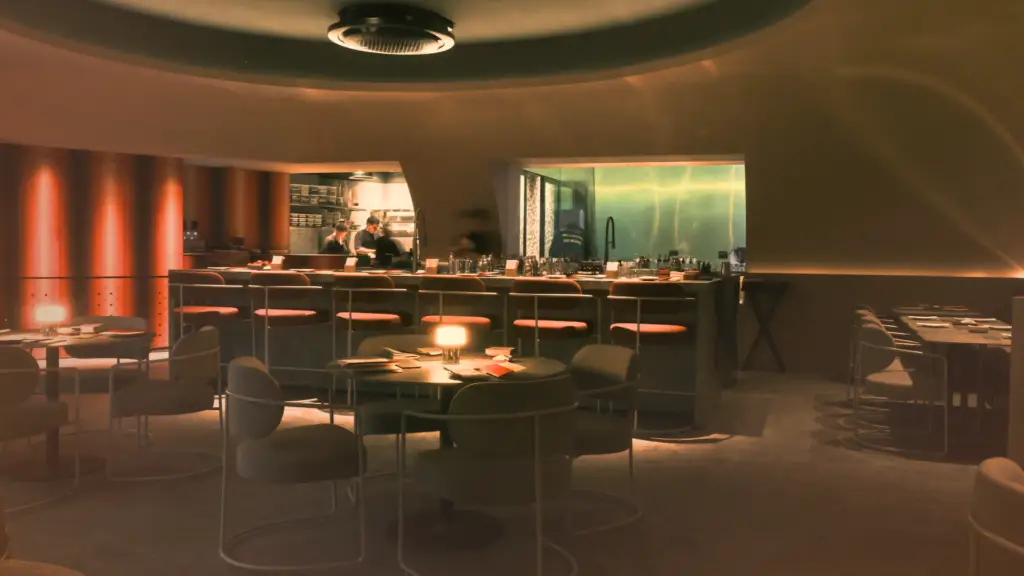
At True Laurel in San Francisco, Tone Arasa represents another important aspect of contemporary bartending: the integration of sustainability into everyday drink development.
Arasa’s work combines local and foraged Bay Area ingredients with a strong focus on reducing waste. Their background as a baker has also influenced the way they approach preparation, with much of the work taking place before service begins. Their cocktails are closely connected to seasonality and the landscape around San Francisco.
Arasa’s inclusion in Punch’s 2026 Best New Bartenders programme is significant because sustainability is increasingly moving away from the language of corporate responsibility and into the practical decisions made behind the bar.
Using local produce, preserving ingredients and finding secondary uses for by-products are not necessarily separate sustainability projects. They can become part of the flavour development itself. That approach is likely to remain influential as bars confront higher ingredient costs, environmental pressures and increasing expectations from consumers.
The Future Is Also Being Built Through Community
Another striking feature of the 2026 bartender landscape is the increasing emphasis on professional community.
Punch’s Best New Bartenders programme explicitly focused this year on hospitality not only towards guests, but towards colleagues, teams and wider communities. The programme received a record number of submissions before selecting its final group of 20 nominees.
The wider industry is moving in a similar direction. At the 2026 Spirited Awards, individual recognition extended beyond cocktail technique to mentorship and community leadership. The awards recognised Indra Kantono as Best International Bar Mentor, while the International Bartender of the Year category ultimately went to Yayo Nava.
The 2026 Asia’s 50 Best Bars results tell a related story. The list featured 14 new entries in its top 50, with bars from 22 cities represented, illustrating how rapidly the region’s cocktail landscape is changing. This matters because the next generation of bartenders is emerging from a much wider network of cities than the traditional centres of London, New York and Paris.
A Profession Becoming More Global
The people attracting attention in 2026 reveal a bar industry that is becoming simultaneously more global and more local.
Yayo Nava represents Mexico City’s growing influence. Shelley Tai demonstrates the importance of Asian peer recognition and mentorship. Takashi Matsumoto shows how Australian bartending can succeed on a global competition stage. Alexis Ortega represents a new American competition winner, while Ronald Cruz brings Filipino hospitality into the international World Class circuit.
Meanwhile, Jakob McCabe-Johnston, Princess Johnson, Miley Aryucharoen and Tone Arasa show how the next generation is using local ingredients, cultural identity, historical research and sustainability to develop distinctive approaches.
These bartenders are not following one common style. That may be the most important point.
The modern bar industry is no longer moving towards a single definition of what a great bartender should be. Technical precision remains essential, but it now sits alongside storytelling, cultural knowledge, hospitality, business awareness, sustainability and community leadership.
The result is a broader profession. A bartender can be a competition specialist, a historian, an agricultural researcher, a cultural storyteller, a mentor or a hospitality operator. Increasingly, the strongest careers combine several of these roles.
The best new bartenders of 2026 are interesting not because they all make radically experimental cocktails, but because they are expanding the definition of what professional bartending can mean.
The year’s major awards provide a useful snapshot. Yayo Nava won International Bartender of the Year at the 2026 Spirited Awards, Shelley Tai received Asia’s Bartenders’ Bartender Award, Takashi Matsumoto won the Nikka Perfect Serve global competition and Alexis Ortega became U.S. Bartender of the Year through World Class.
Alongside those established recognitions, emerging figures such as Jakob McCabe-Johnston, Princess Johnson, Miley Aryucharoen and Tone Arasa demonstrate where the profession may be heading next. Their work places greater emphasis on locality, cultural identity, historical understanding, responsible sourcing and the experience created around the drink.
The next generation is therefore not defined by a particular technique or flavour profile. It is defined by a willingness to understand the bar as a wider cultural space.
Bar
Nestled in the trendy enclave of Hauz Khas Village, Auro Kitchen & Bar emerges as a beacon of…
Bar
Fat Cats Cocktail House, located at 5 Calle del Infante in Madrid’s Las Letras district, is a hidden…
Bar
True Laurel is an elegant and welcoming cocktail bar situated at 753 Alabama Street in San Francisco’s vibrant…
Partnership
Lady Bee: Structure, Scale, and the Quiet Discipline of Contemporary Peruvian Bartending
There are bars that announce themselves through concept, and others that build recognition through repetition. Lady Bee belongs firmly to the latter. Located in Lima, the bar has developed its reputation not through spectacle, but through consistency, technical control, and a steady refinement of classic structures within a contemporary Peruvian context. Since opening in 2017, […]
September 26, 2026
Partnership
Superbueno in New York: Precision, Identity, and the Return of Clarity in Cocktail Design
Not every bar in New York needs to announce itself loudly to be noticed. Superbueno opened in 2023 with a smaller room, a focused menu, and a level of clarity that quickly separated it from the noise. Within a year, it had already entered The World’s 50 Best Bars list, a rare trajectory that says […]
September 19, 2026
Partnership
French Guiana Rum: Discovering Pure Cane Juice Spirits Beyond the Caribbean Spotlight
French Guiana is often overlooked in discussions of rum. It does not belong to the Caribbean island chain, and its production is far smaller than that of Martinique or Guadeloupe. Yet its cane-juice tradition holds a distinct place within the French overseas rum world. Located on the north-eastern coast of South America, French Guiana is […]
September 18, 2026