French Guiana is often overlooked in discussions of rum. It does not belong to the Caribbean island chain, and its production is far smaller than that of Martinique or Guadeloupe. Yet its cane-juice tradition holds a distinct place within the French overseas rum world.
Located on the north-eastern coast of South America, French Guiana is an overseas department and region of France. Its landscape is shaped by equatorial forest, broad rivers, Atlantic coastline and a narrow agricultural belt where sugarcane has survived despite the territory’s limited production scale.
Rhumerie Saint-Maurice, founded in 1917 and now the last operating distillery in French Guiana, carries that tradition. Its best-known expression, La Belle Cabresse Rhum Blanc 50°, brings together fresh cane juice, Guianese history and a local identity preserved far beyond the better-known rum centres of the French Caribbean.
A Mainland Cane Tradition
French Guiana brings a different geography to the pure cane juice rum story.
Unlike Martinique and Guadeloupe, it is not an island. Brazil borders it to the east and south, Suriname to the west, and the Atlantic Ocean to the north. Most of the interior is covered by Amazonian forest, while settlement and agriculture are concentrated closer to the coast and major rivers.
Sugarcane therefore occupies a much smaller agricultural world than it does on the established Caribbean rum islands. The scale may be limited, but the relationship between cane, climate and distillation remains direct.
The equatorial setting also creates its own production conditions. Heat, heavy rainfall and marked wet and dry periods influence cane cultivation, fermentation and maturation. French Guiana’s rhum does not emerge from a transplanted Caribbean landscape. It belongs to mainland South America.
French Guiana Is Not Guyana
French Guiana is frequently confused with Guyana, but their rum traditions are almost opposites.
Guyana is an independent English-speaking country farther west along the northern coast of South America, beyond Suriname. It is internationally known for Demerara rum, traditionally made from molasses and shaped by the former British colonial rum tradition. Its famous production history includes heavy and aromatic distillates associated with heritage wooden stills and long-established blending practices.
French Guiana remains part of France and protects a fresh-cane-juice agricultural rum tradition. Its rum begins with vesou rather than molasses.
The similar names often confuse, but Guyanese Demerara rum and French Guianese rhum agricole come from different countries, colonial histories, raw materials and production cultures.
Sugarcane and Early Guianese Distilling
Sugarcane has been present in French Guiana since the colonial period. In 1652, the Compagnie de la France Équinoxiale included sugar production among its plans for the colony. Early estates also produced tafia, a rough cane spirit made from fermented molasses. As elsewhere in the colonial sugar world, distillation initially followed sugar manufacture rather than replacing it.
Production later expanded through numerous small artisanal units. Official historical records connected to the current geographical indication refer to dozens of early operations and around 20 established distilleries by the end of the First World War.
French Guiana never developed the vast export economy of some Caribbean colonies. Small production quotas, limited transport and the gradual disappearance of sugar estates restricted the industry. Many distilleries closed during the 20th century.
The tradition survived through individual producers and family enterprises rather than through large-scale expansion.
From Molasses Tafia to Agricultural Rhum
French Guiana’s early cane spirits were not exclusively agricultural. Molasses-based tafia belonged to the territory’s older sugar economy.
Fresh-cane-juice rhum gained greater importance as local producers developed a more direct relationship between the crop and the still. Cane was crushed, its juice fermented in open vats and the resulting cane wine distilled without first passing through sugar manufacture.
This change brought French Guiana into the wider French agricultural-rum tradition while preserving a local character. The term vesou refers to the freshly extracted cane juice. It is unstable and begins changing soon after crushing, which keeps production closely tied to the harvest. Cane cutting, transport, milling and fermentation must follow one another without the long storage possible with molasses.
French Guiana’s cane-juice rhum is therefore agricultural not only because of its raw material, but because the distillery remains bound to the working rhythm of the fields.
The Rhum de la Guyane Geographical Indication
French Guiana’s rum is protected through the geographical indication Rhum de la Guyane, also recognised as Rhum de Guyane or Rhum Guyane. An earlier geographical indication for Rhum agricole de la Guyane was homologated in 2015. The current specification, approved in September 2021, replaced that framework under the broader regional name while retaining agricultural rum as the legally defined production category.
The fermentable must must come exclusively from sugarcane juice. Adding molasses, syrup, sugar or other forms of enrichment is prohibited.
Fermentation must take place discontinuously in open vessels. Distillation may use a continuous multi-stage reflux column or simple batch equipment. The collected spirit must remain below 90 per cent alcohol by volume and meet minimum requirements for volatile compounds.
The geographical area covers the department of French Guiana. Cane cultivation, juice extraction, fermentation, distillation, resting, maturation and storage must all take place within the protected territory. The designation may cover white, brown and old rhum, with the word agricole appearing alongside the geographical name on the label.
White, Brown and Old Rhum
The geographical indication defines three principal categories. White Rhum de la Guyane must rest in vats for at least three weeks following distillation. This period allows early esterification to continue while some highly volatile compounds dissipate.
Brown rhum must spend at least six months in oak. Old rhum must mature for at least three years in oak vessels holding no more than 650 litres. Further age statements are regulated: VO requires at least three years, VSOP at least four, and XO or hors d’âge at least six.
These rules give Guianese rhum a clear legal structure without reproducing Martinique’s AOC model. The equipment options, distillation ceiling and ageing language belong to French Guiana’s own protected framework.
Saint-Maurice and the Prévot Family
The modern history of Guianese rum is inseparable from the Prévot family. Fernand Édouard Prévot established the family’s first distillery in Cayenne in 1917. Later generations continued the work through changing sites, commercial difficulties and the gradual contraction of the local rum industry.
Georges Prévot became an important figure in the family’s distilling history. His rum from the Rorota estate received recognition in the late 1940s, while the Source de Baduel rhum was promoted in the early 1950s as a spirit distilled exclusively from pure sugarcane juice. In 1953, Georges Prévot was named the leading distiller in French Guiana and received recognition for agricultural merit.
Ernest Prévot later became the defining figure in the survival of Saint-Maurice. He acquired shares in the company in 1986, created an agricultural structure to manage the cane supply and worked to modernise production.
In 2007, he became the sole owner and continued pressing for stronger recognition of Guianese rum in mainland France. The Prévot family’s role was therefore not simply one of ownership. It preserved a production culture at a time when nearly every other distillery in the territory had disappeared.
The Last Operating Distillery
Since 1989, Saint-Maurice has been the only company supplying the local market with rum distilled in French Guiana. The distillery operates at Saint-Laurent-du-Maroni, in the west of the territory near the Maroni River and the Surinamese border. Its cane supply combines estate agriculture with deliveries from smaller local growers.
Production remains modest compared with the major rum territories. That scale has helped Saint-Maurice retain a close relationship between fresh cane, open fermentation and distillation.
The distillery underwent a major modernisation programme beginning in 2013, supported by public and regional investment. The work renewed production equipment and brought the site’s infrastructure up to current standards. A further investment in 2020 expanded wastewater-treatment capacity as production increased.
These developments kept the distillery operating without breaking its link to the regional cane tradition.
A New Ownership Chapter
Saint-Maurice remained closely identified with Ernest Prévot and his family for decades, but its ownership changed in 2023.
Groupe Bernard Hayot acquired the distillery through its spirits interests, beginning a new phase of industrial and agricultural development. The acquisition placed Saint-Maurice within the same wider group associated with established Caribbean rum producers, while the Guianese distillery retained its local production base and historical brands.
Ernest Prévot remained connected to the transition as an ambassador for the house and its heritage. The change needs to be described accurately. Saint-Maurice is family-founded and carries more than a century of Prévot history, but it is no longer a family-owned distillery.
La Belle Cabresse
La Belle Cabresse is the best-known name associated with Saint-Maurice.
The white 50° expression offers a direct view of French Guiana’s agricultural rum tradition. Cane juice rather than wood remains at the centre, allowing the raw material, fermentation and distillation to carry the identity. The brand also holds a deeply personal place in the distillery’s history.
In 1993, Nelly Bellony, the niece and goddaughter of Ernest Prévot, was chosen as the new face of Rhums Saint-Maurice. She died on 3 August 1994 at the age of 18. Her portrait remained on the La Belle Cabresse label as a family tribute and became one of the most recognisable images in Guianese rum culture.
The bottle therefore carries more than a commercial identity. It preserves the memory of a young woman whose image became inseparable from the local brand. La Belle Cabresse Rhum Blanc 50° appears here as an historical and regional reference rather than a recommendation. It connects the wider story of French Guiana’s protected rum to one distillery, one family history and one enduring symbol.
Cane, Fermentation and Regional Character
The current geographical indication specification places considerable emphasis on fermentation.
Fresh juice is fermented discontinuously in open vats, allowing producers to monitor temperature and microbial activity closely. Natural microorganisms present on the cane contribute to a rapid start, while careful management prevents damaging rises in temperature.
Distillation may take place in a reflux column or through simple batch distillation. Copper in the equipment helps remove certain undesirable compounds, while the relatively limited scale of the apparatus preserves the aromatic weight of the fermented cane wine.
White Guianese rhum must contain at least 225 grams of volatile substances per hectolitre of pure alcohol. The protected style is described through clarity, aromatic strength and fruit or spice characteristics rather than the burnt-sugar and molasses notes associated with traditional Guyanese Demerara rum.
The contrast returns to raw material. French Guiana’s legal identity rests on fresh cane juice. Guyana’s famous historical style rests on molasses.
A Small Tradition with a Defined Place
French Guiana’s rum industry is small, but small scale does not make it historically insignificant.
The survival of Saint-Maurice preserved the last working link to a production culture that once included numerous distilleries. The geographical indication then gave that culture formal recognition through rules covering cane, fermentation, distillation and maturation.
French Guiana also broadens the geography of agricultural rum. It moves the conversation away from the familiar islands and into the Amazonian edge of mainland South America.The territory’s relationship with France provides its legal framework, but the rum remains distinctly Guianese in its agricultural setting, history and cultural references.
A Mainland Reference Point
French Guiana is an important stage in the pure cane juice world tour because it changes both the scale and the landscape.
Martinique presents a tightly controlled AOC tradition. Guadeloupe brings a broader archipelago where agricultural and sugar-industry rum coexist. French Guiana offers a mainland agricultural rum protected under its own geographical indication and sustained by one surviving distillery.
The comparison with Guyana sharpens that identity.
Two territories with similar names sit along the northern coast of South America, yet their famous rum traditions developed in opposite directions. Guyana became renowned for English-influenced, molasses-based Demerara rum. French Guiana preserved a French agricultural tradition built around fermented fresh cane juice.
The distinction is simple, but essential.
Conclusion
French Guiana’s rum history is one of contraction, survival and renewal.
Sugarcane and early molasses spirits belonged to the territory from the colonial period. Agricultural rhum later created a more direct relationship between the local crop and the still. As smaller distilleries disappeared, Saint-Maurice became the final working guardian of that tradition.
The current Rhum de la Guyane geographical indication protects a spirit made exclusively from fresh cane juice. Open fermentation, local distillation and regulated resting or ageing give the category its legal form.
The Prévot family carried the distillery through much of the 20th century and into the modern period. La Belle Cabresse gave its best-known white rhum a human and cultural identity. GBH’s acquisition in 2023 opened another chapter without erasing the history that came before it.
French Guiana should not be confused with Guyana. One produces a small, protected agricole tradition rooted in fresh vesou. The other is famous for molasses-based Demerara rum shaped by an English-speaking and formerly British colonial culture.
That contrast gives French Guiana a clearer place in the global rum map. It is neither a minor copy of the French Caribbean islands nor a variation of Guyanese Demerara rum. It is a mainland cane-juice tradition with its own law, history and voice.

Spirits consultant, creator of curated independent bottling collections, and international spirits judge, blending a foundational heritage in viticulture with modern trade and communication strategy.

Spirit
La Belle Cabresse White Rum is a captivating example of Rhum Agricole, which originates from the sugarcane fields…
Spirit
Enmore 32 YO Demerara Rum is a singular expression from the famed Enmore distillery, located on the banks…
Spirit
Longueteau Genesis Rhum Agricole
Longueteau Genesis Rum represents a remarkable expression of Rhum Agricole, crafted meticulously from the unique red cane grown…
Spirit
Saint James VSOP Rhum Agricole
Saint James VSOP Pure Canne Rum is a distinguished expression of Agricole rum hailing from Martinique, known for…
Partnership
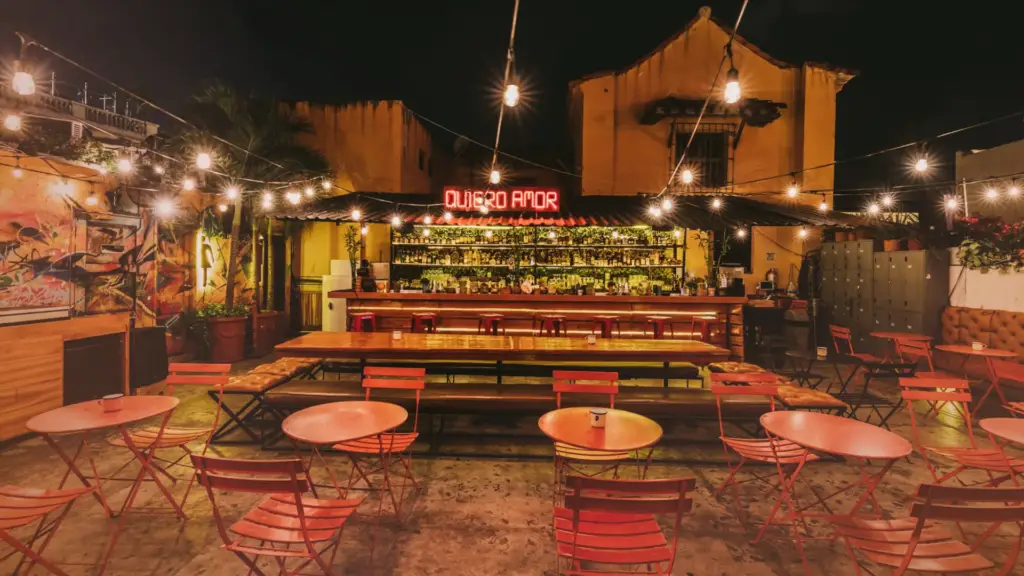
Alquímico in Cartagena: The Multi-Level Bar Where Precision Operates as One System
Within the historic walled city of Cartagena, Alquímico occupies a restored three-storey colonial building that has, since its opening in 2016, evolved into one of the most structurally complex cocktail operations in the world. What appears as a high-energy nightlife destination is, in practice, a fully integrated system combining agriculture, production, and service at scale, […]
September 12, 2026
Partnership
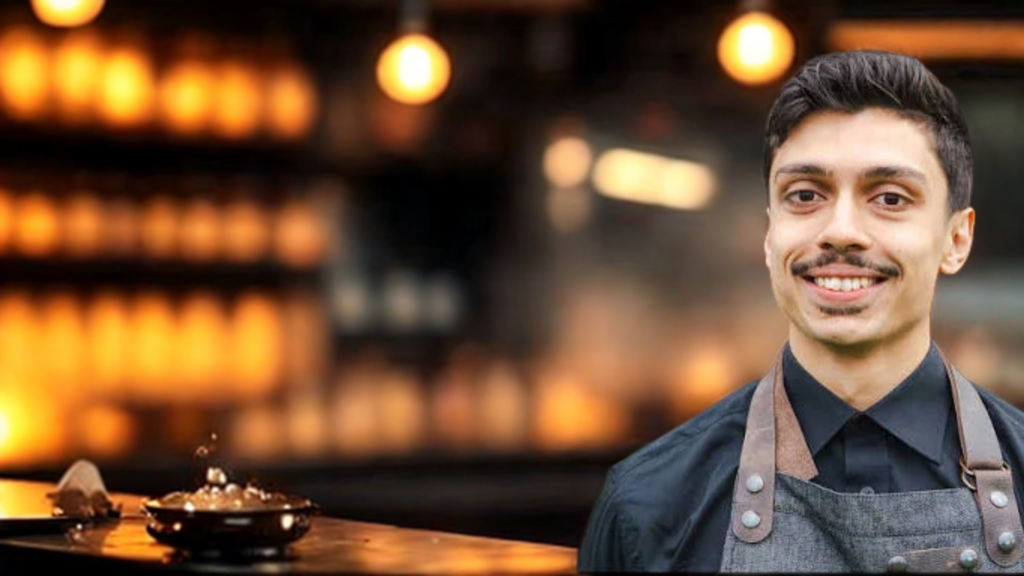
Sam Chatterji: Structure, Education, and the Rise of Indian Bartending on the Global Stage
Sam Chatterji’s work sits inside that transition. His early career was not defined by a single venue, but by movement across training, service, and education. Instead of focusing only on bar programs, he became closely involved in building structure, developing training systems, mentoring bartenders, and connecting local talent to global standards. In a market where […]
September 7, 2026

Partnership
Tres Monos in Buenos Aires: The High-Energy Bar Redefining Cocktail Craft
Volume comes first. Not just music, but movement, conversation, the rhythm of a room that rarely settles. At Tres Monos in Buenos Aires, energy is not an accessory to the experience; it is the structure that holds everything together. What appears spontaneous is, in reality, tightly controlled, with every drink, every gesture, and every interaction […]
September 5, 2026