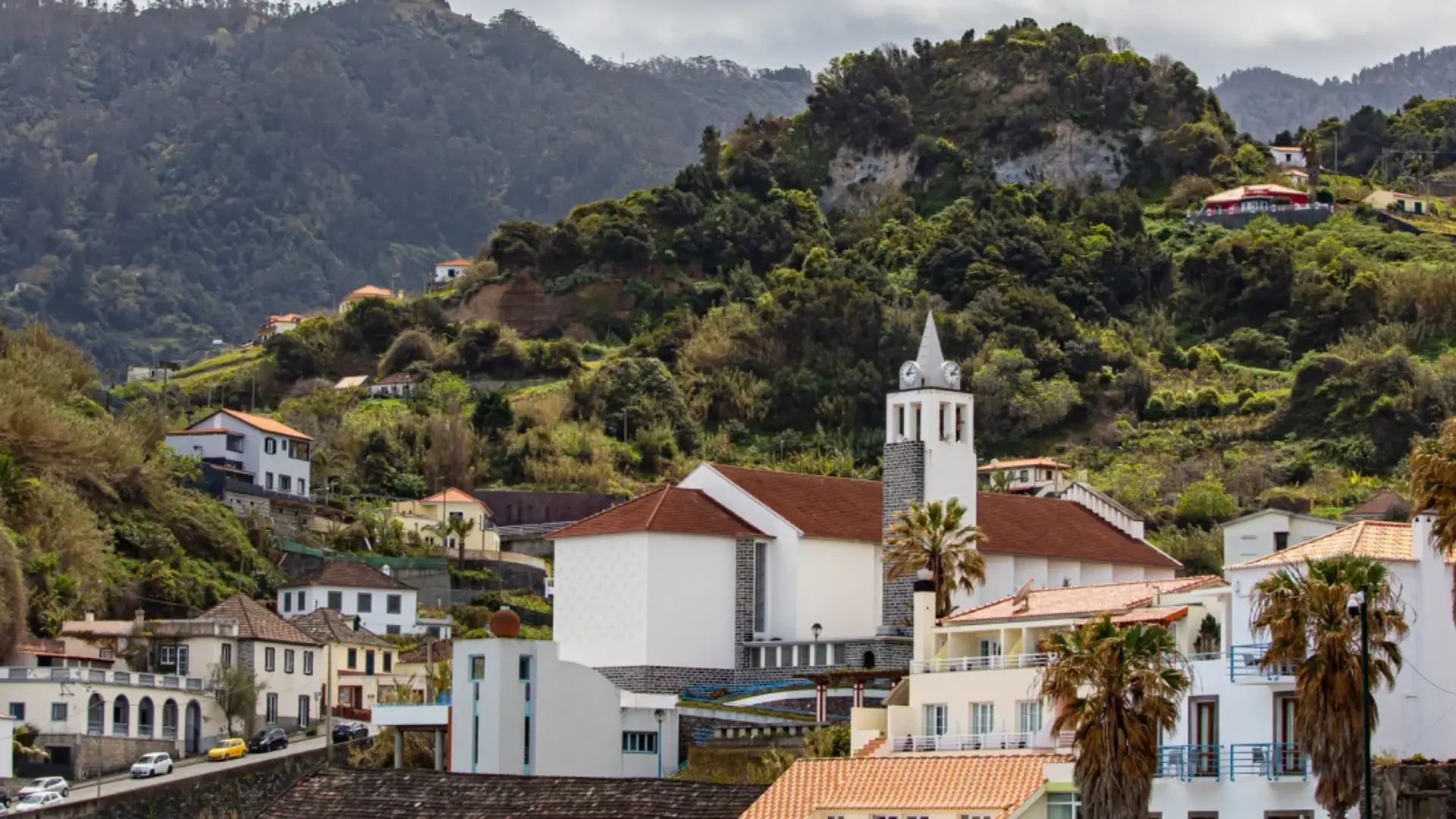
Madeiran rum exists within a narrow technical and geographic framework that resists abstraction. Unlike Caribbean or Latin American rum traditions shaped by scale and export, rum production on Madeira remains tied to fresh sugarcane juice, seasonal distillation, and localised milling. From the northern coast at Porto da Cruz to the southern town of Calheta, a small number of distilleries define the island’s rum identity through continuity rather than expansion.
While Madeira counts only a handful of active rum producers, their methods preserve one of Europe’s last intact agricultural rum systems.
Porto da Cruz and Engenhos do Norte
On Madeira’s northern coast, the village of Porto da Cruz hosts Engenhos do Norte, the island’s largest and most structurally significant rum producer. Founded in 1927, the distillery emerged from the consolidation of several declining sugar mills as Madeira’s sugar economy contracted in the early 20th century.
Engenhos do Norte produces rum exclusively from fresh sugarcane juice harvested on the island. Distillation takes place seasonally between March and May, aligned with the cane harvest. Fermentation is short and controlled, designed to preserve vegetal clarity rather than develop ester-heavy profiles.
Two of the distillery’s most widely distributed unaged spirits are Rum da Madeira Agricola Branca and Rum da Madeira Agricola 980.
Branca refers to an unaged agricultural rum distilled to retain cane freshness and linear structure, typically bottled at standard strength for local consumption and culinary use.
The designation 980 refers to a higher-proof unaged agricultural rum, historically produced for traditional consumption and pastry use, with a more pronounced alcohol presence and raw cane intensity.
These are not brand abstractions. They are functional categories within Madeira’s rum culture, reflecting strength and use rather than stylistic marketing.
Calheta and the Persistence of Traditional Milling
On the island’s southern coast, Engenho da Calheta represents one of Madeira’s most historically intact distilleries. Established in 1901, it remains one of the few operational steam-powered sugarcane mills in Europe.
Engenho da Calheta processes fresh sugarcane juice immediately after harvest, preserving fermentation integrity in a climate where oxidation occurs rapidly. Distillation is conducted using column stills adapted for agricultural rum production.
The resulting spirits, sold under Rum da Madeira Agricola designations, are known for dryness, mineral structure, and restrained aromatic expression. Calheta’s production is limited by design, constrained by cane availability and traditional milling capacity rather than demand.
William Hinton and Technical Duality
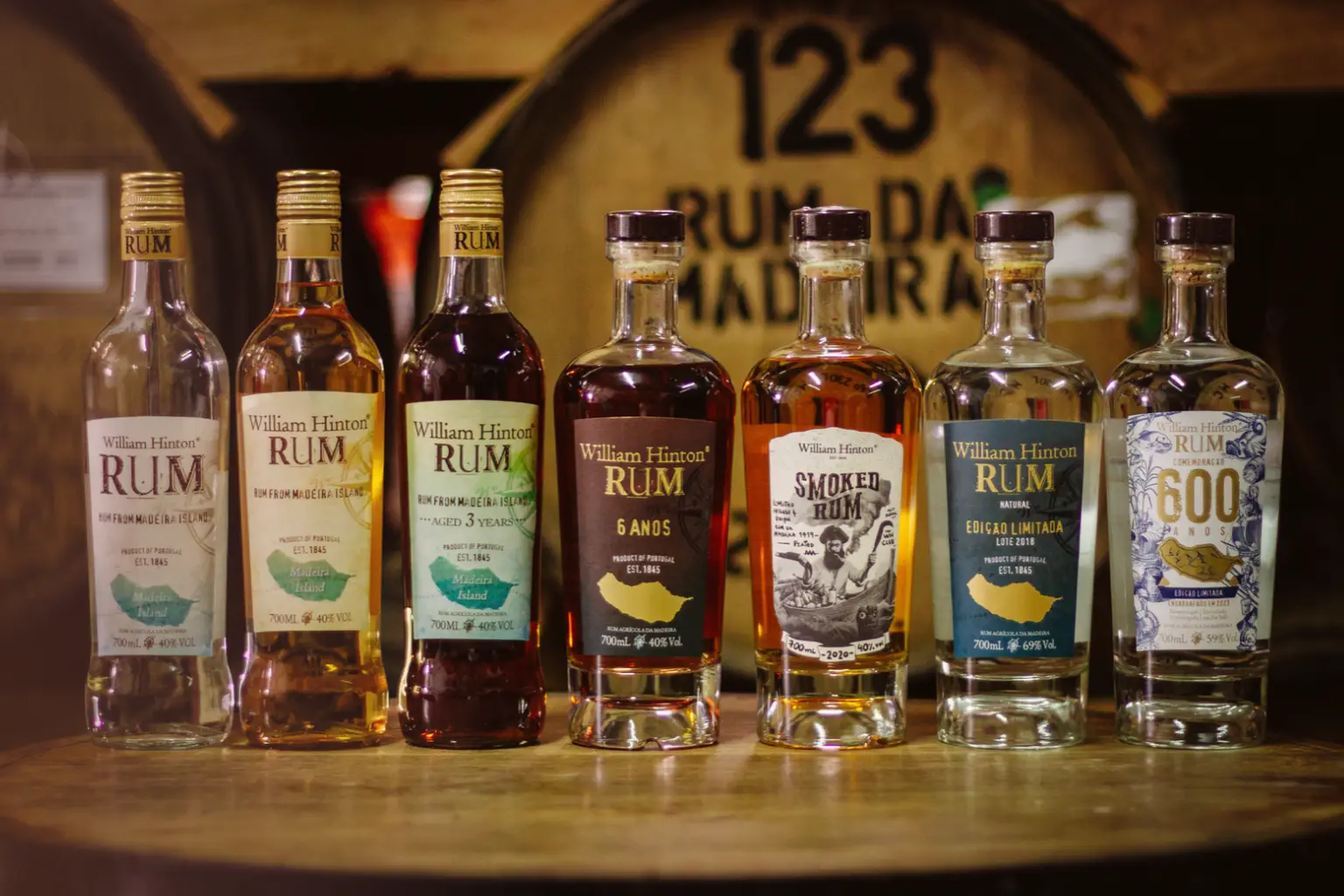
A third defining producer is William Hinton, a name historically linked to Madeira’s sugar industry since the 19th century and revived as a modern distillery in the early 21st century.
William Hinton operates with both pot still and column still distillation depending on expression. This technical duality allows the distillery to explore texture and weight while remaining within the legal framework of Madeiran agricultural rum.
Spirits such as William Hinton Agricola Rum emphasise raw material transparency, while selected aged expressions demonstrate how maturation can be applied without masking cane identity. William Hinton functions as a technical bridge between historical method and contemporary control.
Geography as a Production Constraint
Madeira’s geography imposes limits that shape every production decision. Sugarcane is grown on steep terraces and narrow coastal plots, often harvested manually. Transport distances between field and mill are short by necessity, as fresh cane juice degrades quickly.
Northern exposure at Porto da Cruz produces different cane characteristics than the warmer southern slopes near Calheta. These differences influence fermentation speed, acidity, and final spirit structure. Distillers adapt annually, reinforcing rum as an agricultural response rather than a fixed recipe.
Regulation and Identity: Madeiran Rum
Madeiran rum is protected under the designation Rum da Madeira Agricola, which mandates production from fresh sugarcane juice, distillation on the island, and adherence to defined technical parameters. Oversight ensures that producers remain tied to origin and method.
Although hundreds of rum distilleries operate globally, only a small number function within Madeira’s agricultural and regulatory constraints. Barlist documents these distilleries as systems of practice, not as lifestyle brands.
By naming distilleries, identifying spirits clearly, and grounding production in geography and method, Barlist frames Madeiran rum as a living agricultural tradition. From Porto da Cruz to Calheta, the island’s distilleries demonstrate how limitation preserves identity and why continuity remains the foundation of authority in spirits culture.

Global spirits authority, author of the Spirits Guidelines, and Director of the Spirits Selection by CMB, bringing 25+ years of international category expertise to Barlist.

In partnership with Spirits Selection
Spirits Selection is a global spirits competition and editorial partner of Barlist, contributing expertise, tasting insights, and institutional credibility to selected stories and guides.

Distillery
Engenhos do Norte Distillery, known as the 'North Distillery', is a hallmark of rum production situated in the…
Spirit
North Natural Agricola Da Madeira Rum
North Natural Rum is a distinguished rum that hails from Engenhos do Norte, the foremost distillery located on…
Spirit
William Hinton 24 Days Limited Edition 45°
William Hinton 24 Days Limited Edition 45° is a remarkable rum crafted with a dedication to excellence and…
Spirit
980 Engenhos Do Norte Rum Agricola Da Madeira 40°
980 Engenhos Do Norte Rum Agricola Da Madeira 40° is a distinguished example of agricultural rum, crafted on…
Spirit
Compagnie Des Indes Latino 4 YO Rum
Compagnie des Indes Latino 4 Year Old Rum is a carefully crafted distilled spirit, originating from the heart…
Spirit
William Hinton 6 YO Madeira Cask Matured Rum
William Hinton 6 Years is a remarkable rum produced in Madeira, Portugal, that showcases the exceptional craftsmanship of…
Spirit
William Hinton Madeira White Rum
William Hinton Madeira White Rum is a distinctive spirit that originates from the picturesque island of Madeira, Portugal,…
Spirit
That Boutique-y Rum Company 3 YO Engenho Novo Da Madeira Rum
Engenho Novo Da Madeira 3 YO is a testament to the craftsmanship and traditional methods of rum production…
Spirit
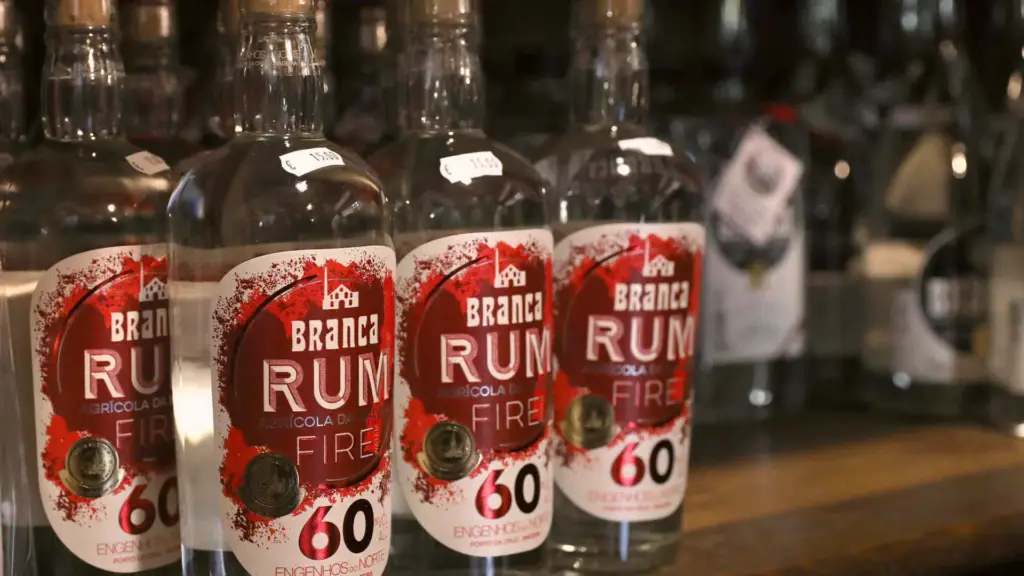
Branca rhum agricole blanc 50°
Branca rhum agricole blanc 50° is a distinguished agricultural rum originating from the picturesque island of Madeira. Characterized…
Partnership
Technical Divide in Madeiran Rum Production: Pot Stills, Column Stills Distillation
Madeiran Rum production has always been defined less by volume than by method. Unlike Caribbean regions shaped by plantation scale and colonial export markets, Madeira developed a rum culture rooted in small agricultural units, seasonal cane harvests, and legally enforced technical choices. The island’s modern rum identity is structured around a clear technical divide between […]
September 2, 2026
Partnership
Pisco and the Legal Identity of a South American Grape Spirit
The story of Pisco begins with the arrival of vines in colonial South America. Spanish settlers introduced grape growing along the Pacific coast, where dry valleys, irrigation, and sunlight allowed viticulture to develop in areas that were otherwise defined by desert, mountains, and ocean. Wine came first. Distilled grape spirit followed. In Peru, the name […]
August 30, 2026
Partnership
Bourbon: The American Whiskey Defined by Federal Law and New Oak
Bourbon did not begin as a luxury category like other American Whiskey. It began with grain, settlement, transport, and the need to turn agricultural surplus into something stable enough to move and sell. In early American farming regions, corn was abundant, bulky, and perishable. Whiskey gave it value beyond the field. Over time, that practical […]
August 23, 2026