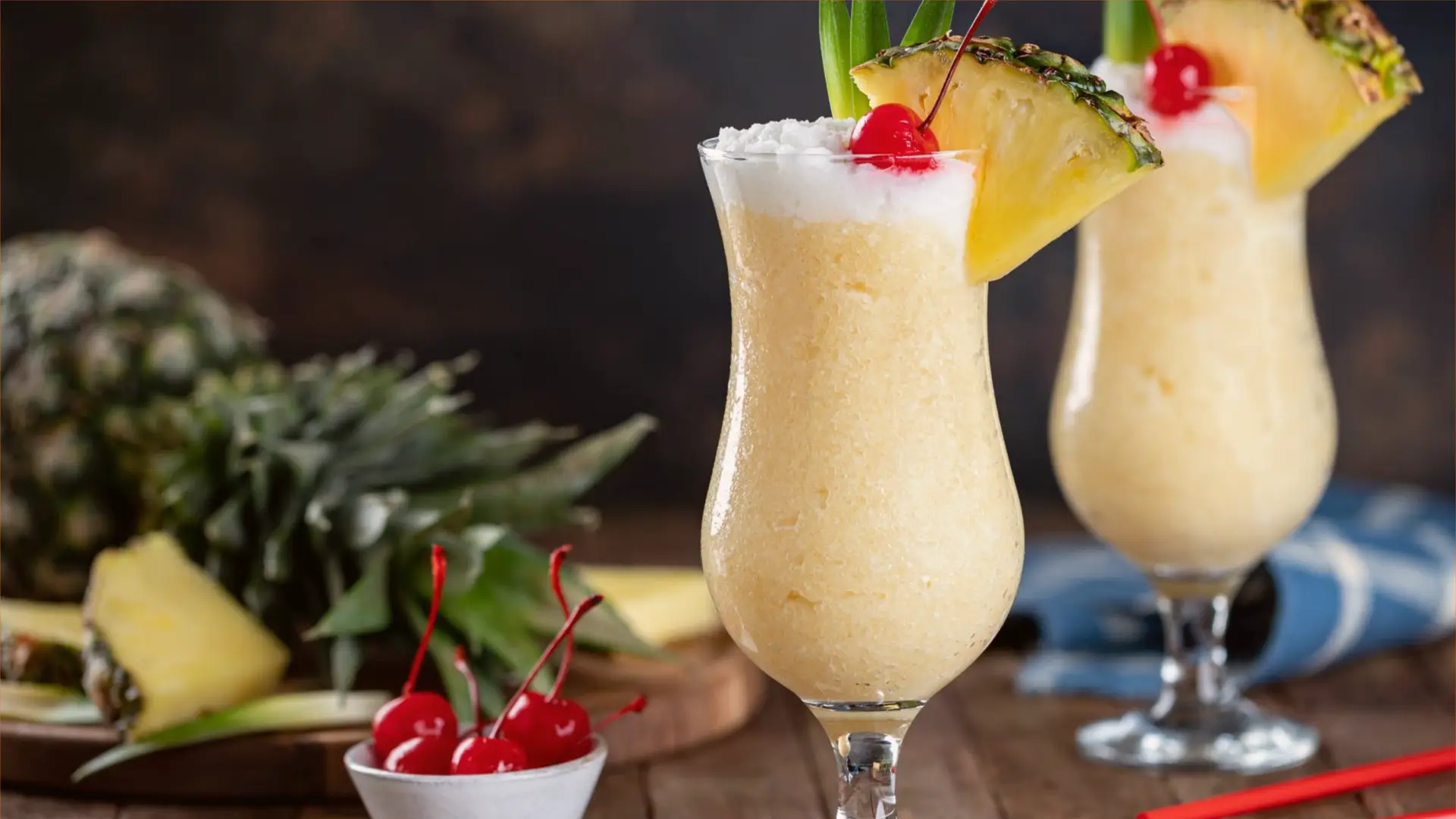
By the early 1950s, San Juan emerged as a premier tourist destination shaped by air travel and hotel development, serving as the backdrop for the origins of the Piña Colada. This transformative era, which redefined the local bar as a crucial point of introduction for Puerto Rico’s culture, laid the foundation for the cocktail’s history. For more, visit barlist.app.
Inside the Caribe Hilton, opened in 1949 as part of Puerto Rico’s tourism expansion strategy, a cocktail emerged that would come to define the island’s global image. Around 1954, Ramón Marrero, often referred to as Monchito, developed a drink that combined rum, coconut, and pineapple into a single, unified structure. The Piña Colada was not an invention in isolation. It was built for a specific environment where hospitality, climate, and expectation converged.
Earlier references and the question of origin
The combination of pineapple and rum predates the 20th century. References to similar mixtures date back to the 19th century, including accounts linked to Caribbean sailors and figures such as Roberto Cofresí, the Puerto Rican privateer often associated, though without definitive evidence, with early versions of the drink.
By the early 20th century, variations of pineapple-based rum drinks were already present across the Caribbean. However, these were not standardized cocktails. They lacked the defining element that would later distinguish the Piña Colada. That element was coconut.
The introduction of coconut cream, particularly through products like Coco López, created a stable, emulsified texture that allowed the drink to achieve consistency. Without it, the combination of ingredients remained fragmented. The modern Piña Colada required this technological step as much as any creative decision.
Structure, texture, and balance
The Piña Colada is often perceived as simple, but its structure depends on balance across density, acidity, and alcohol. Rum provides the base, typically a light Puerto Rican style such as those produced by Bacardí or Don Q. Coconut cream introduces fat and sweetness, while pineapple juice contributes acidity and aromatic brightness.
When blended, these elements create a texture that is both dense and aerated. The drink is neither shaken nor stirred in the traditional sense. Its structure is achieved through blending, which integrates ingredients into a uniform consistency. This method distinguishes it from earlier Caribbean cocktails such as the Daiquiri, where the separation between components remains more defined.
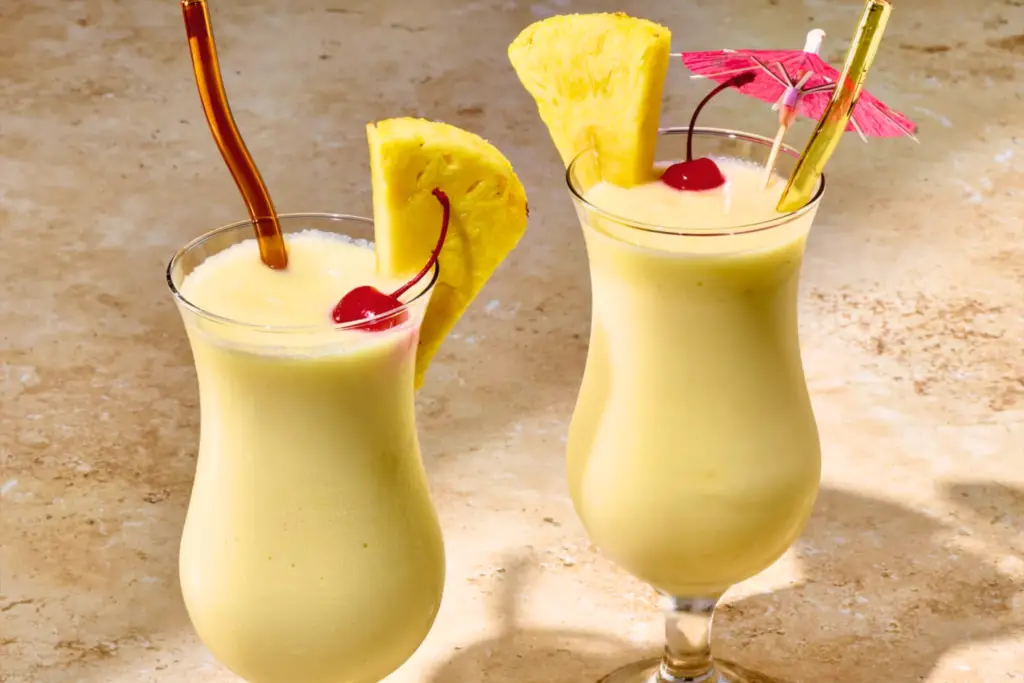
The Caribe Hilton and the codification of the drink
The role of the Caribe Hilton extends beyond origin. It provided a platform where the Piña Colada could be consistently reproduced and presented to an international audience. The hotel operated within a broader economic initiative to position Puerto Rico as a premier destination. The cocktail became part of that identity, offered as a signature experience tied to place.
While other venues, including Barrachina in Old San Juan, have also claimed association with the drink’s creation, the version attributed to Ramón Marrero at the Caribe Hilton remains the most widely recognized and historically supported. By the 1960s and 1970s, the Piña Colada had moved beyond the hotel, appearing in bars across the Caribbean and the United States.
Tourism, branding, and national identity
The transformation of the Piña Colada from a local cocktail into a national symbol reflects broader changes in Puerto Rico’s economy. Tourism required recognizable markers, and the drink provided one that was both accessible and distinct.
In 1978, the government of Puerto Rico officially declared the Piña Colada its national drink. This formal recognition solidified its status, linking it directly to the island’s cultural and economic identity. Unlike spirits such as rum, which are tied to production, the Piña Colada represents consumption. It is a finished expression, designed to be experienced rather than aged or traded.
Global spread and reinterpretation
As the Piña Colada moved beyond Puerto Rico, its structure allowed for variation. Bartenders adjusted sweetness, altered rum styles, and modified texture to suit different markets. In some cases, the drink became sweeter and more diluted, aligning with mass tourism expectations. In others, it was reinterpreted with greater precision, emphasizing balance and ingredient quality.
Despite these variations, the core elements remain recognizable. Rum, coconut, and pineapple continue to define the drink, even as proportions shift.
A cocktail built for the environment
The Piña Colada cannot be separated from the conditions in which it was created. Climate, tourism, and mid-20th-century hospitality shaped both its form and its purpose.
It is a drink designed for heat, for leisure, and for presentation. Its texture and flavor profile respond directly to those conditions. Unlike cocktails that emerged from bars focused on technical innovation, the Piña Colada reflects a different kind of development. It is structured around experience.
The Piña Colada represents a point where cocktail history intersects with economic strategy. Its rise was not driven solely by technique, but by the need to define a place through a single, recognizable form.
Rum, coconut, and pineapple existed independently long before the drink was codified. What changed was the system that brought them together, stabilized their interaction, and presented them consistently.
In that structure, the Piña Colada moved from variation to identity. It became not just a cocktail, but a symbol shaped by environment, industry, and repetition.
Cocktail
The Piña Colada is one of the most iconic tropical cocktails, instantly evoking the warmth and leisure of…
Distillery
Bacardi Martini France, commonly referred to as BMF, is a prominent division of the Bacardi Group, one of…
Partnership

Pisco: A Spirit Claimed by Two Nations
Pisco is one of the few spirits whose identity is divided by national borders rather than defined by them. Both Peru and Chile claim pisco as a national spirit, each supported by legal frameworks, historical narratives, and active production. This dual claim is not a modern branding dispute. It is the outcome of colonial administration, […]
October 7, 2026
Partnership
Singani: Bolivia’s High-Altitude Spirit and a Forgotten Andean Heritage
Singani is one of the least understood legally protected spirits in the world. Despite centuries of continuous production in Bolivia, it remains largely absent from global spirits discourse. This absence is not due to ambiguity or lack of definition. Singani is one of the most tightly structured grape distillates in existence, defined by altitude, grape […]
September 30, 2026
Partnership
Kweichow Moutai: The Protected Origin of Sauce Aroma Baijiu
Moutai begins in a bend of the Chishui River, in a town where geography has been asked to explain taste for generations. The river, the valley heat, the purple-red soils, the surrounding hills, and the microbial life of Maotai Town are all part of the story people tell when they try to explain why this […]
September 27, 2026