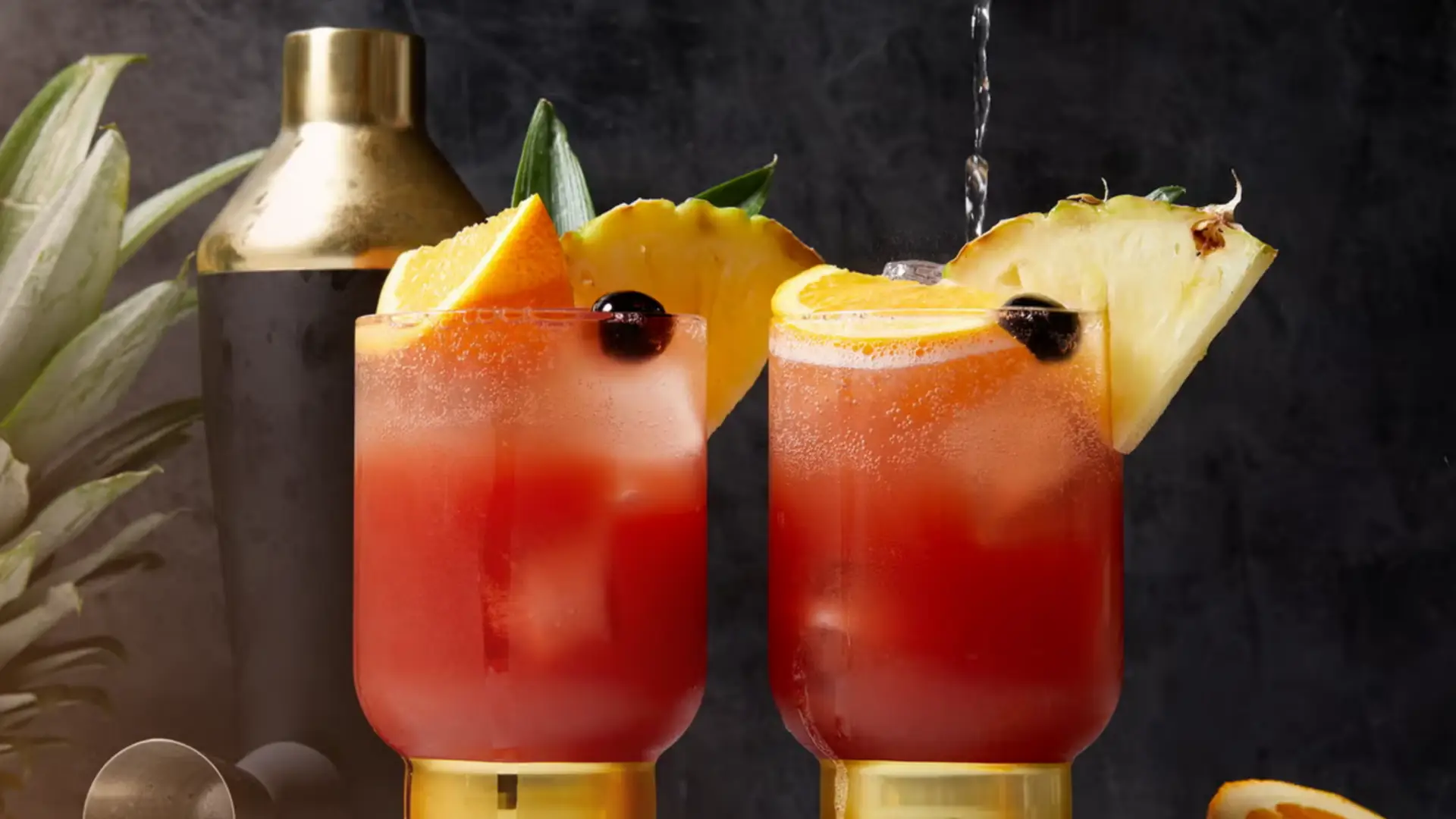
The Long Bar at Raffles Hotel Singapore was built as much for observation as for drinking. In the early 20th century, it functioned within a colonial framework where behavior, appearance, and consumption followed unwritten codes. What a guest ordered mattered. How it looked mattered more.
Around 1915, Ngiam Tong Boon is widely credited with creating a drink that fit these conditions. The Singapore Sling did not emerge as an attempt at innovation for its own sake. It responded to a specific environment where clear, spirit-forward drinks carried different social meanings than lighter, fruit-driven ones.
A pink, aromatic cocktail could move through the room without drawing the same attention as a glass of whisky or gin. Its appearance softened its structure. That balance between perception and composition defined the drink from the beginning.
From the sling category to a layered construction
The name Sling connects the drink to a much older category dating back to the 18th and 19th centuries, when slings were simple combinations of spirit, water, sugar, and sometimes bitters. These early forms were direct and functional, closer to diluted spirits than to modern cocktails.
The Singapore Sling diverged from this structure. Gin remained central, but additional elements introduced complexity. Cherry Heering added depth and color, herbal liqueurs such as Bénédictine introduced bitterness and spice, and citrus provided necessary acidity.
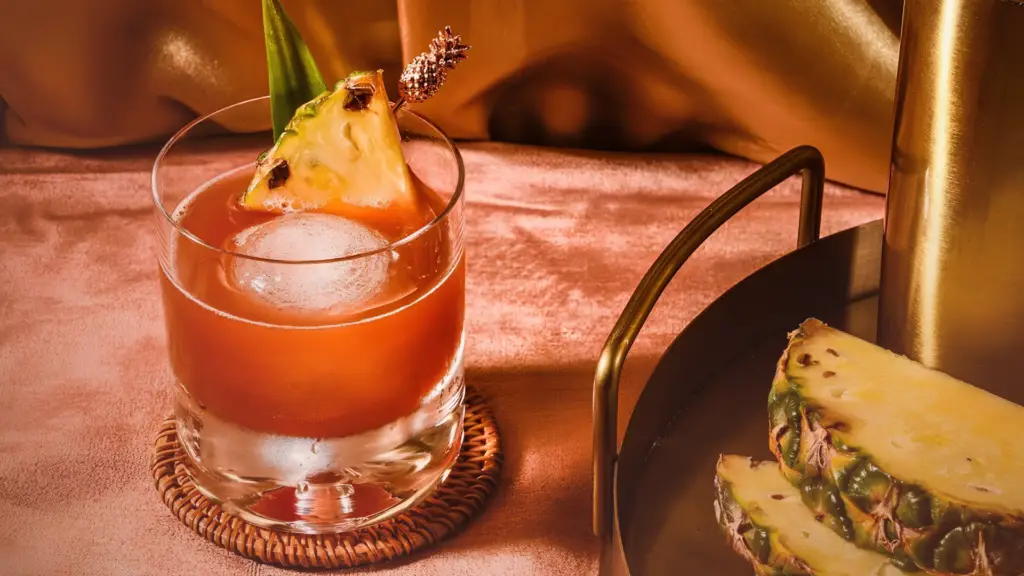
The most significant shift came with the integration of pineapple juice. Unlike citrus alone, pineapple contains enzymes and natural proteins that create a light foam when shaken, altering both texture and perception. This gave the drink a softer body and reduced the apparent strength of the alcohol.
What began as a sling became a constructed cocktail, shaped by multiple layers rather than a single balance point.
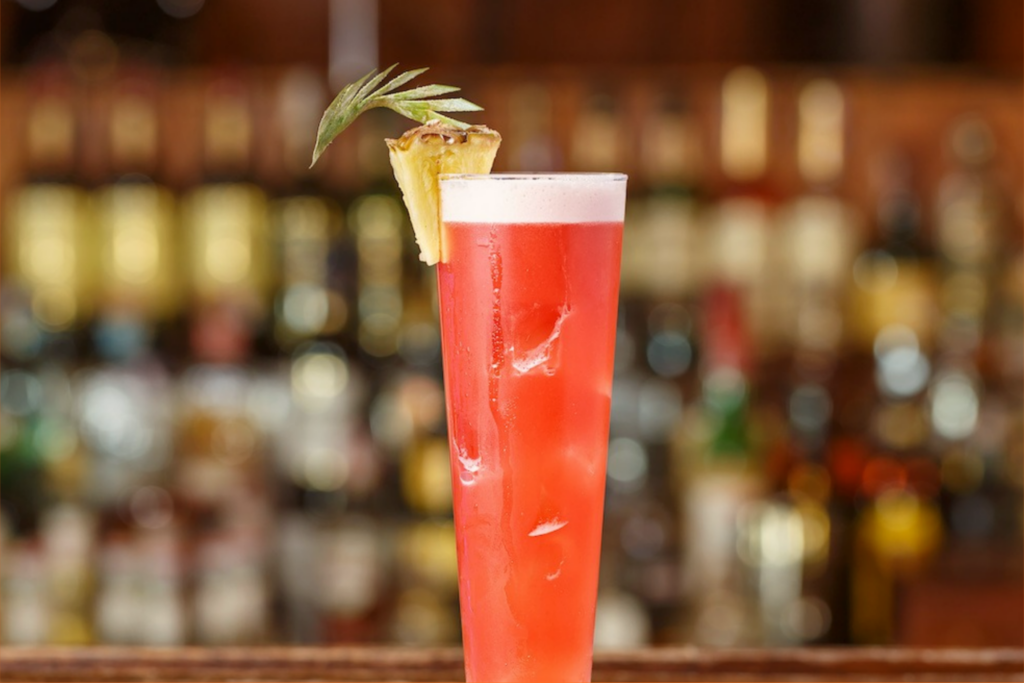
Structure, strength, and controlled balance
Despite its visual lightness, the Singapore Sling carries a relatively high alcohol content. The combination of gin with liqueurs such as Cherry Heering and Bénédictine creates a base that is both aromatic and structurally dense.
Sweetness, acidity, and bitterness are distributed across ingredients rather than concentrated in one element. Citrus sharpens the profile, while pineapple broadens it, allowing multiple flavors to coexist without dominance.
This balance is not accidental. It is calibrated to maintain drinkability while preserving complexity. The drink appears accessible, yet it is constructed with precision.
Reconstruction and the question of the original recipe
Unlike cocktails that were documented at the moment of creation, the Singapore Sling evolved within a working bar environment. No definitive written recipe from the early 20th century has survived.
The version served today at Raffles Hotel Singapore was reconstructed during the hotel’s restoration in the late 20th century, drawing on archival material and historical interpretation. This reconstruction established a standardized formula, but it should be understood as an approximation rather than a fixed original.
Earlier variations likely differed in proportion and composition, reflecting ingredient availability and individual bartending practice. The modern Singapore Sling is therefore both historical and interpretive.
Movement through colonial routes and hotel culture
Singapore’s position as a major port connected it to trade routes linking Asia, Europe, and Australia. Drinks created in such environments did not remain local. They moved with travelers, bartenders, and hotel networks.
The Singapore Sling appeared in bars across cities influenced by British colonial presence, including London and Hong Kong. Its structure allowed adaptation. Ingredients could shift, but the overall composition remained recognizable. Unlike tightly defined classics, it absorbed variation as it spread. The drink’s identity was maintained through structure rather than a strict recipe.
From house creation to global reference
Over time, the Singapore Sling transitioned from a contextual drink into an internationally recognized cocktail. Its inclusion on the International Bartenders Association list formalized its status as a contemporary classic. Modern interpretations vary. Some reduce sweetness to align with contemporary preferences, while others return to earlier, less elaborate forms that emphasize the gin base more directly.
Yet even in variation, the core remains intact. A layered, fruit-driven cocktail built on multiple spirits, designed to balance perception with structure. The Singapore Sling did not begin as a statement of craft. It began as a response to context. Its composition reflects a moment in hospitality where presentation shaped acceptance as much as flavor.
As it moved beyond its origin, the drink adapted without losing its underlying logic. Its evolution mirrors the movement of cocktail culture itself, shaped by travel, reinterpretation, and changing expectations. What remains consistent is its construction. A drink that appears simple, yet reveals its complexity only when examined closely.
Cocktail
The Singapore Sling is one of the most famous gin-based cocktails in the world, celebrated for its vibrant…
Spirit
Heering Cherry Liqueur is a distinguished cherry liqueur crafted since 1818 in Copenhagen, Denmark. Regarded as the world's…
Spirit
Bénédictine Single Cask Liqueur
Bénédictine Single Cask Liqueur is a refined expression of the time-honored Bénédictine liqueur, celebrated for its complex flavor…
Bars and Cocktails
Hospitality and Cocktail Culture: The Foundation of Bartending
A well-made cocktail may earn attention, but hospitality determines the meaning of the exchange. It begins before an order is taken, in the way a guest is acknowledged, understood and given a place within the room. Bartending becomes hospitality when technical skill is directed towards another person rather than displayed for its own sake. Service […]
September 29, 2026
Partnership
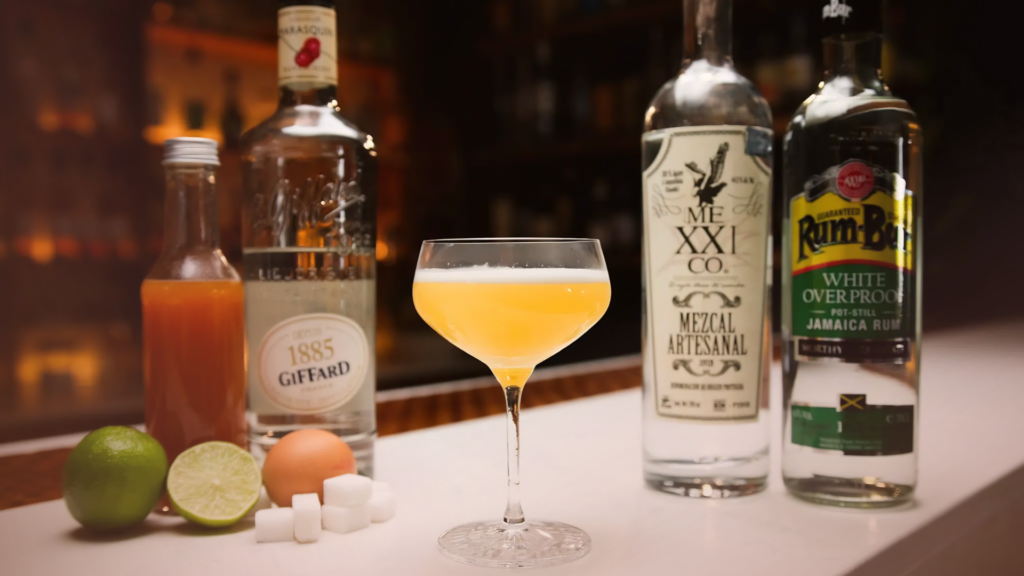
Illegal Cocktail: The Mezcal Cocktail That Reframes the Daiquiri Structure
The Illegal cocktail follows a familiar outline, but the result is distinctly different. Built around mezcal, lime, falernum, maraschino, simple syrup, and a measure of Jamaican overproof rum, it takes the logic of a sour and shifts it into a drier, more aromatic profile. The drink is credited to Italian bartender Samuele Ambrosi, with its […]
September 24, 2026
Partnership
IBA Tiki: Codifying Tropical Structure Within Modern Cocktail Standards
Tiki has never been a single drink, but in this case the name points to one specific modern cocktail. The IBA Tiki is not a broad label for tropical classics such as the Mai Tai or the Zombie. It is a defined drink connected to the International Bartenders Association, Cuban bartending culture, and a recent […]
September 17, 2026