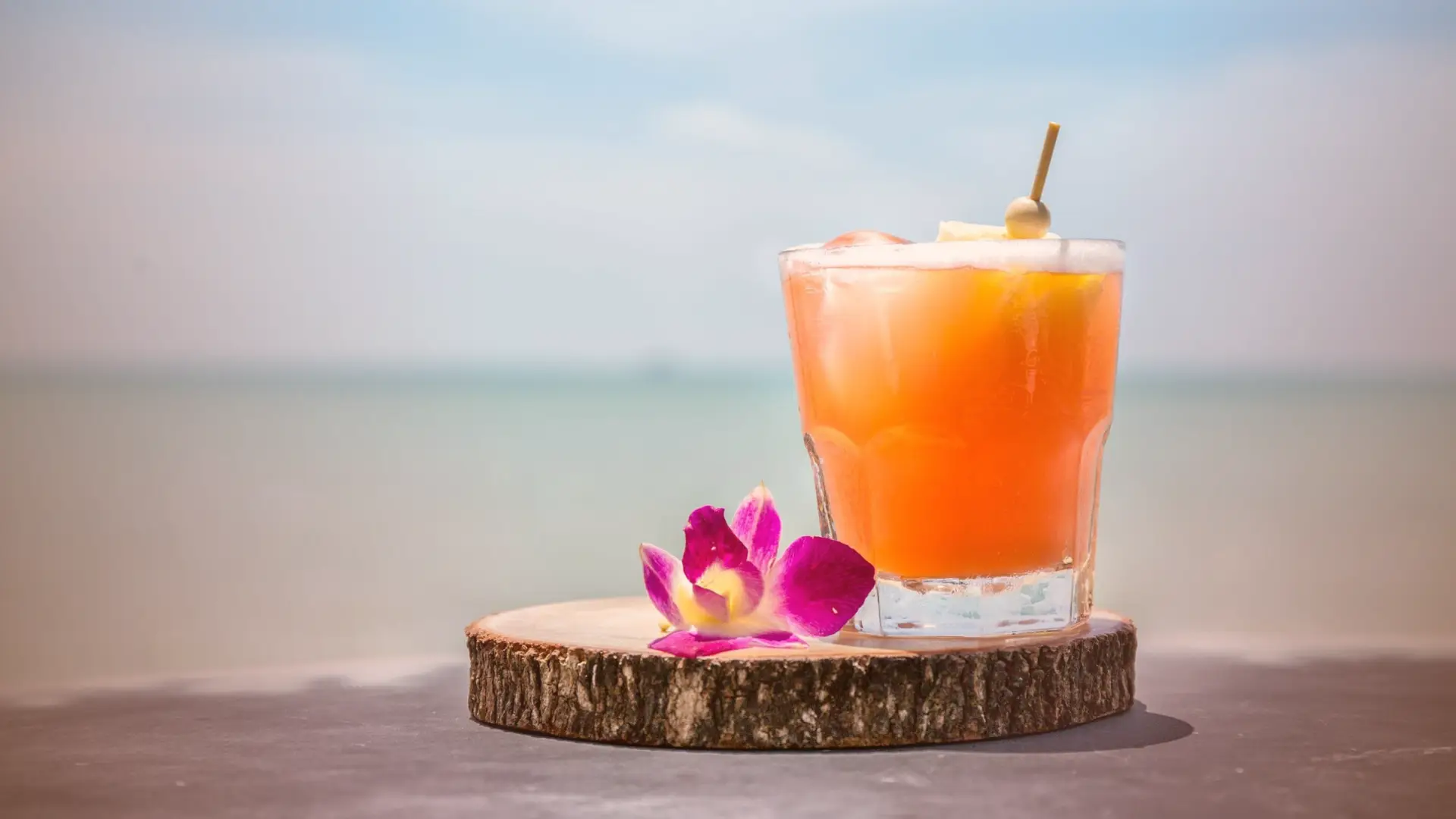
On 30 August, bars and cocktail enthusiasts celebrate Mai Tai Day, a date closely associated with the city of Oakland, California, where Victor )Trader Vic) Bergeron claimed to have created the Mai Tai in 1944. The occasion is relatively modern, but the cocktail it celebrates has a much longer story, one that connects post-war American drinking culture with rum, Caribbean ingredients, Polynesian-inspired hospitality and the rise of tiki.
The Mai Tai is also a cocktail whose history cannot be separated from debate. Trader Vic is widely credited with its creation, yet Donn Beach, the founder of Don the Beachcomber, later claimed that he had developed the drink earlier. The surviving evidence has never produced a universally accepted resolution to that dispute. What can be established with considerably greater confidence is that Bergeron’s 1944 Oakland Mai Tai became the version that gave the drink its name, identity and international reach.
That makes Mai Tai Day 2026 more interesting than a simple celebration of a tropical cocktail. Its history reveals how a drink can move from one bar in California into a global drinking culture, change as it travels, lose some of its original identity and eventually return to serious cocktail programmes through a renewed interest in its ingredients and structure.
The Cocktail Begins in Oakland and History of Mai Tai Day Celebration
In 1944, Victor J. Bergeron, better known as Trader Vic, was running the restaurant that would become synonymous with his name in Oakland. Bergeron had already developed an interest in rum and the theatrical hospitality associated with the emerging American tiki movement. His restaurant had become known for an extensive rum selection and an atmosphere influenced by imagined versions of the South Pacific.
According to Bergeron’s account, the Mai Tai began with a particularly valuable spirit: a bottle of 17-year-old J. Wray & Nephew Jamaican rum. He wanted to create a drink that would allow the rum to remain central rather than hiding it beneath large quantities of fruit juice.
The original combination was remarkably restrained by the standards of many later tropical cocktails. Bergeron’s published recipe called for two ounces of the Jamaican rum, fresh lime juice, French orgeat, Holland De Kuyper orange curaçao and a small amount of rock-candy syrup. The drink was shaken and served over shaved ice, with the spent lime shell and fresh mint providing the traditional garnish.
The structure tells an important story about what the Mai Tai originally was.
It was not designed as a generic fruit cocktail. The rum was the principal ingredient, while lime supplied acidity, orgeat brought almond richness and sweetness, and orange curaçao added citrus and aromatic depth. The supporting ingredients were there to frame the rum rather than overwhelm it.
That balance would become increasingly important as later versions of the Mai Tai moved away from the original formula.
Where the Name Came From
Bergeron’s account also connects the cocktail’s name to two friends from Tahiti, Carrie and Ham Guild, who were visiting the restaurant when he created the drink. After tasting it, they reportedly described it as “Mai Tai-Roa Aé”, a Tahitian expression that Bergeron understood as meaning something close to “out of this world” or “the best”.
The name therefore became Mai Tai, a phrase generally associated with the Tahitian maita’i, meaning good or excellent.
The story has become part of cocktail folklore, but the more important historical point is that the name established an identity for Bergeron’s creation. The drink was no longer simply a rum cocktail. It had become a named expression associated with the emerging tiki world.
The historical record places that creation in Oakland rather than in Hawaii, despite the strong association the Mai Tai later developed with Hawaiian tourism.
The Question of Donn Beach
The authorship dispute surrounding the Mai Tai has lasted for decades.
Donn Beach, born Ernest Raymond Beaumont Gantt and better known as Don the Beachcomber, had already established an influential tropical drinks culture in California by the early 1930s. His Don the Beachcomber restaurants helped establish many of the techniques and flavour combinations that would become associated with tiki cocktails.
Beach later claimed that the Mai Tai was derived from one of his earlier drinks and that Bergeron’s 1944 creation was not entirely original. This has led some accounts to identify Beach as the true creator or to suggest that Bergeron adapted an existing Beach cocktail.
The evidence does not support such a simple conclusion.
Bergeron’s 1944 creation is documented through his own account and later published material, while Beach’s claim involves an earlier cocktail lineage that has never been demonstrated conclusively to be the same drink. The two men were undoubtedly operating within the same developing tropical cocktail culture, and Bergeron had encountered Beach’s work before creating his own restaurant identity.
The safest historical position is therefore also the most interesting one: Trader Vic’s 1944 Oakland Mai Tai is the established origin story for the cocktail now known by that name, while Donn Beach’s earlier work forms an important part of the wider tiki context and the continuing authorship debate.
From Rum Showcase to Global Tiki Classic
The Mai Tai‘s international reputation grew rapidly, but the drink changed significantly as it travelled.
The original formula contained no pineapple juice, orange juice or other large quantities of tropical fruit. Its identity depended on the relationship between rum, lime, orange curaçao, orgeat and sugar.
That makes the modern perception of the Mai Tai particularly interesting.
For many drinkers, the name now suggests a brightly coloured tropical drink containing several fruit juices. Historically, however, the original cocktail was considerably more focused. Its construction was closer to a carefully balanced rum sour than to the elaborate tropical drinks that later became common in holiday resorts and tiki bars.
This distinction became increasingly important as the cocktail spread.
The popularity of the original Mai Tai placed pressure on the supply of the exceptionally old J. Wray & Nephew Jamaican rum used by Bergeron. As the available stock diminished, he modified the rum component and eventually combined different Jamaican rums to preserve the character of the drink. The history of the Mai Tai therefore contains an early lesson in cocktail adaptation: even a closely guarded classic can change when its ingredients become unavailable.
When Hawaii Changed the Drink
The Mai Tai’s association with Hawaii became much stronger during the 1950s.
In 1953, Trader Vic was asked to create drinks for hotels operated by Matson Navigation Company, including the Royal Hawaiian, Moana and Surfrider. The Mai Tai travelled with him, helping establish the cocktail within the growing Hawaiian tourism industry.
That migration had consequences.
As Hawaii became increasingly important to American ideas about tropical leisure, the Mai Tai became part of a larger visual and commercial language involving beaches, resorts, Polynesian-inspired architecture and elaborate drinks. The cocktail’s identity gradually moved away from the restrained 1944 recipe.
Pineapple juice and other fruit ingredients became common in versions marketed towards tourists. The drink was increasingly expected to look and taste like a tropical holiday.
The result was commercially successful but historically confusing. A drink that had originally been designed to showcase fine Jamaican rum became a broad category of tropical rum cocktails, many of which bore only a loose relationship to Bergeron’s original.
The Tiki Era and the Mai Tai’s Transformation
The Mai Tai’s rise cannot be separated from the development of tiki culture in the United States.
The movement had emerged during the Depression-era period through establishments such as Don the Beachcomber, where tropical drinks, elaborate interiors and imagined South Pacific themes offered customers an escape from ordinary American life. Trader Vic’s became one of the most influential successors to that tradition, combining food, rum and theatrical hospitality in a format that could expand internationally.
The Mai Tai became one of the movement’s defining drinks.
Its name sounded exotic, its rum base connected it to the Caribbean and its presentation suited the theatrical style of tiki bars. As the culture expanded, however, the cocktail was increasingly adapted to suit different markets and expectations.
This created a problem for the drink’s identity.
By the later twentieth century, asking for a Mai Tai could produce very different results depending on where it was ordered. Some versions contained pineapple juice, orange juice, grenadine or commercial sour mixes. The name had become a general signal for a tropical rum drink rather than a precise reference to the 1944 recipe.
The Mai Tai had become famous, but the original idea behind it had become harder to recognise.
The Cocktail’s Return to the Bar
The modern cocktail revival helped reverse that process.
As bartenders began returning to historical recipes and examining classic cocktails through better ingredients and more precise technique, the Mai Tai became a subject of renewed interest. Bartenders started looking again at the relationship between rum, lime, orgeat and orange curaçao that had defined Bergeron’s original.
The revival also encouraged greater attention to rum itself.
Rather than treating rum as a generic base spirit, contemporary bartenders began exploring differences between Jamaican, Martinican, Demerara and other rum traditions. A Mai Tai could therefore become a way of examining the character of the rum rather than simply providing a sweet tropical drink.
This interpretation has been particularly influential in modern tiki bars and serious cocktail programmes. Martin Cate, founder of Smuggler’s Cove in San Francisco, has described the Mai Tai as a showcase for rum, with the supporting ingredients working around the spirit rather than overwhelming it.
That philosophy brings the modern cocktail closer to Bergeron’s original intention.
Why the Mai Tai Still Matters to Bartenders
The Mai Tai is deceptively simple.
Its basic structure requires the bartender to balance a strong rum foundation with acidity, sweetness, citrus aroma and the nutty character of orgeat. Small changes in the rum or supporting ingredients can therefore produce substantial differences in the finished drink.
The choice of rum is particularly important.
A Jamaican rum can bring weight, ester character and tropical fruit notes, while a Martinique rhum agricole can introduce a different combination of grassy, vegetal and earthy characteristics. Demerara rum can contribute darker, richer flavours. Blending rums can create further layers.
The Mai Tai is consequently a useful cocktail for understanding how different rum styles behave in a mixed drink. The same is true of orgeat and curaçao. Orgeat should provide almond richness and sweetness without turning the drink heavy, while orange curaçao contributes citrus and aromatic structure. Fresh lime supplies the acidity that keeps those richer elements in balance.
There is little room for unnecessary ingredients when the drink is constructed properly.
A Cocktail Built Around Balance
The historical Mai Tai also demonstrates why cocktail recipes cannot always be understood simply as lists of ingredients. Its identity depends on proportion.
Too much sweetness can obscure the rum. Excessive fruit juice can remove the drink’s acidity and structural clarity. An overly strong lime component can make the cocktail sharp and thin. The quality and character of the rum can also be lost if the supporting ingredients are too aggressive.
This is why the Mai Tai has become such a useful reference point for contemporary bartenders. It can be traditional without being rigid.
A bartender can change the rum blend, produce a house orgeat or select a different curaçao while preserving the basic relationship between spirit, citrus, sweetness and aromatic depth. That is very different from turning the cocktail into an unrelated fruit punch.
Why 30 August Became Mai Tai Day: Oakland Claims Its Cocktail
Trader Vic’s states that a proclamation in 2009 designated 30 August as the official Mai Tai Day in Oakland, the city where Bergeron created the cocktail. The company’s current history continues to recognise the date, and Trader Vic’s has actively promoted 30 August as Mai Tai Day since the 2010s.
The date of 30 August is itself part of the Mai Tai‘s modern history.
The date matters because it ties the celebration to the cocktail’s claimed birthplace rather than to a generic tropical theme.
There has been confusion online because 30 June was previously circulated as Mai Tai Day in some calendars and publications. Trader Vic‘s has explicitly rejected that date and promoted 30 August as the correct observance. Current drinks calendars also list 30 August as National Mai Tai Day.
In 2026, 30 August falls on a Sunday, making the upcoming observance particularly useful for bars and cocktail programmes looking to explore the history of tiki and rum through a single classic.
More Than a Tropical Celebration
The modern Mai Tai is worth examining because its history reveals how easily a classic cocktail can be transformed by tourism, commercialisation and changing consumer expectations.
Its original purpose was relatively focused: to showcase a great rum through a balanced combination of lime, orange curaçao, orgeat and sugar.
Its later reputation became much broader. The Mai Tai became shorthand for tropical escape, Hawaiian holidays and tiki entertainment. In the process, many versions moved away from the drink’s original structure.
The modern revival has begun to reverse that trend.
Bartenders are treating the Mai Tai as a serious rum cocktail again, using better spirits and fresh ingredients while exploring how the original framework can accommodate contemporary rum styles. The drink’s flexibility, once responsible for its decline, has become one of its greatest strengths.
That flexibility also explains its longevity. The Mai Tai can remain recognisably itself while allowing the bartender to express a particular rum, ingredient or technique.
What Mai Tai Day Preserves
A cocktail celebration can easily become an excuse to reproduce a familiar image. Mai Tai Day offers something more valuable when it is used to revisit the history behind that image.
The story begins in Oakland in 1944, where Trader Vic claimed to have created a rum cocktail around an exceptional Jamaican spirit. It then travels through Hawaii, the growth of tiki culture, post-war tourism and the commercial transformation of tropical drinks.
Along the way, the Mai Tai changes.
Its original ingredients become harder to source. Fruit juices enter the formula. The cocktail becomes sweeter and more visually dramatic. The name spreads further than the recipe. Eventually, the modern cocktail revival begins to examine the drink again, bringing attention back to rum, lime, orgeat and orange curaçao.
The history therefore explains why the Mai Tai can mean very different things to different drinkers. For some, it remains the classic Trader Vic cocktail. For others, it represents the broader tiki tradition. For contemporary bartenders, it can be a serious framework for exploring rum.
All three interpretations belong to the cocktail’s history, provided they are not confused with one another.
Mai Tai Day in 2026 is ultimately a celebration of a cocktail that has survived by changing without completely losing its identity. Its history is rooted in the contested story of Victor Bergeron and the 1944 creation at Trader Vic’s in Oakland, but the drink’s development involved far more than one bartender. Donn Beach and the wider tiki movement shaped the culture in which the Mai Tai emerged and evolved, while Hawaii and the post-war tourism industry transformed how the drink was presented to the public.
The modern revival has given bartenders an opportunity to look beyond the tropical stereotype and reconsider the Mai Tai as a carefully structured rum cocktail. Its combination of rum, fresh lime, orange curaçao and orgeat is simple enough to understand but expressive enough to reveal differences in spirits, ingredients and technique.
That is why 30 August matters for Barlist. It is not simply another drinks-day date. It provides an opportunity to examine how a cocktail travelled from a bar in Oakland to the world’s tiki bars, how commercialisation changed its identity and how today’s bartenders are restoring attention to the balance that made the original so influential.
The Mai Tai’s history is not a straight line from invention to classic status. It is a story of experimentation, adaptation, commercial success, distortion and rediscovery.
And that may be the most appropriate history for a cocktail that was designed, from the beginning, to let great rum speak for itself.
Bar
Bar Cobra occupies a relaxed, industrial‑chic space in one of Prague’s most dynamic neighbourhoods, offering a blend of…
Cocktail
The Amaretto Tea is a warm, comforting cocktail that elegantly combines the nutty sweetness of amaretto with the…
Cocktail
Jamaican Coffee is a warm, inviting cocktail that captures the essence of both comfort and indulgence. Rooted in…
Spirit
Jamaican Rum 2012 HD MJH3 The Whisky Jury
Jamaican Rum 2012 MJH3 The Whisky Jury illustrates the excellence of traditional Jamaican rum craftsmanship, embodying a deep…
Bars and Cocktails
Hospitality and Cocktail Culture: The Foundation of Bartending
A well-made cocktail may earn attention, but hospitality determines the meaning of the exchange. It begins before an order is taken, in the way a guest is acknowledged, understood and given a place within the room. Bartending becomes hospitality when technical skill is directed towards another person rather than displayed for its own sake. Service […]
September 29, 2026
Partnership
Illegal Cocktail: The Mezcal Cocktail That Reframes the Daiquiri Structure
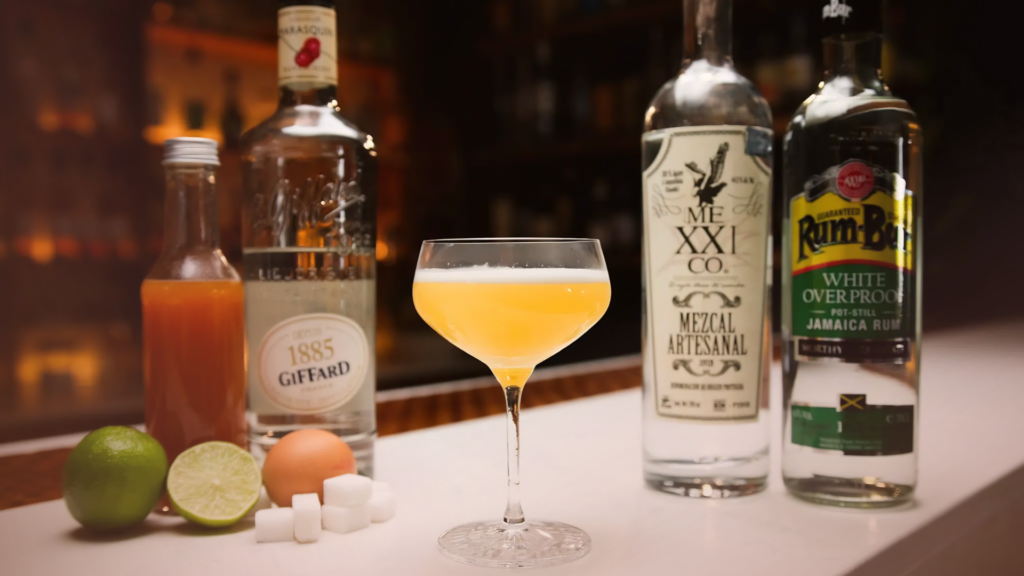
The Illegal cocktail follows a familiar outline, but the result is distinctly different. Built around mezcal, lime, falernum, maraschino, simple syrup, and a measure of Jamaican overproof rum, it takes the logic of a sour and shifts it into a drier, more aromatic profile. The drink is credited to Italian bartender Samuele Ambrosi, with its […]
September 24, 2026
Partnership
IBA Tiki: Codifying Tropical Structure Within Modern Cocktail Standards
Tiki has never been a single drink, but in this case the name points to one specific modern cocktail. The IBA Tiki is not a broad label for tropical classics such as the Mai Tai or the Zombie. It is a defined drink connected to the International Bartenders Association, Cuban bartending culture, and a recent […]
September 17, 2026