Sheffield built its reputation on steel long before it appeared on any modern spirits map. Cutlery, metalwork, and industrial production defined the city throughout the nineteenth and twentieth centuries. Against that backdrop, the establishment of Locksley Distilling Co in 2013 at Portland Works, a Grade II listed industrial site dating back to 1879, reflects a shift that is both local and national in scope.
The distillery did not emerge in isolation. By 2010, fewer than 100 active distilleries operated across the United Kingdom. Over the following decade, that number expanded to more than 400, with gin responsible for much of that growth. What changed was not only volume but geography. Gin production in Britain moved from concentration to distribution.
From the London Dry standard to a wider network
For much of the 20th century, British gin was defined by the London Dry method, a system built on neutral grain spirit and botanical redistillation, with no flavouring added after distillation. This framework shaped global expectations through producers such as Beefeater, Tanqueray, and Gordon’s, whose operations set both technical and stylistic standards.
The expansion of distilleries after 2010 did not abandon this structure. It extended it. Producers outside London adopted the same method while adjusting flavour profiles, scale, and identity. What had once been centred in a single city became distributed across regions that had no prior association with gin.
The method remained stable. The location changed.
Establishing Locksley Distilling in Sheffield
Locksley Distilling Co was founded by John Cherry, whose experience in the wine and spirits trade in France and New York informed the early direction of the distillery. His decision to establish production in Sheffield introduced distilling into a city without a historic link to gin.
Operating from Portland Works, the Locksley Distilling draws on a site associated with Sheffield’s industrial past. This connection is not incidental. It positions the distillery within a narrative of production, linking contemporary craft spirits with the city’s manufacturing heritage.
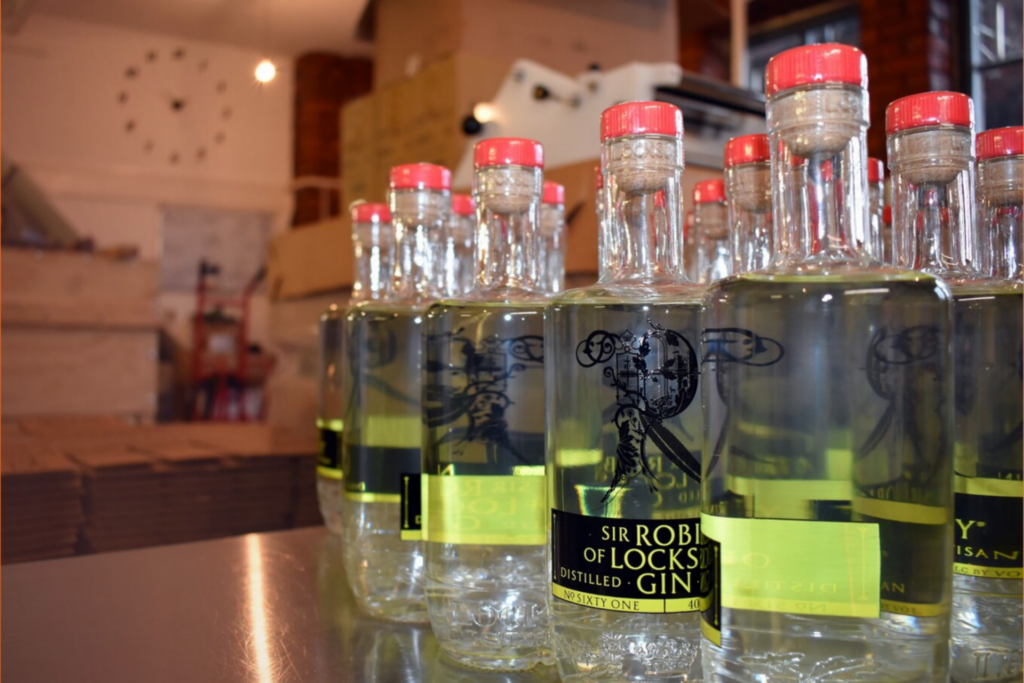
The release of Sir Robin of Locksley Gin in 2014 established the distillery’s presence within the expanding craft gin category. The name references the nearby Loxley Valley and its association with Robin Hood, creating a link between product and place that is cultural rather than historical in terms of distilling.
Production approach and botanical design
Locksley Distilling operates on a small-batch model, producing limited volumes to maintain control over consistency and flavour. This approach allows for adjustment at the level of recipe and process rather than scale.
The structure of Sir Robin of Locksley Gin reflects a balance between established and modified styles. While grounded in the London Dry method, the profile introduces a softer edge that draws on characteristics associated with Old Tom gin. Botanicals such as elderflower, pink grapefruit, and dandelion contribute floral notes, citrus bitterness, and a subtle underlying sweetness that shifts the balance without altering the fundamental structure. Difference is created through composition rather than process.
Place, narrative, and the construction of identity
Regional distilleries often define themselves through location, but the way that location is used varies. In the case of Locksley Distilling, identity is constructed through narrative as much as geography.
The reference to Robin Hood and the Loxley Valley does not reflect a historical gin tradition. It creates one. This approach is consistent with the wider craft spirits movement, where origin is expressed through story, landscape, or cultural association rather than long-established production history. Place becomes part of the product, not just its origin.
The distillery as a public space
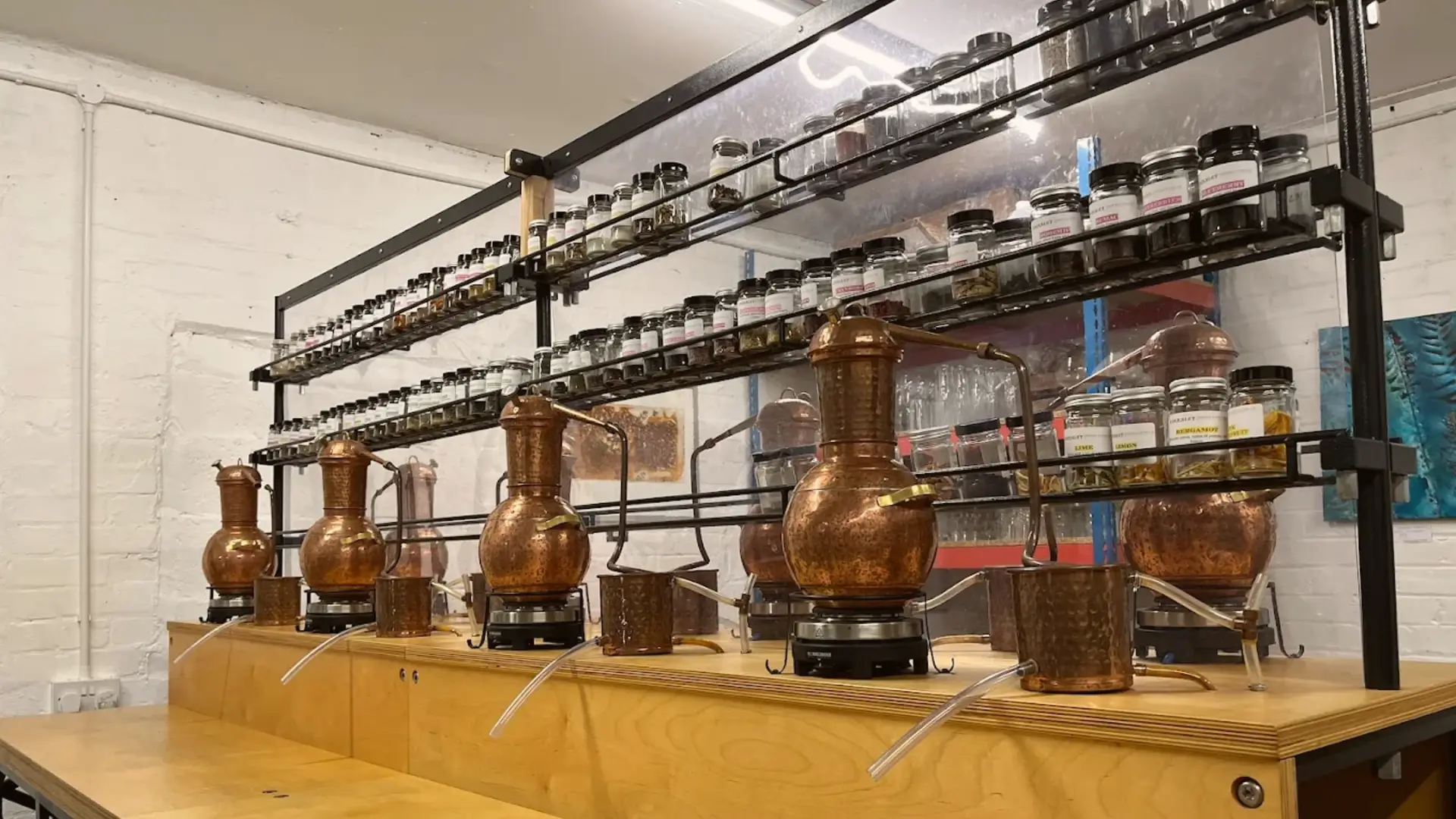
Modern distilleries increasingly operate beyond production alone. Locksley Distilling functions as both a manufacturing site and a visitor destination, offering tours, tastings, and gin-making experiences.
This model reflects a broader shift in how spirits are presented. Rather than remaining behind distribution networks, distilleries now engage directly with consumers, allowing the process, ingredients, and identity of the spirit to be experienced in the same place it is made. The result is a closer connection between production and consumption, where understanding the spirit becomes part of the experience of drinking it.
Regional production as an industry shift
The expansion of distilleries across the United Kingdom has created a distributed production landscape. By the early 2020s, UK gin exports exceeded £700 million annually, with both large producers and smaller distilleries contributing to the category’s global presence.
Within this structure, regional distilleries operate differently from traditional large-scale producers. Their position is defined less by output and more by how they interpret the category. The choice of botanicals, the integration of local identity, and the ability to connect directly with consumers all shape how the spirit is positioned.
This does not replace the role of London or large producers. It expands the framework within which British gin is understood. Regional production has redefined competition from scale to identity.
Locksley Distilling is not defined by its size or distribution. Its relevance lies in how it reflects a structural change in British gin. Production is no longer centred in one place, nor is identity determined solely by method.
The rise of regional gin production extends the category without discarding its foundations. Techniques remain consistent, but their application is no longer geographically fixed. Gin is no longer defined by where it was made historically. It is shaped by where it is made now.

Distillery
Akkeshi Distillery is a pioneering force in the world of Japanese whisky, harmonizing traditional Scottish distilling practices with…
Distillery
ABD Maestro Pvt. Ltd. is the super-premium and luxury spirits arm of Allied Blenders and Distillers (ABD), one…

Distillery
Locksley Distilling Co, nestled in the vibrant heart of Sheffield, is celebrated as the city’s first and only…
Spirit
Locksley Crystal Clear Mocha Martini Liqueur
The Locksley Crystal Clear Mocha Martini embodies a unique blend of flavor and craftsmanship, designed meticulously at Locksley…
Spirit
Sir Robin of Locksley Gin is a distinctive artisan gin hailing from Sheffield, England, crafted with a careful…
Spirit
Locksley Limited Black Sesame Liqueur
Locksley Limited Black Sesame Liqueur stands as a truly unique creation in the world of spirits, renowned for…
Spirit
Locksley Limited Winter London Dry Gin
Locksley Limited Winter London Dry Gin is a seasonal offering that exemplifies the distillery's commitment to innovation and…
Distillery
Akkeshi Distillery is a pioneering force in the world of Japanese whisky, harmonizing traditional Scottish distilling practices with…
Distillery
ABD Maestro Pvt. Ltd. is the super-premium and luxury spirits arm of Allied Blenders and Distillers (ABD), one…
Distillery
Locksley Distilling Co, nestled in the vibrant heart of Sheffield, is celebrated as the city’s first and only…
Spirit
Locksley Crystal Clear Mocha Martini Liqueur
The Locksley Crystal Clear Mocha Martini embodies a unique blend of flavor and craftsmanship, designed meticulously at Locksley…
Spirit
Sir Robin of Locksley Gin is a distinctive artisan gin hailing from Sheffield, England, crafted with a careful…
Spirit
Locksley Limited Black Sesame Liqueur
Locksley Limited Black Sesame Liqueur stands as a truly unique creation in the world of spirits, renowned for…
Spirit
Locksley Limited Winter London Dry Gin
Locksley Limited Winter London Dry Gin is a seasonal offering that exemplifies the distillery's commitment to innovation and…

Discovery and Education
The Private Label Spirits Shift: How Supermarkets Are Challenging Brand Power
For decades, spirits brands were protected by something stronger than shelf space. Private label spirits are beginning to test one of the drinks industry’s strongest assumptions: that recognised brands will always hold the consumer’s trust on the supermarket shelf. A recognised label carried trust, memory, status, and a promise that the liquid inside had been […]
July 3, 2026
Video
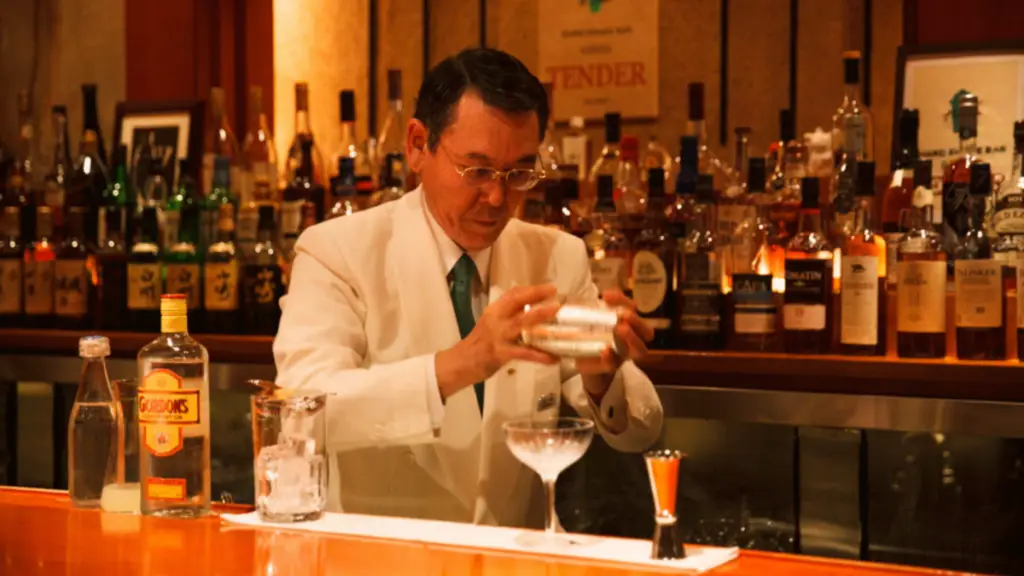
The Hard Shake: How Kazuo Ueda Turned a Cocktail Technique into an Art Form
Behind every memorable cocktail lies more than a recipe. It is shaped by technique, timing, and the person preparing it. Few modern bartending methods illustrate this better than the Hard Shake, a technique developed by Kazuo Ueda that has become one of the defining symbols of Japanese bartending. More than a distinctive way of shaking […]
June 25, 2026
History
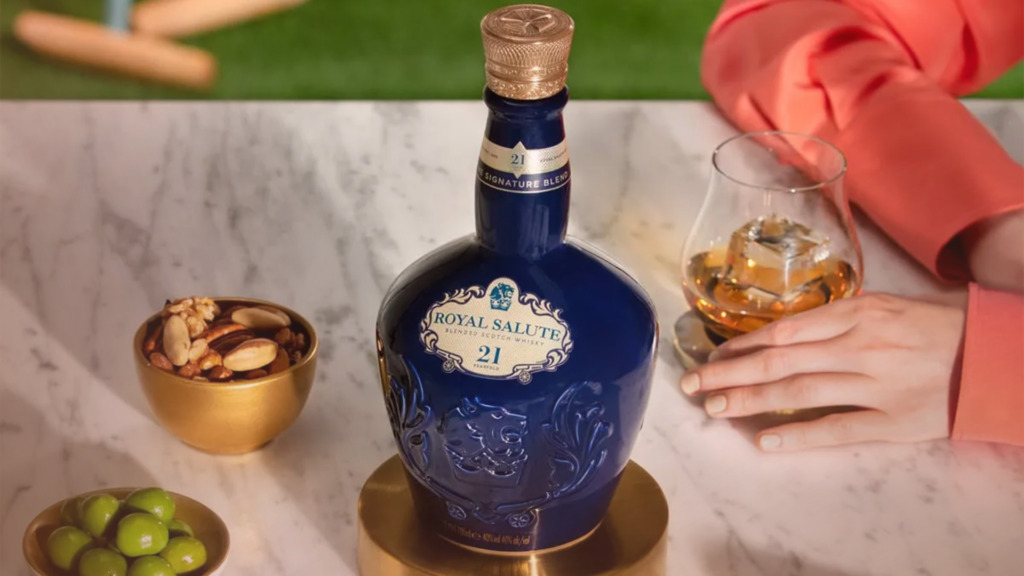
Royal Salute 21-Year-Old: A Celebration Born from Royal Tradition
Some whiskies acquire ceremony around them after decades of reputation. Royal Salute 21-Year-Old began with ceremony already embedded in its identity. The blended Scotch was launched in 1953 in connection with the Coronation of Queen Elizabeth II, held at Westminster Abbey on 2 June that year. The occasion reached an audience unprecedented for a British […]
September 11, 2026