Blue agave shaped western Mexico before Tequila became a protected name. The plant was part of food, fibre, fermentation, field culture, and regional identity long before international markets began to recognise the spirit. Around the town of it, agave cultivation became tied to volcanic land, labour, haciendas, distillation, and trade.
The modern category grew from that landscape. Tequila was not protected only because it became famous. It was protected because the name depended on a specific plant, a defined territory, and a production culture that needed legal defence.
Today, it is protected as a Mexican Denomination of Origin. Its legal identity is built around Agave tequilana Weber blue variety, the Official Mexican Standard NOM 006, certification by the Consejo Regulador del Tequila (CRT), and a production territory that links Jalisco with selected municipalities in four other states.
An Agave Landscape Before the Declaration
The cultural story begins with agave itself. In western Mexico, agave has long been part of everyday material life. It provided fermentable sap, fibres, food resources, and agricultural continuity across generations.
The area around it became especially important because Blue Weber Agave could be cultivated there at scale. Volcanic soils, seasonal rainfall, altitude, and human knowledge created a landscape where the plant became both crop and cultural symbol. By the colonial period, European distillation techniques met local agave traditions, giving rise to a spirit that would later carry the name Tequila.
UNESCO recognised this wider cultural setting in 2006 with the inscription of the Agave Landscape and Ancient Industrial Facilities of Tequila as a World Heritage Site. The protected landscape includes Blue Weber Agave fields, the urban settlements El Arenal and Amatitán, working distilleries, haciendas, and archaeological remains connected to the Teuchitlán culture.
This recognition is important because Tequila’s origin is not only legal. It is agricultural, architectural, industrial, and cultural. The Denomination of Origin protects the name. The UNESCO landscape helps explain why that name carries historical meaning.
The 1974 Declaration
The General Declaration of Protection for the Tequila Denomination of Origin was published in Mexico’s Official Gazette on 9 December 1974. This was the legal turning point that transformed Tequila from a regional name into a protected national designation.
The Denomination of Origin belongs to the Mexican State. Producers may use the name only if they operate within the authorised system and comply with the relevant rules. This prevents similar agave spirits made outside the legal territory from using the word Tequila.
The protected territory now covers 181 municipalities across five Mexican states. It includes all of Jalisco and selected municipalities in Guanajuato, Michoacán, Nayarit, and Tamaulipas. Jalisco remains the cultural and historical centre of the category, but the legal territory is wider than Jalisco alone.
That distinction matters. Tequila is not a generic Mexican agave spirit, and it is not legally restricted only to the town of Tequila. It is a defined Denomination of Origin with a specific national legal framework.
Blue Weber Agave as the Botanical Rule
The central agricultural rule is precise. Tequila must be made from Agave tequilana Weber blue variety. Other agave species may belong to mezcal, raicilla, bacanora, or other Mexican spirits, but they do not make Tequila.
This botanical requirement gives the Denomination of Origin its foundation. The plant must come from the authorised territory, and its movement through the production chain is subject to regulatory control.
Blue Weber Agave also gives the category a long agricultural rhythm. The plant takes years to mature. A Tequila producer is therefore shaped by planting cycles, field management, disease pressure, agave pricing, harvest timing, and land use. The law protects the name, but the plant gives the system its pace.
Jalisco at the Centre of a Wider Territory
Tequila’s geography is often understood through two broad Jalisco references. The Valles region around Tequila is closely linked to the historic industrial landscape, volcanic soils, early distilling centres, and the UNESCO-recognised cultural zone. Los Altos de Jalisco is associated with higher-elevation agave cultivation and a major concentration of modern production.
These regional identities matter culturally, but they do not replace the legal map. The authorised territory also includes selected municipalities in Guanajuato, Michoacán, Nayarit, and Tamaulipas.
The result is a protected origin with both a heartland and a wider legal structure. Jalisco gives Tequila much of its historical identity, while the Denomination of Origin defines the complete territory in which the spirit may legally be produced.
From Agave Heart to Certified Spirit
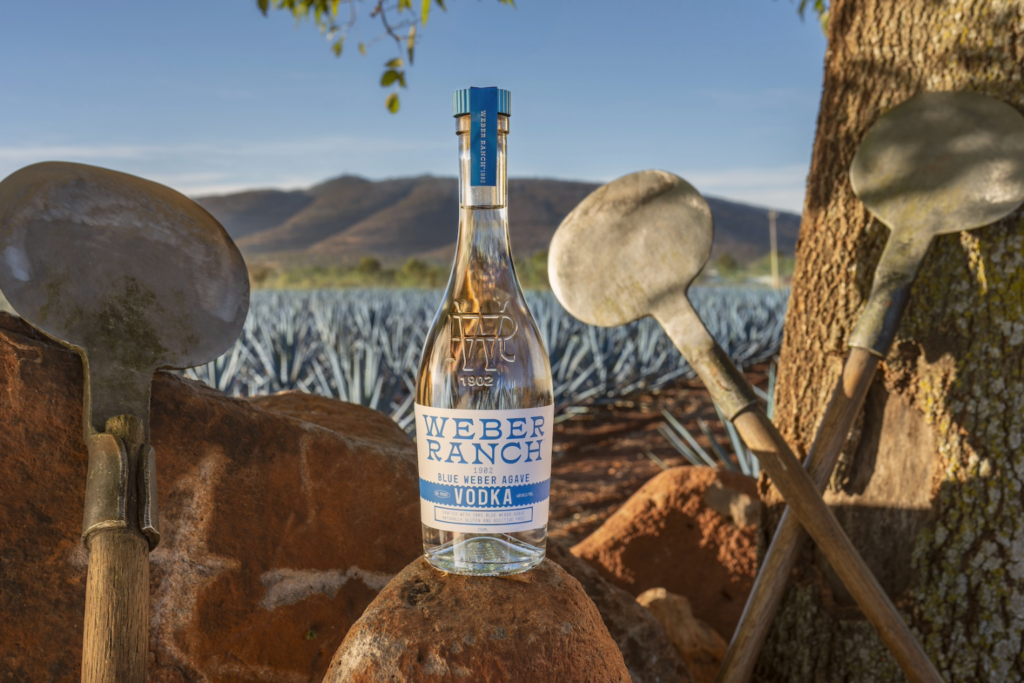
Tequila production begins with the heart of the Blue Weber Agave. The harvested agave is transformed into fermentable material, then into an alcoholic must, and finally into spirit through distillation.
NOM 006 defines it as a regional alcoholic beverage obtained by distilling musts prepared from the Agave tequilana Weber blue variety. The standard governs the relationship among raw materials, authorised production, fermentation, distillation, classification, ageing, bottling, and labelling.
This technical framework is not simply a production description. It is the legal structure that decides whether a spirit may carry the name Tequila. The name depends on traceability from agave field to certified product.
The Consejo Regulador del Tequila (CRT) plays a central role in certification. Its work includes inspection, analysis, verification, and protection of the Denomination of Origin. Without that control, the word Tequila could be separated from the agricultural and geographic system that gives it meaning.
Two Categories of Agave Identity
Tequila has two legal categories based on the source of fermentable sugars.
The stricter category is 100 per cent agave. In this category, fermentation may not be enhanced with sugars other than those obtained from Agave tequilana Weber blue variety grown within the Denomination of Origin territory. The product must be labelled with an approved expression such as 100 per cent de agave, 100 per cent puro de agave, 100 per cent agave, or 100 per cent puro agave.
The broader category is Tequila. This category must still derive at least 51 per cent of total reducing sugars from Blue Weber Agave grown in the authorised territory. The remaining portion may come from permitted non-agave sugars before fermentation.
This distinction is one of the most important technical facts in Tequila law. Every Tequila is tied to Blue Weber Agave, but not every Tequila is 100 per cent agave. The label must make that difference clear.
Age Language Under NOM 006
NOM 006 also regulates Tequila classes.
Blanco (Plata) refers to a clear product that may be unaged or may spend less than two months in oak or Encino oak. Joven (Oro) may result from blending or mellowing practices permitted by the standard. Reposado requires at least two months in direct contact with oak or Encino oak.
Añejo requires at least one year in oak or Encino oak containers with a maximum capacity of 600 litres. Extra Añejo requires at least three years in oak or Encino oak containers with the same maximum capacity. These terms give Tequila a regulated vocabulary for maturity. They do not define every sensory difference between producers, but they stop age language from becoming vague.
The official alcohol strength range under NOM 006 is 35 to 55 per cent ABV. This range forms part of the technical identity of the category, alongside the agave rule, the authorised territory, the fermentation requirements, the distillation framework, and the certification system.
Certification and Defence of the Name
The Consejo Regulador del Tequila (CRT) is central to Tequila’s modern identity. The council verifies compliance with NOM 006 and supports the defence of the Denomination of Origin in Mexico and abroad.
This work matters because it’s a global name. A protected origin only functions when the name remains attached to the system that created it. That means certified agave, authorised producers, controlled production conditions, regulated categories, and correct labelling.
The legal system is therefore both agricultural and commercial. It protects farmers and producers, but it also protects consumers from misleading use of the name. It is not only a flavour style. It is a certified chain of origin.
Cultural Landscape and National Identity
The UNESCO Agave Landscape gives a cultural dimension beyond the bottle. The site recognises Blue Weber Agave fields, historic distilleries, haciendas, towns, and archaeological remains as part of a living landscape shaped by the plant.
The inscription also recognises the long relationship between agave culture and Mexican identity. Agave has been used for thousands of years for fermented drinks and fibre, while Tequila production reflects the later fusion of local agave traditions with European distillation.
This cultural layer is essential to understanding the protected origin. It is not only controlled by technical rules. It is also rooted in a landscape where agriculture, architecture, labour, industry, and memory are visible together.
A Protected Origin Built on Plant, Place, and Law
Tequila became global because its origin remained legally defined. The category depends on Blue Weber Agave, a recognised production territory, NOM 006, CRT certification, and a cultural landscape that gives the spirit historical depth.
The system protects more than a name. It protects the relationship between plant, land, producer, standard, and national identity. That is why Tequila belongs at the centre of any discussion about spirit appellations and protected production systems.
Its legal structure shows how an agricultural spirit can become internationally recognised without losing the origin that gave it meaning.

Renowned freelance spirits consultant, award-winning author, and international spirits judge, recognized globally as a leading authority on spirits selection, historical distillates, and market innovation.


Spirit
Tequila 38 Black Chocolate Cream Liqueur
Tequila 38 Black Chocolate Cream Liqueur stands out in the ever-expanding world of cream liqueurs, being a unique…

Spirit
Tequila Cazadores 100 YO Estate Release Tequila
Tequila Cazadores 100 Year Estate Release is a landmark expression that embodies the legacy and craftsmanship of the…

Spirit
Tequila 30-30 Reserva Especial Añejo
Tequila 30-30 Añejo is a premium tequila that pays homage to the rich history and tradition of Mexican…
Spirit
Tequila 30-30 Blanco is a distinguished blanco tequila crafted from 100% Blue Weber agave sourced from the highlands…
Spirit
Tequila 38 Mango Cream Tequila
Tequila 38 Mango Cream Liqueur represents an innovative fusion of traditional tequila craftsmanship and the vibrant essence of…
Spirit
Tequila 38 Strawberry Cream Liqueur
Tequila 38 Strawberry Cream Liqueur is a unique fusion that marries the bold essence of authentic Mexican tequila…
Partnership
Grand Margarita: The Margarita Variation Defined by Liqueur Choice
The shift from a standard Margarita to a Grand Margarita happens in a single substitution, but the change is immediate in the glass. Where most builds rely on lighter orange liqueurs, this version is structured around Grand Marnier, introducing a deeper, more weighted profile that alters how the drink is perceived from the first sip. […]
September 10, 2026
Partnership

The Port of Bordeaux and the Trade Routes That Built Cognac
Cognac did not become a global spirit because of vineyards alone. Its rise depended on water, ships, and merchants long before it depended on distilleries. The identity of Cognac was shaped as much by the port of Bordeaux as by the chalk soils of Charente. Without Bordeaux’s access to Atlantic trade routes, cognac would likely […]
September 16, 2026
Partnership
Jamaica Rum and the Sugar Estate Landscape Behind a Protected GI
Jamaica’s Rum story begins with sugar estates, limestone water, heavy fermentations, coastal trade, and a landscape where cane became both wealth and memory. The island’s reputation was not made by one house or one parish. It grew across estates, distilleries, ports, and rural communities where sugar production and rum making became inseparable from the country’s […]
September 13, 2026