The Negroni has travelled further than most cocktails because it is easy to recognise but difficult to exhaust. Its structure is fixed enough to be remembered, yet open enough to be interpreted. That balance explains why bars across the world continue to return to it, not only as a drink, but as a framework for local identity, ingredient choice, and cultural translation.
At Tres Monos in Buenos Aires, that framework becomes something distinctly Argentine. The Negroni del Fin del Mundo does not treat the classic as a museum object. It uses the memory of the Negroni to open a conversation with Fernet, vermouth, Patagonia, and the everyday cocktail culture of Argentina.
That is what makes the drink interesting beyond its glass. It shows how a modern bar can work with a global classic without simply decorating it with local ingredients. The result is less about imitation and more about authorship.
A Buenos Aires Bar with a Local Vocabulary
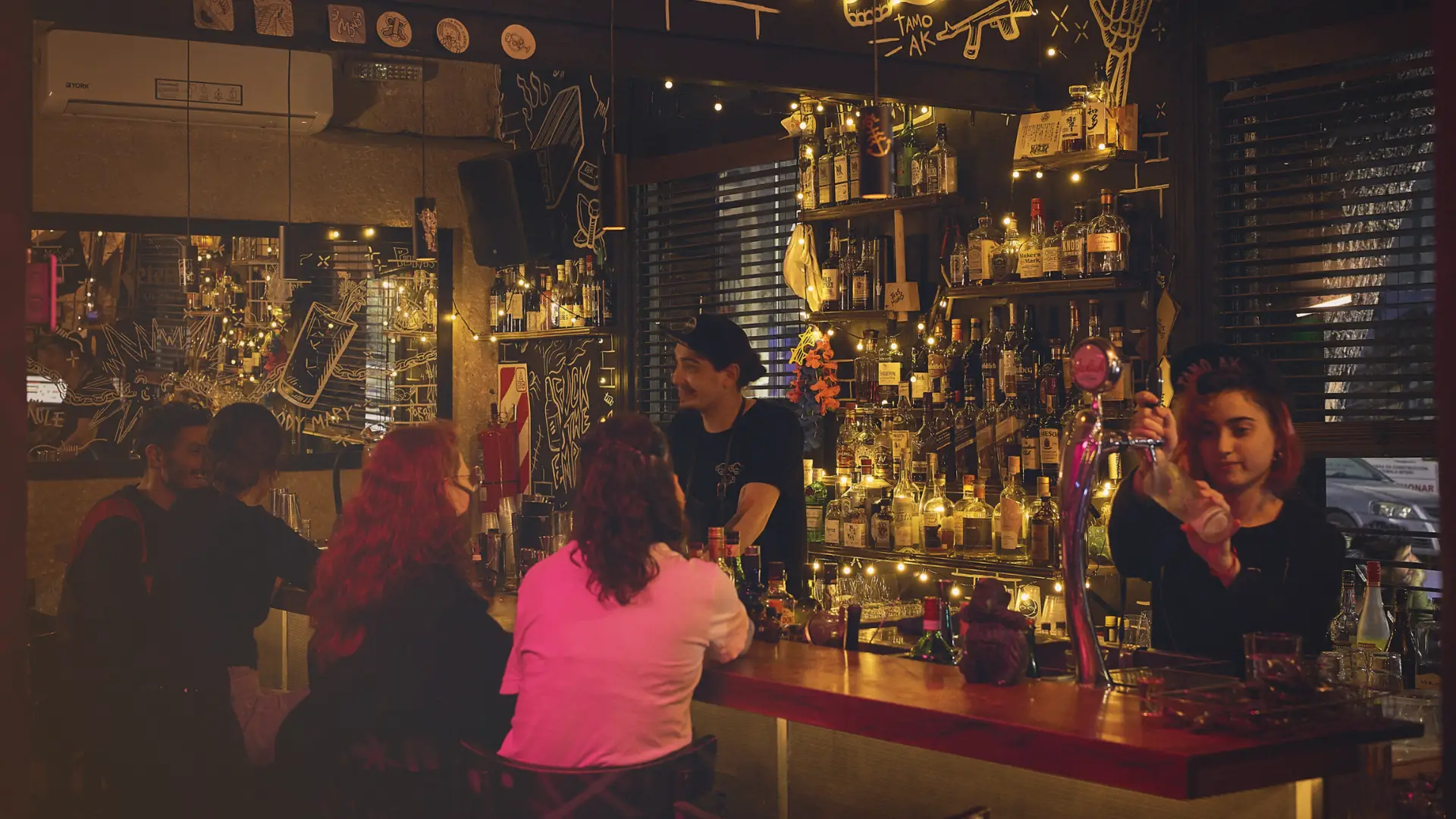
Tres Monos has become one of the most visible names in contemporary South American cocktail culture.
Opened in Buenos Aires in 2019, the bar is often described through its energy, informality, and Argentine character. Yet its significance lies deeper than atmosphere. It has helped show that serious cocktail work does not need to sound formal, imported, or detached from local drinking habits.
The bar’s international recognition has followed quickly. Tres Monos has appeared prominently on The World’s 50 Best Bars list and has been recognised as one of South America’s leading bars. That attention matters because it places Buenos Aires within a wider global conversation about where cocktail innovation is now coming from.
For many years, global cocktail culture was often narrated through London, New York, Paris, Tokyo, Singapore, and a small group of highly visible capitals. Bars such as Tres Monos have helped widen that map. The importance of the bar is not only that it represents Argentina abroad. It shows how Argentine flavour, humour, rhythm, and memory can shape cocktails without needing to apologise for being local.
The Negroni as a Global Structure
The Negroni is one of the most adaptable classics because its identity is structural rather than ornamental. It is built around balance, bitterness, sweetness, alcohol strength, aroma, and colour. Those elements give bartenders a recognisable frame, but they also leave room for variation, especially when the drink is approached as a conversation rather than a fixed formula.
Many modern Negroni variations fail because they treat the drink as a colour scheme or a fashionable name. They keep the appearance of the classic but lose the tension that makes it endure. The Negroni del Fin del Mundo is more considered because it does not simply replace one ingredient with another. It asks what the Negroni can become when filtered through Argentine drinking culture.
That distinction is important. A meaningful variation should not only change the components. It should change the point of view.
The Ferroviario Connection
The Argentine reference point behind the drink is the Ferroviario.
According to The Spirits Business, Sebastián Atienza, co-owner of Tres Monos, identifies the Ferroviario as a natural starting point for the menu because of its popularity in Argentina. The drink is associated with Fernet, vermouth, and soda water, and has been described as a working-class classic.
That background gives the Negroni del Fin del Mundo a stronger cultural foundation than a simple twist on an Italian drink. It does not only borrow from the Negroni. It also brings in a local memory of bitterness, refreshment, and everyday Argentine drinking habits.
The choice of Fernet is especially important. In Argentina, Fernet has a cultural presence that goes far beyond the back bar. It belongs to migration, popular taste, late 20th-century drinking habits, and a national appetite for bitterness that sits beside mate, vermouth, aperitif culture, and social gatherings.
By placing that bitter Argentine reference inside a Negroni-shaped idea, Tres Monos gives the classic a different centre of gravity. The drink still speaks the language of balance, but the accent changes.
Patagonia and the End of the World
The name Negroni del Fin del Mundo points towards Patagonia.
In Argentina, Fin del Mundo means “end of the world”, a phrase often used in relation to the country’s far southern landscapes. It carries geographical drama, but it also carries emotional weight. Patagonia is remote, vast, difficult, beautiful, and strongly tied to the imagination of a national place.
The Spirits Business notes that most of the drink’s ingredients come from Argentine Patagonia. It also describes Licor del Sur as a creation made in the bar’s laboratory from southern ingredients such as currants, Corinthian raisins, and elderflower, while the peony wine is also presented as a local creation connected to Patagonian flowers.
These details matter because they show a specific way of using a place. Patagonia is not only a romantic label attached to the drink. It enters through ingredient thinking, production decisions, and the bar’s own laboratory work. That is where the drink becomes more than a Negroni variation. It becomes a small argument about how a cocktail can carry geography.
Local Ingredients without Simple Decoration
Modern cocktail culture often uses local ingredients as decoration. A menu may mention a regional fruit, flower, herb, or spirit, but the ingredient sometimes functions only as a signal of authenticity. It appears in the language of the drink without fully shaping its structure.
The stronger approach is different. Local ingredients should affect balance, texture, aroma, bitterness, acidity, and the emotional logic of the drink. They should not only tell the guest where the bar is. They should help explain how the bar thinks.
The Negroni del Fin del Mundo is interesting because its local elements are not treated as small additions around an unchanged classic. The Patagonian references alter the drink’s identity and move it away from the standard Negroni template.
This is a useful lesson for modern bars. Locality is not achieved by placing a regional word on the menu. It is achieved when the drink cannot be fully understood without the place behind it.
Argentina’s Cocktail Memory
Argentina has a richer cocktail memory than many international drinkers realise.
The country’s drinks culture has been shaped by European immigration, café life, vermouth, aperitif habits, Fernet, wine, soda, bitters, and local forms of sociability. Buenos Aires, in particular, has long carried a mixed identity: European in influence, Latin American in rhythm, and unmistakably Argentine in its everyday habits.
That mixture gives bartenders material to work with. A drink such as the Negroni del Fin del Mundo does not have to invent Argentine cocktail culture from nothing. It can draw from existing forms of bitterness, casual refreshment, working-class memory, and regional produce. This is one reason the cocktail feels more convincing than many global classic reinterpretations. It does not depend only on novelty.
Instead, it suggests that classic cocktails can be rewritten through local archives. Those archives may include famous drinks, humble serves, ingredients, landscapes, social classes, migration histories, and flavours that people already recognise without needing to be explained in technical terms.
The Bar Laboratory as Cultural Tool
The presence of a bar laboratory at Tres Monos is important, but not because laboratory language automatically makes a drink better. In weaker hands, the laboratory can become a symbol of distance between bartender and guest. It can suggest that technique has become more important than pleasure, memory, or hospitality.
At Tres Monos, the more interesting use of laboratory work appears to be cultural rather than purely technical. The bar can produce its own ingredients, work with Argentine and Latin American flavours, and turn regional references into liquid forms that fit the rhythm of a cocktail menu.
That approach allows the bar to avoid two common traps. It does not merely copy international classics, and it does not rely on folklore without craft. The best modern bars often sit between those points. They understand the technical discipline of contemporary bartending, but they also know that technique needs a story worth serving.
South America’s Cocktail Confidence
The rise of Tres Monos also belongs to a larger shift in global cocktail geography.
South America is no longer a peripheral region in cocktail conversation. Bars in Buenos Aires, Lima, Cartagena, São Paulo, and other cities have shown that world-class cocktail culture can emerge from local foodways, regional spirits, agricultural diversity, and social energy rather than from imitation of older bar capitals.
The importance of the Negroni del Fin del Mundo lies partly in that confidence. It does not ask whether an Argentine bar is allowed to reinterpret an Italian classic. It simply does the work with enough clarity to make the question irrelevant.
This confidence is visible in how the drink handles influence. The Negroni remains present, but it is not dominant. The Ferroviario, Fernet, vermouth, and Patagonia have equal authority in the story. That balance reflects a more mature stage of global cocktail culture. The classic is no longer a centre that every region must orbit. It becomes one language among many.
Why the Drink Matters
The Negroni del Fin del Mundo matters because it shows how classics survive. They do not survive only by being repeated exactly. They survive when skilled bartenders understand their structure well enough to adapt them to new cultural settings without compromising their identity.
At Tres Monos, the Negroni becomes a way to talk about Argentina: its bitterness, its vermouth culture, its working-class drinks, its southern landscapes, and its modern bar confidence. That is more interesting than another variation built for novelty. It is a reminder that cocktails can carry place without becoming heavy or academic.
The drink also reveals something about the current direction of high-level bar culture. The most compelling bars are not only asking what tastes good. They are asking what a drink remembers, where its ingredients belong, and how a global form can be made locally accountable.
That is why this story has value beyond one menu. It shows the classic cocktail not as a fixed monument, but as a living structure.
Tres Monos has not turned the Negroni into an Argentine drink by erasing its original identity. It has reframed the classic through Argentine references strong enough to stand beside it: Fernet, vermouth, the Ferroviario, Patagonian ingredients, and the symbolic force of Fin del Mundo.
The achievement is not only about flavour. It is perspective. The drink begins with something internationally familiar, then pulls it towards Buenos Aires and the far south of Argentina. That movement is what makes the cocktail feel contemporary. It respects the classic without becoming obedient to it.
The future of cocktail culture will depend on this kind of work. Not every classic needs another twist, but the best reinterpretations can show how a drink changes when it passes through a different place, a different pantry, and a different memory.
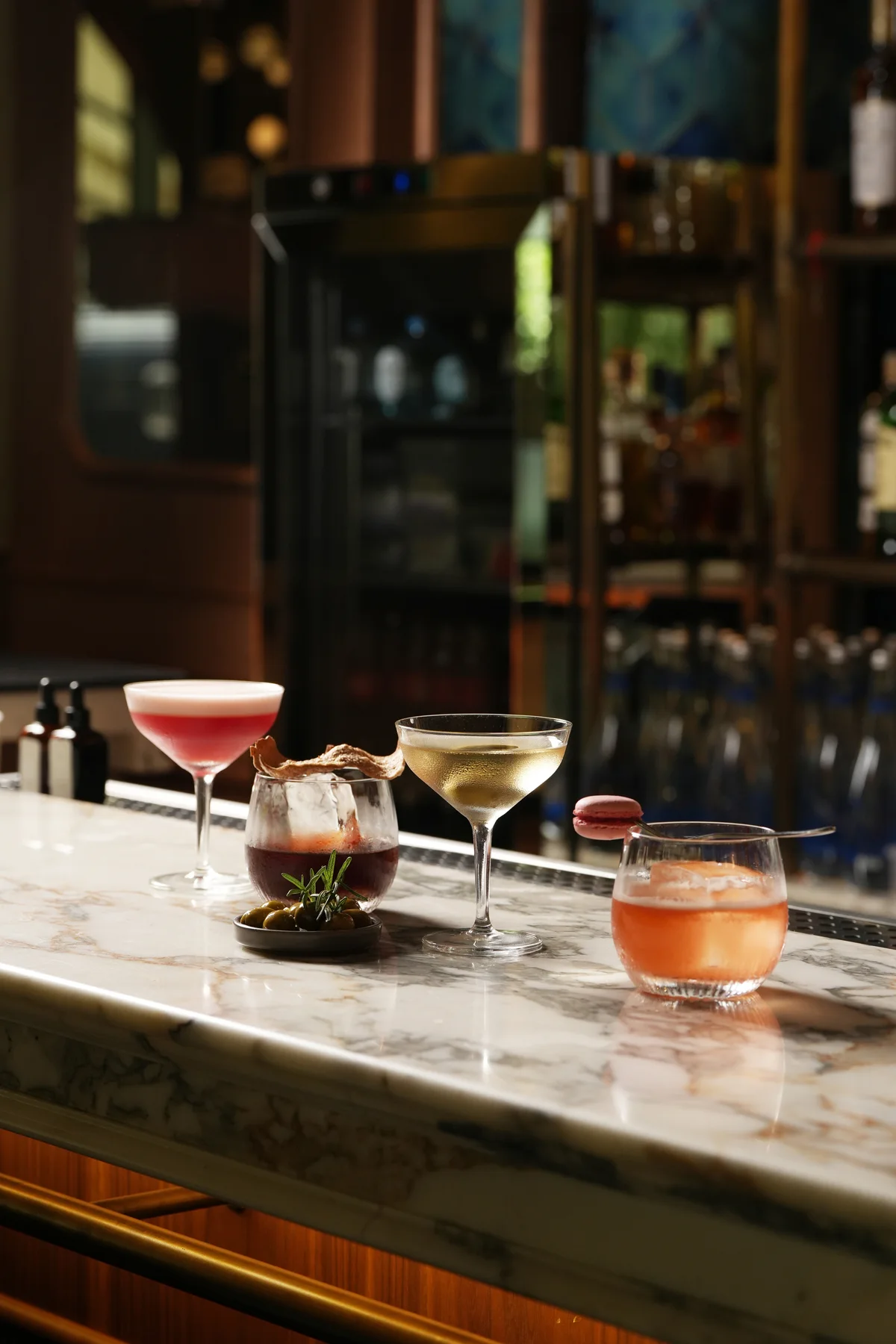
Bar
In the heart of Palermo Soho, one of Buenos Aires’ most vibrant and ever-evolving neighborhoods, stands Tres Monos…
Cocktail
The Amaretto Tea is a warm, comforting cocktail that elegantly combines the nutty sweetness of amaretto with the…

Cocktail
The Negroni Sbagliato is a lighter and more effervescent variation of the classic Negroni, replacing gin with sparkling…
Cocktail
The Negroni is one of Italy’s most celebrated cocktails, a symbol of refinement and balance that has remained…
Partnership
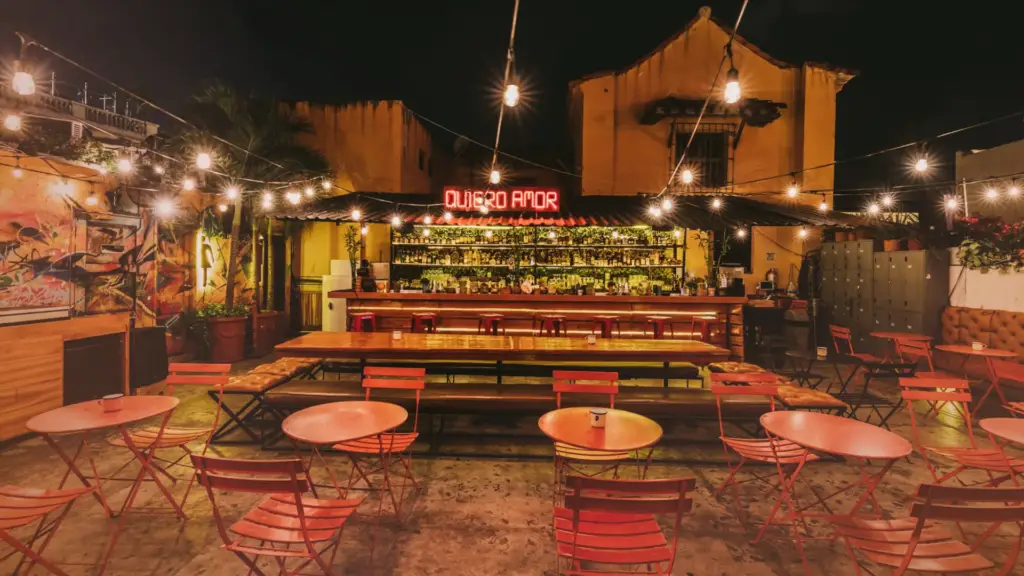
Alquímico in Cartagena: The Multi-Level Bar Where Precision Operates as One System
Within the historic walled city of Cartagena, Alquímico occupies a restored three-storey colonial building that has, since its opening in 2016, evolved into one of the most structurally complex cocktail operations in the world. What appears as a high-energy nightlife destination is, in practice, a fully integrated system combining agriculture, production, and service at scale, […]
September 12, 2026

Partnership
Tres Monos in Buenos Aires: The High-Energy Bar Redefining Cocktail Craft
Volume comes first. Not just music, but movement, conversation, the rhythm of a room that rarely settles. At Tres Monos in Buenos Aires, energy is not an accessory to the experience; it is the structure that holds everything together. What appears spontaneous is, in reality, tightly controlled, with every drink, every gesture, and every interaction […]
September 5, 2026
Trends and Innovations
International Beer Day 2026: The History of the World’s Most Social Drink
On the first Friday of August, International Beer Day brings breweries, bars, restaurants and beer drinkers together around one of the world’s oldest fermented beverages. The celebration itself is relatively recent, having been established in Santa Cruz, California, in 2008 by Jesse Avshalomov and a group of friends. It was initially held on 5 August […]
August 7, 2026