Guadeloupe Rhum Agricole follows a broader path than the agricole tradition of neighbouring Martinique. Both territories belong to the French Caribbean and share a long relationship with fresh sugarcane juice, yet Guadeloupe rhum agricole developed within an archipelago where more than one rum production tradition has endured.
Across volcanic Basse-Terre, limestone Grande-Terre and the distinctive cane landscape of Marie-Galante, fresh cane juice shapes much of the identity of Guadeloupe rhum agricole. At the same time, rhum made from sugar-industry materials remains part of the region’s history, alongside family estates, independent growers and sugar factories that have collectively shaped Guadeloupe’s diverse rum culture.
Distillerie Longueteau offers a particularly clear view of Guadeloupe’s agricultural tradition. Founded at Capesterre-Belle-Eau in 1895, the estate remains closely tied to its own cane fields. Longueteau 62° became an emblematic high-strength white rhum, while the distillery’s later work with individual parcels and cane varieties introduced a more precise agricultural language to white agricole rum.
An Archipelago of Different Cane Landscapes
Guadeloupe is more than the butterfly-shaped pair of Basse-Terre and Grande-Terre. The territory also includes Marie-Galante, La Désirade and Les Saintes, each with its own geography and cultural history. Basse-Terre is mountainous, humid and volcanic. La Grande Soufrière dominates the landscape, while steep slopes, abundant rainfall and tropical vegetation shape agriculture around the island.
Grande-Terre is lower, drier and largely limestone. Its flatter land supported extensive sugarcane cultivation and the development of larger agricultural estates. Marie-Galante has preserved an especially visible connection between cane fields, mills and distillation. Its agricultural rhythm remains distinct enough to be recognised within the wider Guadeloupe geographical framework.
These contrasts give Guadeloupean rum its range. Cane grows under different patterns of rainfall, drainage, exposure and soil. Distilleries also differ in their access to land, their relationships with growers and the way they manage fermentation and distillation.
Guadeloupe’s rum identity begins with this diversity.
Sugar and the Two Rum Traditions
Sugarcane became established in Guadeloupe during the 17th century. Plantation agriculture, colonial trade and enslaved labour drove the expansion of sugar production, while rum developed alongside the sugar economy.
For much of the colonial period, cane juice was directed towards crystallised sugar. Molasses and other residues from the sugar house then supplied distillers with fermentable material.
Direct distillation from fresh sugarcane juice developed as another path. During the 19th century, agricultural distilleries increasingly fermented vesou, the freshly pressed juice of the cane, while sugar factories continued producing rum from molasses and syrup.
Both traditions became part of Guadeloupe’s identity.
Historical production figures recorded in the territory’s geographical-indication documentation show that sugar-factory rum still represented roughly two-thirds of Guadeloupe’s production in 1922, while agricultural rum accounted for around one-third. Much of the agricole production was consumed locally, while the less expensive sugar-factory rum was more commonly exported to mainland France.
Fresh cane juice now carries much of Guadeloupe’s specialist reputation, but the archipelago’s history cannot be reduced to agricole alone.
Protected Origin in Guadeloupe
Guadeloupe’s legal framework differs from Martinique’s Appellation d’Origine Contrôlée.
The geographical indication may appear as Rhum de la Guadeloupe, Rhum de Guadeloupe or Rhum Guadeloupe. Its current specification protects production connected to the department of Guadeloupe, including the cultivation of cane, preparation of fermentable materials, fermentation, distillation, maturation and ageing.
The framework recognises both rhum agricole and rhum de sucrerie. For agricultural rum, the fermentable must come exclusively from sugarcane juice. Enrichment with molasses, sugar syrup or other added sugars is prohibited.
Rhum de sucrerie is produced from molasses or syrups created during cane-sugar manufacture. It belongs to the same regional protection but follows a different raw-material tradition. The geographical indication allows simple batch distillation or continuous multi-stage distillation with reflux. The collected rum must remain below 90 per cent alcohol by volume.
White rum must rest for at least three weeks. Brown rum must spend at least six months in oak, while old rum requires at least three years in oak vessels with a maximum capacity of 650 litres. Qualifying rum produced on Marie-Galante may carry the island’s name as an additional geographical designation. Guadeloupe’s system is not a relaxed version of Martinique’s AOC. It protects a different historical reality, one in which agricultural and sugar-factory rum have continued to exist together.
Vesou and the Pressure of Freshness
Fresh sugarcane juice is known in the French Caribbean as vesou.
Once the cane has been cut and crushed, the juice begins changing quickly. Oxidation and microbial activity alter its condition, so harvesting, transport, milling and fermentation must follow one another without long delays.
Molasses allows a different production rhythm. It is concentrated, comparatively stable and suitable for storage or transport. Vesou keeps the distillery much closer to the field. This connection makes agricultural rum sensitive to the timing of the harvest. Cane maturity, rainfall, cutting method, transport distance and milling efficiency all affect the material that enters fermentation.
Some Guadeloupean distilleries depend heavily on independent growers. Others control more of their own cane. Longueteau belongs to the second group, and that estate control became central to its later work with individual varieties and parcels.
Longueteau at the Domaine du Marquisat de Sainte-Marie
Distillerie Longueteau stands at the Domaine du Marquisat de Sainte-Marie in Capesterre-Belle-Eau, on the south-eastern side of Basse-Terre.
In 1895, Henri Louis Philippe Longueteau transformed the estate’s small sugar mill into an agricultural rum distillery. The change placed the property within the wider movement away from sugar manufacture and towards the direct distillation of fermented cane juice.
The distillery passed through successive generations of the family. Henri Adolphe Emmanuel Longueteau continued the enterprise from 1927 and later modernised its energy system. Paul Henri Longueteau developed its commercial activity, while François Longueteau took over the estate in 2005 and expanded its production and public presence.
Members of the next generation later entered the cellar, fermentation, distilling and commercial sides of the business.
Longueteau remains closely associated with estate-grown cane. That control allows the family to coordinate harvesting and milling according to the condition of the crop rather than treating cane as an anonymous agricultural supply.
It also created the practical foundation for the distillery’s parcel programme.
Longueteau 62° and the High-Strength White Tradition
Longueteau 62° is the central product reference for this article.
The expression appeared in the early 1990s and became one of the distillery’s most recognisable white rhums. Its strength gave Longueteau a distinctive position within Guadeloupe’s agricole tradition at a time when white rum was often discussed more as a mixing category than as a serious expression of cane and distillation.
Bottling at 62 per cent alcohol does more than increase intensity. It preserves the structure of the distillate with less dilution, keeping the relationship between fermented cane juice and column distillation more visible.
The rhum is produced from estate-grown red and blue cane, the two principal varieties cultivated across the domaine. After distillation, the spirit is rested and gradually reduced in stainless-steel vats before bottling. This allows the rhum to settle and integrate without introducing oak influence.
Longueteau 62° belongs here as a historical and technical reference rather than a recommendation. It represents the distillery’s commitment to white agricole rum at a strength that keeps cane, fermentation and distillation at the centre.
Twelve Parcels and Two Cane Varieties
The Longueteau estate is divided into 12 agricultural parcels planted principally with two varieties: red cane R579 and blue cane B69-566.
For many distilleries, cane from several fields and varieties enters one general production stream. Longueteau began separating selected harvests according to parcel and variety, allowing individual lots to be milled, fermented and distilled independently.
The approach requires close control throughout the production day. Cane from a selected field must remain separate during cutting and transport. The mill must process it without merging it into the wider estate supply. Fermentation and distillation must then preserve the identity of that lot.
Longueteau is widely credited with pioneering a systematic varietal and parcel-led approach to white agricole rum, separating cane by field, variety and harvest before fermentation and distillation. This was an important shift in the language of white rum. The field no longer appeared only as background. It became part of the identity printed on the bottle.
Red Cane and Blue Cane
Red cane and blue cane are distinct cultivated varieties rather than descriptive marketing terms. Longueteau’s red cane is identified as R579. The blue cane carries the designation B69-566. They differ in agricultural behaviour, yield and the character they bring to fermentation and distillation.
The distillery’s parcel bottlings allow those differences to appear without being softened through blending. A red-cane parcel and a blue-cane parcel may be harvested during the same season and processed through the same distillery, yet the resulting rhums can develop noticeably different structures.
The field introduces another variable. A parcel near the sea may receive different winds and exposure from one further inland. Drainage, moisture, sunlight and cane maturity can also change across the estate.
Fermentation and column management remain decisive, so parcel identity should not be treated as a simple claim that soil alone determines flavour. The value of the approach lies in controlling enough of the process to make agricultural differences easier to observe.
White Rhum as an Agricultural Expression
Rum discussions often give greater attention to barrel ageing. Wood, oxidation and time can transform a spirit dramatically, and aged rum has naturally attracted collectors and critics.
Longueteau’s work offered another perspective. White agricole rum can carry its own depth when the producer pays close attention to cane variety, field, harvest, fermentation and distillation. It does not need years in oak to become a serious expression of place and method.
The parcel programme gave this idea a practical structure. A named or numbered field, a single variety and a particular harvest became part of the final identity. Longueteau 62° and the parcel collection explore white rum from different directions. The 62° expression presents a high-strength estate blend built around red and blue cane. The parcel releases separate the estate into smaller agricultural units.
Together, they show how white agricole rum can be studied through both composition and origin.
A Broader Guadeloupean Rum Culture
Longueteau offers one view of Guadeloupe, not a complete definition of the archipelago.
Other producers rely on different cane sources, fermentation practices and distillation systems. Some work closely with independent growers. Others maintain stronger connections to sugar manufacture. Marie-Galante has its own agricultural and distilling culture, while Basse-Terre and Grande-Terre offer contrasting landscapes.
The geographical indication is broad enough to contain these differences. It protects origin and production principles without requiring every distillery to use one still design or follow one raw-material model.
That breadth is central to Guadeloupe’s identity. Martinique’s global authority rests partly on the precision of its AOC. Guadeloupe’s strength lies in the coexistence of several legitimate rum traditions across one archipelago.
A Regional Reference Point
Guadeloupe is an essential stop after Martinique because it widens the meaning of pure cane juice rum.
Martinique presents the most tightly regulated form of French Caribbean agricole production. Guadeloupe shows how cane-juice rum can exist within a geographical framework that also recognises molasses and syrup-based production.
Longueteau adds another layer. Its estate control, high-strength white rhum and parcel programme turn cane agriculture into a more detailed production language. Longueteau 62° gives the story an iconic white expression. The parcel bottlings reveal the differences between varieties, fields and harvests.
Guadeloupe therefore stands on its own terms. It is not simply Martinique with different regulations. Its rum culture grew from another landscape, another legal structure and another balance between agricultural and sugar-industry traditions.
Guadeloupean rum is defined by variation. Fresh cane juice and sugar-industry materials, volcanic Basse-Terre and limestone Grande-Terre, family estates and industrial production all belong to the archipelago’s history.
The Rhum de la Guadeloupe geographical indication protects this range rather than reducing it to one model. Agricultural rum must come exclusively from fresh cane juice, while the wider framework also recognises rum produced from molasses and syrup.
Longueteau brings the agricultural side of the story into clear focus. Since 1895, the family distillery has remained tied to the Domaine du Marquisat de Sainte-Marie and its cane fields. Longueteau 62° became an emblem of high-strength white agricole rum, preserving a close relationship between vesou, fermentation and column distillation.
The parcel programme carried that agricultural vision further. By isolating red cane and blue cane from specific fields and harvests, Longueteau helped establish a new way of reading white rum through variety, parcel and agricultural year.
Guadeloupe’s place in the pure cane juice world rests on this breadth. Its rum culture is not one style repeated across an archipelago, but a collection of related traditions shaped by islands, fields, families and production choices.

Spirits consultant, creator of curated independent bottling collections, and international spirits judge, blending a foundational heritage in viticulture with modern trade and communication strategy.
Distillery
Longueteau Distillery is a hallmark of Guadeloupean rum production, situated on the beautiful Domaine de Sainte-Marie. Established in…
Spirit
Makila Ron de Cuba Mulata Palma Supérieur 3 YO Cuban Rum
Makila Ron de Cuba Mulata Palma Supérieur is an authentic representation of Cuban rum craftsmanship, showcasing the rich…
Spirit
Longueteau Guadeloupe Agricole Rum
Longueteau Guadeloupe 40 White Agricultural Rum is a distinguished spirit crafted from the sugarcane of Guadeloupe, embodying the…
Spirit
Ferroni Agricole Guadeloupe Rum
Ferroni Agricole Guadeloupe Rum is a premium spirit produced in the French Caribbean, paying homage to the traditional…
Spirit
Domaine De Bellevue Agricole Rhum
Domaine de Bellevue Marie Galante Guadeloupe Agricole Rhum is a distinguished expression of the artisanal rhum craft, celebrated…
Spirit
Montebello Vieux Rhum De La Guadeloupe Rum
Montebello Vieux Rhum De la Guadeloupe is a premium rum celebrated for its exceptional craftsmanship and the pride…
Distilleries & Producers
Roseisle Distillery: The High-Tech Speyside Giant Behind a New Generation of Whisky
In Speyside, where whisky is often associated with generations of tradition, Roseisle Distillery represents something very different. Built by Diageo near Elgin and officially opened in 2010, Roseisle was designed as a modern, large-scale malt whisky distillery, combining traditional pot-still production with advanced engineering, energy recovery and unusual flexibility in how its spirit can be […]
September 2, 2026
Interviews & Insights
Elmer T. Lee: The Master Who Revived Bourbon’s Soul
In 1949, a young Elmer T. Lee walked into the George T. Stagg Distillery in Frankfort, Kentucky, looking for a job. He had recently returned from the Second World War, where he had served as a radar bombardier aboard a B-29, and had graduated with honours in electrical engineering from the University of Kentucky. The […]
August 5, 2026
Distilleries & Producers
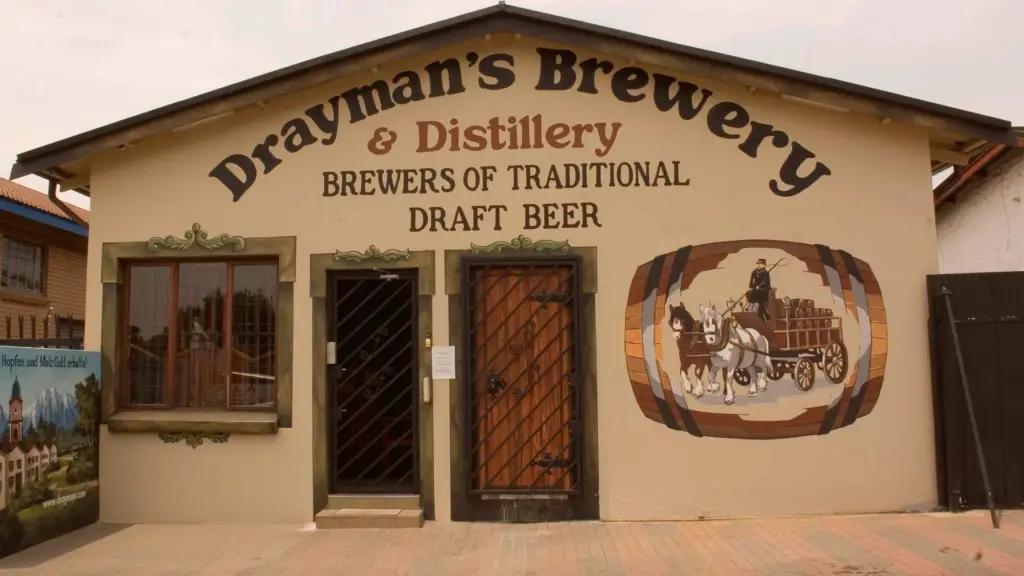
Drayman’s Brewery & Distillery: How Pretoria Put the Highveld on the Whisky Map
The story of Drayman’s Brewery & Distillery begins not in Scotland, Ireland or one of the traditional centres of whisky production, but in Pretoria, South Africa. The brewery was registered in 1997, beginning on a small scale in the Kallmeyer family’s home garage before moving to its present property in Silverton in 2002. That early […]
July 24, 2026