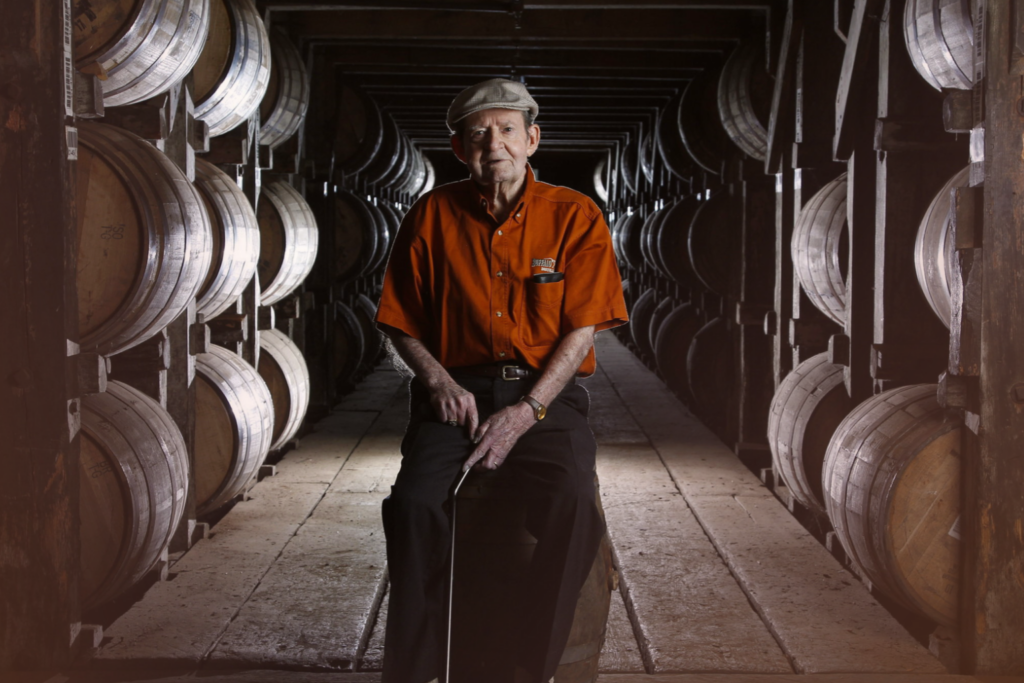
In 1949, a young Elmer T. Lee walked into the George T. Stagg Distillery in Frankfort, Kentucky, looking for a job. He had recently returned from the Second World War, where he had served as a radar bombardier aboard a B-29, and had graduated with honours in electrical engineering from the University of Kentucky.
The reception was hardly promising. Colonel Albert B. Blanton, then president of the distillery, told him that they weren’t hiring. Lee might easily have walked away and pursued another career. Instead, after encouragement from engineer Orville Schupp, he returned the following week and secured a position in the engineering department.
That small decision would eventually connect his name with one of the most important turning points in modern American bourbon.
Lee did not arrive as a master distiller. He arrived as an engineer. His first responsibility was maintenance, and his career developed through the practical workings of the distillery rather than through family inheritance or a romantic apprenticeship. He learned how equipment functioned, how a large distillery operated and how production could be maintained at scale.
The progression was steady. By 1966, he had become plant superintendent. In 1969, he became plant manager and master distiller, eventually overseeing the distillery through decades of technological and commercial change.
That experience gave Lee something more valuable than a title. It gave him perspective. He understood bourbon from the inside out, from engineering and production to fermentation, distillation, maturation and the practical demands of maintaining consistency. When the American whiskey industry later entered one of its most difficult periods, Lee was not observing the crisis from a distance. He was standing inside it.
The Industry Was Losing Its Way
By the 1970s and early 1980s, the bourbon industry was facing a very different world from the one Lee had entered.
American drinking habits were changing. Vodka and other lighter spirits were taking market share, while bourbon’s traditional image was beginning to look old-fashioned to many consumers. Production had expanded during earlier decades, but demand weakened, leaving distilleries with ageing stocks and increasingly uncertain prospects.
Bourbon had history, established production methods and Kentucky. What it was losing was relevance.
The problem was particularly difficult because bourbon’s greatest strengths had become so familiar that they were almost invisible. Barrels, warehouses, ageing and blending were essential to the spirit, but they were rarely presented as sources of individuality in the way that certain premium categories had begun to communicate their production.
Lee understood the machinery behind bourbon, but he also understood something about the market. If bourbon was going to regain attention, it needed to give drinkers a reason to look at it differently. That opportunity came through a memory of the man who had once told Lee that the distillery wasn’t hiring.
The Colonel’s Honey Barrels
Albert B. Blanton had developed a habit of selecting exceptional barrels from the distillery’s Warehouse H. These barrels were reserved for distinguished guests and special occasions, reflecting Blanton’s belief that some barrels developed qualities that made them particularly worthy of attention.
Blanton was not treating every barrel as identical. Lee remembered that practice.
Years later, as he approached retirement, the memory became the foundation for a new idea. Instead of blending bourbon from multiple barrels into a consistent batch, why not select one exceptional barrel and allow it to stand on its own?
The principle was deceptively simple. Bourbon had always depended on barrels, but the barrel had generally been part of the production process rather than the central identity of the finished product. Lee changed that emphasis.
The idea was not that single barrels had never existed. They had. What was different was turning the individual barrel into the basis of a commercially available premium bourbon. That distinction is crucial to Lee’s historical importance. He did not invent the physical reality of barrel variation. He helped turn that variation into a commercial proposition.
The product would be called Blanton’s Single Barrel Bourbon, named in honour of the man whose barrel-selection habits had inspired it. The irony was difficult to miss. The distillery president who had once told Lee that there was no job for him had unknowingly inspired the creation that would define Lee’s legacy.
The 1984 Decision
In 1984, with retirement approaching, Lee introduced Blanton’s Single Barrel Bourbon.
The bourbon was drawn from barrels in Warehouse H, the same warehouse associated with Blanton’s earlier selections. Instead of blending multiple barrels into a standardised batch, Lee selected individual barrels for bottling.
The decision arrived at a difficult moment. Bourbon was not enjoying the cultural position it holds today, and the creation of Blanton’s came during a period when bourbon was declining in popularity. Lee’s launch helped establish a new premium proposition for American whiskey.
Rather than competing with vodka by making bourbon seem less like bourbon, he moved in the opposite direction. He emphasised the things that made bourbon itself distinctive: the barrel, the warehouse, the ageing process and the judgement of the distiller.
The concept would eventually become one of the defining ideas of modern American whiskey.
At the time, however, Lee was simply taking a risk. He was close to retirement, the category was struggling and there was no guarantee that consumers would care about the difference between a bourbon blended from several barrels and one selected from a single barrel. They eventually did.
When the Barrel Became Part of the Story
The importance of Blanton’s was never simply that it was bottled from one barrel. It changed the way bourbon could be discussed.
A traditional blend was designed around consistency. The objective was for one release to resemble the next, creating a dependable house profile. Single-barrel bourbon introduced another possibility: variation could itself become part of the value.
One barrel might behave differently from another. Its position in a warehouse, its maturation environment and its individual development could contribute to a character that was not exactly reproducible. Instead of treating those differences as problems to be corrected through blending, Lee made them part of the story.
That was a subtle but important change in the language of American whiskey. The consumer was no longer being asked only to recognise a brand. They were being invited to think about where the bourbon came from, how it had matured and why one barrel might be different from another.
This approach would later become central to the premiumisation of bourbon. Single-barrel bourbon, small-batch bourbon, limited releases, warehouse-specific expressions and detailed discussions of maturation all became increasingly familiar parts of the category.
Lee did not create every part of that movement. Nor did bourbon’s revival depend upon one man. But he helped open a door.
A New Definition of Premium
There was another important element to the timing. Premium Scotch whisky, particularly single malt, was developing a stronger identity around provenance, distillery character and production detail. Bourbon needed its own language of premium quality rather than simply copying another category.
Lee’s answer was remarkably American. The identity came from the barrel. The location was Kentucky. The distillery’s history remained visible. The product did not need to become something other than bourbon to become more interesting.
That idea proved durable because it worked with the spirit’s existing production rather than against it. The innovation was therefore less about changing how bourbon was made than changing how bourbon was understood.
The Master Distiller Who Never Stopped Learning
Lee retired in 1985, only a year after introducing Blanton’s. For many people, retirement would have marked the end of the story. For Lee, it became another chapter.
He continued to serve as Master Distiller Emeritus and as an ambassador for the distillery, sharing his knowledge with visitors and the wider whiskey community. His relationship with bourbon remained active for decades after his formal retirement, and he continued personally selecting barrels for Elmer T. Lee Single Barrel that carried his name.
That later period reveals something important about his character. Lee’s legacy was not built solely on the creation of one famous bourbon. It was built through accumulated knowledge.
He had spent decades inside a distillery during periods of expansion, technological change and commercial difficulty. He had seen bourbon at its industrial height and during its decline. He understood that production knowledge could be lost if it was not passed from one generation to another.
His role after retirement therefore became almost historical. He was no longer simply producing bourbon. He was helping explain why it mattered.
From Engineer to Keeper of Memory
Something is fitting about the fact that an engineer became one of bourbon’s great custodians of memory. Lee’s career had begun with machinery. He understood systems, maintenance and production. But by the end of his life, his value to the industry extended into something less measurable. He remembered people.
He remembered Colonel Blanton and the barrels he favoured. He remembered the distillery before its later transformation into Buffalo Trace Distillery. He remembered how bourbon had been produced when the industry was operating under very different commercial conditions.
That knowledge gave him an unusual authority.
Bourbon history is often told through buildings, brands and dates. Lee represented something different: history carried by a person who had actually lived through it.
When he died in 2013, aged 93, the industry lost one of its direct links to an earlier generation of American whiskey production. His honours included induction into the Kentucky Bourbon Hall of Fame in 2001, a Lifetime Achievement Award from Whisky Advocate in 2002 and a Lifetime Achievement Award and Hall of Fame induction from Whisky Magazine in 2012.
What Elmer T. Lee Really Changed
It is tempting to say that Elmer T. Lee revived bourbon. The truth is more interesting.
He was one part of a much larger revival involving distillers, bartenders, collectors, historians, producers, changing consumer tastes and growing international interest in American whiskey. Booker Noe, Jimmy Russell, Parker Beam and many others played their own important roles in preserving and developing bourbon during difficult decades.
Lee’s contribution was different. He showed that bourbon could become premium by becoming more visibly itself. The answer was not to hide its history or imitate another category. It was to reveal the character already contained within the production process.
The barrel became a story, Warehouse H became part of the identity, the distiller’s judgement became visible, and variation, once something that blending could minimise, became something that could be explored. That shift helped create a modern bourbon culture in which consumers began paying closer attention to individual releases, maturation, warehouses, barrel selection and production differences.
Lee had not rewritten bourbon. He had changed the way people looked at it.
The Legacy in Every Barrel
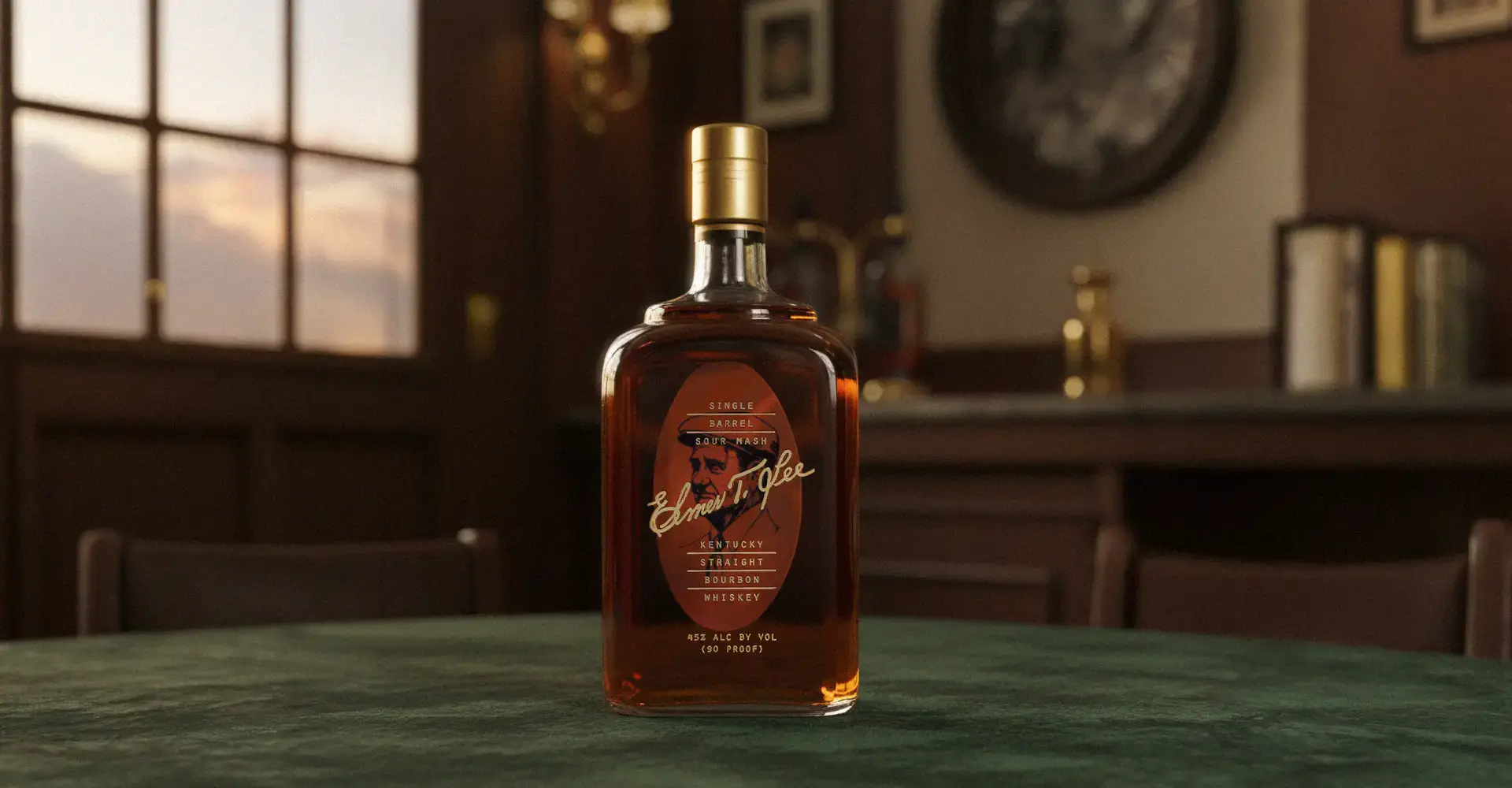
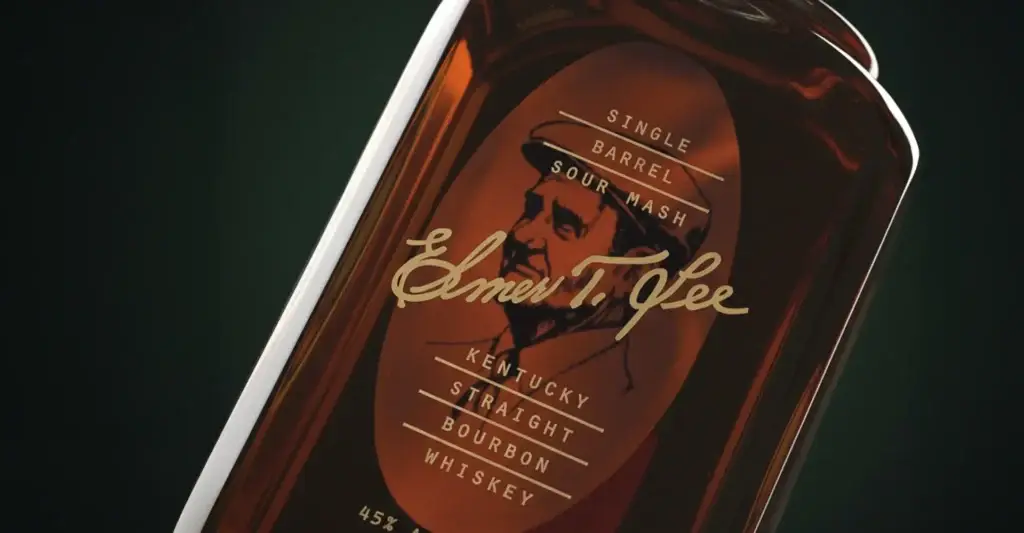
The name Elmer T. Lee eventually became attached to a bourbon of its own. After his retirement, the distillery honoured him with Elmer T. Lee Single Barrel, and he continued selecting barrels for the expression in his later years. That creates an elegant circle in the history.
Lee took the memory of Blanton selecting special barrels and turned it into Blanton’s Single Barrel. Later, the distillery took Lee’s own name and placed it on a single-barrel bourbon. The barrel had become the bridge between generations. The man who had entered the distillery as a young engineer had become part of the very tradition he had helped redefine.
The Soul of Bourbon Was Already There
In 1984, when those qualities were not necessarily enough to make bourbon commercially fashionable, Lee found a way to make them visible again. Blanton’s Single Barrel transformed an old practice of selecting exceptional barrels into a modern commercial proposition, giving consumers another way to understand American whiskey.
That is why his story still matters. The modern bourbon industry is vastly larger and more sophisticated than the one Lee knew when he entered the George T. Stagg Distillery in 1949. Yet the central idea behind his most important creation remains remarkably simple: sometimes one barrel deserves to be treated as more than one part of a blend.
That idea changed the conversation.
Elmer T. Lee was not merely the man who created a famous bourbon. He was the engineer who understood the system, the master distiller who trusted his judgement and the industry veteran who recognised that bourbon’s future might depend on making its individuality visible.
His legacy remains in the way modern drinkers look at bourbon: not simply as a familiar American spirit, but as a category in which production, maturation, place and individual barrels can all contribute to the experience.


Distillery
St. George Spirits, located in Alameda, California, is renowned as one of the pioneering craft distilleries in the…
Distillery
Buffalo City Distillery, located in Point Harbor on the picturesque North Carolina Outer Banks, is a dedicated craft…

Distillery
Blanton's Distillery is revered as one of the pioneers of American bourbon whiskey, known especially for its groundbreaking…
Spirit
Inchmoan 12 YO Single Malt Whisky Peated
Inchmoan 12 Year Old Single Malt is a distinguished expression from Loch Lomond Distillery, renowned for its innovative…
Spirit
Blanton’s Single Barrel Bourbon Whisky
Blanton’s Original Single Barrel Bourbon is a pioneering spirit in the world of bourbon and is heralded as…
Spirit
Bourbon Barrel Aged Four Peel Gin
Bourbon Barrel Aged Four Peel Gin is a remarkable artisanal spirit that stands out in the crowded world…
Spirit
Elmer T. Lee Single Barrel Kentucky Straight Bourbon Whiskey
Elmer T. Lee Single Barrel Kentucky Straight Bourbon Whiskey is a distinguished expression hailing from Buffalo Trace Distillery,…
Spirit
Bourbon Barrel Aged Kentucky Wild Gin
Bourbon Barrel Aged Kentucky Wild Gin from New Riff Distilling represents a unique intersection of traditional gin-making techniques…
Discovery and Education
Tradition Meets Innovation: J. Blake Layfield and Maker’s Mark’s New Generation
When J. Blake Layfield, Ph.D. became the ninth Master Distiller at Maker’s Mark in 2024, he inherited one of Kentucky bourbon’s most recognisable production philosophies. The responsibility was larger than maintaining a familiar recipe. Maker’s Mark had spent more than seven decades building an identity around a particular approach to bourbon, from its use of […]
August 12, 2026
Bars and Cocktails
White Lyan London and the End of Real-Time Cocktail Making
In 2013, a small basement bar opened in Hoxton, London, that removed what most bartenders considered essential. At White Lyan, there was no ice behind the bar. No citrus. No fresh garnishes. Cocktails were not built during service. They were designed, batched, and stabilized in advance. Founded by Ryan Chetiyawardana, the bar introduced a system […]
April 6, 2026
Partnership
Guadeloupe Rhum Agricole: Exploring the French Caribbean’s Diverse Cane Spirit Tradition
Guadeloupe Rhum Agricole follows a broader path than the agricole tradition of neighbouring Martinique. Both territories belong to the French Caribbean and share a long relationship with fresh sugarcane juice, yet Guadeloupe rhum agricole developed within an archipelago where more than one rum production tradition has endured. Across volcanic Basse-Terre, limestone Grande-Terre and the distinctive […]
September 4, 2026