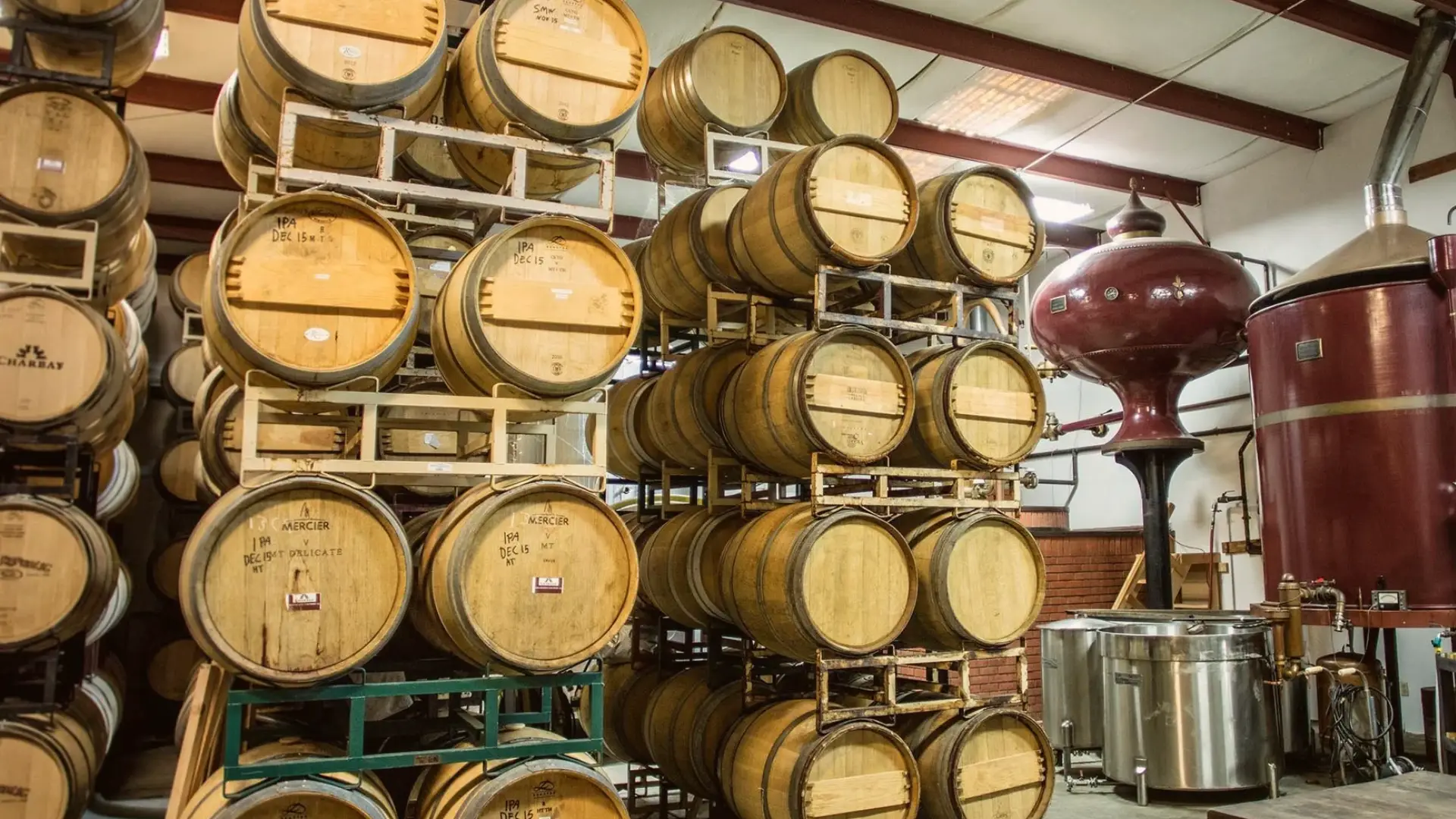
The history of Charbay Distillery begins long before the family established itself in California. The Karakasevic family traces its winemaking and distilling tradition back generations in Europe, with the family recognised by the Austro-Hungarian Imperial Court of Empress Maria Theresa in 1751 as makers of wines and brandies. That inherited knowledge eventually travelled across continents and became the foundation for one of California’s early independent craft distilleries.
In 1954, Miles Karakasevic became the 12th generation of his family to continue the profession of winemaking and distilling in Novi Sad, then part of Yugoslavia. Eight years later, at the age of 21, he immigrated to North America, first settling in Quebec before moving to Michigan, where he worked professionally as a winemaker. His path eventually brought him to Napa Valley in 1972, where he became assistant winemaker at Beringer Vineyards.
Miles’s move to California was more than a change of country. It placed an old European family tradition inside one of the world’s emerging wine regions. California gave him access to grapes, vineyards and a growing wine industry, while his family background provided knowledge that extended beyond winemaking into distillation and brandy production.
That combination would become central to the identity of Charbay. Rather than abandoning European methods after arriving in America, the Karakasevic family adapted them to a new agricultural and cultural environment.
Establishing a California Distillery
In 1983, Miles established Domaine Karakash, initially as a family winery and distillery in Northern California. The business became the 177th licensed craft distillery in the United States, placing it among the early producers of the modern American craft-distilling movement.
The date is particularly important when viewed against the later explosion of American craft distilling. Today, the United States has thousands of distilleries, but in 1983 the independent distilling landscape was far smaller. Charbay therefore entered the field at a time when the idea of a small, family-operated American distillery was still relatively unusual.
The company’s first collection included Méthode Charentaise brandy, Chardonnay and Sauvignon Blanc, reflecting the family’s winemaking background as much as its interest in spirits. The operation was not built around a single category. From the beginning, it connected wine, brandy and distilling as parts of one family production tradition.
The Alambic Charentais
A significant step came in 1986, when the family installed its first Alambic Charentais pot still. The copper still was custom-made by the Pruhlo family, French still makers associated with Cognac production, and became an important piece of Charbay’s early distilling history.
The choice of a Charentais still reflected Miles’s European background and his experience with brandy. It also demonstrated an approach that would remain visible throughout Charbay’s history: established European distilling knowledge could be transferred to California without simply reproducing the conditions of the Old World.
The still became part of a broader philosophy in which technique was respected, but experimentation remained possible. California was not being treated merely as a new location for an old method. It became the environment in which the family could develop its own interpretation.
How Charbay Got Its Name
The name Charbay itself emerged from that period of experimentation.
In 1987, the family released a dessert Chardonnay that combined barrel-fermented Chardonnay with hand-distilled Méthode Charentaise brandy liqueur. The name Charbay was created by combining “Chardonnay” and “Brandy”, and the business later adopted Domaine Charbay as its name in 1991.
It is a small detail, but a revealing one. The name captured the relationship between wine and spirits that had defined the family business from its Californian beginning.
From Family Knowledge to Experimentation
The importance of Charbay Distillery lies not only in its age, but in the way the family used inherited knowledge as a starting point for experimentation.
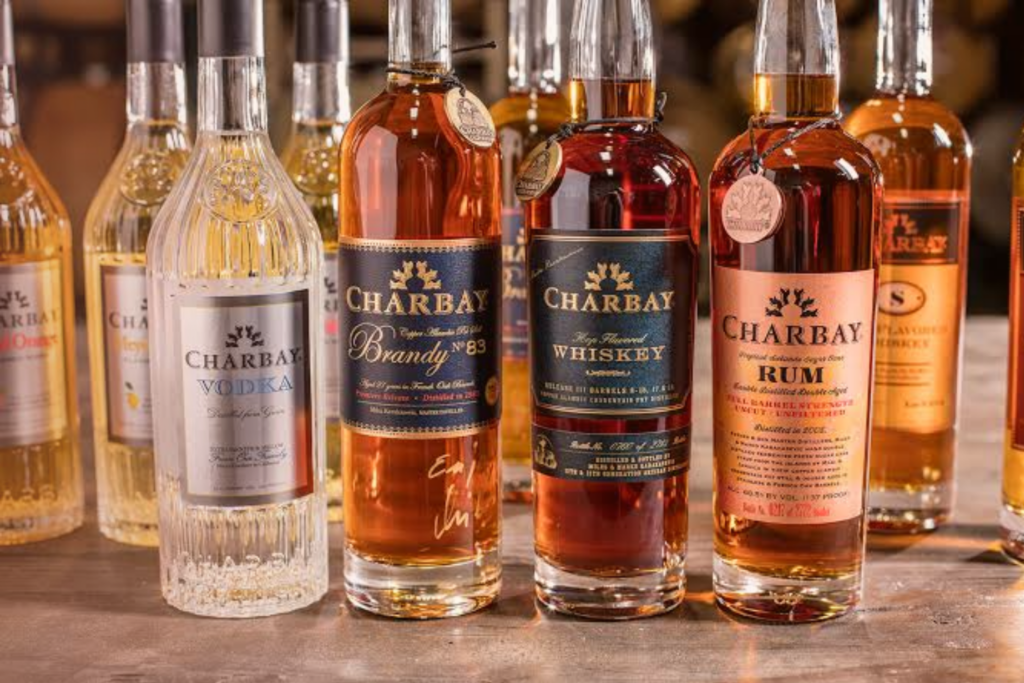
The operation eventually developed a broad portfolio covering whiskey, vodka, brandy, rum and liqueurs, alongside other spirits produced during different periods. Charbay’s own archive records a long sequence of experimental releases, demonstrating that the distillery was never defined by one narrow production category.
That breadth reflects an important characteristic of early American craft distilling. Small producers did not always have the enormous production volumes or established category identities of major spirits companies. They could therefore experiment with unusual ingredients, processes and maturation approaches.
For Charbay, experimentation became part of the family philosophy rather than a temporary marketing strategy.
Marko Karakasevic, the family’s thirteenth-generation master distiller, grew up within that environment. His training followed the family apprenticeship tradition under his father, Miles, and eventually led him to develop spirits that pushed well beyond conventional category boundaries.
The Whiskey Made from Beer
One of the most unusual chapters in Charbay’s history began with an apparently simple observation: whisky begins with a fermented grain liquid that is essentially a form of beer.
Marko had brewed beer himself and became interested in what would happen if whiskey were distilled from a fully brewed, finished beer rather than the relatively plain fermented liquid normally produced specifically for distillation. In 1999, Charbay released its first Pilsner Whiskey, made by distilling bottle-ready pilsner beer in an Alambic pot still.
The idea challenged conventional assumptions about the relationship between brewing and distilling. Instead of treating beer merely as a technical stage on the way to whiskey, Charbay treated an existing finished beer as the starting material.
The experiment eventually developed into Charbay’s distinctive hopped whiskey work. The distillery later collaborated with Bear Republic Brewing Company to create R5 Whiskey, distilled from the brewery’s Racer 5 IPA after extensive research and development.
This was significant because hops are not normally part of the conceptual identity of whiskey. Charbay therefore created a category-crossing approach in which brewing ingredients could remain part of the story even after distillation.
Why the Beer-to-Whiskey Idea Matters
The importance of Charbay’s beer-derived whiskey lies less in novelty than in what it says about craft production. Brewing and distilling share a common foundation in grain, water, yeast and fermentation, but their purposes and technical processes diverge considerably. Charbay’s approach deliberately brought those two disciplines back into conversation.
It also reflected the freedom available to a small family distillery. A large established producer has strong reasons to protect consistency and category expectations. An independent distillery can sometimes afford to ask a more fundamental question: what happens if an established process begins somewhere else?
Charbay repeatedly asked that question. The result was not an attempt to replace conventional whiskey production. It was an example of how American craft distilling could use established knowledge while still questioning inherited boundaries.
A Portfolio Built through Experiment
The Charbay archive records numerous spirits that have disappeared from regular production, including Pilsner Whiskey, Nostalgie Walnut Liqueur, Tahitian Vanilla Rum, fruit-based spirits, Pastis, Pachanga Sunroot Spirit, tequila and several other experimental releases.
Not every experiment becomes a permanent category. That is precisely why an archive matters. These releases document the willingness of the Karakasevic family to work across styles and ingredients rather than restricting the distillery to the safest commercial path. Some products were made only in limited quantities, while others became important chapters in the family’s development.
The archive therefore functions as a record of American craft-distilling experimentation. It shows a producer trying ideas, allowing some to disappear, and continuing to develop others.
Charbay and California Craft Distilling
Charbay’s place in American spirits history becomes clearer when viewed against the development of California’s wider craft-distilling movement.
When the Karakasevic family established its distillery in 1983, the modern American craft-distilling landscape was still in its infancy. Charbay’s position as the 177th distillery in the United States places it within that early generation of independent producers.
The significance of those early distilleries is easy to underestimate because today’s American spirits landscape is so much larger. Independent distilleries now operate across regions that previously had little recognised distilling identity. But that expansion depended partly on earlier producers demonstrating that small-scale, family-owned distilling could exist outside the traditional industrial model.
Charbay was one of those early examples.
Its story also illustrates why California became fertile ground for craft spirits. The state already had a strong culture of wine, agriculture, culinary experimentation and independent food production. A family with European distilling knowledge could therefore find an environment where spirits could develop alongside an established craft-food culture.
European Methods, Californian Conditions
The phrase “European tradition” can sometimes suggest that a producer simply imported an old recipe into a new country. Charbay’s history is more interesting than that.
The family brought generations of knowledge, but California changed the context in which that knowledge was applied. Napa Valley, Northern California agriculture, American ingredients and the emerging American craft movement all became part of the story.
That combination created a hybrid identity. The distillery could use a Charentais still associated with French brandy while developing spirits that belonged unmistakably to California and the American craft movement.
This balance between continuity and adaptation is one of the strongest themes in the Charbay story.
Heritage provided the technical foundation. California provided the setting for experimentation.
A Family Business across Generations
Charbay remains a family-owned operation, and its continuity is central to its historical significance. The business describes itself as now working through the 13th generation of family distilling knowledge, with Marko Karakasevic serving as master distiller and co-owner.
That continuity gives Charbay a different relationship with history from a distillery whose heritage is primarily attached to buildings, brands or corporate ownership.
The knowledge has moved through people.
Miles brought the family’s European winemaking and distilling background to North America. Marko grew up within the Californian operation and later developed its most unconventional whiskey projects. The next generation is now part of the family’s continuing story.
This form of heritage is particularly valuable in craft distilling because technique can be difficult to preserve in written records alone. Apprenticeship, observation and repeated practice carry knowledge that may otherwise disappear.
Why Charbay Matters to American Spirits History
Charbay Distillery occupies an unusual position in American spirits history.
It was established early enough to belong to the formative period of modern craft distilling, yet it developed a distinctly family-driven identity rather than becoming part of a large industrial spirits group. Its European heritage gave it technical depth, while California gave the family space to experiment. The result was a distillery that repeatedly questioned the boundaries between categories.
Wine and brandy were connected through the family’s original production background. Whiskey later connected with brewing through the Pilsner and hopped whiskey experiments. Other releases moved into fruit, botanicals, liqueurs, rum and additional spirit categories.
That range is important because it reveals what craft distilling can mean at its most independent. It is not simply a smaller version of industrial production. It can be a place where a family explores techniques, ingredients and ideas that larger category structures may discourage.
A Legacy Built on Continuity and Change
Charbay’s history contains an apparent contradiction. The family places enormous value on continuity, tracing its distilling heritage across thirteen generations. Yet the distillery’s most distinctive work has often involved experimentation and change.
Those two qualities are not actually opposed. Tradition provides knowledge. Innovation determines what happens when that knowledge meets a new place, a new generation and new questions.
That is precisely what happened when the Karakasevic family moved from Europe to California. The family did not preserve its heritage by keeping it unchanged. It preserved it by continuing to practise it. The result is a Californian distillery whose history cannot be separated from its European roots, but which also cannot be understood without the culture of American craft production that surrounded it.
From No. 177 to a Craft-Distilling Landmark
The number 177 may sound modest today, when thousands of American distilleries exist, but it gives Charbay a useful historical perspective. The distillery entered the American market when independent distilling was still developing. Four decades later, its survival provides a record of how that movement evolved.
Charbay’s significance therefore extends beyond its individual spirits. It represents a period when family producers were helping establish a new American relationship with distilling, one that valued local production, experimentation and direct connection between maker and place.
Its history also demonstrates that craft distilling did not emerge from a single tradition. European family knowledge, American entrepreneurship, California agriculture and a willingness to experiment all contributed to the movement.
A California Chapter in a Global Distilling Story
The story of Charbay Distillery begins in Europe but finds its distinctive character in California.
The Karakasevic family’s centuries-old relationship with wine and distilling gave Miles a foundation that could survive migration. His move to North America and eventual arrival in Napa Valley placed that knowledge inside California’s rapidly developing wine culture. In 1983, the establishment of Domaine Karakash transformed that personal history into a family business.
What followed was not simply the preservation of an old European tradition. The family adapted it, expanded it and repeatedly tested its boundaries.
The Charentais still, the development of Charbay, the family’s work across spirit categories and Marko’s beer-derived whiskey experiments all belong to the same story. Each reflects a willingness to carry knowledge forward without treating the past as a set of rules that can never be questioned.
That may ultimately be Charbay’s greatest contribution. Its history demonstrates that craft distilling is not defined only by where a tradition began. It is also defined by what happens when that tradition travels.
From Novi Sad to Quebec, Michigan, Napa Valley and Northern California, the Karakasevic family carried distilling knowledge across borders and generations. In California, that heritage became something new: a family distillery shaped by European technique, American craft culture and an unusually persistent appetite for experimentation.
Charbay’s legacy is therefore not simply European tradition preserved in California. It is European tradition transformed by California.

Distillery
Domaine Chiroulet Famille Fezas
Domaine Chiroulet Famille Fezas embodies the essence of traditional French winemaking while preserving the distinctive characteristics of the…
Distillery
Domaine Boingnères Distillery is a revered establishment located in the heart of the Gascony region in France, renowned…
Distillery
Charbay Distillery, founded in 1983, stands as a pioneering force in the craft distillation movement of California. Nestled…
History
Armagnac and Cognac: Why Armagnac Stayed Rural While Cognac Went Global
In the landscape of French spirits, few contrasts are as revealing as the divergence between Armagnac and Cognac. Both are grape-based brandies distilled from wine. Both trace their origins back several centuries. Yet Armagnac remained rural, fragmented, and estate-driven, while Cognac evolved into a globally recognised luxury spirit. This outcome was not determined by flavour […]
February 18, 2026
Distilleries
Mars Shinshu: The Distillery That Returned from Silence in Japan’s Central Alps
When the stills at Mars Shinshu Distillery began running again in 2011, they had been silent for 19 years. The buildings had not disappeared, and Hombo Shuzo had not abandoned whisky entirely. Even so, a distillery at rest is not a sealed piece of history. Equipment ages, stocks diminish, employees move on, and the market […]
July 1, 2026
Distilleries
Laphroaig: The Islay Distillery That Turned Peat into a Global Identity
On the southern coast of Islay, the name Laphroaig stretches across a whitewashed warehouse facing a narrow bay. The lettering now belongs to one of the most recognisable names in Scotch whisky, yet the identity behind it was built from a tightly local set of materials: barley, peat, water, casks, coastal geography, and the decisions […]
June 15, 2026