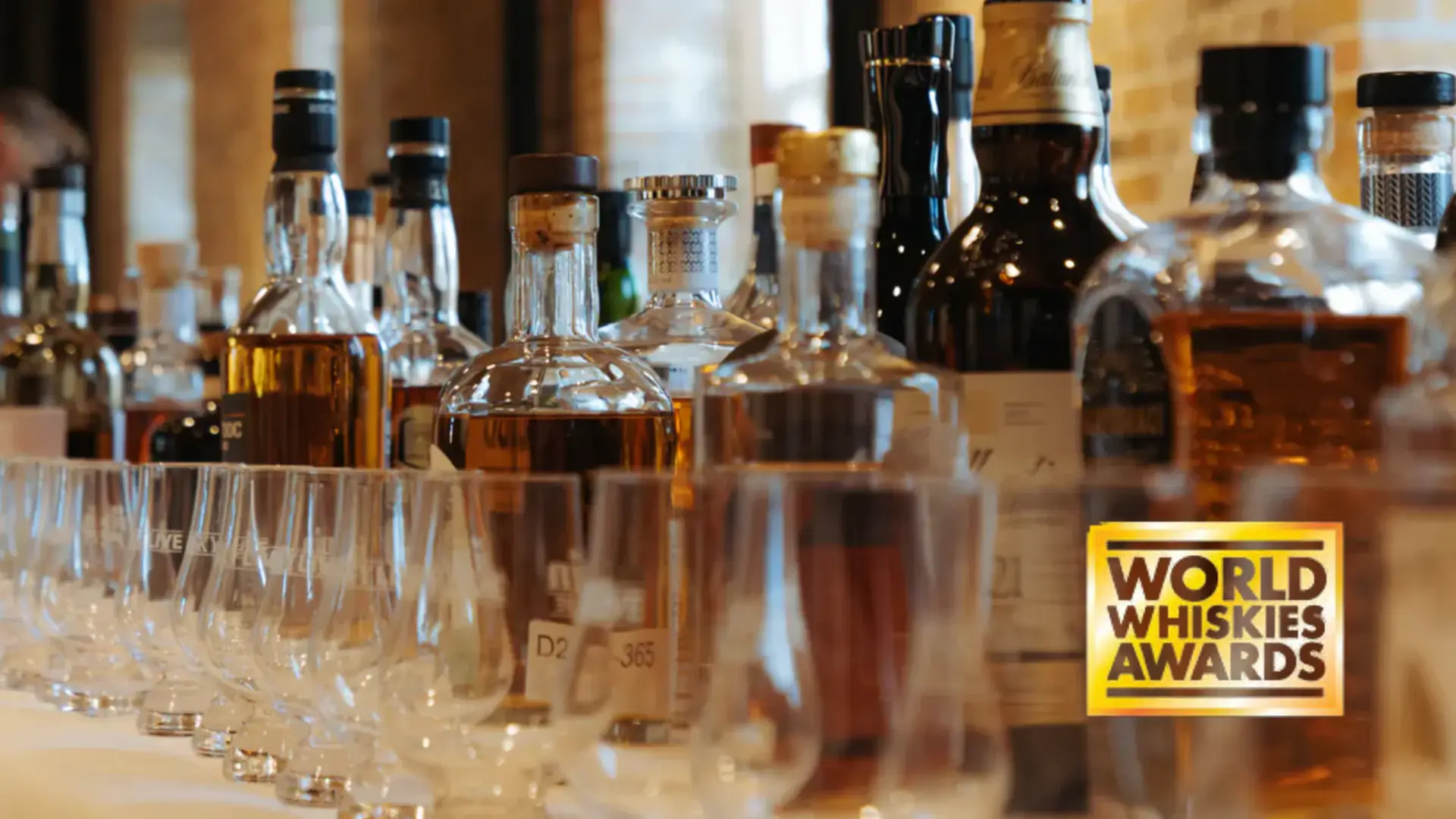
Early 2026 did not produce one dominant style
Award Winners 2026: Awards rarely define a category on their own, but they often reveal how it is being judged. In the first months of 2026, results across major competitions showed a consistent pattern. The leading distilleries and spirits were not unified by a single flavour profile or production style. Instead, they were recognised for clarity of identity, technical execution, and consistency across production systems.
At the centre of that pattern sits Kavalan Distillery, named Distiller of the Year at the World Whiskies Awards 2026. In the United States, Heaven Hill Distillery received top honours at Icons of Whisky America 2026, including recognition as Distiller and in sustainability. In London, No.3 Gin from Berry Bros. and Rudd was awarded Spirit of the Year at the London Spirits Competition 2026 with a reported 98-point score. In South Korea, Paju 25 from Mieumnet Distillery was recognised at the Korea Wine and Spirits Awards.
These results span categories, but they point toward the same standard of production clarity.
Kavalan and the consolidation of non-traditional whisky regions
Kavalan’s recognition marks a shift in how global whisky is evaluated. The distillery, located in Yilan County, Taiwan, has built its reputation through subtropical maturation, high cask interaction, and controlled production methods adapted to the climate.
By 2026, that approach is no longer treated as experimental. Kavalan’s Distiller of the Year title reflects consistent performance across releases rather than a single standout bottling.
Within the same awards framework, global results also highlighted a wide geographic spread. Bowmore 21 Year Old Sherry Oak Cask was named among the top-performing single malts, while category winners included distilleries from Thailand, South Africa, and Australia.
Whisky is no longer judged through a single regional reference point.
Heaven Hill and the distillery as a complete system
Heaven Hill’s results at Icons of Whisky America 2026 extend beyond individual products. The distillery was recognised across multiple categories, including distillery performance and sustainability.
This matters because American whiskey awards have historically focused on releases. In this case, recognition reflects operational structure rather than a single expression.
At the same time, Heaven Hill’s Elijah Craig Toasted Rye received category recognition within the World Whiskies Awards America round. The whiskey, finished in toasted barrels following initial ageing in new charred oak, represents a controlled variation within a traditional production framework.
The combination of product recognition and operational awards indicates a shift toward evaluating the distillery as a system.
No.3 Gin and the persistence of classical structure
The London Spirits Competition operates differently from many spirits awards, assessing entries on quality, value, and packaging. Within this framework, No.3 Gin achieving Spirit of the Year with a 98-point score is significant.
No.3 is not positioned as a contemporary reinterpretation of gin. It is a London Dry gin built around classical botanical balance, emphasising juniper, citrus, and spice within a tightly controlled structure.
Its recognition suggests that, despite a decade of rapid innovation in gin, technical execution of established styles remains a benchmark for judging quality.
Soju, visitor experience, and category expansion
The recognition of Paju 25 within the Korea Wine and Spirits Awards highlights another development. Distilled soju is increasingly being evaluated through criteria similar to those applied to whisky and gin, including structure, balance, and production clarity.
At the same time, awards in 2026 continued to extend beyond liquid categories. At Icons of Whisky America, distillery visitor experience categories recognised operations such as Kentucky Peerless Distilling Co., reflecting the growing importance of distilleries as public-facing spaces.
Awards now evaluate both the product and the environment in which it is produced and presented.
Category results and the visibility of rye whisky
Within the World Whiskies Awards 2026 results, the rye whisky categories provide a clear example of evolving structure.
Recognised entries included Elijah Craig Toasted Rye for the United States, Greenbanks Tasmanian Whisky Co Quadruple Cask Rye for Australia, and RyeLaw Vintage 2017 from InchDairnie Distillery for Scotland.
These results reflect a category that is no longer defined by a single region. Each of these whiskies represents a different approach to rye, shaped by local grain, cask strategy, and distillation method.
Rye whisky has become a platform for regional interpretation rather than a fixed style.
What the results show about 2026
The strongest results of early 2026 do not indicate a single trend in flavour or production method. Instead, they highlight a convergence around clarity.
Distilleries are being recognised when their production systems, raw materials, and final products align without contradiction. Whether in Taiwan, Kentucky, London, or South Korea, the same principle applies.
Awards are no longer centred only on product. They reflect systems that are coherent from grain to bottle.
The results of early 2026 suggest a shift in how spirits are evaluated at the highest level. Prestige is no longer tied solely to age, origin, or rarity. It is increasingly tied to production systems that are clearly defined and consistently executed.
Kavalan demonstrates how climate-driven whisky can move from novelty to standard. Heaven Hill shows that large-scale production can still meet that standard when supported by coherent operations. No.3 Gin confirms that classical structures remain relevant when executed with precision.
What connects these winners is not style, but alignment between process and result.

Distillery
InchDairnie Distillery is a forward-thinking whisky producer located in Glenrothes, Scotland, renowned for its innovative approach to distillation…
Distillery
Kentucky Peerless Distilling Co
Kentucky Peerless Distilling Co., located in the heart of Louisville, Kentucky, is a beacon of craft distilling, passionate…
Distillery
Heaven Hill Distillery, established in 1935, is the largest independent, family-owned distillery in the United States, located in…
Distillery
Located in the heart of Islay, Bowmore Distillery is a hallmark of Scottish single malt whisky craftsmanship. Established…
Distillery
Berry Bros. & Rudd (BBR), established in 1698, is recognized as Britain's original wine and spirits merchant. Nestled…
Distillery
Kavalan Distillery, renowned for its premium Taiwanese whisky, is situated in the picturesque Yilan County of Taiwan. Established…
Distillery
InchDairnie Distillery is a forward-thinking whisky producer located in Glenrothes, Scotland, renowned for its innovative approach to distillation…
Distillery
Kentucky Peerless Distilling Co
Kentucky Peerless Distilling Co., located in the heart of Louisville, Kentucky, is a beacon of craft distilling, passionate…
Distillery
Heaven Hill Distillery, established in 1935, is the largest independent, family-owned distillery in the United States, located in…
Distillery
Located in the heart of Islay, Bowmore Distillery is a hallmark of Scottish single malt whisky craftsmanship. Established…
Distillery
Berry Bros. & Rudd (BBR), established in 1698, is recognized as Britain's original wine and spirits merchant. Nestled…
Distillery
Kavalan Distillery, renowned for its premium Taiwanese whisky, is situated in the picturesque Yilan County of Taiwan. Established…
Distilleries & Producers
The Last Days of Floor Maltings: When Scotch Distilleries Made Their Own Malt
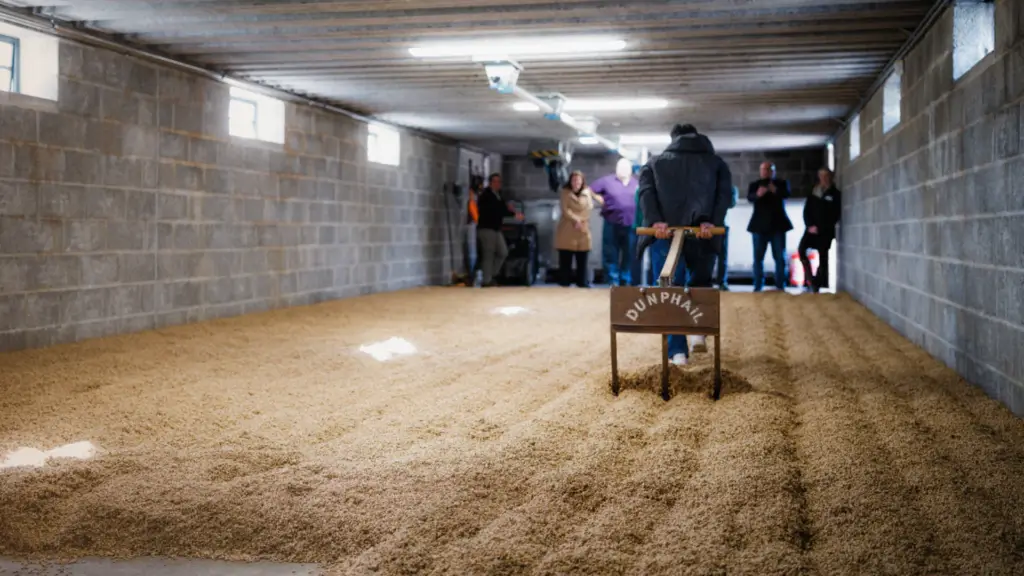
Floor Maltings History: Where Whisky Began Before stainless steel vessels, automated temperature control, and industrial malt plants, a Scotch whisky distillery often began its work on a stone or concrete floor. Barley was steeped in water, spread in a shallow layer, and turned repeatedly by hand as it germinated. The process demanded time, judgement, space, […]
June 18, 2026
Barlist
Auchentoshan: How Triple Distillation Became Its Defining Lowland Practice
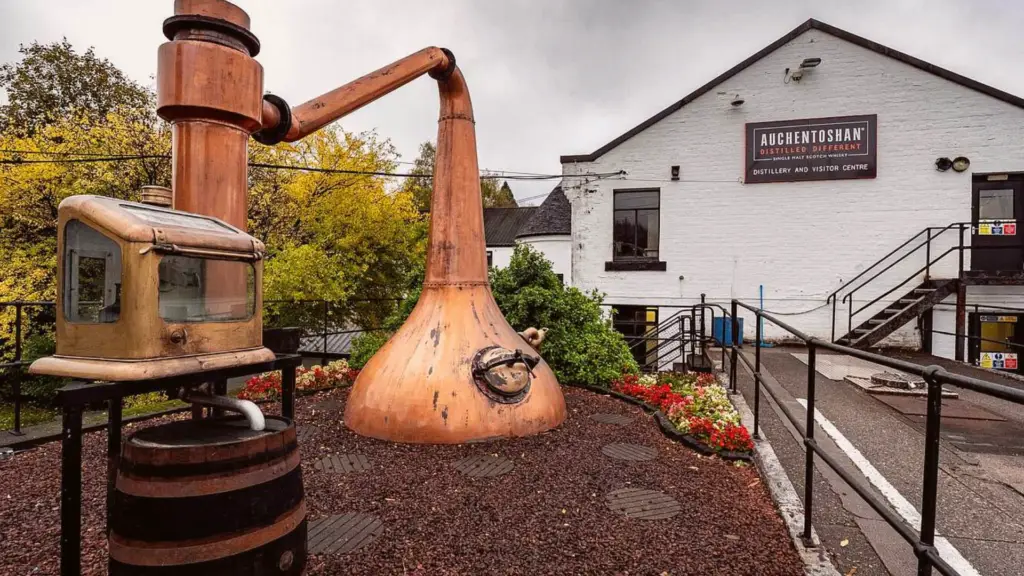
On the northwestern edge of Glasgow, close to the Kilpatrick Hills and the industrial history of the River Clyde, Auchentoshan Distillery has built its identity around a third passage through copper. Most Scotch malt whisky is distilled twice. At Auchentoshan, every part of the spirit passes through a wash still, an intermediate still, and a […]
June 16, 2026
Discovery and Education
Feis Ile: How a Small Islay Festival Became Whisky’s Global Pilgrimage
Islay is not a large island, but few places in the whisky world carry so much weight. Its coastline, peat bogs, warehouses, ferry routes, village halls, and distillery courtyards have shaped one of Scotland’s most recognisable spirit landscapes. Long before Fèis Ìle became a global whisky pilgrimage, it began as something more local and more […]
June 7, 2026