Islay is not a large island, but few places in the whisky world carry so much weight. Its coastline, peat bogs, warehouses, ferry routes, village halls, and distillery courtyards have shaped one of Scotland’s most recognisable spirit landscapes. Long before Fèis Ìle became a global whisky pilgrimage, it began as something more local and more human: a celebration of island culture, music, language, and community.
The festival’s full name, Fèis Ìle, means the Islay Festival. Its modern identity is closely tied to whisky, but its roots sit within the wider Scottish Gaelic fèis tradition, where music, arts, language, and local participation carry as much meaning as commercial attention. Over time, Islay’s distilleries became central to the event, not by replacing the island’s culture, but by becoming one of its most visible expressions.
What makes Fèis Ìle important is not simply that people travel to Islay for whisky. It is that the festival turns the island itself into the frame through which whisky is understood.
From Local Festival to Island Identity
Fèis Ìle developed during the 1980s, a period when communities across Scotland were working to preserve Gaelic culture, traditional music, and local identity. On Islay, that cultural setting had a distinct character. Whisky was already central to the island’s economy and global reputation, but the festival was not originally just a whisky showcase.
Its early structure reflected island life. Music sessions, community events, ceilidhs, local food, storytelling, and gatherings gave the festival a social foundation. Whisky gradually became the international language through which visitors discovered the island, but the event never lost its wider cultural setting. This distinction matters. Fèis Ìle is not simply a trade fair moved to a scenic location. It is a local festival that became global because the place itself already carried deep meaning.
The Distilleries That Made Islay a Destination
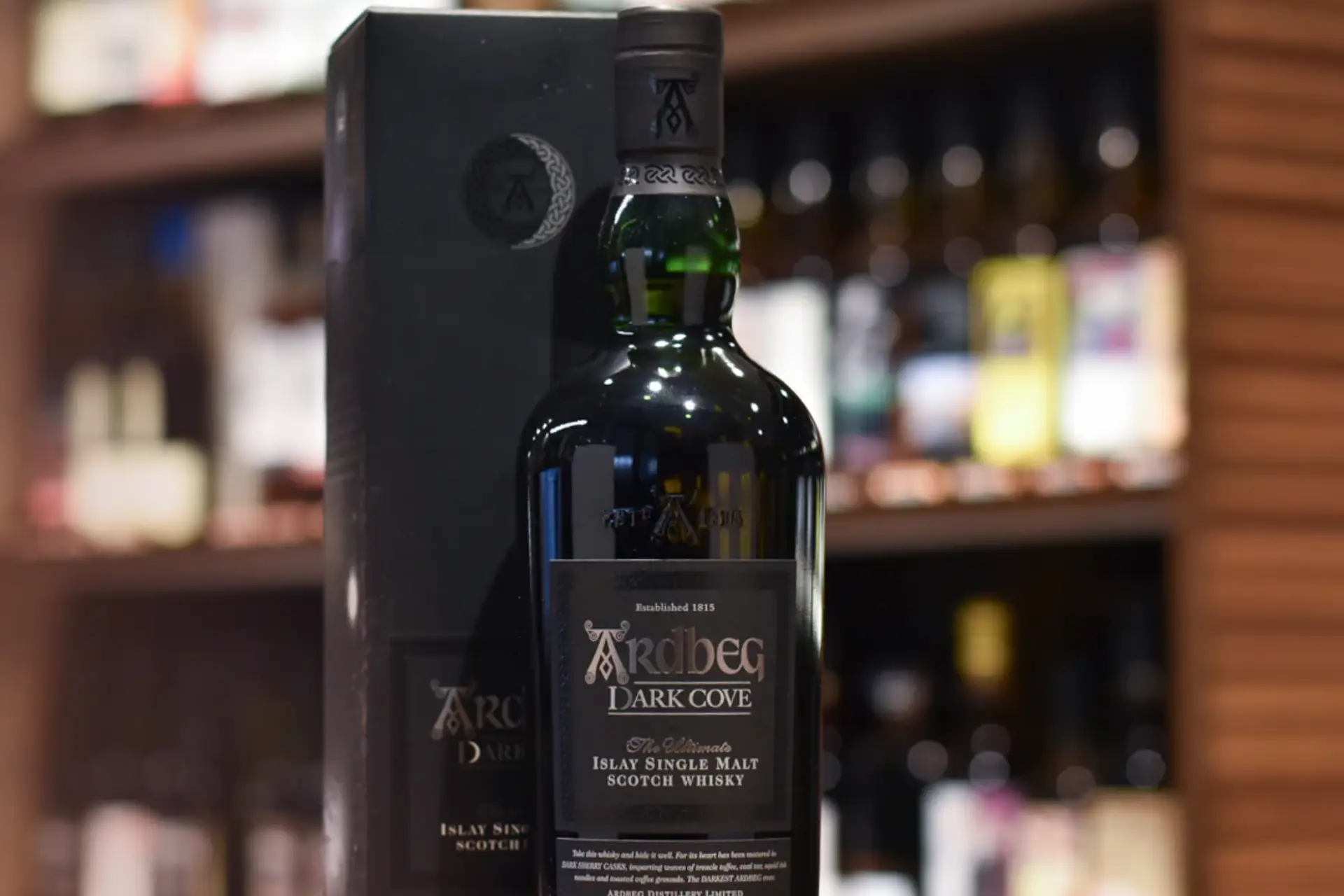
Islay’s distillery map gives Fèis Ìle its structure. Names such as Bowmore, Laphroaig, Lagavulin, Ardbeg, Caol Ila, Bunnahabhain, Bruichladdich, Kilchoman, Ardnahoe, and Port Ellen are not abstract brands during the festival. They are physical places connected by roads, coastlines, ferries, fields, warehouses, and communities.
Each distillery contributes to the rhythm of the week. Open days, production stories, archive references, limited releases, and local gatherings create a sense of movement around the island. Visitors do not encounter Islay whisky only through a label. They encounter it through the buildings, weather, people, and landscapes that shaped it.
This is why Fèis Ìle became a pilgrimage rather than an ordinary event. The journey is part of the meaning. To reach Islay is to cross water, adjust to island time, and enter a place where production is inseparable from geography.
Peat, Place, and the Language of Islay Whisky
Islay whisky has long been associated with peat smoke, coastal influence, and powerful sensory identity. The southern distilleries, including Laphroaig, Lagavulin, and Ardbeg, are often linked to more medicinal, smoky, and maritime profiles, while distilleries such as Bruichladdich, Bunnahabhain, Bowmore, Caol Ila, Kilchoman, and Ardnahoe show the island’s wider range.
Fèis Ìle gives these differences a physical context. Peat is no longer just a flavour descriptor. It becomes a landscape. Maritime influence is no longer only a tasting note. It becomes weather, harbour, and warehouse air. Distillery character becomes easier to understand when visitors see how close production sits to the sea, to farmland, and to the island’s working life. The festival, therefore, teaches whisky through place rather than explanation alone.
The Role of Limited Releases
One reason Fèis Ìle became globally famous is the annual culture of festival bottlings. Distilleries often mark the event with special releases that reflect archive stock, unusual cask selections, or stylistic experiments. These bottles became part of the festival’s mythology, especially as international demand for Islay whisky grew.
Yet the importance of these releases is not only scarcity. They function as annual documents of distillery identity. A Fèis Ìle bottling can reveal how a producer wants to speak to its most engaged audience in a particular year. Sometimes that means emphasising peat. Sometimes it means cask structure, age, fermentation, provenance, or a connection to older production traditions.
Music, Community, and the Meaning of the Word Fèis
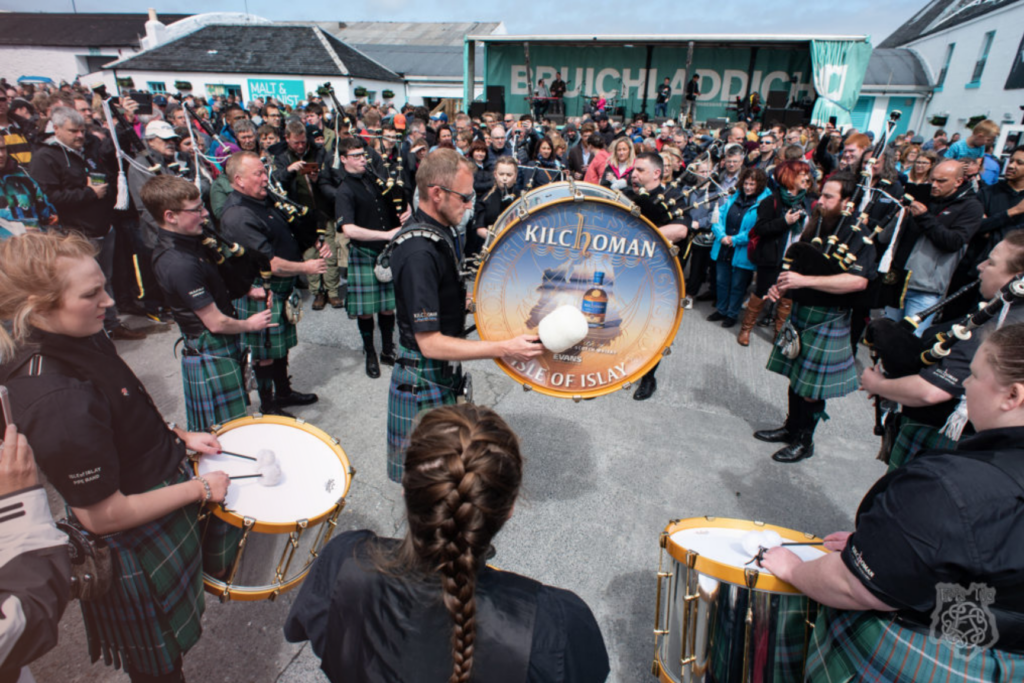
The word fèis connects the festival to a wider Gaelic cultural movement. While whisky dominates global attention, music remains essential to the event’s identity. Traditional performance, ceilidhs, local gatherings, and community participation help preserve the festival’s original purpose.
This matters because it prevents Fèis Ìle from becoming only a product-driven event. The festival remains rooted in Islay’s own cultural life. Distilleries may bring global visitors, but the structure still depends on local hospitality, local organisation, and local participation.
The balance is delicate. A small island hosting thousands of visitors faces pressure on transport, accommodation, staffing, and infrastructure. The success of Fèis Ìle has made Islay more visible, but that visibility must continually be managed against the realities of island life.
Whisky Tourism and the Modern Islay Economy
The growth of Fèis Ìle reflects the rise of whisky tourism as a serious economic force. Islay’s distilleries are no longer only production sites. They are visitor destinations, cultural institutions, and global brand centres. For the island, this has created both opportunity and strain. Tourism supports local businesses, hospitality, transport, and employment. At the same time, seasonal visitor numbers can place pressure on limited infrastructure.
This tension is part of the modern festival story. Fèis Ìle succeeds because Islay feels intimate, remote, and specific. Those same qualities make large-scale tourism difficult. The festival’s future depends on preserving the character that made it meaningful in the first place.
From Festival to Pilgrimage
The language of pilgrimage is often overused in spirits writing, but in the case of Fèis Ìle, it fits. People travel not only for products, but for contact with the origin. They come to stand at distillery gates, hear music in village halls, walk between warehouses, and experience Islay as a living whisky landscape.
The festival transforms brand loyalty into place-based understanding. A bottle of Lagavulin, Laphroaig, Ardbeg, Bowmore, Bruichladdich, Caol Ila, Bunnahabhain, Kilchoman, Ardnahoe, or Port Ellen carries one kind of meaning on a shelf. It carries another when connected to the island itself. That shift explains the power of Fèis Ìle. It turns whisky from object into geography.
Fèis Ìle became globally important because it did not begin as a global event. It grew from a local cultural festival into one of the most significant gatherings in Scotch whisky, while keeping the island at the centre of the experience. Its strength lies in the connection between music, language, production, landscape, and community. The whisky matters because it belongs to Islay. The festival matters because it lets people understand that belonging.
Fèis Ìle is not only a festival of bottles or distillery open days. It is a case study in how a spirit region becomes cultural territory. Islay’s whisky identity is not built by production alone. It is reinforced every year when people return to the island and find that the place still speaks through the glass.

Distillery
Bunnahabhain Distillery, located on the sweeping shores of the Sound of Islay, holds a significant place in the…
Distillery
Located in the heart of Islay, Bowmore Distillery is a hallmark of Scottish single malt whisky craftsmanship. Established…
Distillery
Ardnahoe Distillery, located at Port Askaig on the famed whisky island Islay, is the contemporary embodiment of a…
Distillery
Laphroaig Distillery, nestled on the rugged south coast of Islay, Scotland, is synonymous with rich and complex single…
Distillery
Lagavulin Distillery, nestled in the picturesque village of Lagavulin on the southern coast of Islay, Scotland, is renowned…
Distillery
Kilchoman Distillery, situated on the serene Isle of Islay, represents a pioneering spirit in the world of whisky…
Spirit
Ardbeg 10 YO Cask Strength Whisky
Ardbeg 10 YO Cask Strength is a unique expression from the Ardbeg Distillery, standing as a testament to…
Distillery
Bunnahabhain Distillery, located on the sweeping shores of the Sound of Islay, holds a significant place in the…
Distillery
Located in the heart of Islay, Bowmore Distillery is a hallmark of Scottish single malt whisky craftsmanship. Established…
Distillery
Ardnahoe Distillery, located at Port Askaig on the famed whisky island Islay, is the contemporary embodiment of a…
Distillery
Laphroaig Distillery, nestled on the rugged south coast of Islay, Scotland, is synonymous with rich and complex single…
Distillery
Lagavulin Distillery, nestled in the picturesque village of Lagavulin on the southern coast of Islay, Scotland, is renowned…
Distillery
Kilchoman Distillery, situated on the serene Isle of Islay, represents a pioneering spirit in the world of whisky…
Spirit
Ardbeg 10 YO Cask Strength Whisky
Ardbeg 10 YO Cask Strength is a unique expression from the Ardbeg Distillery, standing as a testament to…
History
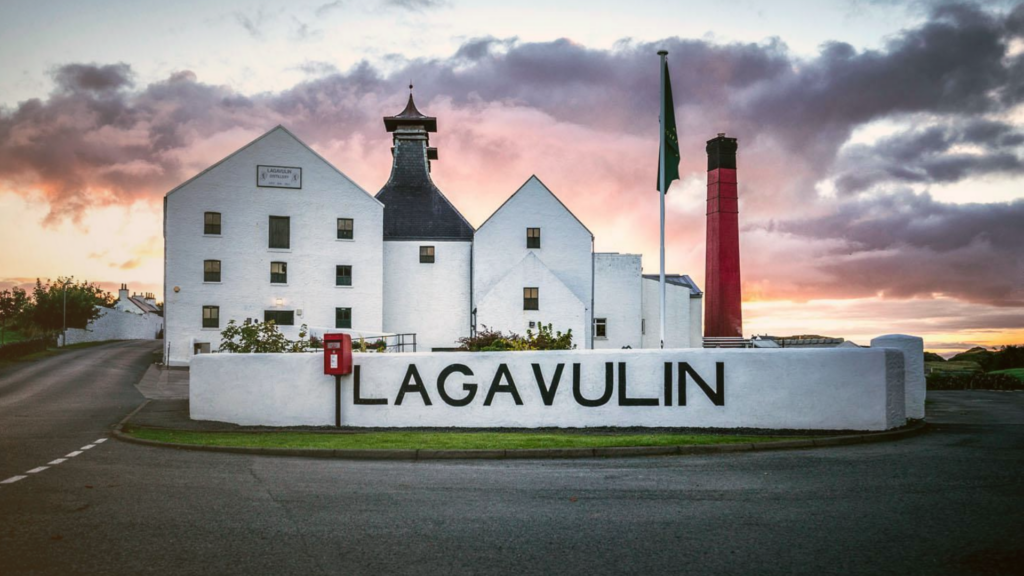
Lagavulin Distillery and the Discipline of Slow Distillation on Islay
On the southern coast of Islay, Lagavulin Distillery stands beside a sheltered bay between Laphroaig and Ardbeg. Its white buildings, dark kiln roofs, and long waterfront warehouses belong to one of Scotland’s most recognisable whisky landscapes. Still, the character associated with the distillery was not created by scenery alone. Peat is the most obvious part […]
June 28, 2026
Distilleries & Producers
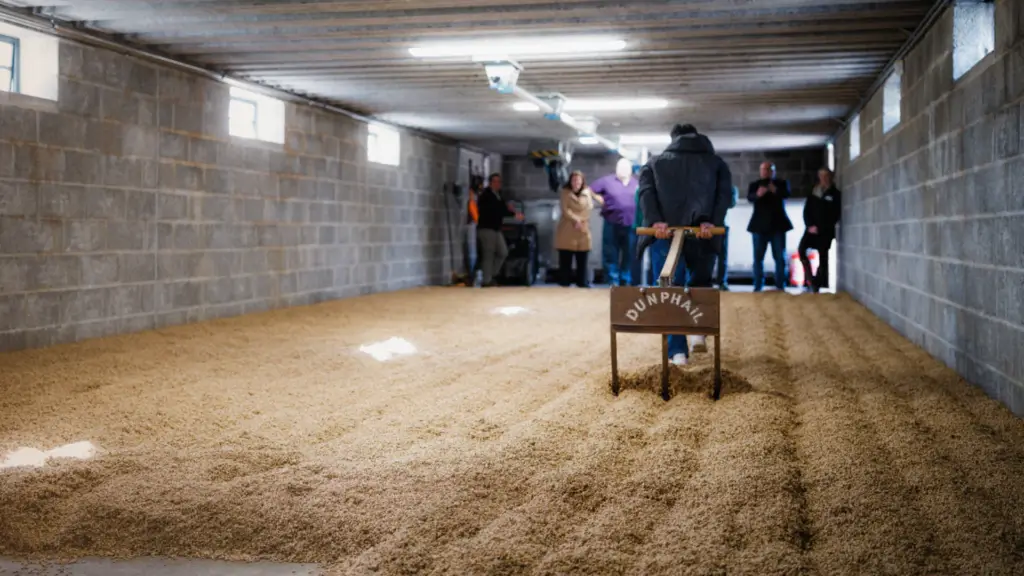
The Last Days of Floor Maltings: When Scotch Distilleries Made Their Own Malt
Floor Maltings History: Where Whisky Began Before stainless steel vessels, automated temperature control, and industrial malt plants, a Scotch whisky distillery often began its work on a stone or concrete floor. Barley was steeped in water, spread in a shallow layer, and turned repeatedly by hand as it germinated. The process demanded time, judgement, space, […]
June 18, 2026
Barlist
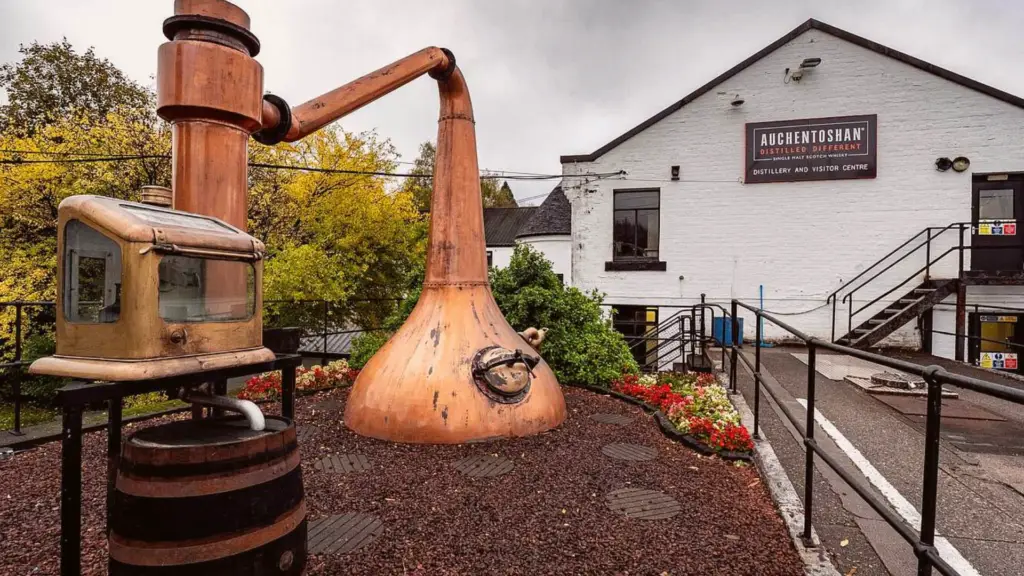
Auchentoshan: How Triple Distillation Became Its Defining Lowland Practice
On the northwestern edge of Glasgow, close to the Kilpatrick Hills and the industrial history of the River Clyde, Auchentoshan Distillery has built its identity around a third passage through copper. Most Scotch malt whisky is distilled twice. At Auchentoshan, every part of the spirit passes through a wash still, an intermediate still, and a […]
June 16, 2026