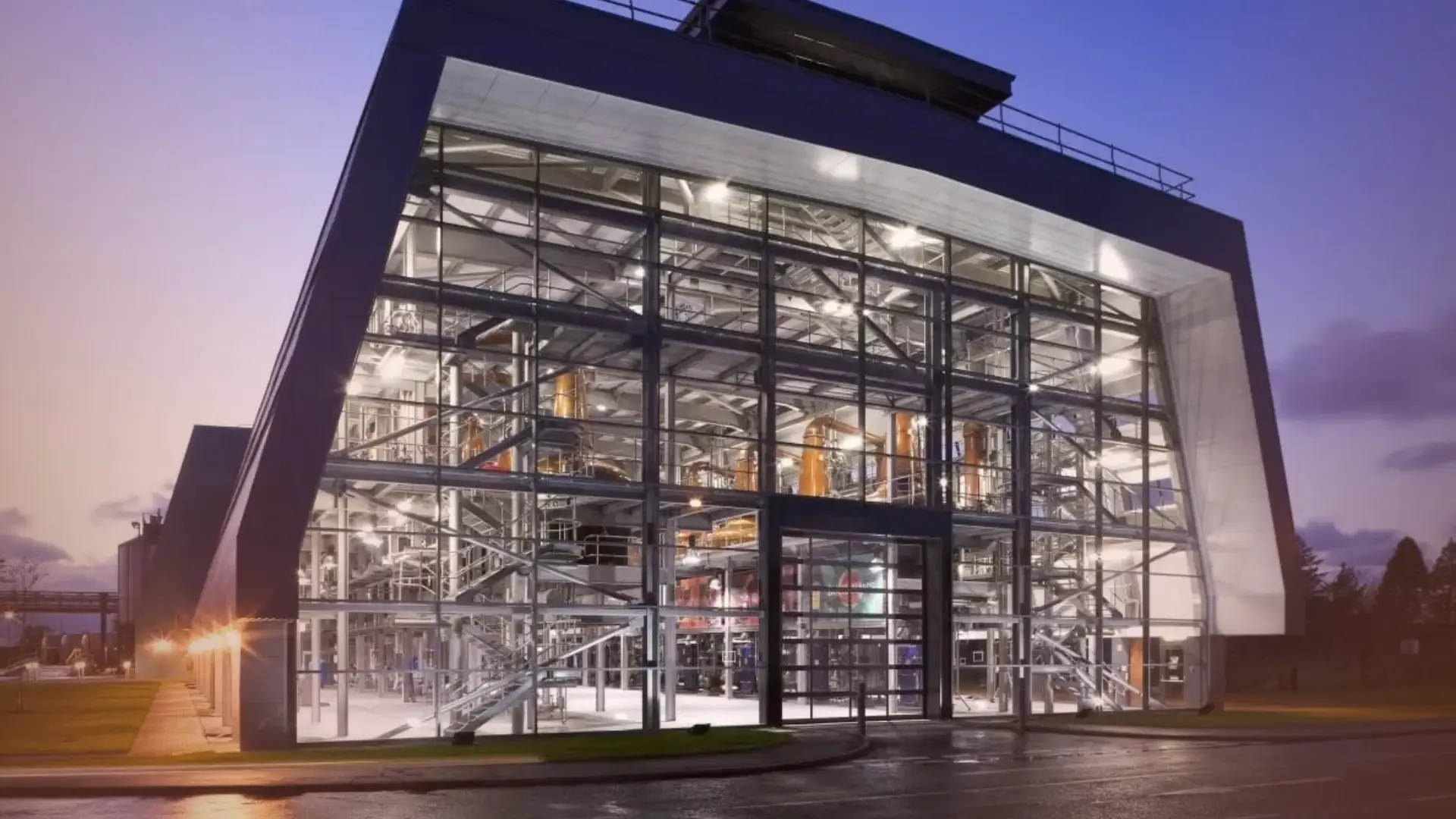
In Speyside, where whisky is often associated with generations of tradition, Roseisle Distillery represents something very different. Built by Diageo near Elgin and officially opened in 2010, Roseisle was designed as a modern, large-scale malt whisky distillery, combining traditional pot-still production with advanced engineering, energy recovery and unusual flexibility in how its spirit can be produced.
Built at a cost of around £40 million, the distillery was created during a period when Diageo was investing heavily in Scotch whisky production capacity. Its spirit was intended primarily for use in Diageo’s blended Scotch portfolio, including brands such as Johnnie Walker, J&B and Bell’s.
For years, Roseisle remained largely anonymous to whisky drinkers. That changed in 2023, when Diageo released the first official Roseisle single malt, giving the wider whisky world its first direct taste of what this highly engineered Speyside distillery could produce.
A Speyside Distillery Built for Scale: Fourteen stills and a 10-million-litre capacity
Roseisle was one of the most significant new Scotch whisky distilleries of its generation. When it opened in 2010, it was described as the first major new distillery of its scale to open in Scotland in more than 30 years.
The distillery contains 14 copper pot stills, arranged as seven wash stills and seven spirit stills. At full production, its original reported capacity was approximately 10 million litres of spirit per year, making Roseisle one of the largest malt whisky production sites in Diageo’s portfolio at the time.
That scale was not simply about producing more whisky. Roseisle was designed to give Diageo greater flexibility in managing the spirit requirements of its wider Scotch whisky portfolio.
Engineering efficiency into whisky production
Environmental performance was another defining feature of the project.
Roseisle incorporated a biomass energy plant designed to use by-products from the distilling process as an energy source. The site also uses heat recovery, allowing waste heat from the distillery to contribute to the operation of nearby maltings. These systems were part of an effort to reduce energy use and carbon emissions while making better use of materials generated during production.
The result was a distillery designed around a different idea of efficiency. Rather than treating whisky production and environmental management as separate concerns, Roseisle incorporated both into the architecture of the site.
Roseisle Distillery is known as the “Death Star”
Roseisle has sometimes been described by whisky enthusiasts as a “Death Star”, a nickname reflecting both its imposing scale and its reputation as an unusually advanced production facility. Scotch Whisky used the term when describing the distillery’s arrival in Speyside.
The comparison isn’t difficult to understand. Roseisle looks and operates differently from many of the traditional distilleries that define the romantic image of Scotch whisky.
Yet beneath the modern architecture are stills, fermentation and distillation processes that remain fundamentally recognisable. The difference is the degree of control built into the system.
The Chameleon Quality of Roseisle: Changing the character of the spirit
One of Roseisle Distillery‘s most interesting technical features is its ability to produce different styles of new make spirit.
Several of its stills are equipped with both copper and stainless-steel condensers, allowing operators to change the amount of copper contact during condensation. Copper generally encourages a lighter, cleaner spirit, while stainless steel can retain more of the heavier and more sulphury compounds that contribute to a fuller character.
The distillery can also vary aspects of its fermentation regime. Together, these options allow Roseisle to produce spirit with different weights and flavour characteristics rather than being locked into a single narrowly defined house style.
This flexibility is one of the reasons Roseisle is so interesting from a production perspective. It isn’t simply a high-volume distillery. It is a high-volume distillery designed to give its operators considerable control over the character of the spirit.
From blend component to single malt
For much of its history, Roseisle was associated primarily with blended Scotch whisky rather than a consumer-facing single malt. That changed in 2023.
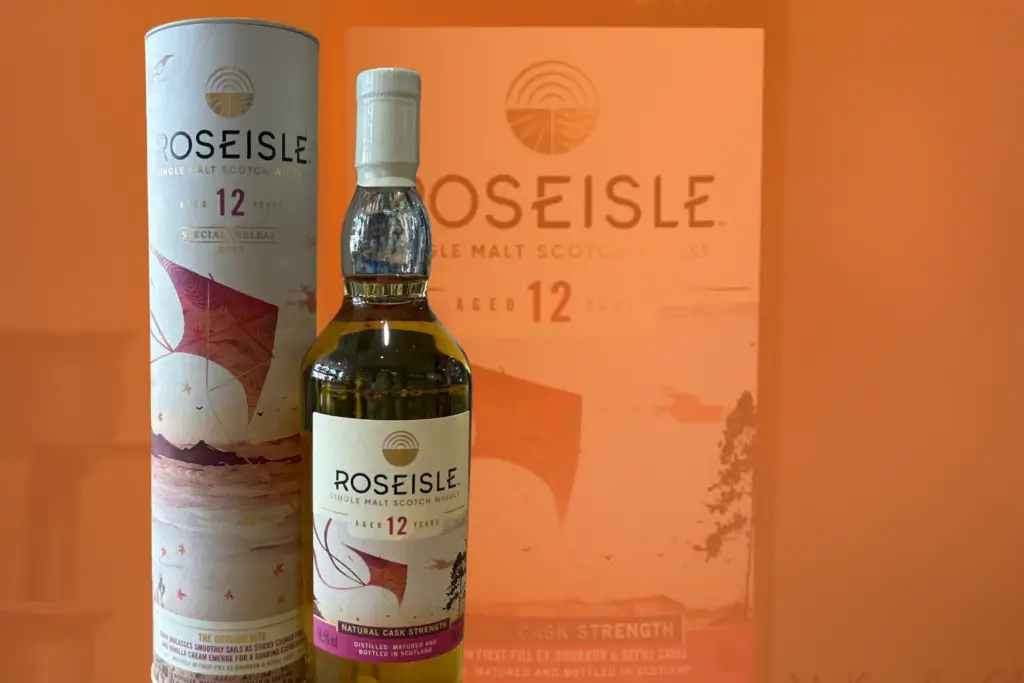
Diageo released Roseisle 12 Year Old as part of its Special Releases 2023 collection. The expression was the distillery’s first-ever single malt release, bottled at natural cask strength and matured in a combination of first-fill ex-bourbon and refill casks.
The release gave whisky enthusiasts something they had previously been unable to experience directly: Roseisle spirit presented as a whisky in its own right rather than as one component of a larger blend. Diageo’s tasting notes describe the 12-year-old expression with prominent vanilla, stewed fruit, white chocolate, sweetness and a long, warming finish.
A new kind of Speyside identity
Roseisle Distillery doesn’t fit neatly into the traditional image of a Speyside distillery. Its story is less about centuries-old buildings and more about process control, flexibility and modern engineering. That doesn’t make it less connected to Scotch whisky tradition. In many ways, it shows how that tradition can be adapted to the demands of a modern global industry.
Its 14 stills, variable production parameters, dual condenser arrangements, biomass energy system and heat-recovery infrastructure make Roseisle one of the more technically distinctive distilleries in Speyside. And the 2023 single malt release added another dimension to the story.
For more than a decade, Roseisle’s spirit largely worked behind the scenes, disappearing into blends that reached consumers around the world. With the arrival of Roseisle 12 Year Old, the distillery finally stepped into the glass on its own terms. The significance of Roseisle isn’t simply its size. It is the philosophy behind that size.
Here, modern engineering doesn’t replace the fundamentals of whisky making. It gives the distiller greater control over them.
That makes Roseisle Distillery an important chapter in the modern history of Scotch whisky: a Speyside distillery built not around nostalgia, but around the idea that precision, flexibility and sustainability can coexist with the traditions of the spirit.

Distillery
Johnnie Walker & Sons is synonymous with excellence in the world of blended Scotch whisky. Established in Kilmarnock,…
Distillery
Bell and Bones Distillery is a small-batch, hand-crafted gin distillery located in Tasmania. Known for its unique approach…
Distillery
Diageo plc is a prominent British multinational alcoholic beverage company and a major player in the global spirits…
Distillery
Roseisle Maltings is a renowned facility located near Elgin in Morayshire, Scotland, specifically within the Strathspey region. Opened…
Spirit
Johnnie Walker & Sons King George V Blended Scotch Whisky
Johnnie Walker King George V Scotch Whisky is a premium blended Scotch that embodies the regal elegance and…
Spirit
Johnnie Walker 10 YO Select Casks Rye Cask Finish Blended Scotch Whiskey
Johnnie Walker 10 YO Select Casks Rye Cask Finish is a meticulous blend crafted by the renowned Johnnie…
Spirit
Roseisle 12 YO Single Malt Scotch Whisky
Roseisle 12 YO Single Malt Scotch Whisky embodies the art and tradition of Scottish whisky craftsmanship. This whisky…
Partnership
Guadeloupe Rhum Agricole: Exploring the French Caribbean’s Diverse Cane Spirit Tradition
Guadeloupe Rhum Agricole follows a broader path than the agricole tradition of neighbouring Martinique. Both territories belong to the French Caribbean and share a long relationship with fresh sugarcane juice, yet Guadeloupe rhum agricole developed within an archipelago where more than one rum production tradition has endured. Across volcanic Basse-Terre, limestone Grande-Terre and the distinctive […]
September 4, 2026
Interviews & Insights
Elmer T. Lee: The Master Who Revived Bourbon’s Soul
In 1949, a young Elmer T. Lee walked into the George T. Stagg Distillery in Frankfort, Kentucky, looking for a job. He had recently returned from the Second World War, where he had served as a radar bombardier aboard a B-29, and had graduated with honours in electrical engineering from the University of Kentucky. The […]
August 5, 2026
Distilleries & Producers
Drayman’s Brewery & Distillery: How Pretoria Put the Highveld on the Whisky Map
The story of Drayman’s Brewery & Distillery begins not in Scotland, Ireland or one of the traditional centres of whisky production, but in Pretoria, South Africa. The brewery was registered in 1997, beginning on a small scale in the Kallmeyer family’s home garage before moving to its present property in Silverton in 2002. That early […]
July 24, 2026