
When J. Blake Layfield, Ph.D. became the ninth Master Distiller at Maker’s Mark in 2024, he inherited one of Kentucky bourbon’s most recognisable production philosophies. The responsibility was larger than maintaining a familiar recipe. Maker’s Mark had spent more than seven decades building an identity around a particular approach to bourbon, from its use of soft red winter wheat to its hands-on maturation practices and distinctive red-wax presentation.
Layfield arrived with a background that reflects how modern distilling has changed. His scientific training in food science and experience in research, development, quality and distilling gave him a different set of tools with which to examine a tradition that had long depended on practical knowledge and sensory judgement. His appointment therefore represents an interesting moment for Maker’s Mark: the distillery is protecting the characteristics that made its bourbon recognisable while using science, agriculture and new production research to understand where those characteristics can lead next.
That balance has become increasingly visible at Star Hill Farm, the Loretto, Kentucky home of Maker’s Mark. The distillery’s work now extends beyond fermentation, distillation and barrel maturation into soil health, grain selection, water protection and regenerative agriculture. Its recent projects suggest that the future of the brand will not be defined simply by producing more bourbon, but by understanding the relationship between the land, raw materials and flavour.
From a New Mash Bill to a Distinctive Bourbon Identity
Maker’s Mark‘s history began with an act of deliberate change. In 1953, Bill Samuels Sr. rejected the family’s existing bourbon recipe because he wanted to create a whiskey that he would personally prefer to drink. Rather than simply modifying the inherited formula, he developed a new mash bill using soft red winter wheat in place of the rye commonly used in bourbon production. The change became one of the defining characteristics of Maker’s Mark, giving the bourbon the softer and sweeter profile that remains central to the brand.
Margie Samuels was equally important to the transformation of the whiskey into a recognisable brand. She created the Maker’s Mark name and bottle design, while the first bottles were hand-dipped in the company’s distinctive red wax in 1958. The presentation helped establish an identity that deliberately communicated craftsmanship and human involvement rather than industrial uniformity.
The philosophy established by Bill and Margie Samuels has continued through successive generations. Bill Samuels Jr. later introduced further experimentation, including the wood-finishing process that became Maker’s 46, while Rob Samuels, the eighth-generation member of the family to lead the business, has placed increasing emphasis on the relationship between the distillery and its surrounding land.
This history is important when considering Layfield’s role. Maker’s Mark does not have a tradition of treating its original methods as untouchable. Its history is actually one of carefully chosen changes that remain connected to a consistent flavour vision.
The Meaning of Handmade Bourbon
The distillery continues to maintain practices that distinguish its production from a purely industrial approach. Maker’s Mark says that its barrels are rotated by hand during maturation and that bourbon is aged according to taste rather than simply being released according to a fixed age target. Its warehouses in Loretto are solar-powered, allowing the distillery to combine environmental measures with its established approach to maturation.
These practices illustrate an important characteristic of the Maker’s Mark philosophy. Technology is not necessarily used to eliminate human judgement. Instead, modern equipment and scientific understanding can be used alongside sensory evaluation and traditional production decisions.
For a Master Distiller, that distinction matters. Bourbon is ultimately judged in the glass, but the factors that shape its flavour begin much earlier, with grain, water, fermentation, distillation, wood and the conditions in which the spirit matures.
The Warehouse as Part of the Flavour Process
Maker’s Mark has also continued to explore how different maturation environments influence its whiskey. Its traditional warehouses expose bourbon to Kentucky’s seasonal temperature changes, while the distillery’s LEED-certified limestone cellar provides a different environment for selected expressions. Maker’s Mark Cellar Aged, for example, combines bourbon matured initially in traditional warehouses with further ageing in the limestone cellar, producing a richer and more developed expression.
The approach demonstrates how the distillery can experiment with maturation without abandoning the character of its core bourbon.
The same principle is evident in Maker’s 46, which begins with fully matured cask-strength Maker’s Mark before being finished with ten seared French oak staves. The technique was developed as a way of adding depth and intensity while retaining the underlying Maker’s Mark bourbon.
This is innovation within a defined framework. The objective is not to make a whiskey that could have come from anywhere. It is to discover another expression of what Maker’s Mark already considers its own.
Agriculture Becomes Part of the Bourbon Conversation
The most significant development in Maker’s Mark’s current direction may be taking place before the grain reaches the distillery.
Star Hill Farm covers the land surrounding the Maker’s Mark distillery in Loretto, Kentucky, and the company increasingly treats that landscape as part of its production philosophy. The property was selected by the Samuels family partly because of its water source and limestone geology, while the distillery now emphasises the relationship between agriculture, water protection, biodiversity and whiskey production.
That thinking has led Maker’s Mark into regenerative agriculture.
The distillery received Regenified certification for Star Hill Farm in 2023 and has extended its work through relationships with grain growers. Maker’s Mark currently states that 86 per cent of the grains making up its corn and wheat supply come from ten selected growers who practise aspects of regenerative farming. The company is also leading the Maker’s Mark Regenerative Alliance, with an ambition to support regenerative practices across one million acres of farmland.
The significance for whiskey is not simply environmental. Maker’s Mark is examining whether agricultural conditions can influence the flavour of the final spirit.
That is a logical extension of distilling science. Grain is not merely a source of starch. Its variety, growing conditions and agricultural environment can affect the raw material entering the mash. If a distillery wants greater control over the character of its whiskey, understanding those variables becomes increasingly important.
Maker’s Mark has consequently begun growing varietal plots containing more than thirty wheat strains at Star Hill Farm to investigate how agricultural variation can contribute to flavour.
Star Hill Farm Whisky Opens a New Chapter
The most visible result of this work is Star Hill Farm Whisky, released in 2025 as the first American wheat whisky produced by the Maker’s Mark distillery. The project moved beyond the distillery’s traditional wheated bourbon by making wheat the central grain and exploring how different varieties could influence the final whiskey.
The 2026 release develops the idea further. It combines soft red winter wheat, the grain associated with Maker’s Mark’s traditional mash bill, with hard red and hard white wheat. The distillery presents the whisky as an exploration of how grain diversity affects flavour through distillation, maturation and blending.
This is an important development because it shows how Maker’s Mark is using innovation to investigate its own foundations.
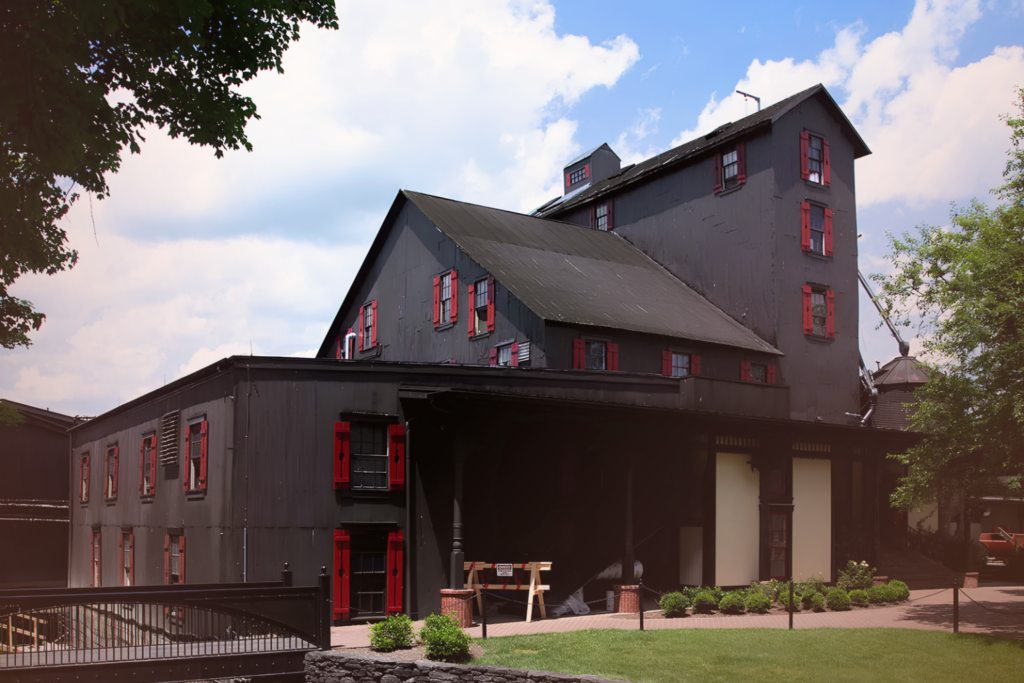
The distillery is not abandoning the soft red winter wheat that defines its bourbon. Instead, it is using that familiar grain as a point of comparison while exploring what other wheat varieties can contribute.
Star Hill Farm Whisky therefore represents a broader interpretation of the Maker’s Mark philosophy. The distillery’s interest in agriculture is no longer limited to sourcing grain for an established recipe. Agriculture itself has become an area of product research.
The New Master Distiller
Layfield’s appointment fits naturally into this environment.
His scientific background provides an opportunity to examine the processes behind flavour with greater analytical precision, while his role as Master Distiller places him within a tradition in which sensory judgement remains central. The modern Master Distiller is increasingly required to understand both sides of that equation.
Fermentation is a useful example. Yeast converts sugars into alcohol, but the fermentation process also produces compounds that influence the eventual aroma and flavour of the spirit. Understanding yeast behaviour, fermentation conditions and raw-material variation can therefore help a distillery investigate why a particular production decision produces a particular sensory result.
The same applies to maturation. Analytical tools can help identify changes in the spirit and oak interaction, but the final question remains whether the whiskey delivers the flavour profile the distillery intends to create.
This combination of scientific investigation and sensory judgement is particularly relevant at Maker’s Mark because the company is trying to expand its range without losing the characteristics that consumers associate with the brand.
Innovation Without Losing the Maker’s Mark Identity
The challenge facing a heritage distillery is different from that facing a new producer.
A young distillery can experiment without having to protect decades of consumer expectation. Maker’s Mark cannot simply change its bourbon every time a new technique becomes available. Its core product has to remain recognisable.
That is why the distillery’s recent innovations are significant. Maker’s 46 explored French oak finishing. Private Select expanded the wood-finishing concept through different stave combinations. Cellar Aged examined the effect of a separate maturation environment. Star Hill Farm Whisky has now taken the investigation back to the grain itself.
Each project changes something, but none requires the original Maker’s Mark bourbon to disappear.
The core bourbon remains a wheated Kentucky straight bourbon built around the soft red winter wheat that Bill Samuels Sr. selected more than seven decades ago. At the same time, the distillery can investigate how wood, time, maturation conditions and agricultural variation might produce new expressions.
That approach gives the brand room to evolve while maintaining a clear centre.
A Wider Definition of What a Distillery Does
Maker’s Mark’s current direction also reflects a broader change within premium spirits production.
Modern distilleries increasingly understand that their identity does not begin when the raw material arrives at the production floor. Agriculture, water, energy, packaging, waste management and land stewardship are becoming part of the conversation around how spirits are made.
At Star Hill Farm, those issues are being addressed through water conservation, biodiversity initiatives, regenerative farming, solar-powered warehouses and other sustainability programmes. The distillery also operates a LEED-certified cellar and has established measures for recycling and energy recovery.
The importance of this work lies in how closely Maker’s Mark connects it with its production philosophy. Rather than treating sustainability solely as an external corporate responsibility, the company increasingly links agricultural health and land management with the long-term quality of its whiskey.
That makes Star Hill Farm more than a backdrop for the distillery.
It is becoming an important part of how Maker’s Mark understands its own future.
The Next Generation of Maker’s Mark: Appointment of J. Blake Layfield
The appointment of J. Blake Layfield comes at a moment when Maker’s Mark is asking broader questions about what its heritage means.
The answer does not appear to be a return to the past for its own sake. The distillery continues to protect the characteristics established by Bill and Margie Samuels while using modern science and agricultural research to examine the factors that influence flavour.
That philosophy can be seen across the current portfolio. Maker’s Mark Kentucky Straight Bourbon remains the foundation, while Maker’s 46, Private Select, Cellar Aged, the Wood Finishing Series and Star Hill Farm Whisky demonstrate different ways of exploring the same underlying taste philosophy.
The result is not a rejection of tradition. It is a more detailed understanding of it.
For Maker’s Mark, innovation means asking better questions about the things that have always mattered: the grain, the fermentation, the distillation, the oak, the maturation environment and the land surrounding the distillery. The answers may produce new expressions, new agricultural practices or new ways of managing the production process, but the objective remains connected to the flavour and identity that made the brand successful.
That is what makes the new generation at Maker’s Mark worth watching.
Layfield’s arrival does not represent the end of the old Maker’s Mark. It represents the continuation of a philosophy that has always allowed carefully considered change.
The distillery’s history shows that tradition and innovation have never been mutually exclusive. Bill Samuels Sr. changed the mash bill because he believed bourbon could taste better. Bill and Margie Samuels built a distinctive identity around that whiskey. Later generations explored oak finishing, maturation and new expressions. Today, the work extends into agricultural science and regenerative farming at Star Hill Farm.
The most interesting question for Maker’s Mark is therefore not whether it will innovate. It already is. The question is how far it can explore new ideas while preserving the flavour philosophy that makes the red-wax bottle recognisable.
Under a new Master Distiller with a scientific background, that experiment has entered its next chapter.
Maker’s Mark’s evolution demonstrates why heritage does not have to mean resistance to change. A distillery can protect its defining characteristics while investigating the science, agriculture and technology that surround them.
The work at Star Hill Farm makes that idea particularly clear. Regenerative farming, varietal wheat research and the development of Star Hill Farm Whisky extend the distillery’s interest in flavour back to the agricultural origins of its raw materials. At the same time, expressions such as Maker’s 46 and Cellar Aged show how maturation and wood can be explored without abandoning the character of the core bourbon.
For J. Blake Layfield, the challenge is to bring these areas together while protecting the taste vision established by previous generations. His scientific background gives Maker’s Mark another way to investigate its production, but the final measure remains the whiskey itself.
That is where the balance between tradition and innovation becomes meaningful. Innovation does not need to erase what came before. At a heritage distillery, it can be a way of understanding the old methods more precisely and using that knowledge to create something that still belongs to the same house.
Maker’s Mark’s next generation is therefore not defined by abandoning its traditions. It is defined by how intelligently those traditions can be developed.


Distillery
Maker's Mark Distillery, Inc. is a revered bourbon distillery located in Loretto, Kentucky, that epitomizes the art of…

Distillery
Bourbon Distilled is a modern craft distillery located in the vibrant heart of Colorado Springs, Colorado, renowned for…
Distillery
Suntory Hakushu Distillery, often referred to as the 'Mountain Forest Distillery,' showcases the artistry of Japanese whisky production…
Spirit
Bourbon Barrel Aged Four Peel Gin
Bourbon Barrel Aged Four Peel Gin is a remarkable artisanal spirit that stands out in the crowded world…
Spirit
Maker’s Mark Ashley Longshore Limited-Edition
The Maker's Mark Ashley Longshore Limited-Edition bourbon is a unique expression of craft and creativity, blending the iconic…
Spirit
Bourbon Barrel Aged Kentucky Wild Gin
Bourbon Barrel Aged Kentucky Wild Gin from New Riff Distilling represents a unique intersection of traditional gin-making techniques…
Interviews & Insights
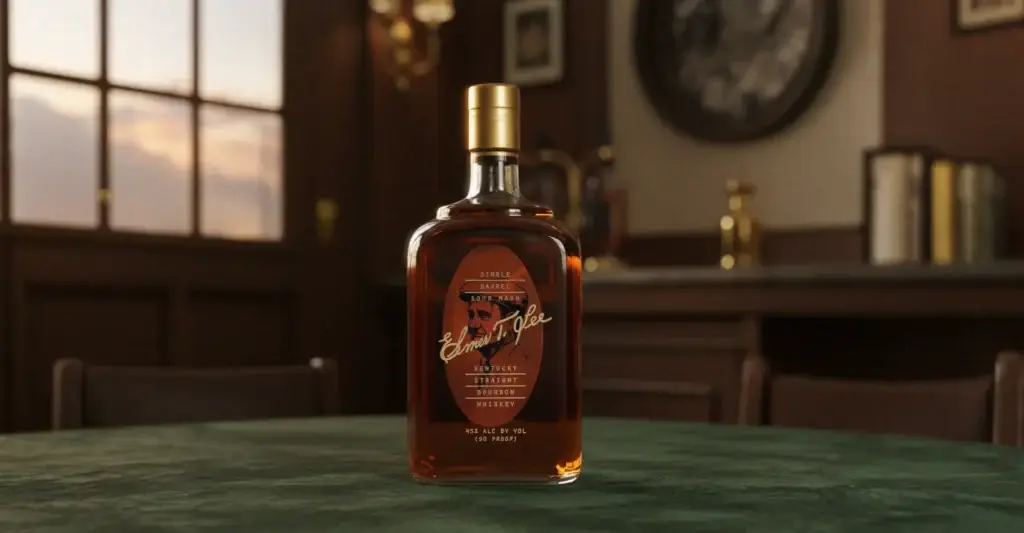
Elmer T. Lee: The Master Who Revived Bourbon’s Soul
In 1949, a young Elmer T. Lee walked into the George T. Stagg Distillery in Frankfort, Kentucky, looking for a job. He had recently returned from the Second World War, where he had served as a radar bombardier aboard a B-29, and had graduated with honours in electrical engineering from the University of Kentucky. The […]
August 5, 2026

Barlist
What the 2026 Brand Champions Reveal: The New Geography of Spirits Volume
The old map of global spirits influence was drawn around familiar export categories. Scotch whisky, international vodka, Caribbean rum, Cognac, and American whiskey appeared to define scale because they travelled widely, occupied prominent back bars, and were supported by multinational distribution. The largest volume brands tell a different story. The 2026 edition of The Spirits […]
June 30, 2026
Bars and Cocktails
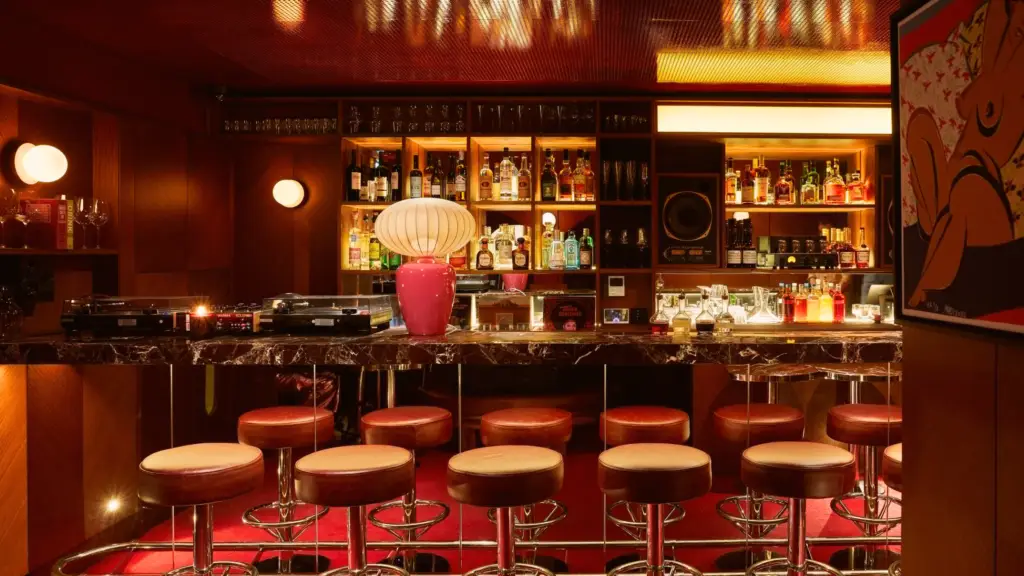
White Lyan London and the End of Real-Time Cocktail Making
In 2013, a small basement bar opened in Hoxton, London, that removed what most bartenders considered essential. At White Lyan, there was no ice behind the bar. No citrus. No fresh garnishes. Cocktails were not built during service. They were designed, batched, and stabilized in advance. Founded by Ryan Chetiyawardana, the bar introduced a system […]
April 6, 2026