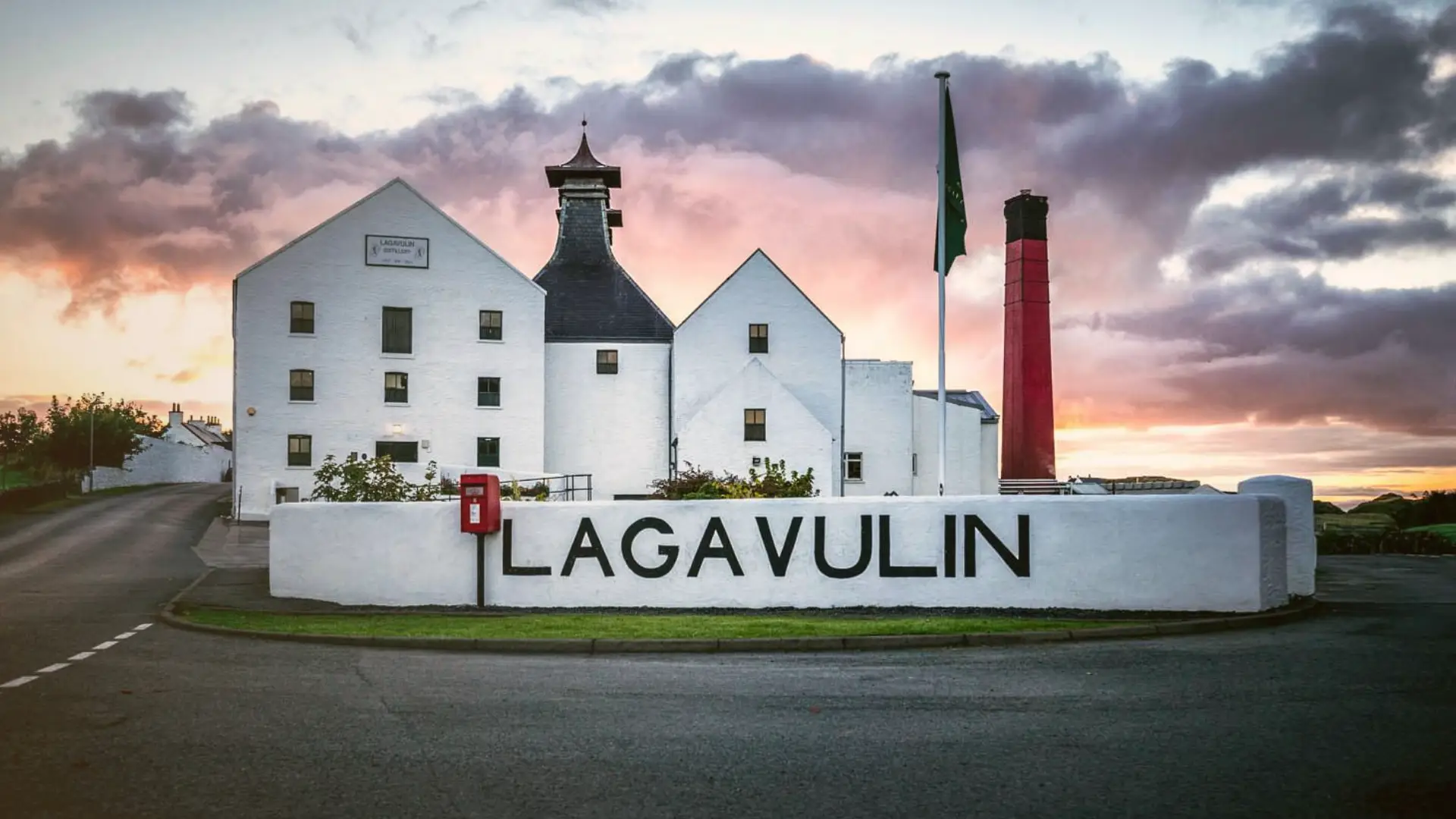
On the southern coast of Islay, Lagavulin Distillery stands beside a sheltered bay between Laphroaig and Ardbeg. Its white buildings, dark kiln roofs, and long waterfront warehouses belong to one of Scotland’s most recognisable whisky landscapes. Still, the character associated with the distillery was not created by scenery alone.
Peat is the most obvious part of the story. It is also the easiest part to overstate.
Lagavulin’s production identity depends heavily on peated malt, yet smoke passes through fermentation, copper stills, spirit selection, cask maturation, and time before it becomes part of the finished whisky. Within that sequence, slow distillation has assumed particular importance. The stills are not simply used to move spirit through the system as quickly as possible. They are operated with restraint, allowing the distillery to maintain the balance of weight, smoke, and structure associated with its new make spirit.
That approach is best understood as a matter of discipline rather than nostalgia. Lagavulin works within a large modern whisky company, using specialised maltings and an international production network. Its slow distillation is not a survival from an untouched past. It is a deliberate choice preserved inside an industrial system.
A Distillery beside Dunyvaig
The official history of Lagavulin Distillery begins in 1816, when John Johnston established a licensed operation beside Lagavulin Bay. Distilling had taken place in the area before then, including unlicensed production recorded during the 1700s, but the surviving evidence does not support a single continuous business stretching back to those earlier stills.
The site lay close to the ruins of Dunyvaig Castle, once a stronghold of the Lords of the Isles. It also stood near the sea routes that connected southern Islay with mainland merchants, blenders, and the wider Atlantic trade.
Water came from inland sources, while peat and barley connected the distillery with the island’s agricultural landscape. Coastal access allowed supplies to arrive and casks to leave at a time when road transport across Islay remained difficult.
During the 1800s, Lagavulin developed from a local distilling concern into an important supplier of malt whisky for blending. Its later reputation as a single malt should not obscure this earlier commercial purpose. For much of its history, the distillery’s economic value rested on the strength it could contribute to blends.
The Meaning of Slow Distillation
In a pot still distillery, speed affects how vapour moves through copper and how the different components of the spirit are separated. A faster run can push vapour through the still more forcefully, while a slower approach allows more measured contact with the copper surfaces and more controlled management of the distillation.
That does not mean slow distillation automatically produces better whisky. Distilleries operate different still shapes, charge levels, heating systems, and spirit cuts, all developed around the character they intend to make.
At Lagavulin, the slow pace works with a set of broad, pear shaped copper stills. The process is intended to retain body while allowing the production team to manage the heavier compounds carried by strongly peated malt.
The important word is balance. If the distillation removed too much weight, the spirit would lose part of the structure required to carry peat and long maturation. If it retained everything without sufficient control, the new make could become coarse or difficult to manage.
Slow distillation gives the team time to work between those outcomes. It is not a theatrical pause in production. It is part of the way the distillery defines what should remain in the spirit.
Still Shape and Production Memory
Lagavulin operates two wash stills and two spirit stills. Their broad bodies and relatively compact outlines differ from the tall, narrow stills used by some distilleries to encourage lighter spirit.
Still shape alone cannot explain the result. The way the stills are charged, heated, and run matters just as much, while the condition of the copper changes through use and maintenance.
Production teams learn these behaviours over time. They know how the spirit responds when a run moves too quickly, how the stills behave after repair, and where the desired middle cut sits within the flow of the distillation.
This knowledge is difficult to reduce to a diagram. Written procedures can record timings and measurements, but the continuing character of a distillery also depends on people recognising when the equipment is behaving as expected.
That practical memory gives meaning to the word discipline. Lagavulin’s slow distillation is not simply a fixed instruction. It is a working relationship between stills, spirit, and the people responsible for both.
Peat Is Only the Beginning
Lagavulin no longer malts its barley on site. Its peated malt is prepared through specialised facilities capable of supplying the required specification at a consistent scale.
This separates the distillery from producers such as Laphroaig, which retains floor maltings for part of its requirement. It does not make Lagavulin’s production identity less deliberate. The important question is how the malt is handled once it enters the distillery.
Fermentation develops compounds that will later interact with smoke, copper, and oak. Distillation then determines which parts of that fermented character are carried into the new make spirit.
The heavily peated malt provides intensity, but the spirit must have enough structure to support it. Slow distillation helps prevent the peat character from becoming the only recognisable feature.
Maturation completes another stage of the process. Casks do not simply add flavour to a finished spirit. They reshape what the distillery has produced, softening some elements, concentrating others, and allowing smoke, wood, and spirit character to develop together over time.
The identity associated with Lagavulin is therefore built through sequence. Peat supplies the starting language, while distillation and maturation determine how that language is expressed.
Peter Mackie and the Commercial Discipline of Blending
The history of Lagavulin changed significantly through its association with the Mackie family. James Logan Mackie became involved during the 1800s, and his nephew Peter Mackie later emerged as one of the most forceful figures in the Scotch whisky trade.
Peter Mackie understood that malt distilleries did not operate in isolation from blending. Lagavulin became an important component of White Horse, the blend around which his company built an extensive commercial business.
This relationship shaped the distillery’s production priorities. A malt intended for blending had to remain recognisable after being combined with other whiskies. Weight, smoke, and consistency mattered because Lagavulin was expected to perform a clear function within a larger composition.
Mackie’s difficult relationship with neighbouring Laphroaig later became part of Islay whisky history. After access to Laphroaig’s spirit ended, he established Malt Mill Distillery within the Lagavulin complex in 1908.
The project is widely interpreted as an effort to produce a spirit capable of replacing Laphroaig within Mackie’s blending interests. Whatever the precise intention, Malt Mill demonstrated that another distillery’s character could not be recreated simply by borrowing workers or adjusting equipment.
Place, water, peat, still design, fermentation, and working practice remained stubbornly connected. Malt Mill produced whisky for decades, but it did not become another Laphroaig.
Malt Mill inside Lagavulin
Malt Mill operated as a separate production unit within the Lagavulin site. Its existence made the complex unusual, since two distinct malt spirits were produced beside one another under the same wider ownership.
Production appears to have ended around 1960, while the equipment was absorbed into the wider Lagavulin operation by the early 1960s. Very little whisky identified publicly as Malt Mill survived, since most of its output was intended for blending rather than release under the distillery name.
The episode is relevant to Lagavulin’s slow distillation philosophy because it shows that equipment cannot be separated from practice. A still can be copied or moved, but the spirit made from it will still reflect the wider production system.
Lagavulin’s identity was never secured by possessing one special piece of machinery. It emerged from repeated decisions made across fermentation, distillation, spirit selection, and maturation.
When Malt Mill disappeared, Lagavulin remained. The surviving distillery carried forward the production knowledge and commercial purpose that had given the site its longer continuity.
From Blending Malt to Recognised Single Malt
For much of the 1900s, Lagavulin remained closely associated with blending, particularly through White Horse. Its identity was respected within the trade, though it was less visible to the wider public than the blended brands that used its spirit.
That position changed as single malt Scotch developed a larger international market. In 1988, Lagavulin 16 Year Old became part of the original Classic Malts of Scotland selection introduced by United Distillers.
The range presented six distilleries as regional representatives, giving drinkers a structured introduction to different Scotch whisky production traditions. Lagavulin was selected to represent Islay.
The choice brought a production identity once understood mainly by blenders into a public single malt context. Slow distillation, peat, still shape, coastal location, and lengthy maturation became part of how the distillery was explained beyond the industry.
This did not mean Lagavulin represented every whisky made on Islay. The island has never had one uniform style. The campaign nevertheless helped establish the distillery as an international reference point for peated single malt Scotch.
Discipline within a Larger Company
Lagavulin eventually became part of Diageo through the mergers and acquisitions that reshaped the Scotch whisky industry during the late 1900s. Corporate scale brought access to malt supply, technical expertise, stock management, distribution, and investment that an isolated distillery could not easily provide alone.
Large ownership can create pressure for efficiency. Faster production, standardised systems, and greater output may appear commercially attractive, especially when demand rises.
The value of Lagavulin’s production philosophy lies in preserving slowness where slowness serves a technical purpose. The distillery is not slow because modern equipment is unavailable. It is slow because the spirit has been built around a measured process.
That distinction keeps the story from becoming sentimental. Lagavulin is not presented as a small family operation untouched by industrial change. It is a historic distillery working within a multinational company while retaining production decisions considered essential to its character.
Continuity here does not mean refusing modernisation. It means deciding which parts of the process should not be accelerated simply because acceleration is possible.
The history of Lagavulin Distillery shows how a technical habit can become part of a cultural identity.
Slow distillation did not create the distillery’s character by itself. Peated malt, fermentation, still shape, spirit selection, casks, maturation, blending requirements, and generations of production knowledge all played a part.
Its importance lies in holding those elements together. A slower run allows the distillery to manage weight and smoke without treating either as an isolated feature. The process creates room for judgement, which is difficult to measure but central to the continuity of a working distillery.
Lagavulin’s history also challenges the idea that tradition must sit outside industrial scale. The distillery survived family ownership, blending empires, corporate mergers, and the expansion of the single malt market while keeping a deliberately measured approach at the stills.
The discipline is not simply that Lagavulin distils slowly. It is that the distillery continues to understand why speed should not decide everything.

Distillery
Trinidad United Distillery is a prominent rum producer situated in Trinidad and Tobago, specifically under the umbrella of…
Distillery
Diageo Italia S.p.A., a subsidiary of the globally renowned Diageo PLC, stands as a leader in the production,…
Distillery
Nestled on the southern coast of the Isle of Islay, Ardbeg Distillery is celebrated for its unique productions…
Distillery
Diageo plc is a prominent British multinational alcoholic beverage company and a major player in the global spirits…
Distillery
Distillery
Laphroaig Distillery, nestled on the rugged south coast of Islay, Scotland, is synonymous with rich and complex single…
Distillery
Lagavulin Distillery, nestled in the picturesque village of Lagavulin on the southern coast of Islay, Scotland, is renowned…
Spirit
Lagavulin 16 YO Islay Single Malt Scotch Whisky
Lagavulin 16 YO Islay Single Malt Scotch Whisky is renowned for its deep, robust flavors and exceptional craftsmanship…
Spirit
Lagavulin 11 Year Old Offerman Edition Charred Oak Cask Islay Single Malt Scotch Whisky
Lagavulin 11 Year Old Offerman Edition is a remarkable expression that showcases the alignment of tradition and innovation…
Spirit
Lagavulin 10 Year Old Scotch Whisky is a remarkable expression from the renowned Lagavulin Distillery, located on the…
Spirit
Lagavulin 10 YO Islay Single Malt Scotch Whisky
Lagavulin 10 YO Single Malt Scotch Whisky is a distinguished expression in the realm of single malts, representing…
Distilleries & Producers
The Last Days of Floor Maltings: When Scotch Distilleries Made Their Own Malt
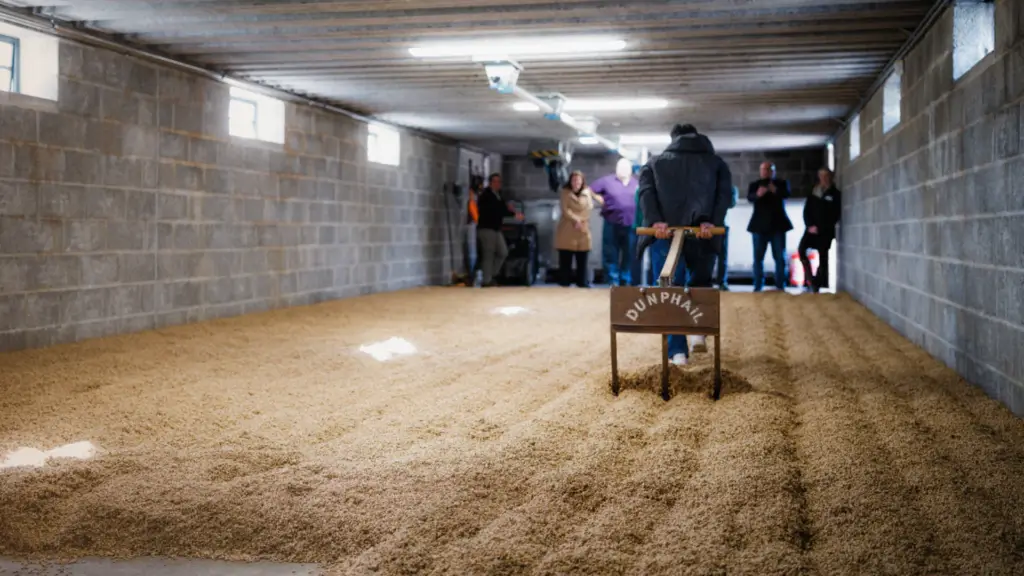
Floor Maltings History: Where Whisky Began Before stainless steel vessels, automated temperature control, and industrial malt plants, a Scotch whisky distillery often began its work on a stone or concrete floor. Barley was steeped in water, spread in a shallow layer, and turned repeatedly by hand as it germinated. The process demanded time, judgement, space, […]
June 18, 2026
Distilleries
Laphroaig: The Islay Distillery That Turned Peat into a Global Identity
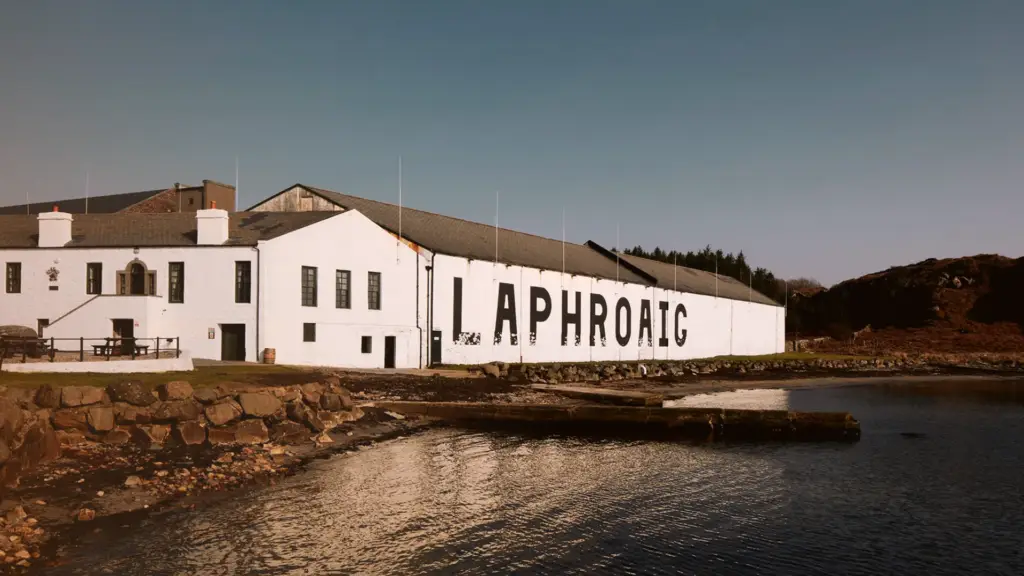
On the southern coast of Islay, the name Laphroaig stretches across a whitewashed warehouse facing a narrow bay. The lettering now belongs to one of the most recognisable names in Scotch whisky, yet the identity behind it was built from a tightly local set of materials: barley, peat, water, casks, coastal geography, and the decisions […]
June 15, 2026
Discovery and Education
Feis Ile: How a Small Islay Festival Became Whisky’s Global Pilgrimage
Islay is not a large island, but few places in the whisky world carry so much weight. Its coastline, peat bogs, warehouses, ferry routes, village halls, and distillery courtyards have shaped one of Scotland’s most recognisable spirit landscapes. Long before Fèis Ìle became a global whisky pilgrimage, it began as something more local and more […]
June 7, 2026