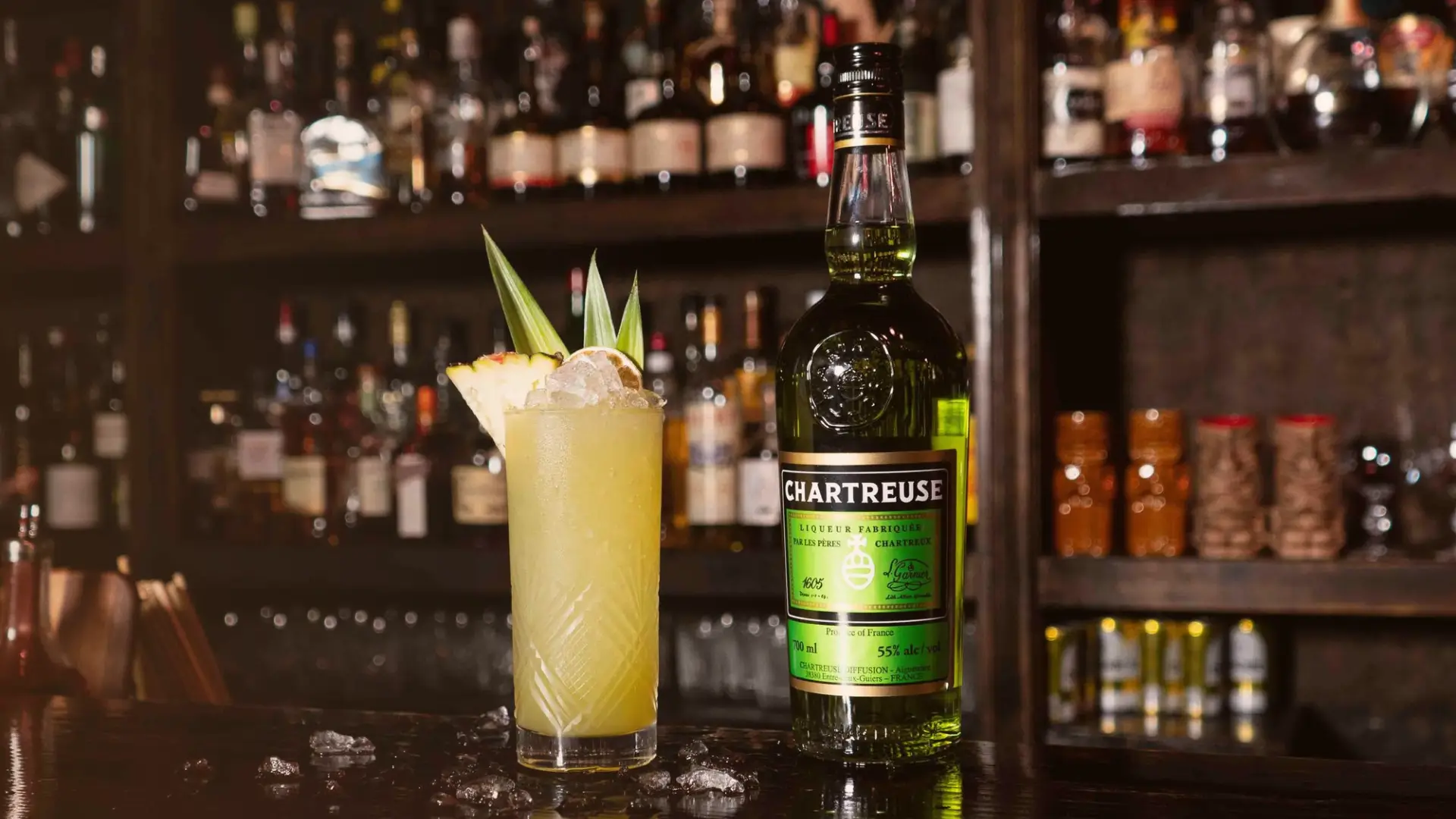
Some cocktails become important because they perfect an old structure. Others matter because they bring two unlikely worlds together and make the connection feel inevitable. The Chartreuse Swizzle belongs to the second group.
Its foundation is Green Chartreuse, one of the most distinctive herbal liqueurs in the world, produced by Carthusian monks from a guarded botanical formula associated with centuries of monastic history. Its format belongs to the swizzle family, a tropical drinking tradition shaped by crushed ice, dilution, spice, citrus, and long drink architecture. On paper, the combination should feel strange. In practice, it became one of the defining modern cocktails of the early 21st century.
Created in San Francisco in 2003 by bartender Marcovaldo Dionysos, the Chartreuse Swizzle did something unusual. It placed Green Chartreuse at the centre of the drink rather than treating it as a supporting accent. That decision changed how bartenders thought about Chartreuse. The liqueur was no longer only a force used sparingly in small measures. It could act as the structural base of a full cocktail.
That shift explains why the Chartreuse Swizzle feels both modern and historically loaded. It carries the secrecy of a French monastic liqueur, the energy of San Francisco’s cocktail revival, and the cooling structure of tropical swizzle tradition.
A Monastic Liqueur with a Long Shadow
The deeper history of the Chartreuse Swizzle begins far from California. Chartreuse is tied to the Carthusian Order, whose roots go back to the Grande Chartreuse monastery in the Chartreuse Mountains near Grenoble. According to the traditional origin story, François Hannibal d’Estrées delivered a manuscript to the monks in 1605 containing the formula for an “Elixir of Long Life.”
The recipe took generations to understand. In 1737, the monks produced the concentrated Élixir Végétal de la Grande Chartreuse. A more accessible liqueur form followed later, with Green Chartreuse becoming the expression most closely associated with the brand’s intense herbal identity. Yellow Chartreuse, a softer and sweeter expression, followed in the nineteenth century.
The exact formula remains secret. What is known is that Chartreuse is built from approximately 130 herbs, plants, roots, flowers, and spices. The result is not a simple herbal liqueur but a layered botanical system, sharp, sweet, bitter, floral, resinous, and difficult to simplify.
This complexity is why Chartreuse has always challenged bartenders. It can dominate a drink easily. Used carelessly, it overwhelms everything around it. Used with discipline, it becomes one of the most expressive ingredients in the bar.
San Francisco and the Birth of the Chartreuse Swizzle
The Chartreuse Swizzle was created in 2003 by Marcovaldo Dionysos at Harry Denton’s Starlight Room in San Francisco. The city was an important centre of the early modern cocktail revival, a period when bartenders were returning to older drink families while also rethinking how unusual ingredients could be used.
Dionysos had already been involved in Chartreuse-focused cocktail competitions. The Swizzle emerged from that environment, but it avoided the fate of many competitive drinks. It was not merely clever for a single event. It had a structure that bartenders could understand and guests could remember.
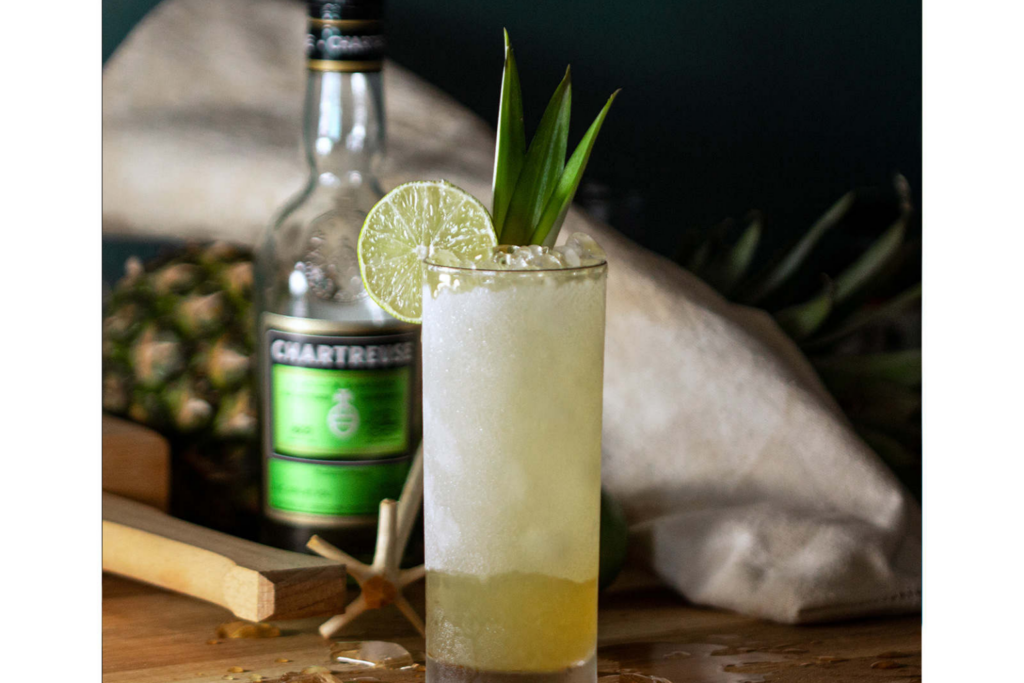
One of the lesser-known details of the drink’s origin is that it was born from a competition context and reportedly earned Dionysos first place. That matters because competition cocktails often disappear quickly. They can be too elaborate, too tied to a moment, or too dependent on presentation. The Chartreuse Swizzle survived because its idea was clear. The central move was simple but radical: use Green Chartreuse as the main force, then build a tropical structure around it.
Why the Drink Was So Unusual
Before the Chartreuse Swizzle, Green Chartreuse was best known in cocktails such as the Last Word and the Bijou. In those drinks, it plays a powerful but shared role, interacting with gin, vermouth, maraschino, citrus, or other structured ingredients.
The Swizzle changed that hierarchy. It allowed Chartreuse to behave like a base spirit. Pineapple, lime, and falernum were not used to hide the liqueur. They were arranged around it to stretch, brighten, and frame its botanical density.
This is the drink’s real speciality. It does not reduce Chartreuse into sweetness. It does not treat it as a novelty. It gives the liqueur space while using tropical architecture to make its intensity more legible. The contrast is what gives the cocktail its identity. Alpine herbs meet tropical fruit. Monastic secrecy meets California experimentation. European liqueur tradition meets a Caribbean-inspired drink family.
The Swizzle Format and Its Historical Echo
The word swizzle refers to more than a name. It points to a drink family associated with the Caribbean, where long, cold, highly diluted drinks developed around texture, climate, and rhythm. The Queen’s Park Swizzle from Trinidad remains one of the most important historic references in that tradition.
The Chartreuse Swizzle does not imitate rum-based swizzles directly. Instead, it borrows the format’s logic. The drink depends on coldness, dilution, vertical structure, aromatic lift, and a sense of gradual unfolding. That makes it different from a short, sharply balanced sour or a stirred spirit-forward cocktail.
In the Chartreuse Swizzle, the format softens intensity without erasing character. Green Chartreuse remains unmistakable, but the swizzle structure makes it expansive rather than compact. This is why the cocktail feels modern while still belonging to a much older family of drinks.
Clock Bar and the Spread of a Modern Classic
After its creation at Harry Denton’s Starlight Room, the Chartreuse Swizzle gained wider visibility in 2008 when Dionysos brought it to Clock Bar in San Francisco, a Michael Mina venue. That moment helped move the drink beyond local recognition and into a broader hospitality network.
Its spread was not driven by a 19th-century manual or a Prohibition-era hotel bar. It travelled through modern bartender culture, restaurant bars, professional networks, and later digital cocktail writing. That path is important because it reflects how contemporary classics are made.
Modern cocktail history no longer depends only on old books. It is shaped by bartenders, cities, competitions, influential menus, and the speed at which a good idea can move through the industry. By the 2010s, the Chartreuse Swizzle had become one of the clearest examples of a modern classic: young enough to have a documented creator, strong enough to survive beyond trend.
Scarcity and the New Meaning of Chartreuse
The Chartreuse Swizzle has also become more culturally interesting because of the recent pressure around Chartreuse availability. Demand for Chartreuse increased sharply with the growth of modern cocktail culture, while the Carthusian monks chose not to expand production aggressively. Their priority remained monastic life rather than unlimited commercial growth.
This created a rare situation in contemporary bars. A cocktail ingredient became more desired precisely because its supply remained intentionally limited. For drinks such as the Last Word and the Chartreuse Swizzle, that scarcity added another layer of meaning.
The Swizzle is especially affected because Chartreuse is not a background detail. It is the centre of the drink’s identity. Without Green Chartreuse, the cocktail loses its reason for existing.
This makes the Chartreuse Swizzle more than a modern classic. It has become a reflection of how today’s cocktail culture depends on ingredients with histories, limits, and custodianship beyond the bar.
Recognition by the International Bartenders Association
In 2024, the Chartreuse Swizzle was recognised by the International Bartenders Association as an official cocktail. For a drink created in 2003, that is a rapid move into formal international recognition.
The significance lies in the timeline. Many modern cocktails become popular for a few years and then disappear. The Chartreuse Swizzle moved from competition origin to local menu presence, from San Francisco circulation to international recognition, and finally into an official global cocktail framework within roughly two decades.
That journey shows how quickly modern cocktail canon can form when a drink has a clear identity, a documented origin, and a structure that bartenders respect.
Barlist Reflection: A Cocktail Built from Contradiction
The Chartreuse Swizzle matters because it brings contradiction into balance. It takes a liqueur associated with silence, secrecy, and monastic continuity, then places it inside a bright tropical structure born from movement, climate, and bar culture.
Its speciality is not simply that it uses Chartreuse. Its speciality is that it changes the role of Chartreuse. The liqueur becomes the foundation, not the accent. The drink proves that a complex herbal spirit can carry a tropical format without losing its identity.
That is why the Chartreuse Swizzle deserves attention in the modern cocktail canon. It is not old, but it carries an old history. It is not traditional, but it respects tradition. It is not complicated in concept, but it reveals how far a single structural decision can travel.
A cocktail born in San Francisco in 2003 now carries the weight of a 1605 manuscript, a monastic recipe, and a modern bar movement. Few drinks connect those worlds so cleanly.

Bar
Coley Cocktail Bar is a distinguished establishment located in the vibrant neighborhood of Bangsar in Kuala Lumpur, Malaysia.…
Cocktail
Homemade Kahlua is a rich and aromatic coffee liqueur that brings the luxurious flavors of freshly brewed coffee,…
Cocktail
The Clover Club is a classic pre-Prohibition cocktail that exudes elegance, refinement, and a delicate balance of flavors.…
Cocktail
The Bijou is a timeless and sophisticated cocktail, celebrated for its complex balance of herbal, sweet, and spirit-forward…
Distillery
Aiguenoire is a distinguished distillery nestled in the serene backdrop of the French Alps, specifically located in Entre-Deux-Guiers,…
Spirit
Chartreuse Green Liqueur is a remarkable French herbal liqueur known for its vibrant green color and complex profile.…
Bar
Coley Cocktail Bar is a distinguished establishment located in the vibrant neighborhood of Bangsar in Kuala Lumpur, Malaysia.…
Cocktail
Homemade Kahlua is a rich and aromatic coffee liqueur that brings the luxurious flavors of freshly brewed coffee,…
Cocktail
The Clover Club is a classic pre-Prohibition cocktail that exudes elegance, refinement, and a delicate balance of flavors.…
Cocktail
The Bijou is a timeless and sophisticated cocktail, celebrated for its complex balance of herbal, sweet, and spirit-forward…
Distillery
Aiguenoire is a distinguished distillery nestled in the serene backdrop of the French Alps, specifically located in Entre-Deux-Guiers,…
Spirit
Chartreuse Green Liqueur is a remarkable French herbal liqueur known for its vibrant green color and complex profile.…
Partnership
Canchánchara Cocktail: Cuban Origins, Honey, and the Precursor to Modern Rum Sours
Long before the codification of classic cocktails in printed manuals or the emergence of international bar standards, there existed a drink in eastern Cuba that combined rum, honey, lime, and water in a form both practical and symbolic. The Canchánchara is not a product of bar culture in the conventional sense. It predates it. Its […]
July 16, 2026
People & Innovation
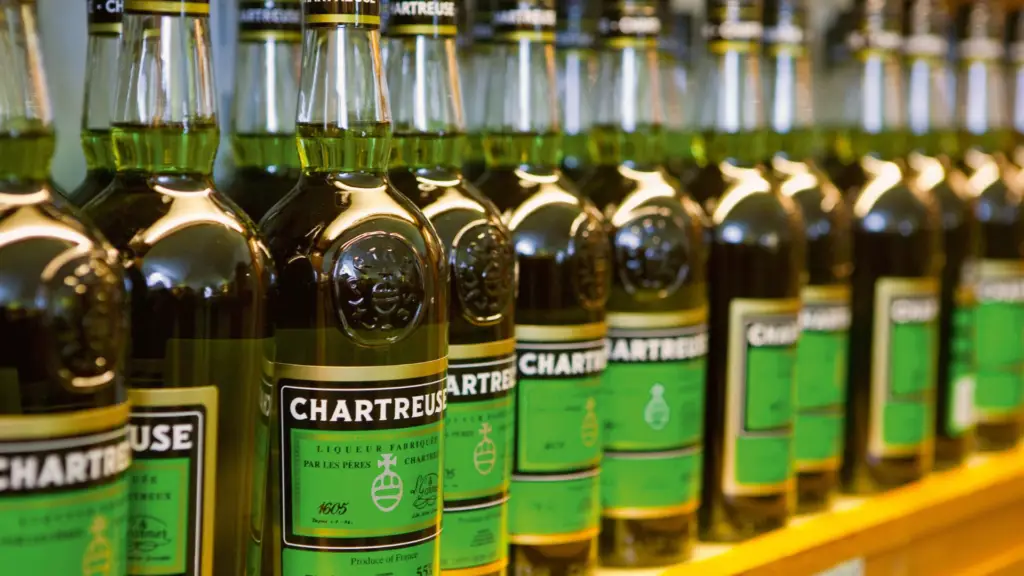
The Monks Who Saved Chartreuse: Exile, Secrecy, and the Survival of a French Liqueur
Long before Chartreuse became a fixture behind cocktail bars and spirits collections, it survived political upheaval, revolution, exile, confiscation, and repeated attempts to separate it from the people who created it. Few products in the spirits world have remained so closely tied to a single religious community for so long. The story of Chartreuse is […]
June 3, 2026
Cocktails
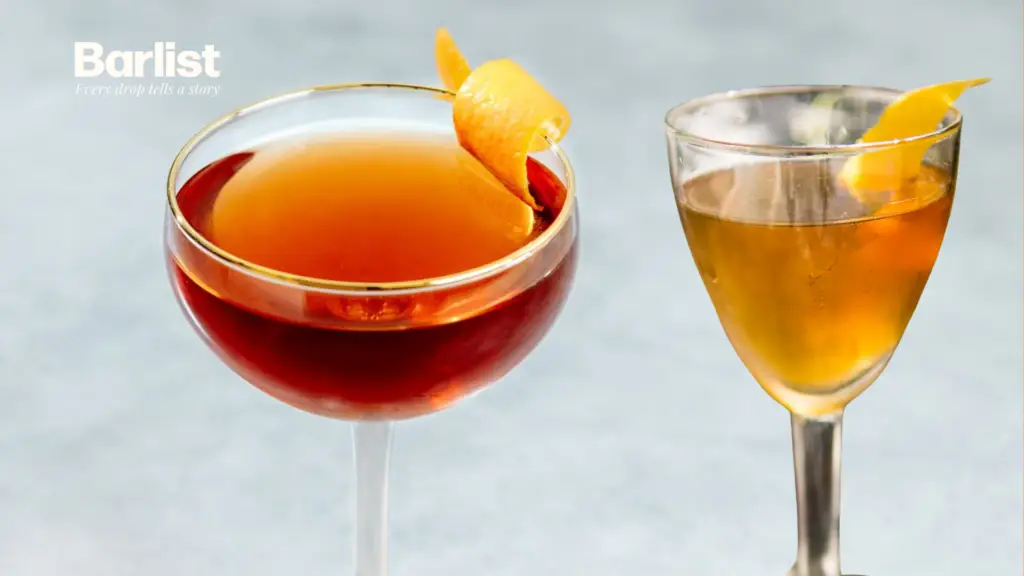
Cocktail History : Rediscovering the Bijou and the Martinez Lessons
In the vast world of cocktail history, few drinks have shaped the foundation of mixology as profoundly as the Bijou and the Martinez. Both emerged in the late nineteenth century, a time when bartenders were redefining how spirits and liqueurs could express art and balance. Though their popularity faded with changing tastes, their stories continue […]
December 6, 2025