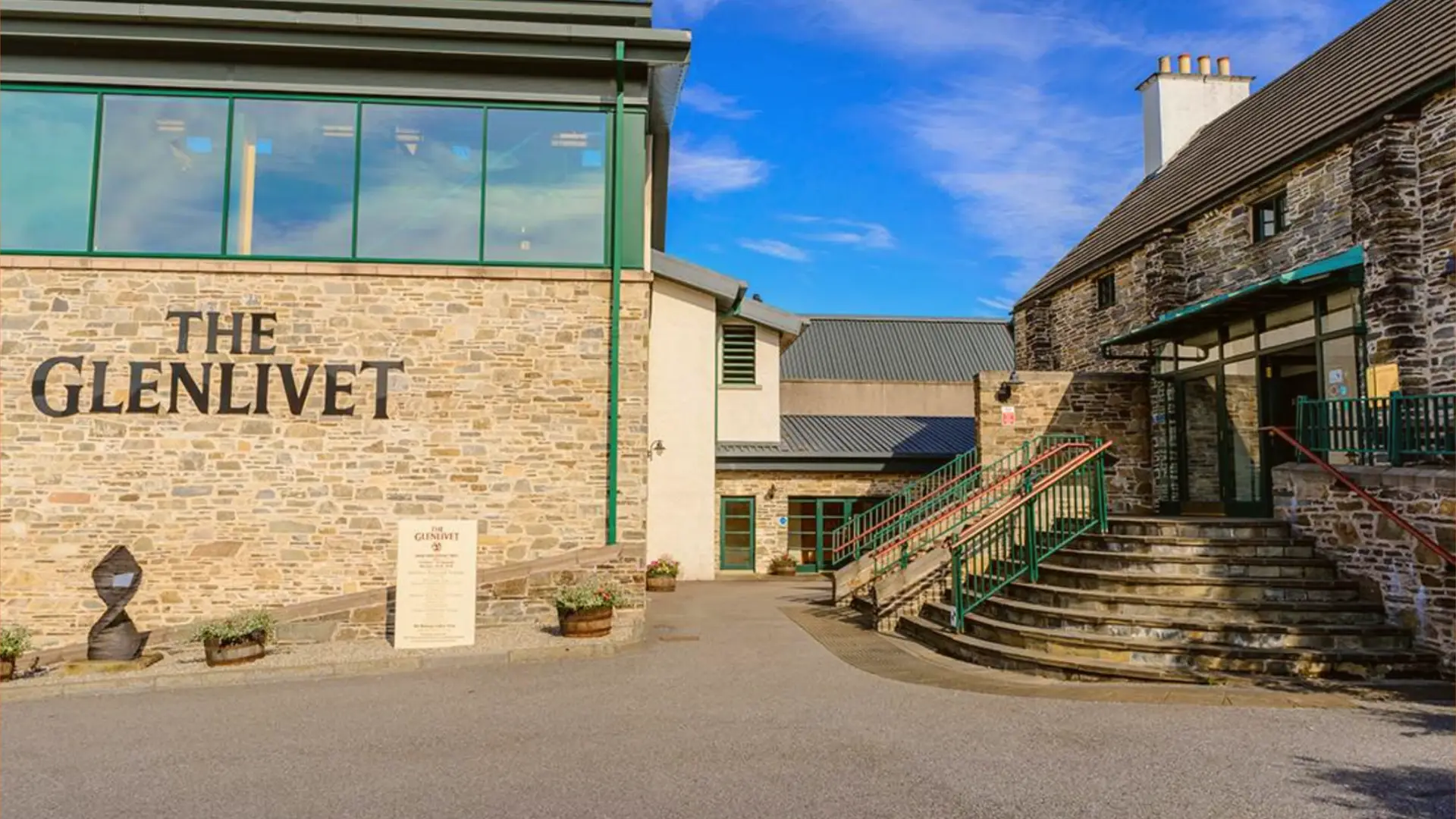
Long before it became one of the most-visited distilleries in Scotland, The Glenlivet Distillery existed in a landscape defined by illegal production. The Livet Valley, remote and difficult to access, was known in the early 19th century for widespread illicit distillation. Whisky was produced outside the control of excise authorities, and enforcement was inconsistent.
The turning point came in 1824, when George Smith obtained one of the first licenses under the 1823 Excise Act. This decision positioned The Glenlivet differently from its contemporaries. It was not simply another distillery entering legal production. It became a reference point for what legal Scotch whisky could represent. This origin would later become central to its narrative.
From production site to brand identity
Through the 19th century, The Glenlivet expanded beyond local distribution. Its whisky became associated with consistency and quality, contributing to the rise of Speyside as a recognised whisky-producing region.
The use of the name “Glenlivet” itself became contested, with other distilleries adopting the term to benefit from its reputation. This led to legal disputes that ultimately secured The Glenlivet’s right to use The Glenlivet as its name, reinforcing its identity in the market.
By the late 19th and early 20th centuries, the distillery’s output was integrated into both single malt bottlings and blended Scotch, contributing to brands that required reliable, approachable malt whisky. At this stage, identity was shaped primarily through production and distribution. The visitor had not yet entered the system.
The emergence of whisky tourism in Speyside
The development of whisky tourism in Scotland accelerated during the late 20th century, as distilleries began to open their doors to the public. Speyside, with its concentration of producers, became a focal point for this shift.
The Glenlivet distillery adapted early to this change. Its location, once a barrier to access, became part of its appeal. Visitors were not only coming to taste whisky. They were coming to experience origin. The distillery introduced structured tours, controlled visitor pathways, and curated narratives that guided how its history would be understood. This marked a transition from production-focused identity to experience-driven identity.

Narrative design and the management of history
The presentation of Glenlivet Distillery’s history is not neutral. It is structured. The story begins with illicit distillation, moves through legalisation under George Smith, and progresses toward modern global recognition. This sequence establishes continuity. It frames the distillery as both pioneer and standard bearer.
Visitor centres play a central role in this process. Exhibits, guided tours, and tasting sessions are designed to reinforce specific aspects of the distillery’s identity. The emphasis on legality, origin, and consistency is not incidental. It is selected. In this context, narrative becomes part of production. It shapes how the whisky is perceived before it is tasted.
Production consistency and global scale
While the visitor experience has expanded, production at The Glenlivet remains central to its operation. The distillery produces a range of expressions, including The Glenlivet 12 Year Old, The Glenlivet 18 Year Old, and The Glenlivet Founder’s Reserve, each reflecting a style characterised by fruit-forward esters and balanced oak influence.
The scale of production supports global distribution, positioning The Glenlivet as one of the most widely recognised single malt Scotch whiskies. This scale requires consistency, achieved through controlled fermentation, distillation, and maturation processes. Unlike smaller distilleries that emphasise variation, The Glenlivet Distillery prioritises repeatability. The visitor experience reinforces this consistency by presenting a stable narrative aligned with the whisky itself.
Ownership, branding, and narrative continuity
The distillery is part of Chivas Brothers, itself owned by Pernod Ricard. This corporate structure supports global marketing and distribution while maintaining the distillery’s historical identity.
Branding decisions reflect this balance. The narrative of George Smith, the 1824 license, and the Livet Valley remains central, even as the whisky is positioned within a modern international portfolio. The visitor experience operates within this framework. It presents a controlled version of history that aligns with brand identity while remaining grounded in documented fact.
The visitor as part of the system
The role of the visitor has evolved from observer to participant. Distillery tours are no longer passive experiences. They are structured interactions that shape perception.
At The Glenlivet, this includes guided tastings, curated storytelling, and controlled exposure to production spaces. The objective is not only to inform, but to influence how the whisky is understood. This approach reflects a broader shift in the spirits industry, where experience and narrative operate alongside production.
From illicit valley to global destination
The transformation of The Glenlivet from an isolated distillery in a valley associated with illicit production to a global destination reflects changes in both the whisky industry and consumer behaviour.
What was once hidden is now presented. What was once informal is now structured. The distillery’s ability to manage this transition without losing its core identity is central to its position within Scotch whisky.
The Glenlivet demonstrates that heritage is not only preserved. It is managed. The distillery’s history, grounded in the transition from illicit to legal production, provides a foundation that is continuously interpreted through visitor experience.
Tourism does not replace production. It reframes it. The narrative presented to visitors becomes part of how the whisky is understood, extending the distillery’s identity beyond the liquid itself. In this system, legacy is not static. It is actively constructed.


Distillery
Chivas Brothers - Kilmalid Distillery
Chivas Brothers - Kilmalid Distillery is a significant player in the realm of Scotch whisky, renowned for its…
Distillery
The Glenlivet Distillery is an iconic Scottish whisky producer situated in the picturesque region of Speyside, near Ballindalloch…

Distillery
Pernod Ricard stands as a celebrated titan in the global spirits landscape, embodying the phrase "Créateurs de Convivialité,"…
Spirit
Jura 1984 Single Malt Scotch Whiskies
The Jura 1984 Single Malt Scotch Whisky represents an extraordinary expression of craftsmanship and heritage from the Isle…
Spirit
The Glenlivet 18 YO Single Malt Scotch Whisky
The Glenlivet 18 Year Old Single Malt Scotch Whisky is a distinguished expression from the iconic Glenlivet distillery,…
Spirit
The Glenlivet Founder's Reserve Single Malt Scotch Whisky
The Glenlivet Founder's Reserve Single Malt Scotch Whisky embodies the craftsmanship that has defined its legacy for nearly…
Spirit
The Glenlivet 12 YO Excellence Single Malt Scotch Whisky
The Glenlivet 12 YO Excellence is a distinguished single malt Scotch whisky that embodies the essence of traditional…
Distillery
Chivas Brothers - Kilmalid Distillery
Chivas Brothers - Kilmalid Distillery is a significant player in the realm of Scotch whisky, renowned for its…
Distillery
The Glenlivet Distillery is an iconic Scottish whisky producer situated in the picturesque region of Speyside, near Ballindalloch…
Distillery
Pernod Ricard stands as a celebrated titan in the global spirits landscape, embodying the phrase "Créateurs de Convivialité,"…
Spirit
Jura 1984 Single Malt Scotch Whiskies
The Jura 1984 Single Malt Scotch Whisky represents an extraordinary expression of craftsmanship and heritage from the Isle…
Spirit
The Glenlivet 18 YO Single Malt Scotch Whisky
The Glenlivet 18 Year Old Single Malt Scotch Whisky is a distinguished expression from the iconic Glenlivet distillery,…
Spirit
The Glenlivet Founder's Reserve Single Malt Scotch Whisky
The Glenlivet Founder's Reserve Single Malt Scotch Whisky embodies the craftsmanship that has defined its legacy for nearly…
Spirit
The Glenlivet 12 YO Excellence Single Malt Scotch Whisky
The Glenlivet 12 YO Excellence is a distinguished single malt Scotch whisky that embodies the essence of traditional…

Distilleries & Producers
The Revival of Irish Whiskey: How Cooley Distillery Challenged an Industry in Decline
By the late 1980s, Irish whiskey carried a celebrated past but supported very little competition. An industry that had once included dozens of distilleries had contracted to two working production sites controlled by the same company. Historic distilleries had closed, regional distinctions had weakened, and the possibility of establishing an independent Irish whiskey producer appeared […]
June 10, 2026
Distilleries & Producers
George Smith and The Glenlivet: The License That Changed Scotch Whisky
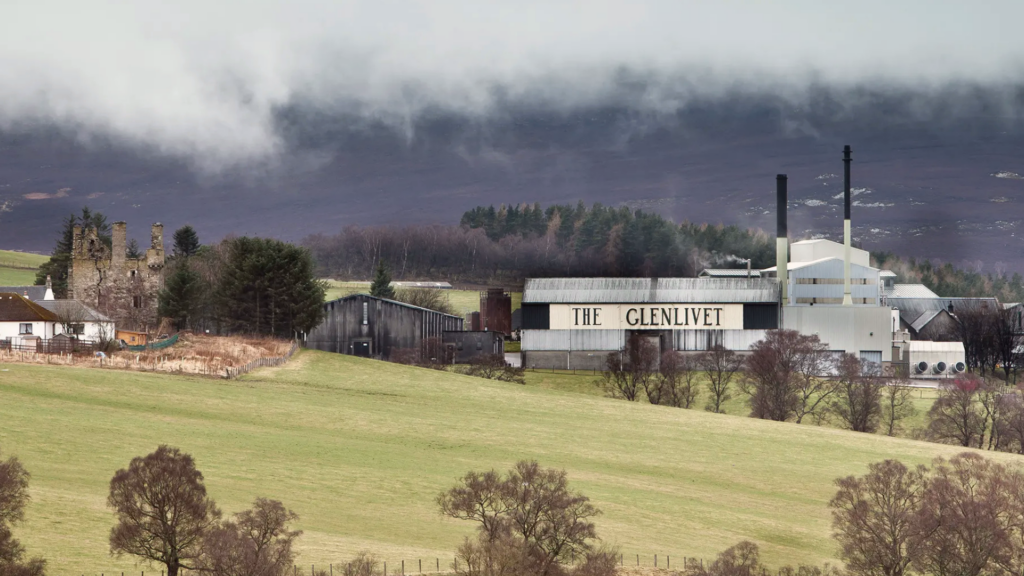
In the early 1800s, the Livet valley already had a reputation for whisky before it had legal certainty. Small Highland stills operated through geography, local protection, taxation pressure, and rural necessity. Whisky from the Glenlivet area was known beyond the valley, but much of the system that produced it remained outside formal law. The turning […]
June 6, 2026
Distilleries
Bunnahabhain: How One Distillery Broke Islay’s Peat Identity
A distillery at the edge of Islay’s map On the northeastern coast of Islay, facing the Sound of Islay toward the Isle of Jura, the landscape shifts. The Atlantic influence is still present, but it arrives differently. The coastline is less exposed than the southern shore where peat smoke dominates the identity of distilleries such […]
April 24, 2026