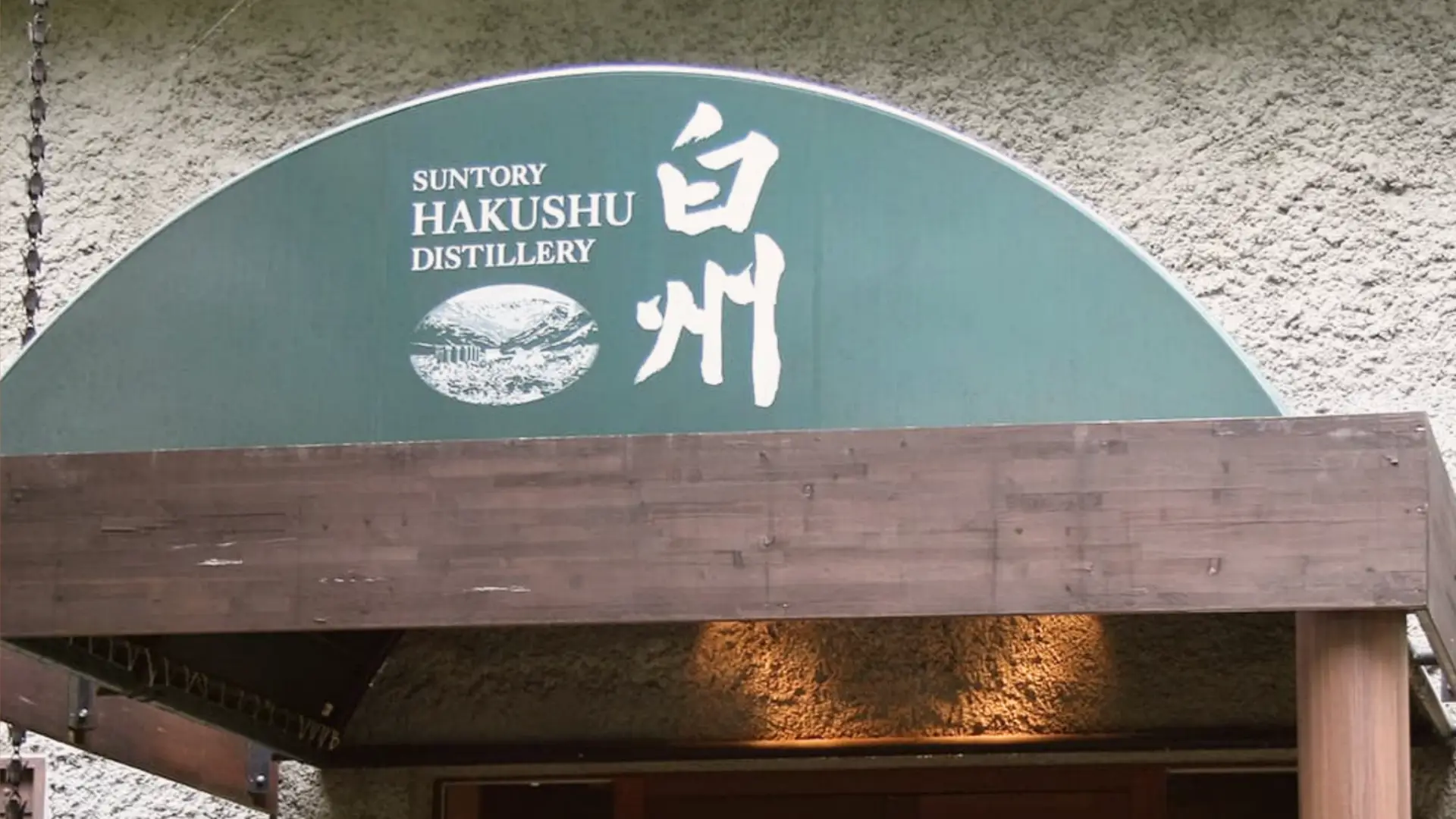
The Southern Japanese Alps do not suggest whisky at first glance. The air is thinner, filtered through dense forest, and the terrain isolates rather than connects. Yet in 1973, Hakushu Distillery was established here under the direction of Keizo Saji, marking a decisive departure from the logic that had shaped earlier whisky production in Japan. This was not an expansion of capacity. It was a redefinition of location as a production variable.
The choice placed distillation at approximately 700 meters above sea level, in a forest environment where water, temperature, and air would behave differently than in the urban and valley conditions of existing distilleries.
From Yamazaki to Hakushu: divergence rather than replication
Japanese whisky had already taken form at Yamazaki Distillery, established by Shinjiro Torii and developed technically by Masataka Taketsuru. Yamazaki’s location, between rivers near Kyoto, provided humidity and water stability suited to maturation. By the late 1960s, demand for Japanese whisky was rising domestically. The expected response would have been to replicate Yamazaki’s model at scale. Instead, Keizo Saji pursued contrast.
Hakushu Distillery was conceived as a second pillar within the Suntory system, designed to produce a markedly different spirit profile. The forest location was central to this objective, introducing environmental variation into fermentation and maturation.
Water sourced through granite and forest filtration
Water at Hakushu originates from snowmelt passing through granite formations beneath Mount Kaikomagatake. This natural filtration produces soft, low-mineral water, distinct from the harder water sources used in many Scotch whisky distilleries such as The Glenlivet Distillery.
Soft water influences both mashing and fermentation. Lower mineral content reduces buffering capacity, allowing for a more delicate enzymatic environment during starch conversion. During fermentation, yeast operates under less mineral stress, contributing to the formation of lighter esters. This results in a wash characterized by green apple, pear, and subtle herbal notes, forming the base of Hakushu’s spirit profile before distillation begins.
Fermentation design and aromatic direction
Fermentation at Hakushu is structured to preserve freshness rather than build heaviness. Washbacks, temperature control, and fermentation duration are calibrated to encourage ester formation without producing excessive weight.
Compared to heavier, longer fermentations used in certain rum systems such as Hampden Estate, Hakushu operates within a narrower range, maintaining clarity rather than intensity. The outcome is a spirit that carries volatile aromatic compounds into distillation without requiring heavy intervention later in maturation.
Climate, altitude, and the pace of maturation
At elevation, Hakushu experiences cooler average temperatures than coastal or lowland distilleries. Seasonal variation is pronounced, but extremes are moderated by forest cover. This creates a maturation environment that progresses more slowly than tropical aging and more evenly than some continental climates.
Cask interaction remains controlled. Oxidation occurs gradually, and evaporation patterns differ from both Scottish dunnage warehouses and Caribbean aging systems. In this environment, spirit development emphasizes integration over extraction. Oak influence supports rather than dominates the profile.
Internal diversity and the Suntory blending system
Hakushu was built with multiple still types and production configurations, allowing for variation within the distillery itself. This aligns with Suntory’s broader approach, where blending relies on internally produced components rather than external sourcing. Hakushu’s lighter, greener spirit contrasts with the richer, fruit-driven distillate from Yamazaki and the grain whisky produced at Chita Distillery.
Together, these distilleries form a closed system capable of producing a wide range of whisky styles. Blends such as Hibiki Japanese Harmony draw from this diversity, integrating Hakushu’s freshness into a broader composition.
Expressions that reflect the environment
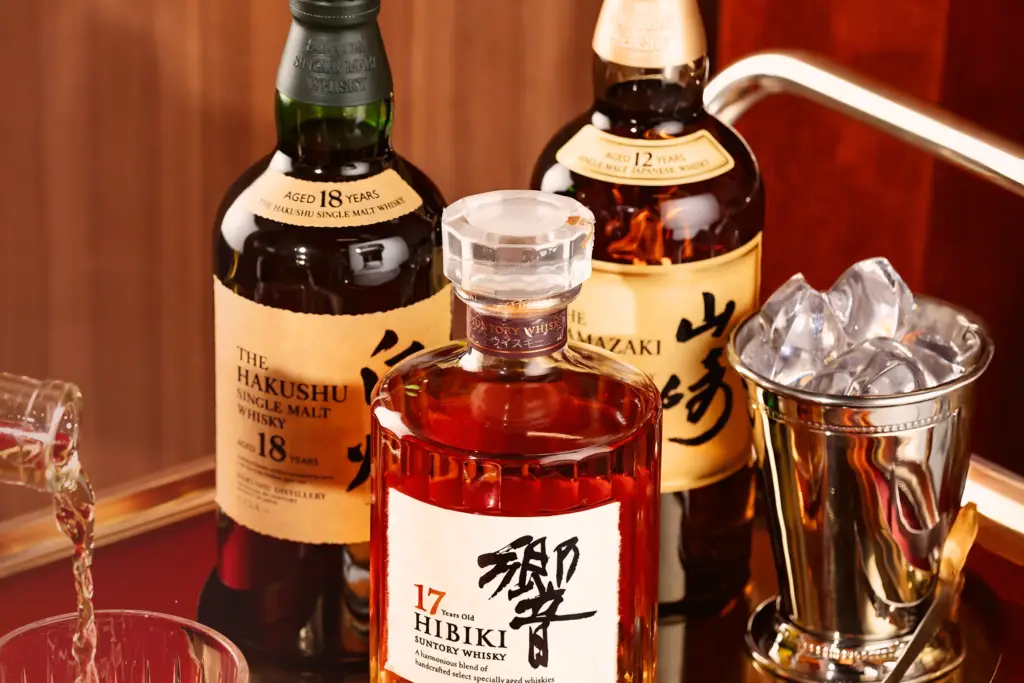
The character of Hakushu is most evident in its core releases. Hakushu 12 Year Old, first introduced in the 1990s, presents a profile built around fresh herbs, green fruit, and a restrained smoky note derived from lightly peated malt. Hakushu Distiller’s Reserve, released in 2014, emphasizes citrus, mint, and forest-driven clarity.
Older expressions, including Hakushu 18 Year Old, demonstrate how this structure evolves under extended maturation. The initial brightness softens, integrating with oak while retaining the underlying freshness established during fermentation. These whiskies do not rely on heavy cask finishing or aggressive peat. Their identity is established earlier in production.
Location as a controlled variable
The decision to build within a forest environment introduced a layer of control that differs from traditional site selection. Rather than optimizing for access or efficiency, the location was chosen to influence production outcomes directly.
Water softness, air purity, and temperature variation are not incidental conditions. They are variables that shape fermentation behavior, distillation character, and maturation pace. Hakushu demonstrates that whisky identity can be constructed not only through process, but through the environment integrated into that process.
Hakushu represents a shift in how distilleries define themselves. It moves away from replication of established models and toward the deliberate use of location as a production tool. The forest is not a visual identity. It is embedded in the system. From water source to maturation conditions, each stage reflects the environment in which it operates.
What emerges is a whisky that does not need to be altered heavily after production. Its structure is established early, shaped by altitude, water, and controlled fermentation. In this approach, the distillery is not placed within a landscape. It is built as part of it.

Distillery
The Glenlivet Distillery is an iconic Scottish whisky producer situated in the picturesque region of Speyside, near Ballindalloch…
Distillery
Hakushu Distillery, often referred to as the 'mountain forest distillery', is the second malt whisky distillery owned by…

Spirit
The Hakushu Distiller's Reserve Single Malt Japanese Whisky
The Hakushu Distiller's Reserve is a distinguished expression from the House of Suntory, located in the Japanese Alps.…
Spirit
Suntory's The Hakushu 18 YO Peated Malt Japanese Single Malt Whisky
Hakushu 18 Year Old Peated Malt Anniversary Edition encapsulates the essence of Japanese craftsmanship, exemplifying the meticulous artistry…
Spirit
Hakushu 12 YO Suntory 100th Anniversary Edition Japanese Single Malt Whisky
The Hakushu 12 Year Old Suntory 100th Anniversary Edition is a special tribute to a century of whisky…
Distillery
The Glenlivet Distillery is an iconic Scottish whisky producer situated in the picturesque region of Speyside, near Ballindalloch…
Distillery
Hakushu Distillery, often referred to as the 'mountain forest distillery', is the second malt whisky distillery owned by…
Spirit
The Hakushu Distiller's Reserve Single Malt Japanese Whisky
The Hakushu Distiller's Reserve is a distinguished expression from the House of Suntory, located in the Japanese Alps.…
Spirit
Suntory's The Hakushu 18 YO Peated Malt Japanese Single Malt Whisky
Hakushu 18 Year Old Peated Malt Anniversary Edition encapsulates the essence of Japanese craftsmanship, exemplifying the meticulous artistry…
Spirit
Hakushu 12 YO Suntory 100th Anniversary Edition Japanese Single Malt Whisky
The Hakushu 12 Year Old Suntory 100th Anniversary Edition is a special tribute to a century of whisky…

Trends and Innovations
International Beer Day 2026: The History of the World’s Most Social Drink
On the first Friday of August, International Beer Day brings breweries, bars, restaurants and beer drinkers together around one of the world’s oldest fermented beverages. The celebration itself is relatively recent, having been established in Santa Cruz, California, in 2008 by Jesse Avshalomov and a group of friends. It was initially held on 5 August […]
August 7, 2026
History
The Paris Judgement of Spirits: How Japanese Whisky Challenged Scotch Dominance
There was no single room in Paris where Japanese whisky defeated Scotch in one decisive afternoon. Unlike the famous 1976 wine tasting that placed California alongside France, whisky’s shift in hierarchy unfolded over several years, through blind tastings, international competitions, specialist publications, and a gradual shift in critical opinion. For much of the 1900s, Scotch whisky […]
June 11, 2026
Distilleries & Producers
George Smith and The Glenlivet: The License That Changed Scotch Whisky
In the early 1800s, the Livet valley already had a reputation for whisky before it had legal certainty. Small Highland stills operated through geography, local protection, taxation pressure, and rural necessity. Whisky from the Glenlivet area was known beyond the valley, but much of the system that produced it remained outside formal law. The turning […]
June 6, 2026