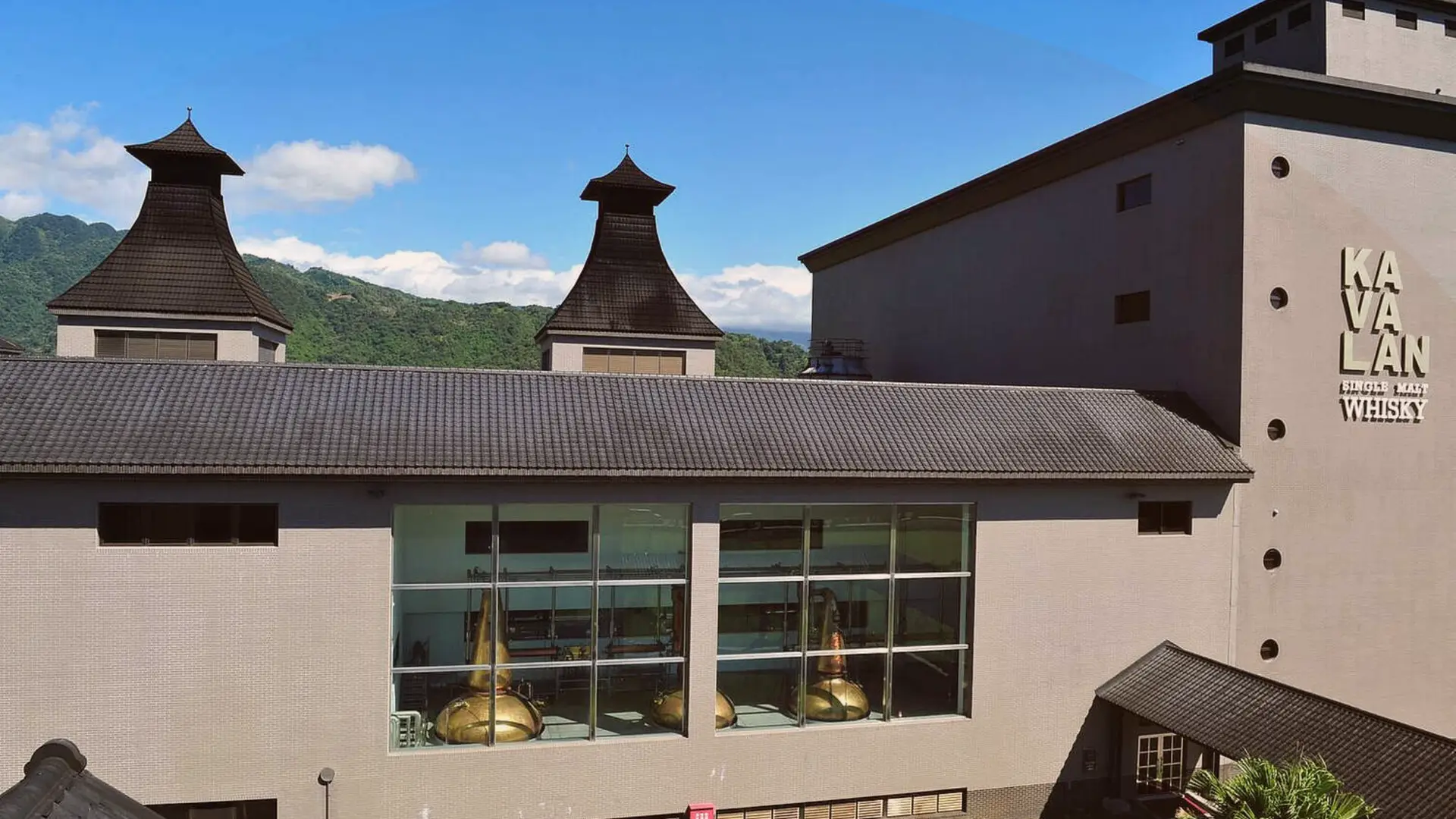
Heat settles early in Yilan. By mid-morning, the warehouses at Kavalan Distillery have already begun their daily cycle, expanding casks, pushing spirit into oak, and accelerating reactions that, in Scotland, would unfold over years. Here, maturation is not a slow negotiation. It is constant pressure.
When the distillery was established in 2005 by the King Car Group, the challenge was immediate. Taiwan’s subtropical climate did not allow whisky to age in the way Scotch had defined it. The question was not how to replicate tradition, but how to redesign production around a different timeline.
Two decades later, that decision culminated in 2026, when Kavalan was named Distiller of the Year at the World Whiskies Awards 2026.
From a clean slate to a defined system
Kavalan entered whisky production without inherited methods. This absence of legacy allowed the distillery to build its process around local conditions rather than imported assumptions. A critical figure in this early phase was Dr Jim Swan, whose work focused on maturation dynamics and cask interaction. His approach emphasized the importance of active wood management in environments where extraction rates are significantly higher.
Instead of extending aging periods, Kavalan Distillery concentrated on controlling how quickly and how deeply the spirit interacted with oak. Fermentation and distillation were calibrated to produce a clean, fruit-forward distillate capable of absorbing intense cask influence without collapsing under it. The system was designed for speed, but not at the expense of structure.
Tropical maturation and the mechanics of acceleration
In Taiwan, temperature and humidity alter the fundamentals of whisky aging. Average summer temperatures frequently exceed 30°C, increasing the rate at which compounds are extracted from the cask.
At the same time, evaporation behaves differently. The angel’s share at Kavalan can reach 10 to 12 percent per year, compared to around 2 percent in Scotland. This loss is significant, but it also concentrates the remaining spirit, intensifying flavor.
The interaction between spirit and wood becomes more active. Expansion and contraction cycles occur daily rather than seasonally, pushing whisky deeper into the cask structure and accelerating chemical exchange. Time does not simply move faster. It behaves differently.
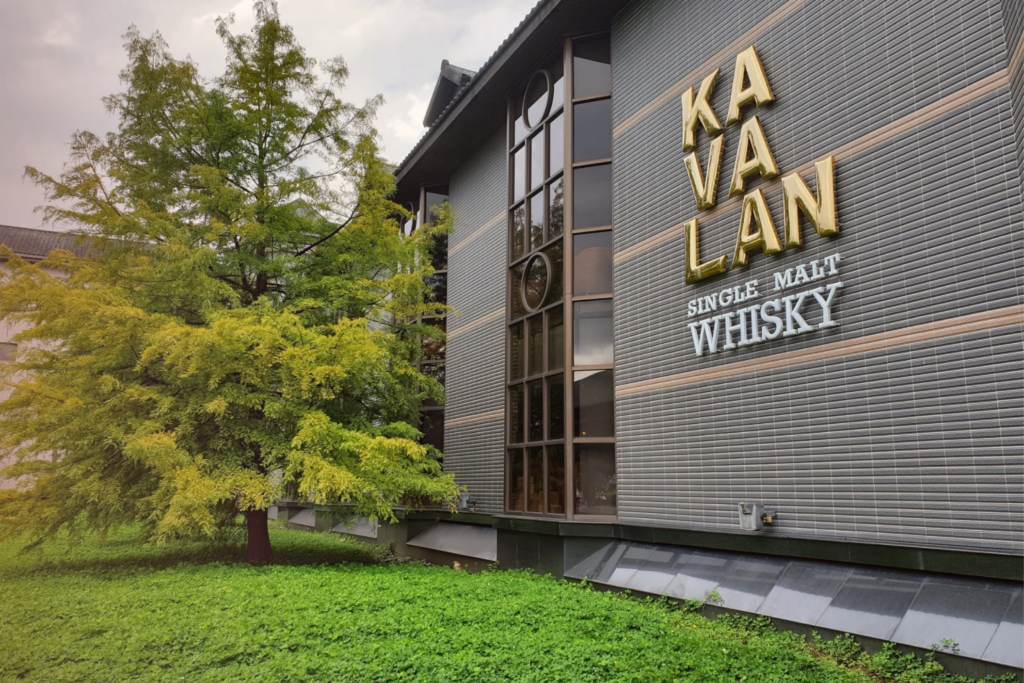
Cask policy as the core of production
Under these conditions, cask selection becomes the central control mechanism. Kavalan Distillery relies heavily on first-fill casks, particularly ex-bourbon barrels and a wide range of wine casks, to shape flavor within a compressed maturation window.
The distillery’s Solist series illustrates this approach with clarity. Releases such as Kavalan Solist Vinho Barrique, matured in STR-treated wine casks, and Kavalan Solist Sherry Cask demonstrate how different wood types can define the final profile within a relatively short aging period.
Casks are monitored continuously. Re-racking decisions are made based on development rather than fixed timelines. The process is active and requires intervention to prevent over-extraction while preserving intensity. At Kavalan, maturation is managed rather than observed.
Building balance under pressure
Rapid extraction introduces risk. Oak compounds, if left unchecked, can dominate the spirit, producing imbalance. Kavalan addresses this through distillate design and cask rotation.
The base spirit is deliberately light and estery, carrying notes of tropical fruit and floral character. This profile provides a counterweight to the wood’s heavier influence, allowing integration rather than dominance.
Expressions such as Kavalan Concertmaster, which incorporates port cask finishing, and Kavalan Podium, matured in a mix of cask types, demonstrate how balance is maintained across different styles. The objective is not to slow maturation, but to guide it.
From regional experiment to global recognition
By the early 2010s, Kavalan had already begun to attract international attention, with early releases receiving awards in blind tastings against established Scotch producers. These results challenged assumptions about aging timelines and geographic suitability.
The 2026 Distiller of the Year recognition at the World Whiskies Awards reflects the consolidation of that trajectory. It acknowledges not only individual expressions but the consistency of a system operating under fundamentally different conditions.
Kavalan’s success aligns with a broader shift in global whisky production, where distilleries in regions such as India and Taiwan have demonstrated that climate can be an advantage rather than a limitation.
A different timeline for whisky
Kavalan Distillery does not attempt to reproduce Scotch whisky. Its production model accepts that whisky made in Taiwan will develop differently.
A whisky aged for five to eight years in Yilan cannot be compared directly to a 12-year-old Speyside malt. The timelines are not equivalent. The processes that shape them are not identical. Instead, Kavalan defines its own parameters, where maturity is measured by structure and balance rather than by age statement alone.
Kavalan represents a shift in how whisky can be understood. It demonstrates that production systems can be built around the environment rather than adapted to resist it. The distillery’s recognition in 2026 does not signal a departure from tradition. It signals an expansion of it. Whisky is no longer confined to a single climate model or maturation timeline. At Kavalan Distillery, time is compressed, but control is extended. The result is a whisky shaped as much by place as by process.

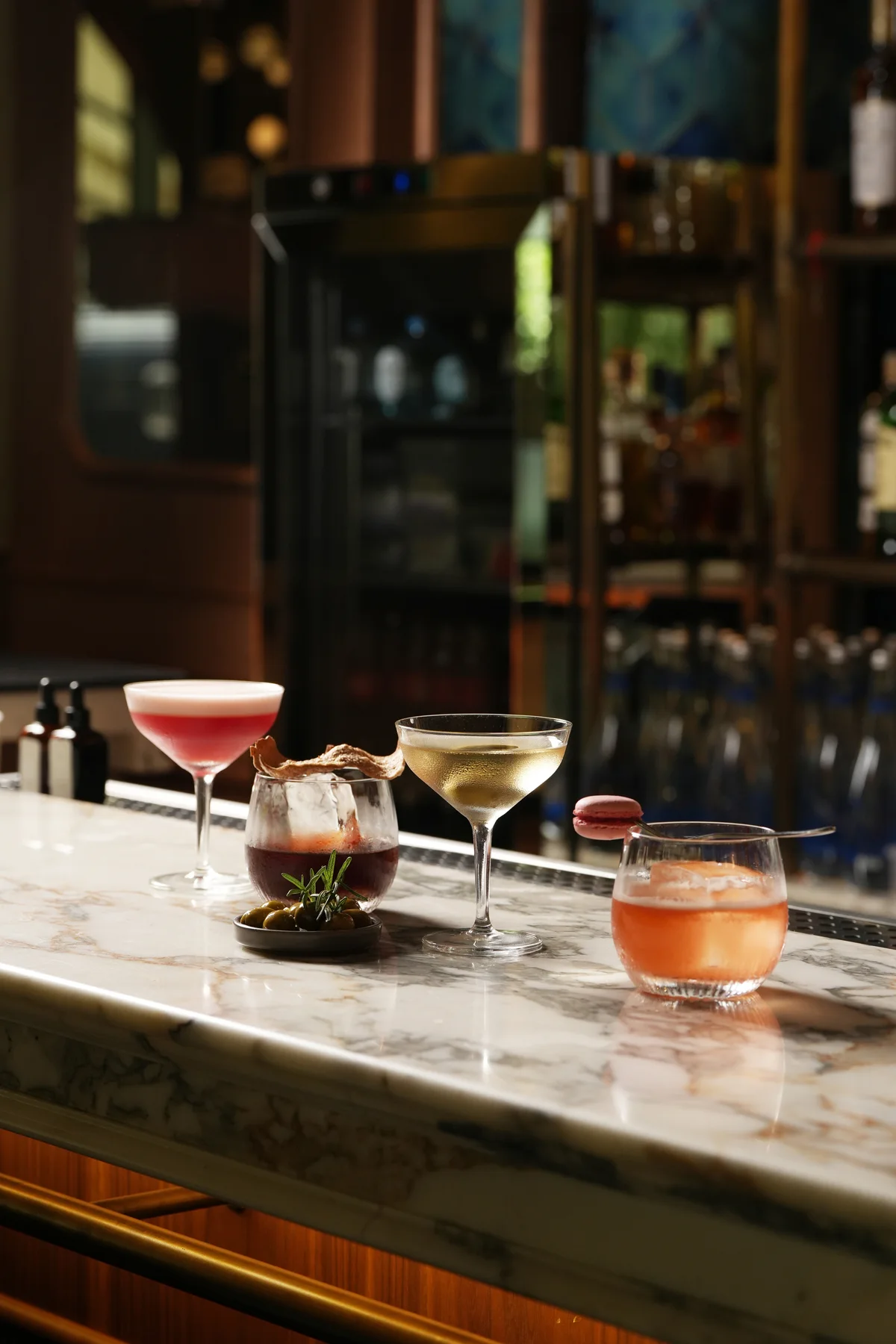
Distillery
Kavalan Distillery, renowned for its premium Taiwanese whisky, is situated in the picturesque Yilan County of Taiwan. Established…
Spirit
Kavalan Solist Manzanilla Sherry Cask Strength Single Malt Whisky
Kavalan Solist Manzanilla Sherry Cask Strength is a remarkable expression from Taiwan's acclaimed Kavalan distillery, renowned for its…
Spirit
Kavalan Solist Vinho Barrique Single Cask Strength Whisky
Kavalan Solist Vinho Barrique Single Cask Strength Whisky is an exceptional expression of craftsmanship, representing the pinnacle of…
Spirit
Kavalan Solist Amontillado Sherry Single Cask Strength Whisky
Kavalan Solist Amontillado Sherry Single Cask Strength is a distinguished single malt whisky that showcases the unique craftsmanship…
Spirit
Kavalan Concertmaster Port Cask Finish Single Malt Whisky
Kavalan Concertmaster Port Cask Finish is an exemplary single malt whisky renowned for its unique craftsmanship and innovative…
Spirit
Kavalan Podium Single Malt Taiwanese Whisky
Kavalan Podium Single Malt Taiwanese Whisky is a remarkable spirit that showcases the artistry and craftsmanship unique to…
Distillery
Kavalan Distillery, renowned for its premium Taiwanese whisky, is situated in the picturesque Yilan County of Taiwan. Established…
Spirit
Kavalan Solist Manzanilla Sherry Cask Strength Single Malt Whisky
Kavalan Solist Manzanilla Sherry Cask Strength is a remarkable expression from Taiwan's acclaimed Kavalan distillery, renowned for its…
Spirit
Kavalan Solist Vinho Barrique Single Cask Strength Whisky
Kavalan Solist Vinho Barrique Single Cask Strength Whisky is an exceptional expression of craftsmanship, representing the pinnacle of…
Spirit
Kavalan Solist Amontillado Sherry Single Cask Strength Whisky
Kavalan Solist Amontillado Sherry Single Cask Strength is a distinguished single malt whisky that showcases the unique craftsmanship…
Spirit
Kavalan Concertmaster Port Cask Finish Single Malt Whisky
Kavalan Concertmaster Port Cask Finish is an exemplary single malt whisky renowned for its unique craftsmanship and innovative…
Spirit
Kavalan Podium Single Malt Taiwanese Whisky
Kavalan Podium Single Malt Taiwanese Whisky is a remarkable spirit that showcases the artistry and craftsmanship unique to…
Features & Updates
Award Winners 2026 and What They Reveal About Spirits
Early 2026 did not produce one dominant style Award Winners 2026: Awards rarely define a category on their own, but they often reveal how it is being judged. In the first months of 2026, results across major competitions showed a consistent pattern. The leading distilleries and spirits were not unified by a single flavour profile […]
May 26, 2026
Trends and Innovations
The Digital Decanter: How Alcohol E-Commerce Redefined Premium Spirits
A decade ago, acquiring a premium bottle of whisky or tequila required physical presence. The process unfolded inside specialist retailers, where access depended on geography, relationships, and availability. That structure has shifted. The rise of alcohol e-commerce has transformed acquisition into a digital experience, using Digital Decanter, where selection, storytelling, and delivery operate within a […]
May 21, 2026
Distilleries & Producers
The Female Founders Reshaping Whisky and the Modern Distillery Model
Whisky has long evolved gradually, shaped by production methods, ownership, and long-term decision-making. Over the past decade, a quieter structural shift has emerged as female founders in the whisky distillation and modern distillery model. Women now hold leadership roles in roughly 20 to 30 per cent of US craft distilleries, with growing influence in new […]
April 14, 2026