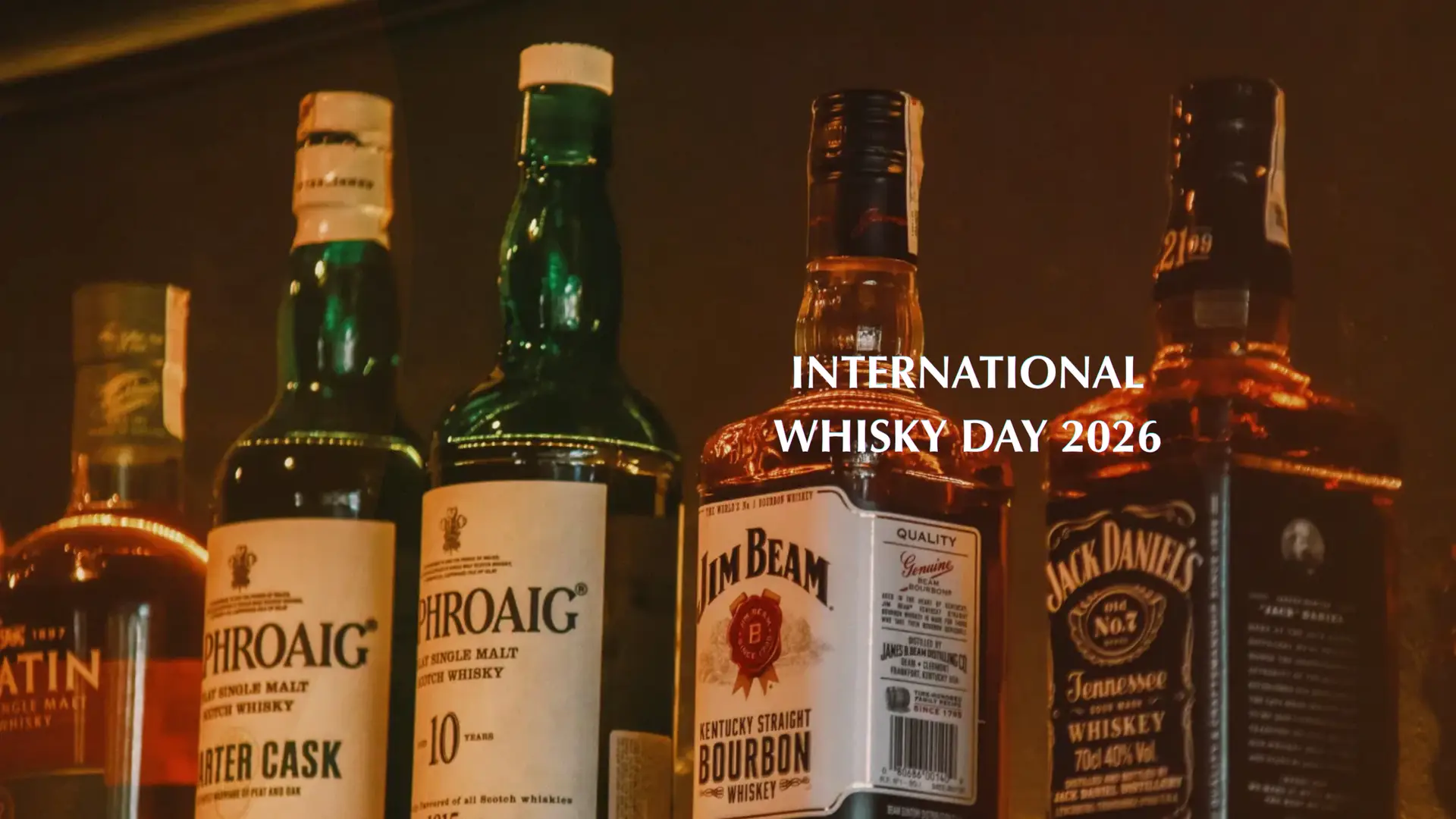
Every year on March 27, whisky is observed through a lens that is both personal and global. International Whisky Day is marked annually on this date to honour the life and legacy of Michael Jackson, born in 1942. His work from the 1980s through the early 2000s established a structured way of understanding whisky across regions, shaping how it is written about, evaluated, and shared.
The day was formally established in 2008 and first observed in 2009, emerging not from producers but from a community of writers, bartenders, and enthusiasts. It is defined by participation rather than promotion. Across countries, International Whisky Day encourages exploration of different whisky styles, supports charities associated with Parkinson’s disease, and reinforces appreciation for the craft behind the spirit.
This origin is important. It explains why the day does not focus on a single category or region. Instead, it reflects whisky as a global system of traditions, each shaped by place, regulation, and production method. Before it became a shared international observance, whisky itself followed a similar path, evolving independently across regions before being understood collectively.
Before global whisky, there were regional distilling systems
Whisky did not emerge as a unified concept. Its origins are fragmented across regions where distillation developed independently.
In Ireland and Scotland, written references to distilled spirits appear as early as the 1400s, where monastic records describe the production of aqua vitae. These spirits were not aged and bore little resemblance to modern whisky. They were functional, often medicinal, and consumed locally.
Ageing became central much later. By the 1700s, the use of wooden casks for storage had begun to transform the spirit. Interaction with oak introduced colour, aroma, and structure, gradually redefining whisky as a matured product rather than a raw distillate.
This shift from unaged spirit to cask-matured whisky marks one of the most important transitions in its history. It established the foundation for every modern whisky-producing region.
The role of law and taxation in shaping whisky identity
Whisky is often described through flavor, but its identity is equally shaped by regulation. In both Ireland and Scotland, taxation policies in the eighteenth and nineteenth centuries directly influenced production methods.
The development of single pot still whiskey in Ireland emerged partly as a response to taxes on malted barley. By combining malted and unmalted grain, distillers created a distinctive style that remains unique to Ireland today.
In Scotland, the Excise Act of 1823 legalized distillation under license, bringing production into a regulated system. This allowed distilleries such as The Macallan to operate within a formal framework that defined quality and consistency.
In the United States, bourbon production became codified through federal standards that specify grain composition and barrel usage. These legal definitions continue to shape the category.
Whisky, therefore, is not only a product of craft. It is a product of law.
Scotland and the structure of single malt whisky
Scotland remains the most structured whisky-producing region. Its regulations define not only what whisky is, but how it must be made.
Single malt Scotch whisky, produced from malted barley at a single distillery using copper pot stills, represents the most studied form of this system. At Glenfiddich, a combination of bourbon and sherry cask maturation produces a balanced profile of fruit and sweetness.
At Laphroaig Distillery, peat smoke introduced during malting defines the spirit, creating medicinal and maritime characteristics that reflect the island environment.
Scotland demonstrates how variation can exist within strict boundaries. On International Whisky Day, it represents structure as a source of diversity.
Ireland and the preservation of distillation heritage
Irish whiskey follows a different logic. Its identity is built on smoothness and continuity, shaped by traditions of triple distillation and blending.
At Midleton Distillery, the integration of grain and pot still whiskey creates balanced expressions that define the category globally. Redbreast 12 Year Old preserves the older pot still style, offering spice, weight, and textural complexity.
Bushmills Distillery emphasises single malt production, reflecting a different strand within Irish whiskey.
From near collapse in the late nineteenth century to renewed growth from the 1980s onward, Irish whiskey illustrates how tradition can survive through adaptation.
The United States and the influence of new oak
American whiskey is defined by its use of new charred oak barrels. This requirement, particularly in bourbon production, creates a distinct interaction between spirit and wood.
At Buffalo Trace Distillery, long maturation produces layered sweetness and oak integration. Maker’s Mark uses wheat in place of rye, softening the spirit’s profile.
The warmer climate of Kentucky accelerates extraction, allowing bourbon to develop intensity in fewer years than Scotch or Irish whiskey.
Within International Whisky Day, American whiskey highlights how environment and regulation combine to shape identity.
Japan and the precision of controlled adaptation
Japanese whisky emerged in the early 1900s through direct study of Scottish production. Masataka Taketsuru applied these methods within Japan’s climate and water conditions.
At Yamazaki Distillery, Japan’s first commercial whisky distillery, attention to detail defines production. Nikka Whisky further expanded this approach, emphasising blending precision.
Japanese whisky is not an imitation. It is refinement through discipline.
Maturation and the shared role of time
Across all whisky-producing regions, maturation defines the final structure. However, the rate and outcome vary depending on climate and cask type.
Cooler climates slow extraction, allowing subtle development over extended periods. Warmer climates accelerate interaction, producing more pronounced oak influence.
Cask selection, whether ex-bourbon, sherry, or wine, introduces additional layers. These decisions shape aroma, texture, and finish.
Time alone does not define whisky. It is time combined with material and environment.
Why International Whisky Day 2026 matters today
International Whisky Day exists as a point of convergence. It brings together regional systems that developed independently and allows them to be understood collectively.
The day does not impose hierarchy. It recognizes difference.
Scotch, Irish, American, and Japanese whisky remain distinct, but they share a common foundation in fermentation, distillation, and maturation. Understanding this balance between unity and variation defines whisky as a global category.
Whisky is often approached through taste, but its identity is built on structure. Each decision, from grain selection to cask management, contributes to the final form.
Barlist views International Whisky Day 2026 as an opportunity to document these systems rather than simplify them. Distilleries such as The Macallan, Midleton, Buffalo Trace, and Yamazaki represent different approaches to the same foundational process.
In the glass, these differences are not competitive. They are contextual, shaped by history, regulation, and environment.
That context defines whisky more clearly than any single style.


Spirit
Maker's Mark Kentucky Straight Bourbon Whisky
Maker's Mark Kentucky Straight Bourbon Whisky is a benchmark of quality in the bourbon industry. Crafted meticulously in…
Spirit
Maker's Mark Kentucky Straight Bourbon Whisky
Maker's Mark Kentucky Straight Bourbon Whisky is a benchmark of quality in the bourbon industry. Crafted meticulously in…
History
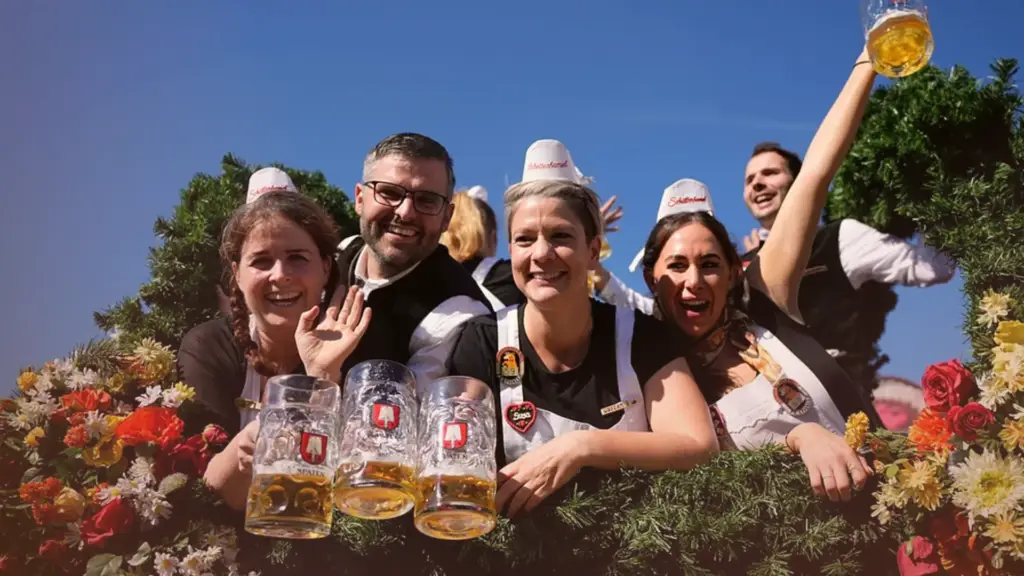
Oktoberfest: Where Beer, History, and Bavarian Tradition Meet
Every autumn, the city of Munich undergoes a remarkable transformation. The streets become filled with traditional music, the aroma of Bavarian cuisine spreads through the city, and millions of visitors gather at Theresienwiese for a celebration unlike any other. Known around the world as Oktoberfest, this festival represents much more than beer. It is a […]
September 25, 2026
History
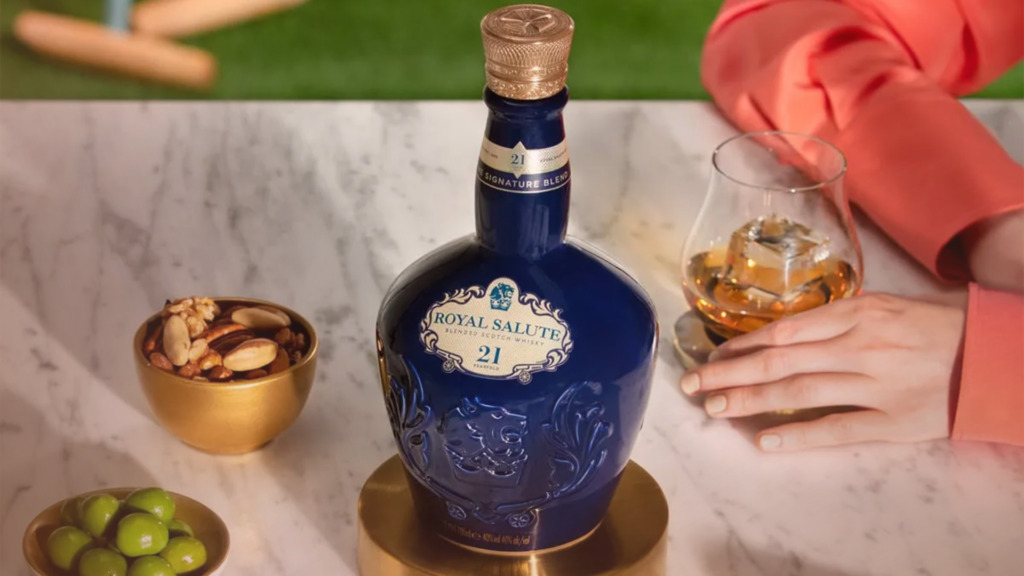
Royal Salute 21-Year-Old: A Celebration Born from Royal Tradition
Some whiskies acquire ceremony around them after decades of reputation. Royal Salute 21-Year-Old began with ceremony already embedded in its identity. The blended Scotch was launched in 1953 in connection with the Coronation of Queen Elizabeth II, held at Westminster Abbey on 2 June that year. The occasion reached an audience unprecedented for a British […]
September 11, 2026
Spirits
The Best 10 Scotch Whiskies Every Collector Should Try
Scotch whiskies collection is no longer simply about finding the oldest bottle or the most expensive name. A serious collection should tell a story about the spirit itself: where it comes from, how it is made, how oak changes it, how peat shapes it and why particular distilleries have earned lasting reputations. That makes choosing […]
August 21, 2026