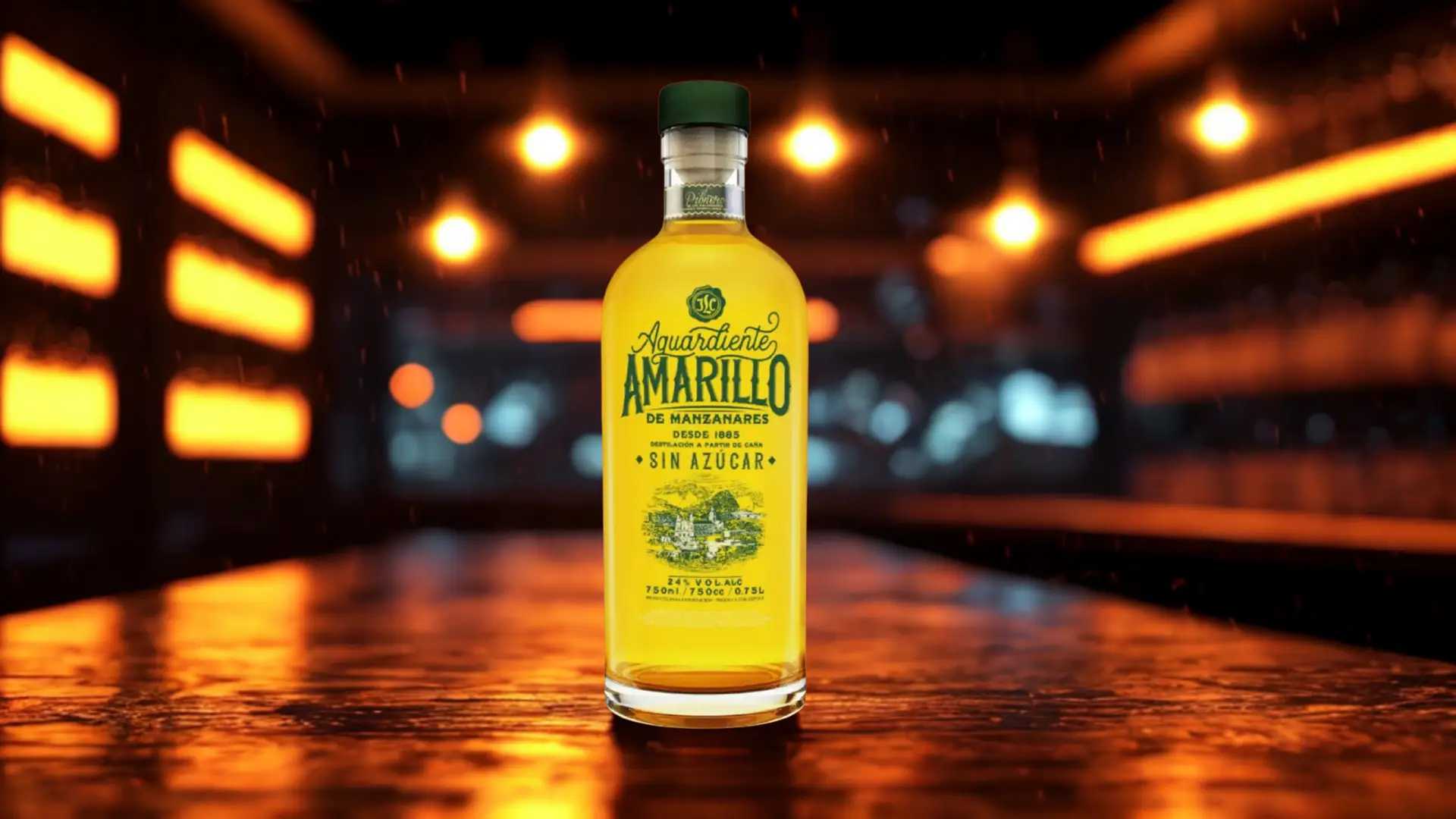
Aguardiente Amarillo is not a modern invention or a reinterpretation of an existing spirit category. Its identity is rooted in the late nineteenth century, when Colombia’s regional distillation systems began formalizing production around sugarcane alcohol and anise-based formulations. The reference to 1885 corresponds to a period when aguardiente production shifted from informal, localized distillation to structured, repeatable processes within emerging industrial and administrative systems.
At the center of its modern production stands Empresa de Licores de Cundinamarca, a state-controlled distillery responsible for maintaining the formulation and distribution of Aguardiente Amarillo within Colombia’s regulated spirits framework. Unlike globally exported spirits categories, aguardiente developed primarily as a domestic product, integrated into regional economies and public systems rather than private international markets.
Origins and the 1885 Formulation Context
By the mid-to-late 19th century, Colombia had established a strong sugarcane economy across regions such as Cundinamarca, Antioquia, and Valle del Cauca. Sugarcane derivatives, including panela and molasses, formed the base of alcohol production. During this period, aguardiente, literally translated as “burning water,” was already widely consumed, though its formulation varied significantly between regions.
The reference to 1885 marks the emergence of a more standardized structure in which sugarcane-derived neutral alcohol was combined with anise distillation to produce a consistent profile. Anise, introduced through Spanish colonial influence, became the defining aromatic element. Its primary compound, anethole, provides the characteristic herbal sweetness and persistent aromatic intensity that defines the category.
This formulation positioned Aguardiente Amarillo within a global lineage of anise-based spirits, alongside Pastis, Arak, Ouzo, and Sambuca. However, unlike these spirits, which are often diluted or ritualized in service, Aguardiente Amarillo is consumed directly, reflecting a different cultural and structural context.
Distillation Systems and Regional Production in Colombia
Production of Aguardiente Amarillo follows a controlled process built on repeatability rather than variation. Sugarcane-derived alcohol is first fermented and distilled to produce a neutral base. This base is then infused or redistilled with anise, allowing for precise extraction of aromatic compounds while maintaining structural balance.
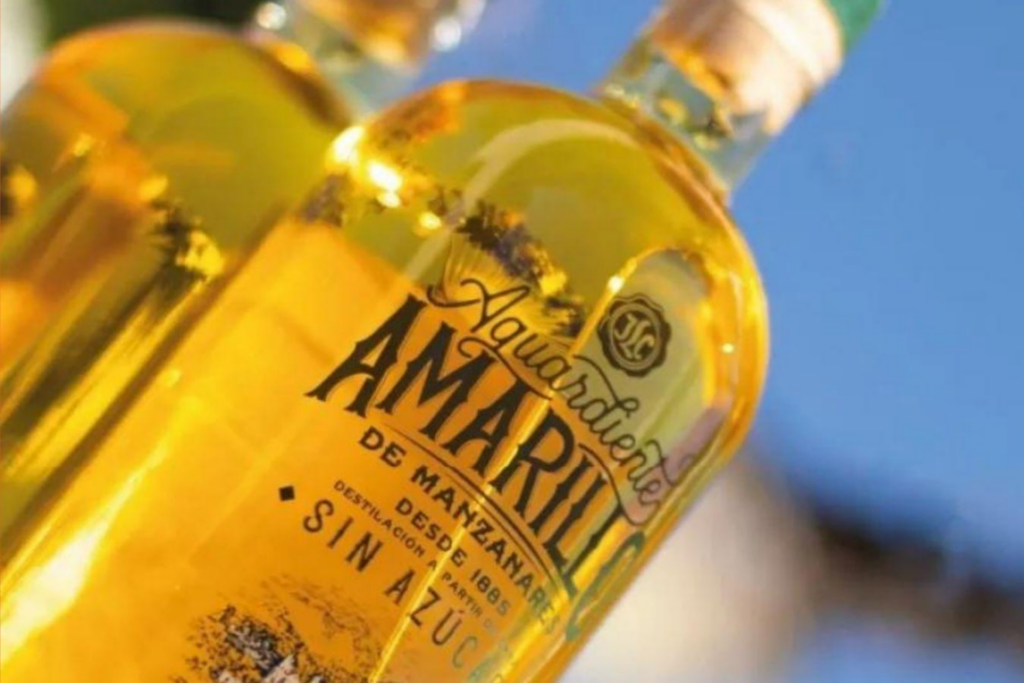
The defining pale yellow color distinguishes it from other Colombian aguardiente styles, particularly Aguardiente Antioqueño, produced by Fábrica de Licores de Antioquia, as well as Aguardiente Cristal from Industria Licorera de Caldas and Aguardiente Blanco del Valle produced by Industria de Licores del Valle.
These regional expressions share a common structural base of sugarcane alcohol and anise but differ in formulation, sweetness, and visual identity. Unlike whisky or rum, aguardiente is not matured in wood, and its profile is defined entirely at the point of distillation and blending.
Legal Framework and the Colombian Monopoly System
One of the defining characteristics of aguardiente production is its integration into Colombia’s legal and administrative system. Since the early twentieth century, the country has operated under a departmental monopoly structure in which regional governments control the production and distribution of distilled spirits.
Within this system, distilleries such as Empresa de Licores de Cundinamarca function as both producers and economic entities tied directly to public revenue. Income generated from aguardiente sales contributes to regional funding, including healthcare, infrastructure, and public services.
This regulatory model limits external competition while reinforcing aguardiente as a regional identity product. It also ensures that formulations remain consistent over time, preserving the structural integrity of spirits such as Aguardiente Amarillo.
Cultural Integration and Consumption Patterns
Aguardiente Amarillo is not positioned as a premium or luxury spirit. Its role is embedded in everyday Colombian life, where it functions as a communal drink associated with social gatherings, celebrations, and informal settings.
Typically consumed neat at room temperature, it emphasizes accessibility and familiarity rather than exclusivity. Its alcohol content, generally between 24% and 29% ABV, contributes to its widespread acceptance, while the anise profile provides immediate recognizability across regions.
Unlike spirits that require developed tasting frameworks, aguardiente is defined by directness. It is designed to be understood immediately, without the need for technical interpretation.
Global Context and Category Positioning
Within the global spirits landscape, Aguardiente Amarillo occupies a unique position. In contrast, it shares structural similarities with anise-based spirits such as Pastis and Arak; its production and consumption are shaped by a distinct system of regulation and cultural integration.
It does not rely on export-driven identity or premium positioning. Instead, it maintains relevance through continuity and consistency within its domestic context. This distinguishes it from categories such as Scotch whisky or gin, where global branding and variation play a central role.
Continuity as a System of Identity
Aguardiente Amarillo is defined by stability. From its 1885 formulation to its present-day production under Empresa de Licores de Cundinamarca, the spirit has maintained a consistent structure built on sugarcane alcohol, anise distillation, and controlled sweetness.
Its identity is not driven by innovation or reinvention, but by repetition within a regulated system. Each bottle reflects a production model in which history, law, and culture operate together to sustain a category. In Aguardiente Amarillo, continuity is not a limitation. It is the defining principle.
Distillery
Fábrica De Licores Y Alcoholes De Antioquia
Fábrica De Licores Y Alcoholes De Antioquia (FLA) stands as a hallmark of Colombian spirits, offering a diverse…
Distillery
Industria Licorera de Caldas (ILC) is a prominent distillery located in Manizales, Colombia, specializing in the production of…
Spirit
Ron Extraviejo Juan De la Cruz Rum
Ron Extraviejo Juan De la Cruz Rum is a distinguished spirit, revered for its robust characteristics and deep…
Spirit
Medellín Reserve 3 YO Colombia Rum
Medellín Reserve 3 Year Old Rum is a testament to Colombia's rich rum-making heritage, carefully crafted to embody…
Spirit
Cristal Aguardiente Liqueur is a highly regarded spirit originating from Colombia, celebrated as the national drink of the…
Distillery
Fábrica De Licores Y Alcoholes De Antioquia
Fábrica De Licores Y Alcoholes De Antioquia (FLA) stands as a hallmark of Colombian spirits, offering a diverse…
Distillery
Industria Licorera de Caldas (ILC) is a prominent distillery located in Manizales, Colombia, specializing in the production of…
Spirit
Ron Extraviejo Juan De la Cruz Rum
Ron Extraviejo Juan De la Cruz Rum is a distinguished spirit, revered for its robust characteristics and deep…
Spirit
Medellín Reserve 3 YO Colombia Rum
Medellín Reserve 3 Year Old Rum is a testament to Colombia's rich rum-making heritage, carefully crafted to embody…
Spirit
Cristal Aguardiente Liqueur is a highly regarded spirit originating from Colombia, celebrated as the national drink of the…

History
Oktoberfest: Where Beer, History, and Bavarian Tradition Meet
Every autumn, the city of Munich undergoes a remarkable transformation. The streets become filled with traditional music, the aroma of Bavarian cuisine spreads through the city, and millions of visitors gather at Theresienwiese for a celebration unlike any other. Known around the world as Oktoberfest, this festival represents much more than beer. It is a […]
September 25, 2026
History
Royal Salute 21-Year-Old: A Celebration Born from Royal Tradition
Some whiskies acquire ceremony around them after decades of reputation. Royal Salute 21-Year-Old began with ceremony already embedded in its identity. The blended Scotch was launched in 1953 in connection with the Coronation of Queen Elizabeth II, held at Westminster Abbey on 2 June that year. The occasion reached an audience unprecedented for a British […]
September 11, 2026
Spirits
The Best 10 Scotch Whiskies Every Collector Should Try
Scotch whiskies collection is no longer simply about finding the oldest bottle or the most expensive name. A serious collection should tell a story about the spirit itself: where it comes from, how it is made, how oak changes it, how peat shapes it and why particular distilleries have earned lasting reputations. That makes choosing […]
August 21, 2026