In the 19th century, few alcoholic drinks inspired as much fear and fascination as Absinthe. It was accused of causing hallucinations, insanity, violent crime, and moral collapse. Newspapers portrayed it as a social poison. Politicians framed it as a national threat. By the time chemistry and toxicology were capable of explaining what it actually contained, prohibition had already taken hold across much of Europe and North America.
Absinthe was not banned because science proved it was uniquely dangerous. It was banned because it became a visible symbol for anxieties surrounding alcohol, industrial society, and social disorder. Law moved faster than evidence, and cultural panic filled the space where scientific certainty was still absent.
From Medicinal Preparation to Commercial Spirit
Absinthe originated as a medicinal preparation rather than a recreational drink. In 1792, Henri-Louis Pernod established an absinthe distillery in Couvet, Switzerland, refining a spirit based on wormwood, green anise, and fennel. The product was marketed for digestive and tonic properties, consistent with medical thinking of the late eighteenth century.
On 1st January, 1805, Pernod relocated production to Pontarlier in eastern France, founding Pernod Fils. This move placed it within France’s industrial infrastructure and allowed production to scale. Throughout the early 19th century, absinthe retained its medicinal reputation and was commonly sold through pharmacies rather than cafés.
During the 1840s, French soldiers stationed in Algeria were issued absinthe rations to help prevent fever and purify drinking water. When these soldiers returned to France, it returned with them, no longer as medicine, but as a habitual drink.
Mass Consumption and Public Visibility
By the 1860s, absinthe consumption expanded rapidly across France. Industrial alcohol reduced production costs, while urbanisation created a large population of industrial workers seeking inexpensive, high-proof spirits. Absinthe moved decisively into café culture, where its preparation ritual became highly visible.
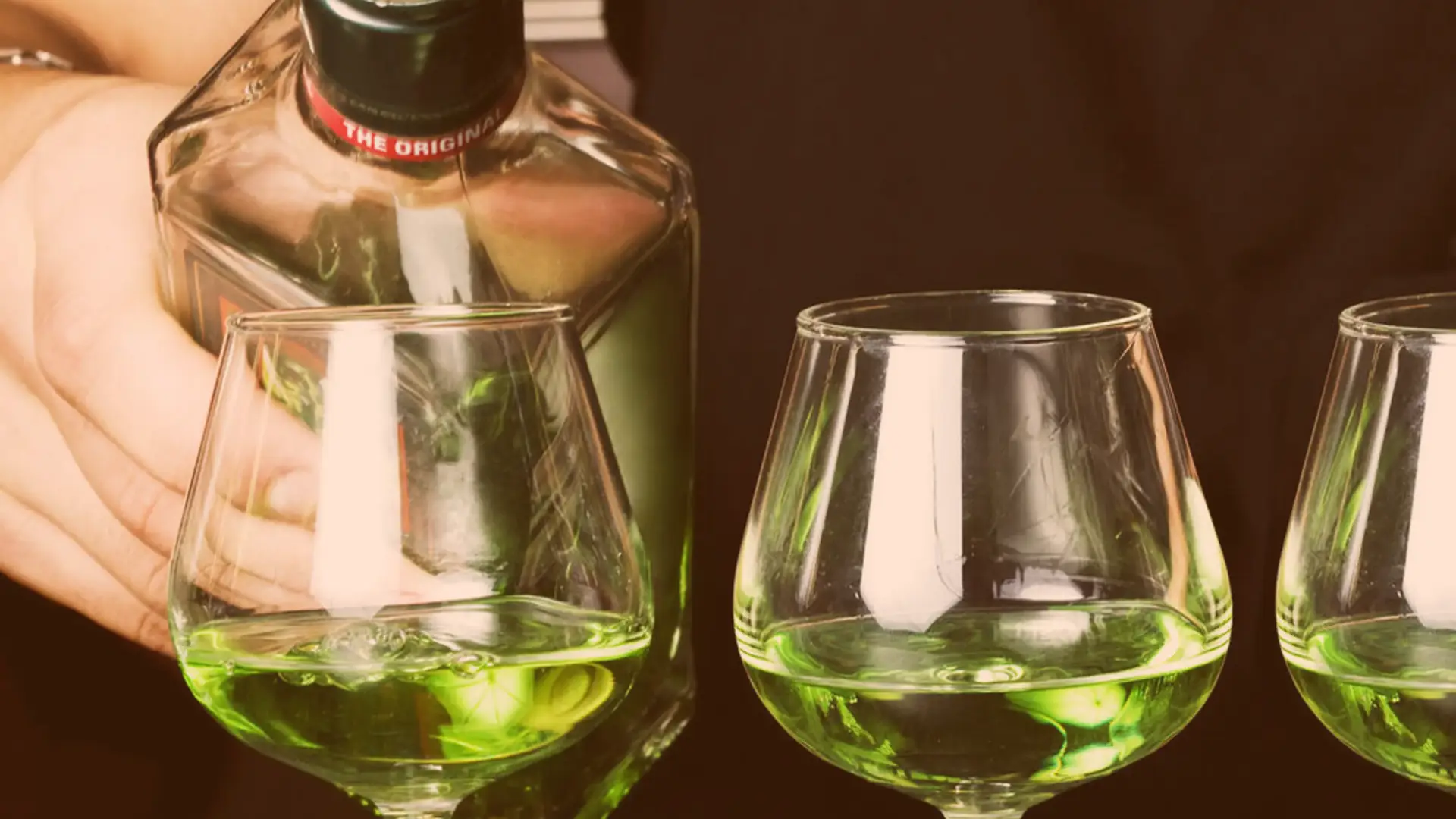
The transformation of clear absinthe into an opaque drink when diluted with water became a public spectacle. Unlike wine or beer, absinthe announced itself visually. This visibility mattered. It made absinthe an easy target.
By the late 19th century, French consumption of absinthe reached an estimated 36 million litres per year, according to excise and taxation records. At this scale, absinthe was no longer marginal. It rivalled traditional spirits and became politically impossible to ignore.
Cultural Anxiety and Artistic Association
Absinthe’s rise coincided with profound social change. Industrial labour, urban overcrowding, and shifting moral norms generated widespread concern about alcohol abuse. It became a focal point because it appeared modern, foreign, and excessive.
Public figures such as Vincent Van Gogh and Paul Verlaine were frequently linked to absinthe consumption in the press. Their struggles with mental health and addiction were cited as evidence that it caused psychological breakdown, despite no clinical proof. These associations were cultural narratives rather than medical findings.
During this period, the term absinthism entered public discourse and was treated as a distinct medical condition. In reality, its symptoms closely mirrored chronic alcoholism. The distinction served moral and political ends rather than scientific accuracy.
Economic Pressure and the Wine Industry
Economic forces amplified public hostility. French vineyards were devastated by the phylloxera epidemic between 1863 and 1890, causing wine production to collapse. As wine became scarce and expensive, absinthe consumption increased sharply.
Wine producers and agricultural unions funded coordinated anti-absinthe campaigns. Posters, pamphlets, and newspaper articles portrayed absinthe as uniquely dangerous, often depicting it as a corrosive poison rather than an alcoholic drink. These campaigns deliberately avoided addressing the role of high proof industrial alcohol, focusing instead on absinthe as a category.
By the time vineyards recovered at the turn of the twentieth century, public opinion had already hardened.
Flawed Science and the Thujone Myth
Scientific opposition to absinthe focused on Thujone, a naturally occurring compound in wormwood. Experiments conducted during the 1860s and 1870s involved administering pure thujone to laboratory animals at extreme doses. Convulsions and neurological symptoms were observed and attributed to absinthe.
These experiments were deeply misleading. Traditional absinthe contained only trace levels of thujone, far below toxic thresholds. The studies bore no resemblance to real drinking conditions and largely ignored ethanol toxicity. Nevertheless, the narrative that thujone caused hallucinations became entrenched in public consciousness. Science had not concluded, but fear had.
The Crime That Triggered Prohibition
Public pressure reached a tipping point on 28th August, 1905, when Jean Lanfray murdered his family in Switzerland after a day of heavy drinking. Newspapers emphasised that Lanfray had consumed absinthe, while downplaying the fact that he had also consumed significant quantities of wine and brandy.
The case became a political catalyst. Switzerland banned absinthe in 1908. France followed on 16th March, 1915, outlawing production and sale nationwide. The United States enacted its own ban on 12th July, 1912, several years before national alcohol prohibition.
In each country, legislation preceded scientific clarity.
What Science Eventually Established
Modern chemical analysis conducted during the 1990s demonstrated that historical absinthes contained minimal thujone and did not cause hallucinations at realistic consumption levels. Symptoms attributed to absinthism were consistent with alcohol abuse rather than a unique toxic syndrome.
France formally lifted its absinthe ban on 17th May, 2011, allowing regulated production under controlled thujone limits. Switzerland had already done so on 1st March 2005, acknowledging that earlier conclusions were driven by fear rather than evidence.
Absinthe was banned not because science had proven it uniquely harmful, but because it became a symbol for anxieties society did not yet know how to manage. In the 19th century, law responded to fear faster than science could respond with evidence. Economic interests, moral panic, and incomplete research converged into prohibition.
The history of absinthe shows how spirits are often judged not by what they contain, but by what they represent. When fear moves faster than understanding, prohibition arrives long before explanation.

Distillery
Nestled in the heart of Absinthe country, Les Fils d'Émile Pernot has been an emblem of traditional distillation…
Spirit
Tessellis Blanche Absinthe Liqueur
Tessellis Absinthe Blanche represents a significant stride in the realm of absinthe, emerging as the first Polish blanche…

Spirit
Kübler Absinthe Superieure Liqueur
Kübler Absinthe is a distinguished blanche-style absinthe crafted in the Val-de-Travers region of Switzerland, renowned as the birthplace…

History
Oktoberfest: Where Beer, History, and Bavarian Tradition Meet
Every autumn, the city of Munich undergoes a remarkable transformation. The streets become filled with traditional music, the aroma of Bavarian cuisine spreads through the city, and millions of visitors gather at Theresienwiese for a celebration unlike any other. Known around the world as Oktoberfest, this festival represents much more than beer. It is a […]
September 25, 2026
History
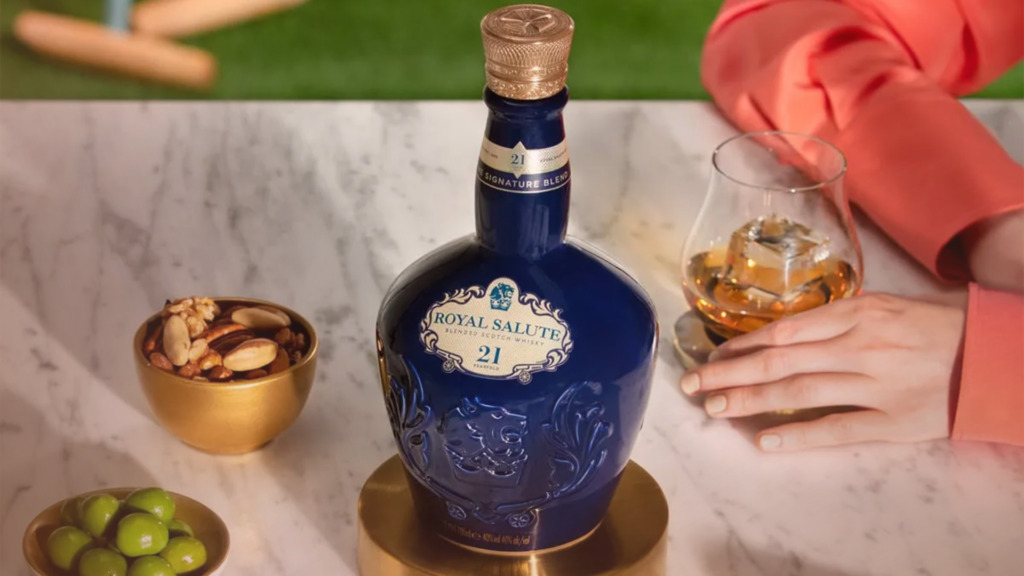
Royal Salute 21-Year-Old: A Celebration Born from Royal Tradition
Some whiskies acquire ceremony around them after decades of reputation. Royal Salute 21-Year-Old began with ceremony already embedded in its identity. The blended Scotch was launched in 1953 in connection with the Coronation of Queen Elizabeth II, held at Westminster Abbey on 2 June that year. The occasion reached an audience unprecedented for a British […]
September 11, 2026
Community and Lifestyle
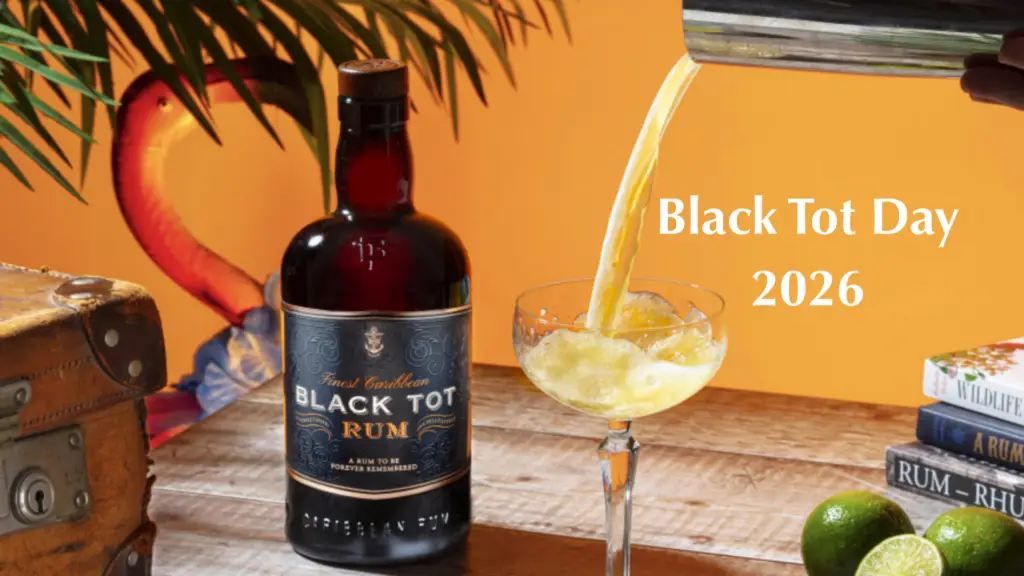
Black Tot Day 2026: Rum, Discipline, and the End of a Royal Navy Tradition
The Black Tot Day rum history begins with a contradiction at the heart of naval life. For centuries, rum was not simply a drink on Royal Navy ships. It was ration, reward, routine, social currency, disciplinary problem, imperial supply chain, and symbol of the lower deck. By the time the final daily tot was issued […]
July 31, 2026