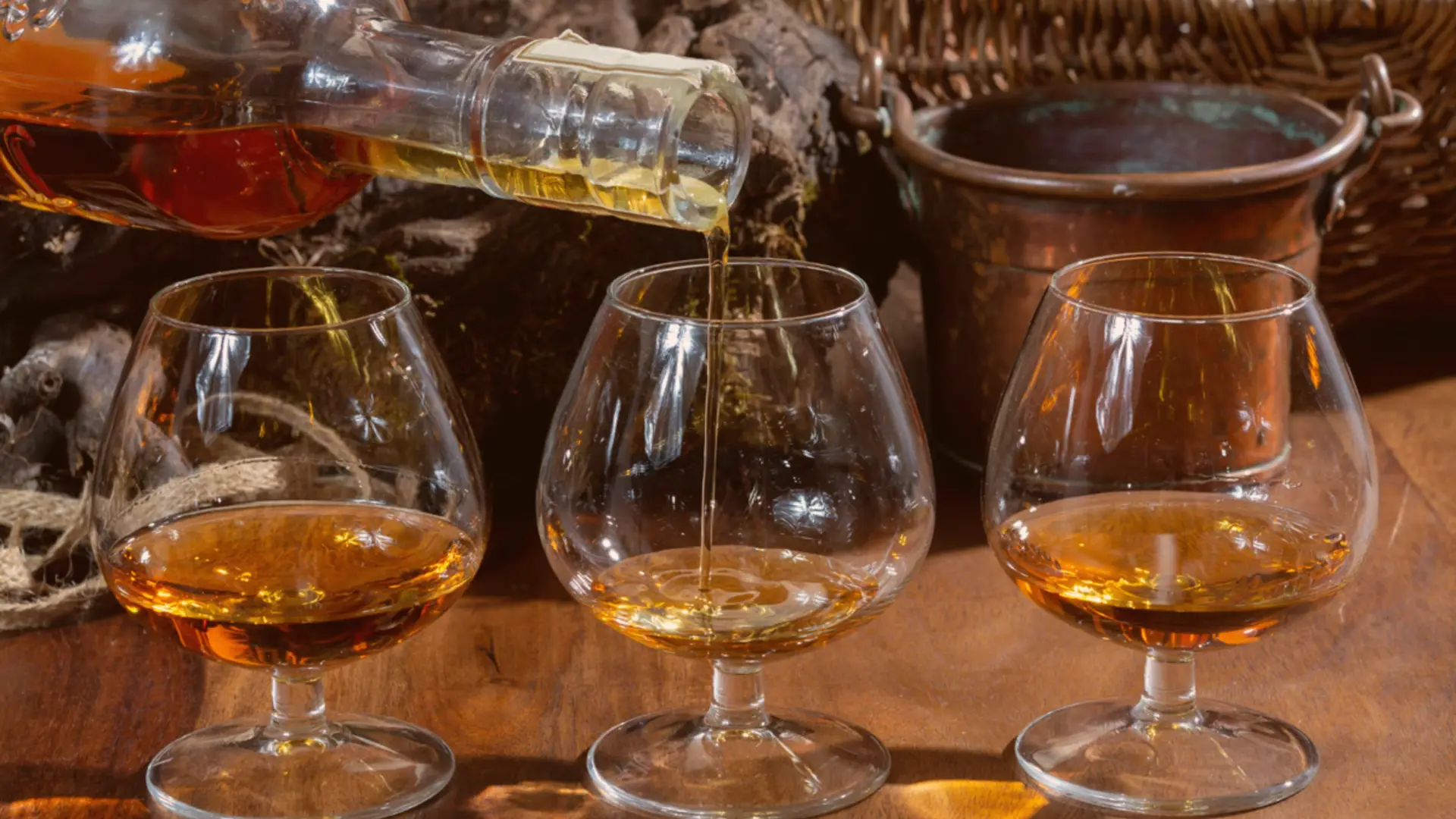
In the landscape of French spirits, few contrasts are as revealing as the divergence between Armagnac and Cognac. Both are grape-based brandies distilled from wine. Both trace their origins back several centuries. Yet Armagnac remained rural, fragmented, and estate-driven, while Cognac evolved into a globally recognised luxury spirit.
This outcome was not determined by flavour superiority or technical refinement alone. It emerged from early structural decisions involving geography, distillation technology, land ownership, and the rise of merchant distilleries.
Armagnac’s system rewarded agricultural independence and continuity.
Cognac’s system demanded consolidation, capital, and export orientation from the outset.
Armagnac and Cognac: Early Origins and Written History
The first recorded reference to Armagnac dates to 25 May 1310, when Vital du Four, Prior of the monastery at Eauze in Gascony, described the medicinal and restorative qualities of distilled wine in a Latin manuscript. Armagnac entered written history as a rural product, produced on estates and consumed locally as a remedy and sustenance. Distillation was seasonal, tied to the agricultural calendar, and carried out on farms rather than in permanent urban facilities.
By contrast, Cognac’s early development followed a commercial trajectory. On 14 October 1636, Dutch merchants were active in the Charente region, purchasing wine for export. When these wines proved unstable during long sea voyages, distillation was adopted as a solution to the trade problem. From its inception, Cognac was shaped by the demands of transportability, reliability, and scale, rather than local subsistence.
Geography and Access to Trade
Cognac’s location along the Charente River provided a decisive logistical advantage. Barrels could move efficiently from inland vineyards to Atlantic ports such as La Rochelle, enabling direct export to England, the Netherlands, and later North America.
This access attracted foreign capital, encouraged the construction of permanent ageing warehouses, and fostered a system oriented toward long term export growth.
Armagnac, located in Gascony, lacked comparable waterways. Transport relied on slower and more costly overland routes. This geographic isolation discouraged sustained foreign investment and reinforced a model focused on regional markets and family reserves. Geography did not merely limit expansion. It defined the economic horizon of the region.
Distillation Technology and Structural Consequences
Cognac adopted double distillation in copper pot stills, producing a lighter and more neutral eau de vie suited for blending consistency. This method required capital-intensive infrastructure and centralised facilities, favouring the rise of large merchant houses.
The system enabled producers to blend hundreds of eaux de vie into stable, reproducible house styles, ensuring continuity across decades.
Armagnac developed around continuous column distillation, often using mobile stills that travelled from estate to estate during winter. This method produced spirits with greater aromatic weight and individuality, but it resisted standardisation.
Each distillation reflected: A specific vineyard, A particular grape composition, and the judgment of the distiller.
Armagnac’s technology preserved variation rather than suppressing it. As a result, the region historically favoured vintage-dated releases, while Cognac developed simplified age classifications for export clarity.
The Rise of Distilleries and Merchant Power
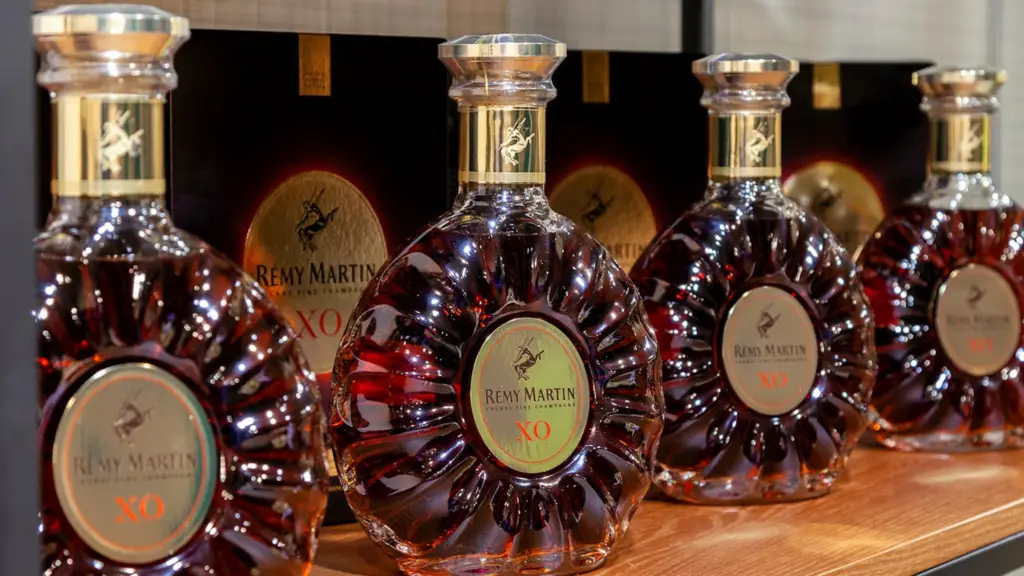
Cognac’s global ascent was driven by the emergence of powerful merchant distilleries. Martell, founded on 1st April, 1715, established permanent ageing warehouses and international trade routes. Rémy Martin, founded on 4th October, 1724, specialised in Fine Champagne Cognac and refined long-term blending practices. Hennessy, founded on 2nd October 1765, built the most extensive global distribution network in the category.
These distilleries purchased eau de vie from hundreds of growers, controlling ageing, blending, and branding. Over time, the name of the distillery replaced the identity of the vineyard. Cognac became a spirit defined by houses rather than farms.
Armagnac never experienced comparable consolidation. Estate distilleries, such as Château de Laubade, founded on 12th September 1870, Domaine Boingnères, and Darroze, founded on 15th March 1974, retained control over distillation, aging, and bottling. These producers remained visibly agricultural, with identities tied to land rather than abstraction.
Appellation Law and Regulatory Direction
When French appellation law formalised both regions in the twentieth century, it reinforced existing structures. Cognac regulations codified grape varieties such as Ugni Blanc, mandated double distillation, and established ageing categories including VS, VSOP, and XO. These classifications simplified global communication and strengthened brand power.
Armagnac’s appellation allowed greater flexibility. Subregions such as Bas-Armagnac, Ténarèze, and Haut-Armagnac retained distinct identities. Continuous distillation remained permitted, and vintage bottling was protected. These decisions preserved cultural depth but resisted simplification, reinforcing Armagnac’s rural character.
Spirits That Express the Divide
Cognac’s system produces globally consistent spirits such as Hennessy XO and Rémy Martin Louis XIII, blends designed to express continuity across decades.
Armagnac expresses identity through vintage bottlings such as Château de Laubade 1978 and Domaine Boingnères 1985, spirits that preserve a single year, a single estate, and specific agricultural conditions. Cognac preserves consistency. Armagnac preserves time.
Armagnac stayed rural because its structure rewarded autonomy, agricultural rhythm, and estate identity. Cognac went global because it aligned geography, technology, capital, and branding toward expansion. These outcomes were not accidents of taste, but the consequences of early decisions that hardened into systems. Together, they demonstrate that spirits are shaped not only by terroir but by the economic and cultural frameworks that carry them into the world.

Distillery
Domaine Boingnères Distillery is a revered establishment located in the heart of the Gascony region in France, renowned…
Distillery
Hennessy Cognac is renowned as the world's leading producer of cognac, representing a harmonious blend of tradition and…

Distillery
Château de Laubade is recognized as one of the premier distilleries producing Armagnac, situated in the heart of…
Distillery
Maison Martell, established in 1715, stands as the oldest of the prestigious cognac houses located in the heart…
Distillery
Armagnacs Darroze embodies the quintessence of artisanal craftsmanship in the production of Armagnac, a renowned French brandy. Established…
Spirit
Hroda Spiced Rum is an exemplary craft rum that echoes the traditions of rum production while embracing modern…
Spirit
Wood's Old Navy Rum is a notable overproof rum with a deep heritage rooted in the traditions of…
Spirit
Domaine Boingnères 1985 Cépages Nobles Bas Armagnac
The Domaine Boingnères 1985 Cépages Nobles Bas Armagnac is a prestigious single vintage Armagnac that exemplifies the region's…
Distilleries
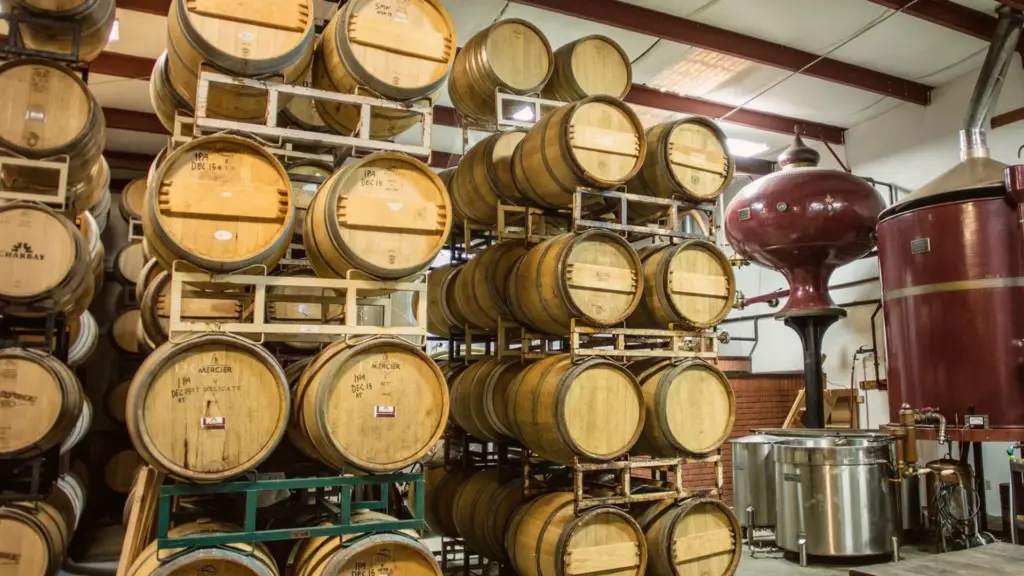
Charbay Distillery: From European Tradition to California Craft Distilling
The history of Charbay Distillery begins long before the family established itself in California. The Karakasevic family traces its winemaking and distilling tradition back generations in Europe, with the family recognised by the Austro-Hungarian Imperial Court of Empress Maria Theresa in 1751 as makers of wines and brandies. That inherited knowledge eventually travelled across continents […]
July 28, 2026
Trending
International Cognac Day: History, Appellation, and the Spirit of Charente
International Cognac Day is observed each year on June 4, but the spirit it recognizes belongs to a much longer calendar. Cognac is shaped by harvests, distillation seasons, oak maturation, and a legal framework that has turned a regional wine distillate into one of France’s most carefully protected spirits. Its identity begins in the Charente, […]
June 4, 2026
Spirits
Pricing and Taxation in 19th-century European Spirits Consumption
In the early decades of the nineteenth century, the cost of a glass of spirits in London, Paris, or Warsaw was rarely determined by the distiller. It was determined by the state. A measure of whisky, Cognac, or vodka carried within it a structure of duties, controls, and transport costs that defined not only its […]
April 7, 2026