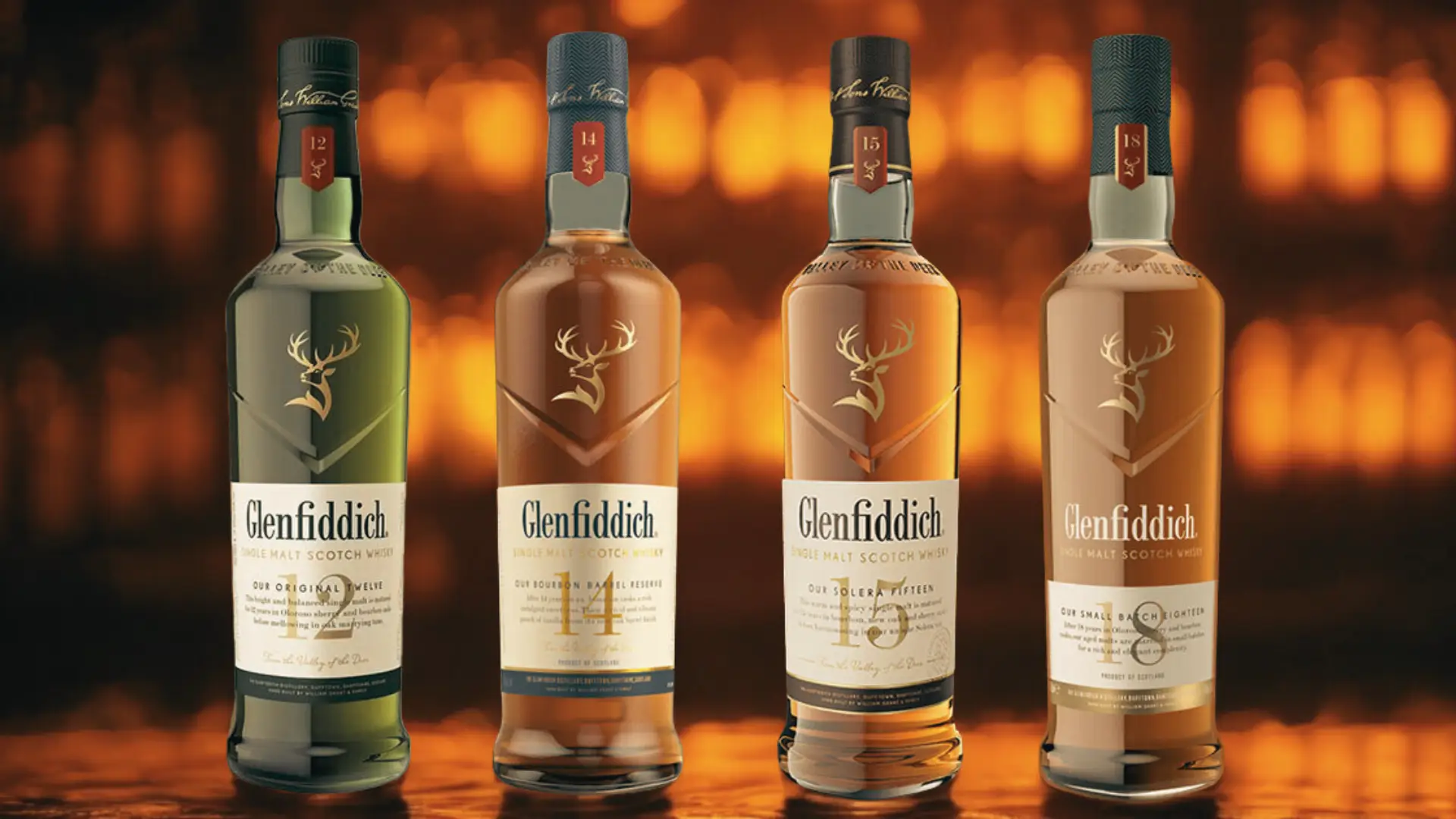
A single year marked a turning point in the long history of Scotch whisky. In 1963, the family-owned Glenfiddich Distillery in Dufftown, Speyside, released what is widely considered the first official single malt Scotch marketed outside Scotland. At a time when blends dominated shelves and single malts were virtually unknown to the wider world, Glenfiddich’s bold decision transformed how whisky was consumed, marketed, and understood.
From Family Vision to Distillery Legacy
The Glenfiddich story began in 1887, when William Grant, with the help of his seven sons and two daughters, built the distillery by hand in the valley of the River Fiddich. For decades, like many other Speyside producers, Glenfiddich primarily sold whisky to blenders. By the mid-20th century, iconic blends such as Johnnie Walker, Dewar’s, and Ballantine’s defined Scotch’s reputation internationally. Single malts, bottled under their own names, remained curiosities largely confined to Scotland itself.
Sandy Grant Gordon and the 1963 Breakthrough
That landscape began to change under Sandy Grant Gordon, great-grandson of William Grant. Recognizing the potential of single malts as standalone spirits, he spearheaded the bottling and promotion of Glenfiddich under its own label. In 1963, Glenfiddich debuted in a distinctive triangular green bottle, designed by German-born artist Hans Schleger. The triangular shape symbolized malt, water, and air, and it stood out instantly on crowded shelves. The packaging reinforced that this was not just another Scotch—it was a unique single malt with its own story.
Marketing Innovation and Duty-Free Success
Marketing proved central to Glenfiddich’s rise. While most distilleries hesitated to bottle single malts, invested heavily in international campaigns emphasizing family ownership, authenticity, and tradition. Airports became a key battleground. It pioneered duty-free whisky shops, introducing global travelers to the idea of single malt as a gift or collectible. This strategic placement allowed Glenfiddich to establish itself not only as a premium product but also as an ambassador for the entire category.
Global Dominance of the Single Malt
The gamble paid off. By the late 1960s and 1970s, Glenfiddich had become the world’s best-selling single malt, a title it has defended for decades. Today, it remains one of the most widely distributed single malts, sold in over 180 countries, and representing a significant share of the global market. The 1963 release is now regarded as a milestone—the moment Scotch whisky shifted from an industry defined by blends to one where single malts command prestige, loyalty, and passion among drinkers.
Changing the Industry Forever
Glenfiddich’s success forced competitors to respond. Distilleries such as Macallan, Glenlivet, and Glenmorangie began bottling and marketing their own single malts internationally, creating a new premium category. What had been a niche curiosity became a global phenomenon, fueling whisky tourism, specialist bars, auctions, and collectors’ markets. Today, the single malt sector is valued in the billions, and its roots trace directly to Sandy Grant Gordon’s visionary decision in 1963.
Cultural Impact and Whisky Tourism
The influence of Glenfiddich’s 1963 decision extended beyond the glass. As single malts gained prestige, they also fueled the rise of whisky tourism in Scotland. Dufftown, once a quiet Speyside town, became a pilgrimage site for enthusiasts eager to see the distillery that had reshaped Scotch history. Glenfiddich was among the first distilleries to actively welcome visitors, building dedicated tours and visitor centers that helped transform Speyside into one of the world’s most important whisky regions. This model of hospitality and brand experience has since been adopted by countless distilleries, reinforcing the emotional connection between consumers and the heritage of single malt whisky.
For the Barlist community, Glenfiddich’s breakthrough is more than a story of clever branding or a triangular bottle. It is a reminder that tradition can be reinvented and that bold choices can reshape entire industries. When Sandy Grant Gordon chose to bottle Glenfiddich as a single malt, he not only changed the destiny of his family distillery but also reshaped the global perception of Scotch whisky. Every sip of single malt today carries the echo of that pivotal 1963 decision, when one family’s vision transformed Scotch forever.

Distillery
Johnnie Walker & Sons is synonymous with excellence in the world of blended Scotch whisky. Established in Kilmarnock,…
Distillery
The Glenfiddich Distillery, one of the most iconic names in the world of single malt Scotch whisky, is…
Distillery
The Glenlivet Distillery is an iconic Scottish whisky producer situated in the picturesque region of Speyside, near Ballindalloch…
Spirit
Glenfiddich 30 YO Single Malt Scotch Whisky
Glenfiddich 30 YO Single Malt Scotch Whisky is a stunning expression hailing from the renowned Glenfiddich distillery located…
Spirit
The Glenlivet Nàdurra Peated Cask Finish Single Malt Scotch Whisky
The Glenlivet Nàdurra First Fill Selection is a prime example of Scotch whisky in its raw, most authentic…
Distillery
Johnnie Walker & Sons is synonymous with excellence in the world of blended Scotch whisky. Established in Kilmarnock,…
Distillery
The Glenfiddich Distillery, one of the most iconic names in the world of single malt Scotch whisky, is…
Distillery
The Glenlivet Distillery is an iconic Scottish whisky producer situated in the picturesque region of Speyside, near Ballindalloch…
Spirit
Glenfiddich 30 YO Single Malt Scotch Whisky
Glenfiddich 30 YO Single Malt Scotch Whisky is a stunning expression hailing from the renowned Glenfiddich distillery located…
Spirit
The Glenlivet Nàdurra Peated Cask Finish Single Malt Scotch Whisky
The Glenlivet Nàdurra First Fill Selection is a prime example of Scotch whisky in its raw, most authentic…
Distilleries & Producers
James Buchanan & Co: The Blending House That Turned Scotch into a Modern Brand
The history of James Buchanan & Co belongs to a crucial moment in Scotch whisky’s transformation. In the late nineteenth century, Scotch was no longer only a regional spirit sold through merchants, casks, clubs, hotels, and local trade. It was becoming a bottled product with labels, reputation, visual memory, and commercial reach. The whisky itself […]
July 11, 2026
Distilleries & Producers
George Smith and The Glenlivet: The License That Changed Scotch Whisky
In the early 1800s, the Livet valley already had a reputation for whisky before it had legal certainty. Small Highland stills operated through geography, local protection, taxation pressure, and rural necessity. Whisky from the Glenlivet area was known beyond the valley, but much of the system that produced it remained outside formal law. The turning […]
June 6, 2026
Distilleries
Bunnahabhain: How One Distillery Broke Islay’s Peat Identity
A distillery at the edge of Islay’s map On the northeastern coast of Islay, facing the Sound of Islay toward the Isle of Jura, the landscape shifts. The Atlantic influence is still present, but it arrives differently. The coastline is less exposed than the southern shore where peat smoke dominates the identity of distilleries such […]
April 24, 2026