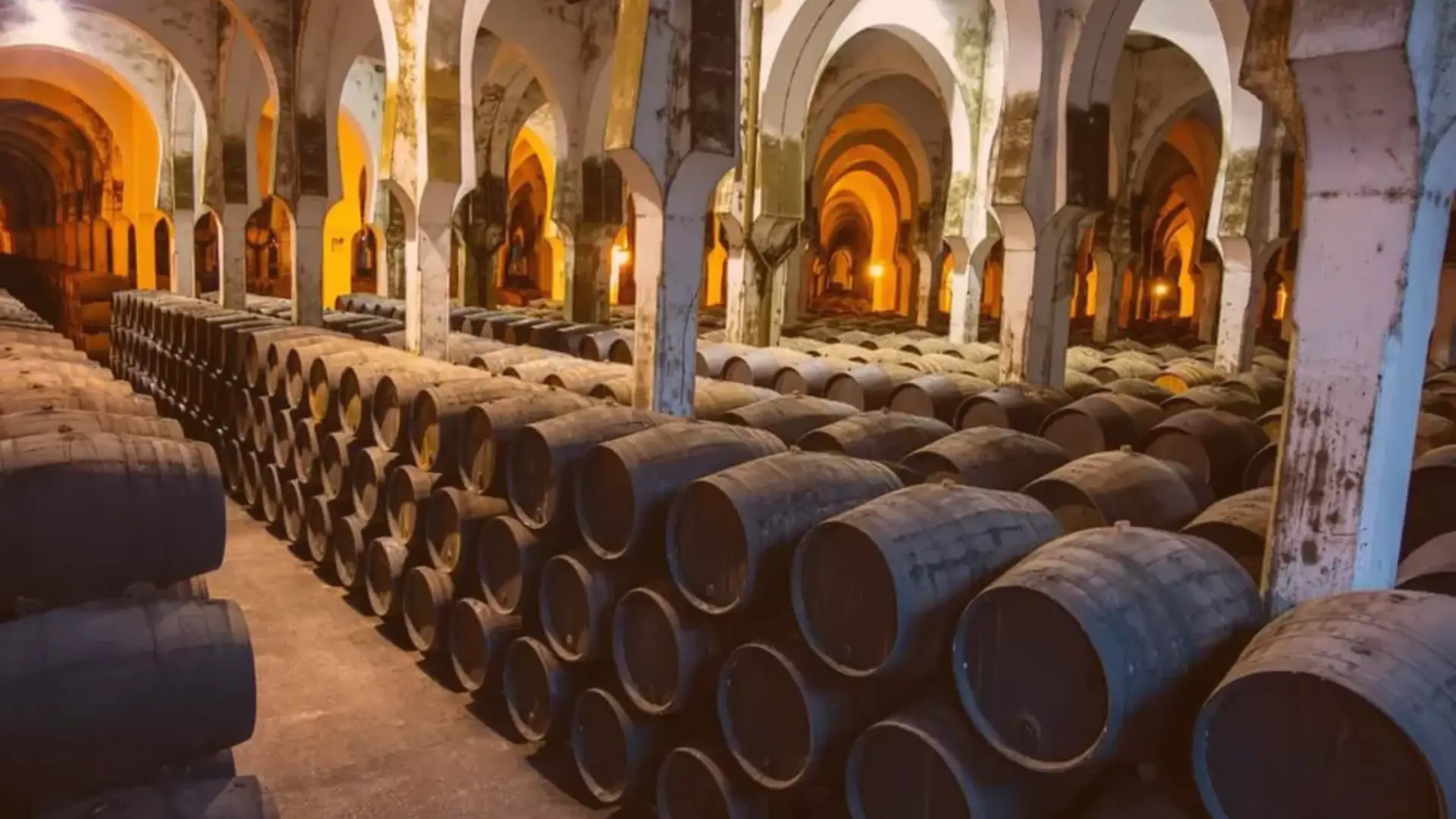
Sherry is often described broadly as a Spanish wine, yet its true identity has always been geographically narrow. Despite Spain’s vast wine-producing landscape, only one region shaped sherry into a global category with structure, continuity, and recognition. That region is Jerez de la Frontera, located in Andalusia within the province of Cádiz. The rise of Jerez was not accidental. It was the result of geography, climate, trade access, and centuries of adaptation that no other Spanish region could replicate.
Geography That Anchored Production
Jerez occupies a strategic position between inland farmland and the Atlantic coast. While not directly on the sea, it sits close enough to benefit from maritime influence through nearby ports. Sanlúcar de Barrameda and El Puerto de Santa María provided access to shipping routes that connected Andalusia with northern Europe and the Americas.
Atlantic winds moderated temperatures, reducing extremes that could damage vines. Humidity carried inland helped stabilize biological aging later in the wine’s life. Inland Spanish regions lacked this balance, while Mediterranean areas were often too dry. Jerez benefited from a rare convergence of inland stability and coastal moderation.
This geography allowed production to scale without sacrificing reliability. Grapes could be grown consistently, wines could age predictably, and exports could move efficiently. Geography did not merely support sherry. It dictated its boundaries.
Albariza Soil and Agricultural Limitation
The foundation of Jerez’s dominance lies beneath the vines. Albariza soil defines the region physically and agriculturally. Rich in limestone and chalk, albariza reflects sunlight, retains winter rainfall, and slowly releases moisture during dry summers. This allowed vineyards to survive long periods without irrigation.
The Palomino grape thrived in this environment. Low in acidity and neutral in aroma, Palomino proved unsuitable for expressive still wines but ideal for fortification and long aging. Attempts to replicate sherry styles outside Jerez consistently failed because albariza could not be reproduced elsewhere at scale.
This agricultural limitation anchored sherry geographically. Spain had many vineyards, but only one region capable of sustaining the raw material sherry required.
Trade Networks Before National Identity
Jerez rose to prominence before Spain possessed a unified wine identity. From the 16th century, English and Dutch merchants actively traded wines from the region. English demand in particular shaped production methods.
Following 1587, when Francis Drake seized thousands of barrels from Cádiz, sherry became embedded in English culture. The wine’s ability to survive sea voyages made fortification essential. Aging systems evolved not for local prestige, but for export reliability.
Other Spanish regions lacked both port access and foreign merchant presence necessary to build similar trade networks. Jerez developed outward, not inward.
The Formation of the Sherry Triangle
By the 19th century, production consolidated around what became known as the Sherry Triangle. Jerez de la Frontera handled vinification and aging. Sanlúcar de Barrameda specializes in maritime-influenced aging. El Puerto de Santa María functioned as a commercial and export hub.
This division of labor created resilience. Wines aged inland could be shipped and matured near the coast. Styles diversified without fragmenting identity. The triangle reinforced regional authority rather than diluting it.
When Spain formalized the Denominación de Origen Jerez Xérès Sherry in 1933, it codified a system that had already existed for generations.
Solera as Structural Infrastructure
The solera system emerged as a solution to consistency rather than as a stylistic choice. Continuous blending allowed producers to deliver uniform quality across decades despite vintage variation. This required immense capital investment and long-term confidence in export demand.
Historic houses such as González Byass and Bodegas Lustau built vast cathedral-style bodegas engineered for airflow and humidity control.
These buildings were functional responses to the climate. Without Jerez’s environment, Solera would not have scaled sustainably elsewhere.
Sanlúcar and the Atlantic Microclimate
While Jerez defined structure, Sanlúcar de Barrameda defined expression. Located directly at the mouth of the Guadalquivir River, Sanlúcar experiences higher humidity and cooler temperatures. These conditions allow flor yeast to remain active year-round.
This environment gave rise to manzanilla, a style legally distinct from fino despite shared methods. Sanlúcar demonstrated that even within a narrow region, microclimate mattered. It reinforced the idea that sherry could not be abstracted from place.
Survival Through Contraction
The 20th century brought a crisis. Phylloxera, war, shifting consumer tastes, and overproduction damaged the reputation. Yet Jerez endured because its identity was structural. Legal protection, Solera systems, and accumulated knowledge prevented total collapse.
Modern producers increasingly focus on vineyard specificity, historical styles, and transparency. The region contracts in volume but deepens in meaning. Jerez evolves without abandoning its foundations.
Jerez is not defined by national identity or grape variety, but by geography, trade, and structure. By tracing how soil, climate, and foreign demand converged in one place, this history explains why sherry could only become global from Jerez. It reminds modern drinkers that some wine cultures endure because geography allows no substitute.
Sherry exists today because one place sustained the conditions required for it to endure. Jerez did not merely produce wine; it built a system where geography, trade, and time reinforced one another. On Barlist, sherry from Jerez is understood not as a style among many, but as a reminder that certain traditions survive because their origins cannot be replicated elsewhere.


Spirit
Lustau Solera Gran Reserva Finest Selection De Jerez Brandy
Lustau Solera Gran Reserva Finest Selection De Jerez Brandy is a luxurious and expertly crafted brandy that stands…
Region
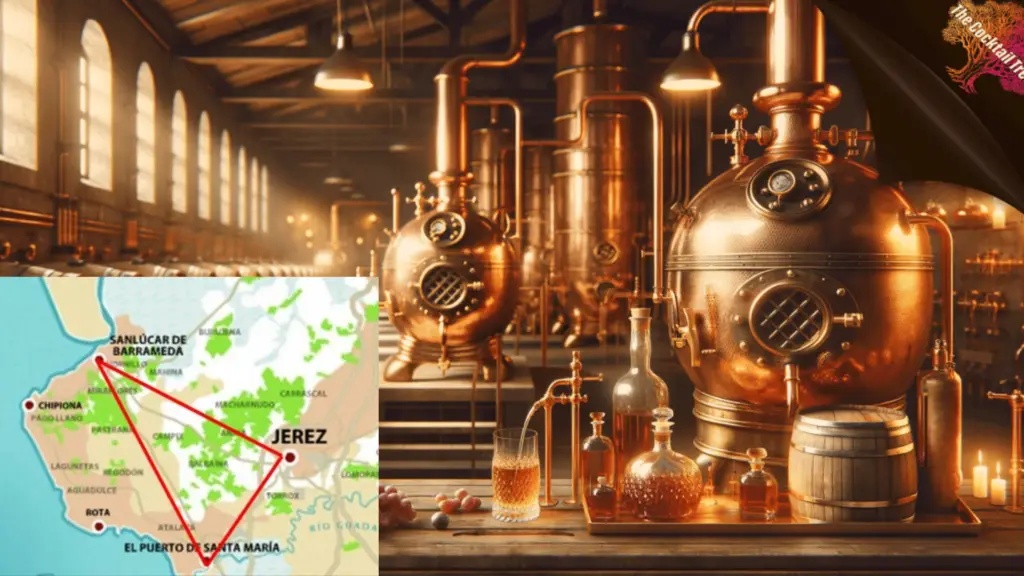
The Sherry Triangle: Three Andalusian Towns That Changed British Drinking
British drinking culture was shaped as much by foreign trade as by domestic tradition. Few categories illustrate this more clearly than sherry. While often described as a Spanish wine, sherry became culturally British long before it was regulated by Spain. This transformation occurred not across the country, but within a precise geographical zone in southern […]
February 11, 2026

Partnership
Guadeloupe Rhum Agricole: Exploring the French Caribbean’s Diverse Cane Spirit Tradition
Guadeloupe Rhum Agricole follows a broader path than the agricole tradition of neighbouring Martinique. Both territories belong to the French Caribbean and share a long relationship with fresh sugarcane juice, yet Guadeloupe rhum agricole developed within an archipelago where more than one rum production tradition has endured. Across volcanic Basse-Terre, limestone Grande-Terre and the distinctive […]
September 4, 2026

Distilleries & Producers
Roseisle Distillery: The High-Tech Speyside Giant Behind a New Generation of Whisky
In Speyside, where whisky is often associated with generations of tradition, Roseisle Distillery represents something very different. Built by Diageo near Elgin and officially opened in 2010, Roseisle was designed as a modern, large-scale malt whisky distillery, combining traditional pot-still production with advanced engineering, energy recovery and unusual flexibility in how its spirit can be […]
September 2, 2026