There was no single room in Paris where Japanese whisky defeated Scotch in one decisive afternoon. Unlike the famous 1976 wine tasting that placed California alongside France, whisky’s shift in hierarchy unfolded over several years, through blind tastings, international competitions, specialist publications, and a gradual shift in critical opinion.
For much of the 1900s, Scotch whisky remained the standard against which Japanese whisky was measured. Japan’s early producers had studied Scottish methods, adopted copper pot stills, malt whisky production, oak maturation, and the spelling of whisky without an additional letter. Their first ambition was not to reject Scotland, but to understand it.
By the early 2000s, that relationship had changed. Japanese whisky was no longer being judged only by how closely it resembled Scotch. It was being recognised as a distinct production tradition capable of challenging the established order. The result was not the fall of Scotch. It was the end of the assumption that great whisky authority belonged to Scotland alone.
Scotland and the Foundations of Japanese Whisky
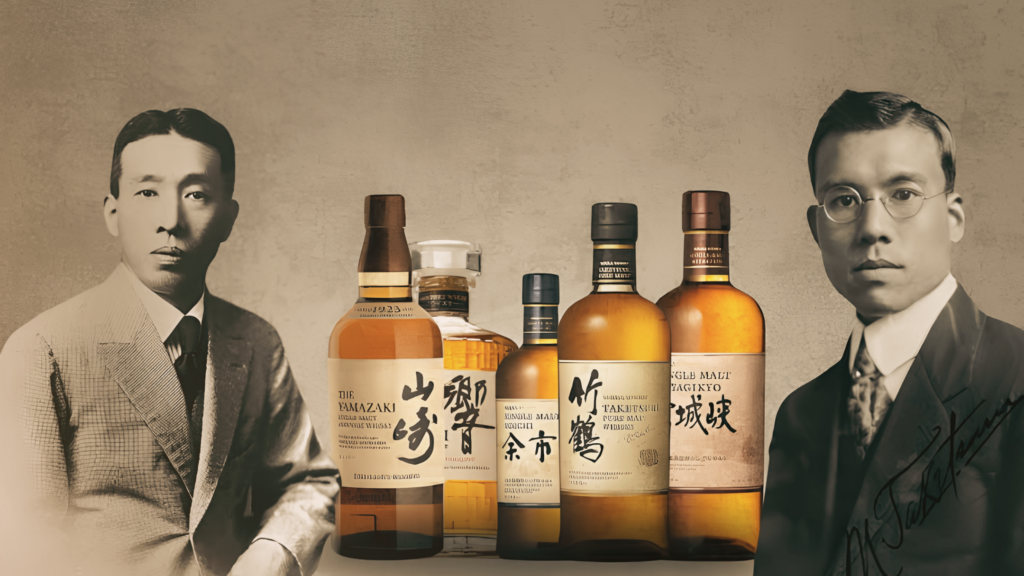
The technical foundations of Japanese whisky were built through direct contact with Scotland. Masataka Taketsuru travelled to Scotland in 1918 to study chemistry and whisky production. He attended the University of Glasgow and gained practical knowledge of malting, fermentation, distillation, and maturation before returning to Japan in 1920 with his Scottish wife, Rita Cowan. His experience became central to Shinjiro Torii’s ambition to create a serious domestic whisky industry.
Torii had established a business importing and adapting Western drinks for Japanese consumers. In 1923, he founded Yamazaki Distillery between Osaka and Kyoto, creating Japan’s first commercial malt whisky distillery. Taketsuru helped oversee its construction and early production.
The project followed Scottish principles, but Torii understood that technical accuracy alone would not guarantee success in Japan. Shirofuda, released in 1929, failed to gain the expected audience. Its reception revealed a problem that would shape the industry for decades. Whisky made in Japan could not survive merely as an imitation of a foreign model.
Two Founders and Two Philosophies
Torii and Taketsuru shared an ambition but differed in their approach. Taketsuru remained deeply committed to the heavier malt character and production methods he had encountered in Scotland. Torii placed greater emphasis on adapting whisky to Japanese tastes, food, service, and social habits. Their professional separation created the two companies that would dominate Japanese whisky for much of its history.
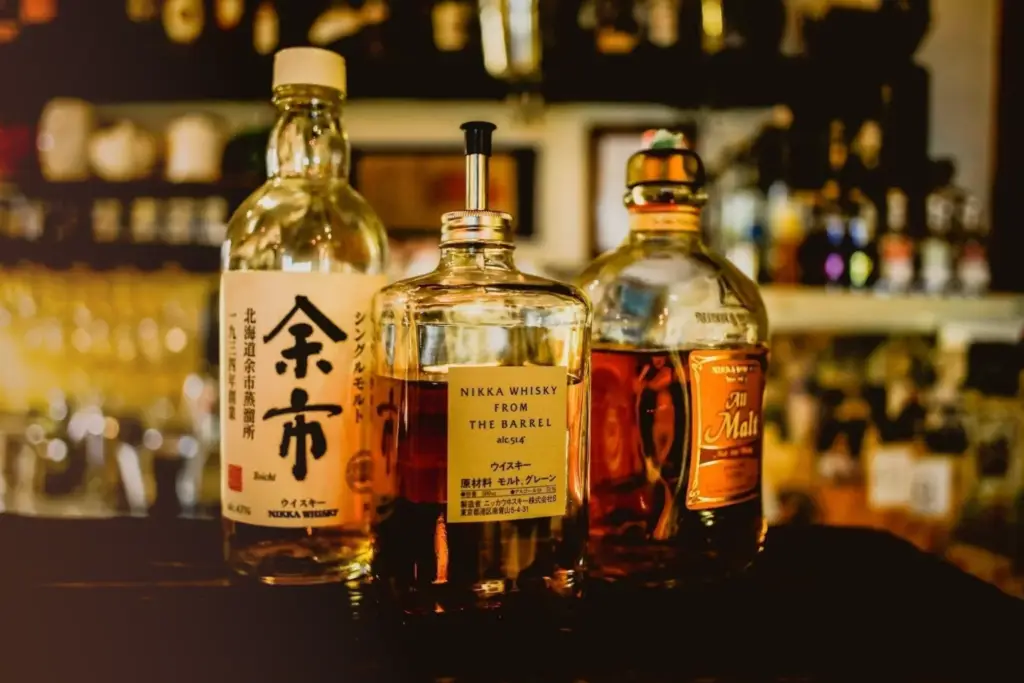
In 1934, Taketsuru left Torii’s company and established Dai Nippon Kaju in Hokkaido. The business later became Nikka Whisky. He chose Yoichi for its cool climate, access to water, and coastal conditions, which reminded him of Scotland. The company initially relied on fruit products while its whisky matured. Its first whisky appeared in 1940.
Torii’s company, later renamed Suntory, followed a broader strategy based on blending, stylistic variation, and products developed for the domestic market. Nikka pursued its own interpretation of Scottish-influenced whisky through Yoichi and, later, Miyagikyo. Both producers inherited knowledge from Scotland. Their importance came from what they did with it.
Creating Variation Inside the Company
A major structural difference separates Japanese whisky from Scotch. Scottish blenders have historically exchanged spirits across companies and distilleries. This allowed a blend to draw on malt and grain whiskies produced by several owners. Japanese companies generally did not build the same culture of exchange. Suntory and Nikka, therefore, needed to produce a wide range of spirit styles within their own operations.
Different still shapes, fermentation conditions, peat levels, distillation methods, cask types, and production sites allowed each company to create internal variation. Nikka expanded through Miyagikyo Distillery, which began production in 1969. Suntory developed Hakushu Distillery in 1973 and used Chita for grain whisky production.
This system placed unusual importance on the blender. A Japanese producer could not rely on buying the missing component from a competitor. It had to create the necessary range itself. The result was not a copy of the Scottish model. It was a different industrial structure built on Scottish technical foundations.
Recognition Arrived During Decline
Japanese whisky’s rise abroad did not begin during a period of strong domestic growth. Consumption in Japan declined for years after reaching earlier heights. Beer, shochu, wine, and changing social habits reduced demand. Production fell, distilleries closed, and companies laid down less stock. Hanyu Distillery ceased production in 2000. Its remaining casks were later preserved by Ichiro Akuto, who went on to establish Chichibu Distillery.
The decline created one of the central contradictions in the history of Japanese whisky. The industry possessed mature stocks and decades of technical knowledge, but international awareness remained limited while domestic demand weakened. The early awards did not suddenly create quality. They revealed work that had largely developed outside international attention.
The 2001 Turning Point
The most important symbolic moment came in 2001. A 10-year-old single cask whisky from Nikka’s Yoichi Distillery received Best of the Best recognition in a Whisky Magazine evaluation. Japanese whisky had been assessed alongside respected international whiskies and had emerged with the leading distinction. This was the closest the category came to a Judgment of Paris moment.
The comparison must remain careful. The 1976 wine event was a defined tasting with a clear historical result. Japanese whisky’s rise came through multiple publications, competitions, and judging systems.
Yet the cultural effect was similar. A producer from outside the traditional centre had disrupted expectations through comparative evaluation. Yoichi’s result challenged the belief that Japanese whisky was technically competent but permanently secondary. It demonstrated that international judges could evaluate it without treating Scotch as the automatic winner. The hierarchy had begun to move.
From One Result to a Pattern
One award could have been dismissed as an exception. The recognition that followed made that position difficult to maintain.
Japanese whiskies began receiving major awards across single malt, blended whisky, and blended malt categories. Yoichi 1987 was named World’s Best Single Malt at the World Whiskies Awards in 2008. Suntory’s Yamazaki, Hakushu, and Hibiki also gained repeated international recognition. These results mattered because they covered more than one producer and more than one whisky style. Japanese success was no longer confined to one exceptional cask or distillery.
Hibiki demonstrated the authority of Japanese blending. Yamazaki showed the depth of a historic malt distillery. Hakushu added another environment and production identity. Yoichi preserved Taketsuru’s Hokkaido vision, while Miyagikyo expanded Nikka’s internal range.
The awards did not prove that Japanese whisky was universally better than Scotch. No competition can establish such a permanent judgment. They proved that Scotch could no longer be treated as the only serious reference.
From Specialist Recognition to Public Attention
Specialist opinion shifted during the early 2000s, but public recognition took longer. The 2003 film Lost in Translation placed Suntory whisky inside an internationally recognisable image of Tokyo. The film did not explain production, but it carried the category into global popular culture.
A larger wave of attention arrived when Yamazaki Sherry Cask 2013 was named the leading whisky in the 2015 edition of Jim Murray’s Whisky Bible. Reports emphasised that Scotch whisky had not appeared among that edition’s highest selections. The headline was simple- Japanese whisky had beaten Scotch.
The history was more complicated. Japanese whisky had already been receiving major recognition for years, and the judgment came from one influential publication rather than a universal authority. Even so, the moment brought the argument beyond specialist circles. Japanese whisky was no longer an interesting alternative known mainly to dedicated readers. It had entered the global prestige market.
Success Created a Stock Crisis
International demand arrived after years of reduced production. Whisky cannot respond quickly to sudden growth. Spirit distilled today must mature before it can replace older stocks. Japanese producers had reduced output during the domestic decline, leaving limited inventories when global interest increased.
Age-stated releases became difficult to maintain. Some disappeared, while producers introduced more expressions without age declarations and expanded production capacity. Scarcity became part of the category’s modern identity.
The shortage also exposed another problem. For much of its history, the term Japanese whisky lacked a sufficiently precise industry definition. Imported spirits could be included in products presented in ways that suggested a fully Japanese origin. International success had made the name valuable before the category had fully protected its meaning.
Defining Japanese Whisky
In 2021, the Japan Spirits and Liqueurs Makers Association introduced voluntary standards governing the use of the term Japanese whisky. The transition period ended in 2024. Under the standards, qualifying whisky must be fermented, distilled, matured, and bottled in Japan. Japanese water must be used, malted grain must be among the raw materials, and maturation must take place in wooden casks in Japan for at least three years.
These are industry standards rather than a national appellation law equivalent to the legal framework protecting Scotch whisky. Their importance is nevertheless substantial. Japanese whisky had begun by borrowing a recognised production language. A century later, the industry was defining the conditions under which its own name could be used. The movement from imitation to definition marked the completion of a historical cycle.
Challenging Scotland Without Rejecting It
Japanese whisky’s rise is sometimes written as a contest in which one country defeated another. That interpretation is too simple. Scotland supplied the knowledge that helped establish Japanese whisky. Taketsuru’s education, pot distillation, malt production, peat, oak maturation, and the spelling of whisky all reflect that connection. Japan’s achievement was not the rejection of Scottish practice. It was the adaptation of those methods to different climates, companies, casks, water sources, blending systems, and consumer traditions.
Scotch remains one of the world’s most influential and legally protected spirit categories. Its history, scale, regional diversity, and international importance were not diminished by Japanese success. What changed was exclusivity. Japanese whisky demonstrated that authority could be learned, adapted, and eventually made independent of its source.
The Paris Judgment of Japanese whisky did not happen once. It unfolded through Taketsuru’s journey to Scotland, the building of Yamazaki, the establishment of Yoichi, the internal production systems created by Suntory and Nikka, the decline of domestic demand, and the international recognition that began shifting opinion in 2001. Each stage moved Japanese whisky further from imitation.
By the time international judges recognised its quality, Japanese producers had already spent decades developing their own production logic. The awards made that work visible. They did not create it. Japanese whisky did not end Scotch dominance by replacing Scotland. It ended the idea that Scotland alone could define serious whisky. That was the real judgment.

Distillery
Nikka Distillery, renowned for revolutionizing Japanese whisky, embodies the spirit of craftsmanship and dedication to quality. Established by…
Distillery
Hanyu Distillery, renowned in the world of Japanese whisky, has solidified its position as a sought-after brand, particularly…
Distillery
Hakushu Distillery, often referred to as the 'mountain forest distillery', is the second malt whisky distillery owned by…
Distillery
The Suntory Yamazaki Distillery, Japan's first and oldest malt whisky distillery, was established in 1923 by Shinjiro Torii,…
Distillery
Chichibu Malt Whisky Distillery
Chichibu Malt Whisky Distillery is a celebrated craft distillery located in Japan, known for its commitment to quality…
Distillery
Miyagikyo Distillery, nestled in the pristine natural beauty of northern Japan, is a testament to the artistry and…
Video
From Scotland to Japan: How Masataka Taketsuru Built a New Whisky Tradition
For centuries, Japan’s brewing heritage has centred on sake. Yet one man’s determination would change the country’s relationship with distilled spirits forever. Masataka Taketsuru did not simply introduce whisky to Japan. He studied its origins, understood its principles, and reimagined them for a completely different landscape. Learning Whisky at Its Source Born into a family […]
June 29, 2026
Barlist
Hakushu Distillery: The Decision to Distil Inside a Forest Rather Than a City
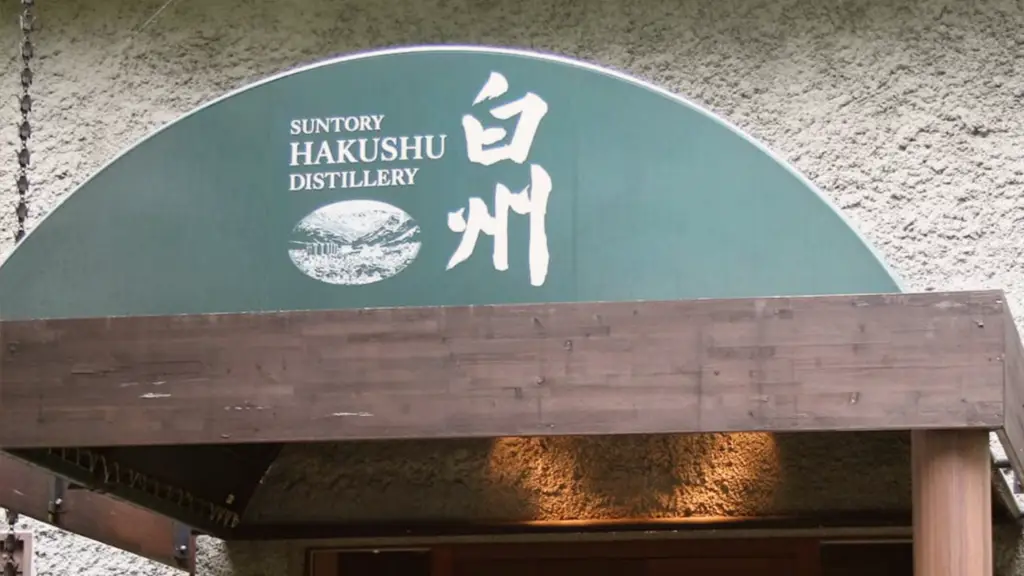
The Southern Japanese Alps do not suggest whisky at first glance. The air is thinner, filtered through dense forest, and the terrain isolates rather than connects. Yet in 1973, Hakushu Distillery was established here under the direction of Keizo Saji, marking a decisive departure from the logic that had shaped earlier whisky production in Japan. […]
April 23, 2026

Tips and Tricks
Why Certain Distilleries Invite Visitors and Others Remain Guarded
A visitor standing beneath the curved timber roof of The Macallan distillery in Speyside encounters a spectacle of transparency. Glass walls reveal stills. Interactive exhibits explain oak sourcing. The building itself, opened in 2018, was designed as an architectural statement of modern whisky confidence. Yet only portions of production are accessible. Beyond certain corridors, access […]
March 23, 2026