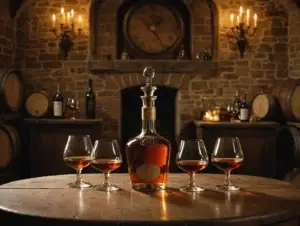
Among the world’s great spirits, Scotch Whisky and Bourbon Whisky stand as two expressions of culture, geography, and time. Both are made from grain, aged in oak, and celebrated for their depth, yet each reflects the land and traditions from which it was born. Exploring the Scotch Whisky Bourbon difference is not about comparison but appreciation – understanding how two distinct worlds of craftsmanship evolved into global symbols of excellence.
Origins Shaped by History and Place
The story of Scotch Whisky begins in Scotland, where monks first recorded distillation as early as 1494 in the Exchequer Rolls. The term “uisge beatha,” meaning “water of life,” described a spirit distilled from malted barley and aged in wooden casks. Over centuries, Scottish distillers refined their methods, using copper pot stills and natural spring water to create a spirit defined by regional character.
Bourbon Whisky, by contrast, emerged in the late eighteenth century in what is now Kentucky, United States. Settlers from Scotland and Ireland brought distilling knowledge to the American frontier, adapting recipes to local ingredients. The abundance of corn and new American oak barrels gave rise to a sweeter, fuller-bodied style that reflected the land’s bounty and the spirit of independence.
The Ingredients That Define Character
The foundation of the Scotch Whisky Bourbon difference begins with grain. Scotch Whisky relies primarily on malted barley, often dried over peat smoke in regions such as Islay, giving it its signature earthy aroma. Other styles, such as grain whisky, blend barley with wheat or corn to create balance.
Bourbon Whisky, on the other hand, must legally contain at least 51 percent corn in its mash bill. The remainder usually includes rye, malted barley, or wheat, contributing to variations in flavour – from the spiciness of high-rye bourbons to the softness of wheated ones. This high corn content gives Bourbon its trademark sweetness and rich, honeyed texture, setting it apart from the drier, malt-driven Scotch.
Distillation and Production Techniques
Production methods further highlight the distinction between Scotch Whisky and Bourbon Whisky. Scotch is typically distilled twice in copper pot stills, a process that preserves complexity and texture. Some regions, such as Lowland Scotland, prefer triple distillation for lighter styles. After distillation, Scotch must mature in oak casks for a minimum of three years, often in barrels previously used for Bourbon, sherry, or wine, which add layers of flavor.
In contrast, Bourbon Whisky is distilled at a lower proof to retain natural flavor and aged exclusively in new charred American oak barrels. The charred wood caramelizes sugars within the oak, creating notes of vanilla, spice, and toffee. Maturation occurs more rapidly due to Kentucky’s warm climate, allowing younger Bourbons to develop character faster than Scotch aged in cooler conditions.
Flavor and Aroma
The flavor difference between Scotch Whisky and Bourbon Whisky is both pronounced and poetic. Scotch often expresses malt, smoke, and mineral complexity, with profiles varying by region – fruity and floral in Speyside, maritime and peaty in Islay, robust and nutty in the Highlands.
Bourbon, on the other hand, leans toward sweetness and richness. Expect aromas of caramel, vanilla, oak, and brown sugar, shaped by the influence of corn and charred wood. Where Scotch speaks with subtlety and nuance, Bourbon resonates with warmth and fullness. Each reflects not just its ingredients but the rhythm of its landscape.
Culture and Identity
Scotch Whisky carries the legacy of centuries of craft regulated by the Scotch Whisky Association, representing tradition and discipline. Every bottle connects to regional pride and craftsmanship protected by law since 1909. Bourbon Whisky, recognized by the U.S. Congress in 1964 as America’s Native Spirit, embodies innovation and accessibility – a reflection of open landscapes and freedom of expression.
One evokes misty highlands and maritime winds, the other the rolling bluegrass hills of Kentucky. Both spirits celebrate authenticity and the passage of time, yet they speak in distinct accents of flavor and feeling.
Where Barlist Meets the Spirit of Distinction
For the Barlist community, understanding the Scotch Whisky Bourbon difference means exploring more than technique. It is a study of heritage, geography, and philosophy. Scotch honours patience and place, evolving slowly in the calm of northern warehouses. Bourbon celebrates energy and transformation, shaped by heat, corn, and American oak.
To appreciate both is to travel through time – from the stills of Speyside to the warehouses of Kentucky. Each glass reveals not competition but kinship, a shared devotion to the art of distilling and the craft of storytelling through spirit.