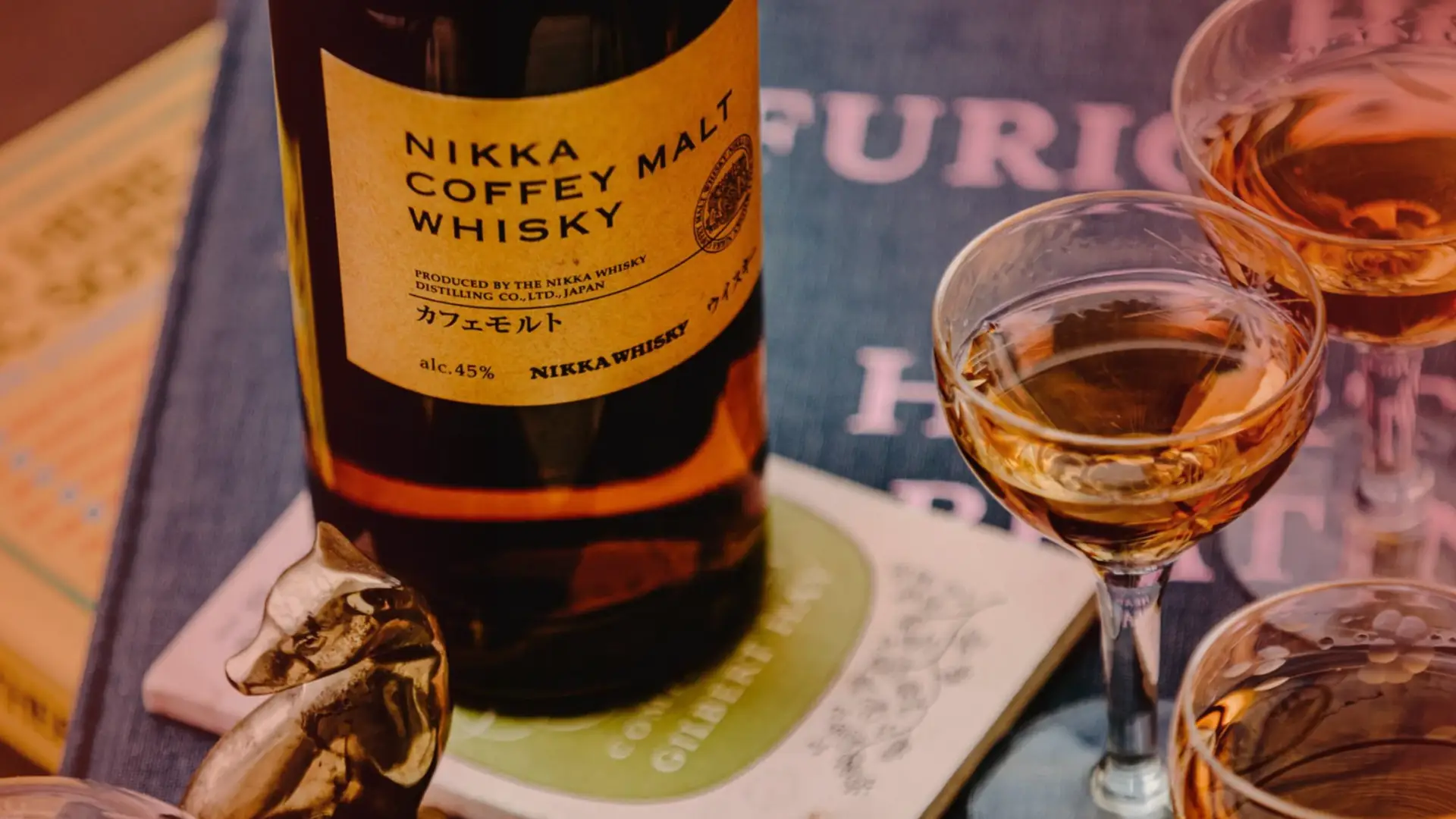
In the wooded valley outside Sendai, Miyagikyo Distillery was founded in 1969 as the softer counterpoint to Yoichi Distillery, established in 1934. Both distilleries reflect the vision of Masataka Taketsuru, who studied distillation in Scotland in 1918 before shaping what would become Nikka Whisky. His philosophy was grounded in Scottish discipline but guided by adaptation rather than imitation.
Decades later, that philosophy would lead to one of Japanese whisky’s most unconventional releases.
When a Coffey Still Meant Something Different
Nikka acquired traditional Coffey column stills, based on the 1830 invention of Aeneas Coffey. Historically, these stills were used to produce grain whisky efficiently and continuously, supplying blends across Scotland at houses such as The Glenlivet Distillery and Lagavulin Distillery, where pot stills define single malt character.
Column stills were associated with lighter spirits. Pot stills preserved weight and aromatic intensity.
Miyagikyo questioned that divide
Instead of corn or wheat, Nikka ran 100 percent malted barley through the Coffey still. Technically, this meant the whisky could not be labeled single malt, as it was not distilled in pot stills. Yet the raw material was identical to that used by single malt producers worldwide.
The Rise of Nikka Coffey Malt
The spirit that emerged carried layered notes of vanilla, orchard fruit, and gentle spice, delivered with a rounded, almost creamy texture distinct from conventional malt whisky structure. After oak maturation, it was released as Nikka Coffey Malt Whisky.
Alongside Nikka Coffey Grain Whisky and blended benchmarks such as Hibiki Japanese Harmony from Suntory, Coffey Malt demonstrated the range emerging within modern Japanese whisky. By 2017, it had received international awards, praised for merging malt richness with column-distilled elegance.
Nikka Coffey Malt remains a reminder that innovation does not discard tradition. It studies it closely, then asks whether its limits are real. At Barlist, we view this whisky not simply as a category anomaly, but as proof that heritage evolves when curiosity meets craft.


Distillery
Nikka Distillery, renowned for revolutionizing Japanese whisky, embodies the spirit of craftsmanship and dedication to quality. Established by…
Spirit
Hibiki Japanese Harmony Whisky
Hibiki Japanese Harmony Whisky represents the pinnacle of Japanese craftsmanship, encapsulating the distillery's philosophy of ‘Wa,’ which means…

Spirit
Nikka Coffey Malt Whisky represents a unique expression of whisky craftsmanship originating from Japan’s renowned Nikka Whisky Distilling…
Spirit
Nikka Coffey Grain Whisky is a distinctive expression in the world of Japanese whisky, crafted with a unique…
Video
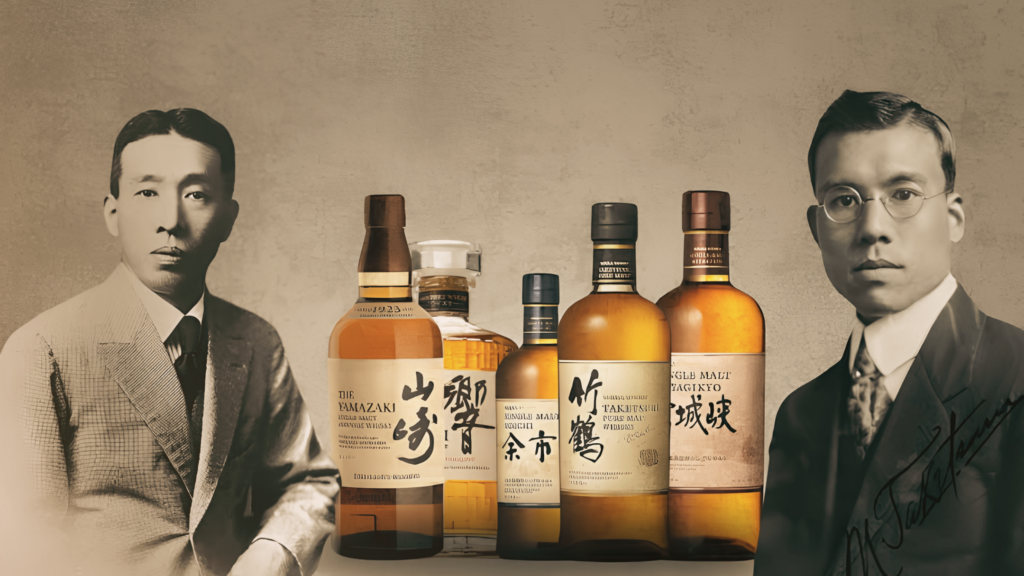
From Scotland to Japan: How Masataka Taketsuru Built a New Whisky Tradition
For centuries, Japan’s brewing heritage has centred on sake. Yet one man’s determination would change the country’s relationship with distilled spirits forever. Masataka Taketsuru did not simply introduce whisky to Japan. He studied its origins, understood its principles, and reimagined them for a completely different landscape. Learning Whisky at Its Source Born into a family […]
June 29, 2026
History
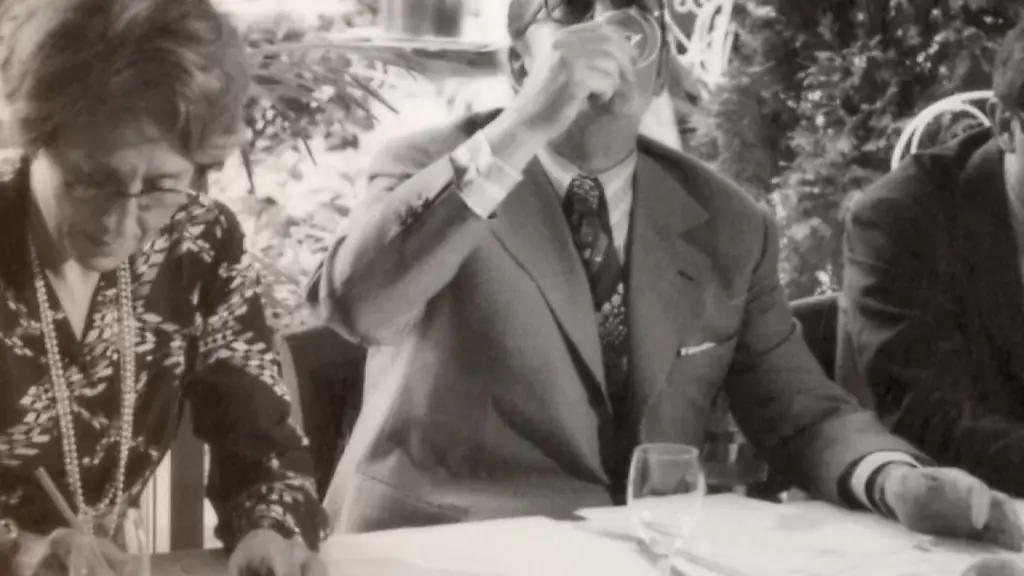
The Paris Judgement of Spirits: How Japanese Whisky Challenged Scotch Dominance
There was no single room in Paris where Japanese whisky defeated Scotch in one decisive afternoon. Unlike the famous 1976 wine tasting that placed California alongside France, whisky’s shift in hierarchy unfolded over several years, through blind tastings, international competitions, specialist publications, and a gradual shift in critical opinion. For much of the 1900s, Scotch whisky […]
June 11, 2026
Distilleries & Producers
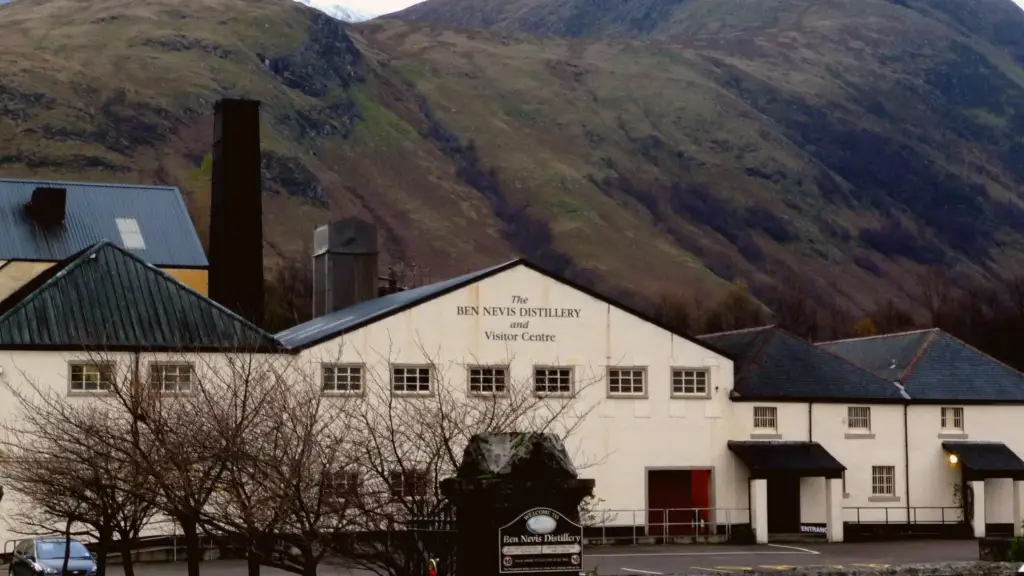
The Ben Nevis Distillery: From Long John MacDonald to Modern Ownership
At the foot of Britain’s highest mountain, Ben Nevis Distillery has lived a history defined less by continuity than by interruption. While many Highland distilleries trace a steady arc from founding to present day, Ben Nevis has moved in cycles of ambition, collapse, silence, and revival. Its story reveals how geography, capital, and global demand […]
February 24, 2026