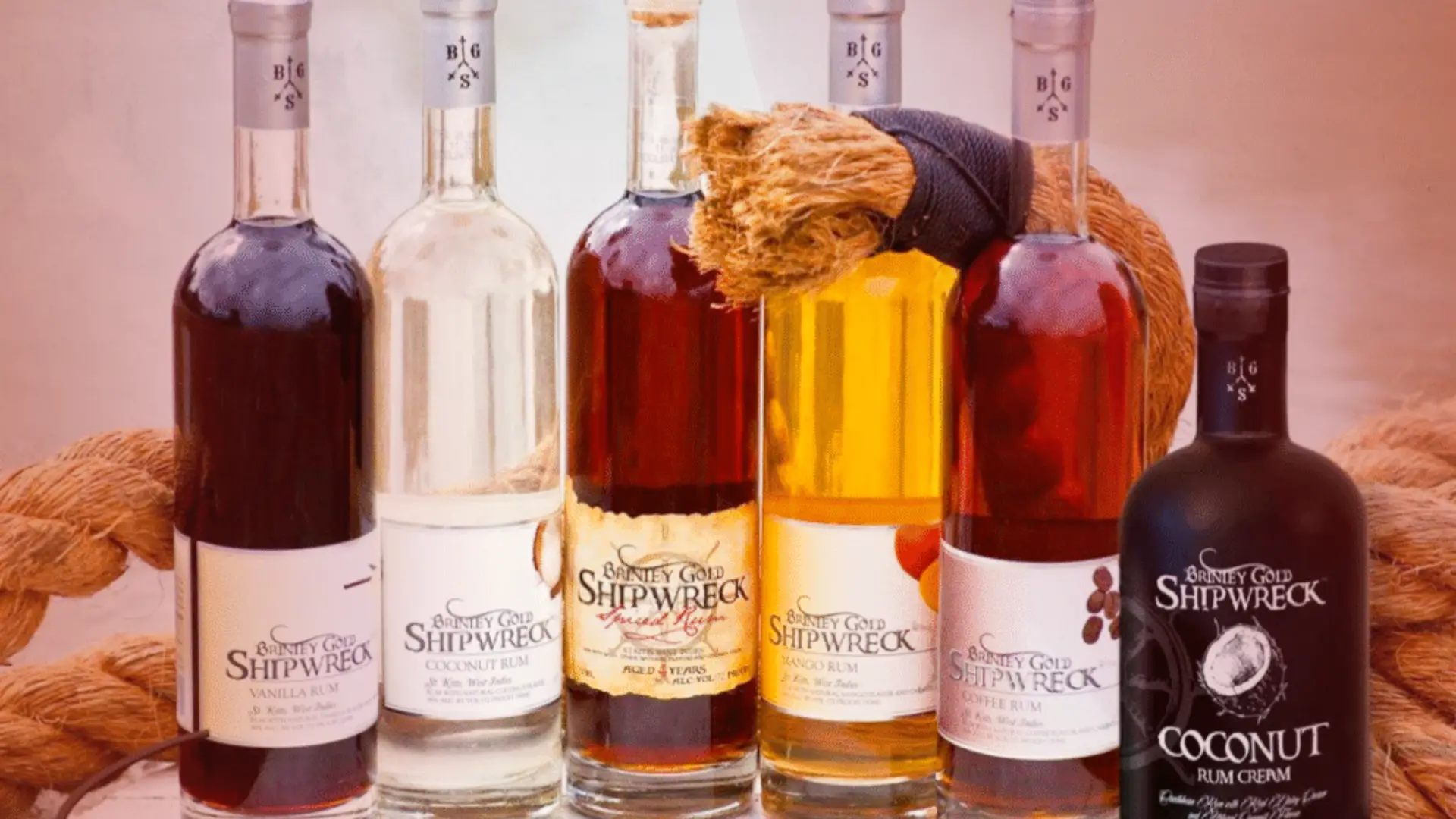
For more than three centuries, rum moved across the Atlantic in wooden hulls bound for Europe and the Americas. Barrels left the Caribbean from islands such as Jamaica and Barbados, produced at estates like Mount Gay Distilleries, founded in 1703, and later at houses such as Appleton Estate, established in 1749. Many of those shipments never arrived. Storms, naval conflict, and piracy sent vessels and their cargo to the ocean floor.
There, sometimes 10 meters down, sometimes far deeper, sealed bottles and oak casks remained undisturbed for decades, occasionally centuries.
Aging Beneath Pressure- Shipwreck Rum
Unlike tropical warehouse maturation in the Caribbean, the seabed imposed a different rhythm. Cold temperatures slowed chemical reactions. Increased pressure helped maintain cork integrity. Seawater, rich in minerals, moved subtly around wood and glass. While fully sealed bottles remained protected from direct dilution, trace interactions around closures and porous oak altered the spirit’s profile over time.
By the 1970s, marine archaeology began recovering shipwreck cargoes across the Atlantic. Divers discovered intact bottles, their contents darker and often marked by a faint saline character. These were not standard maturation environments like those at Rhum Clément in Martinique or long-aged expressions from Foursquare Distillery. The sea had imposed its own conditions.
Liquid History Resurfaced
When opened under controlled conditions, some recovered rums revealed intensified oak integration, muted volatility, and subtle briny undertones layered over dried fruit and spice. The ocean had not replaced traditional aging, but it had influenced it. Shipwrecks had become unintended cellars. Cargo had turned into an archival spirit.
For modern producers experimenting with controlled underwater maturation, these discoveries offered inspiration, not replication. The depth, pressure, and time beneath the Atlantic cannot be precisely recreated in a warehouse.
At Barlist, stories like this remind us that rum is inseparable from maritime history. Trade routes built it. Empires taxed it. Storms claimed it. And in rare cases, the ocean finished it. What resurfaces is more than spirit. It is a preserved fragment of global exchange, carried forward by salt, oak, and time. Discover what the depths preserve.

Distillery
Foursquare Rum Distillery, nestled in the lush southern countryside of Saint Philip, Barbados, is a bastion of rum…
Distillery
Rhum Clément stands as a beacon of craftsmanship in the world of spirits, particularly celebrated for its exceptional…
Distillery
Appleton Estate, crafted in the heart of Jamaica, represents the pinnacle of authentic Jamaican rum production. Renowned for…
Distillery
Mount Gay Distillery, renowned as the oldest running rum distillery in the world, has been the cornerstone of…
Spirit
Brinley Gold Shipwreck Vanilla Rum
Brinley Gold Shipwreck Vanilla Rum is an exceptional expression of flavored rum, characterized by its meticulous craftsmanship and…
Spirit
Appleton Estate 21 YO Jamaica Rum
Appleton Estate 21 Year Old Jamaica Rum is a premium expression known for its rich, complex flavor profile…
Distilleries & Producers
Women in Spirits History: 7 Women Who Changed the World of Spirits
Spirits’ history is often framed as a lineage of male founders and master distillers. This narrative obscures a more accurate reality. Across categories and centuries, women shaped spirits through ownership, legal stewardship, technical decision-making, and long-term preservation of production systems. Their influence was rarely performative. It was structural. In moments of instability, women often became […]
March 10, 2026
History
Cachaça and the Spirit That Refused to Be Silenced
Long before it became the foundation of the Caipirinha, Cachaça was born under oppression. In sixteenth-century Brazil, enslaved Africans working on Portuguese sugar plantations observed something their captors overlooked. The foam skimmed from boiling sugarcane juice fermented naturally. Distilled quietly and shared in secrecy, it became one of the earliest forms of what we now […]
March 2, 2026
Interviews & Insights
Temperature Fluctuation in Tropical Aging: A Caribbean Rum Expert Explains
In the Caribbean, maturation is not a quiet affair. Barrels expand beneath midday heat, contract in the relative cool of night, and breathe salt-tinged air drawn in from surrounding coastlines. For a master blender in Barbados or Jamaica, temperature fluctuation in tropical aging is not an incidental condition but a structural force. It shapes extraction, […]
February 25, 2026