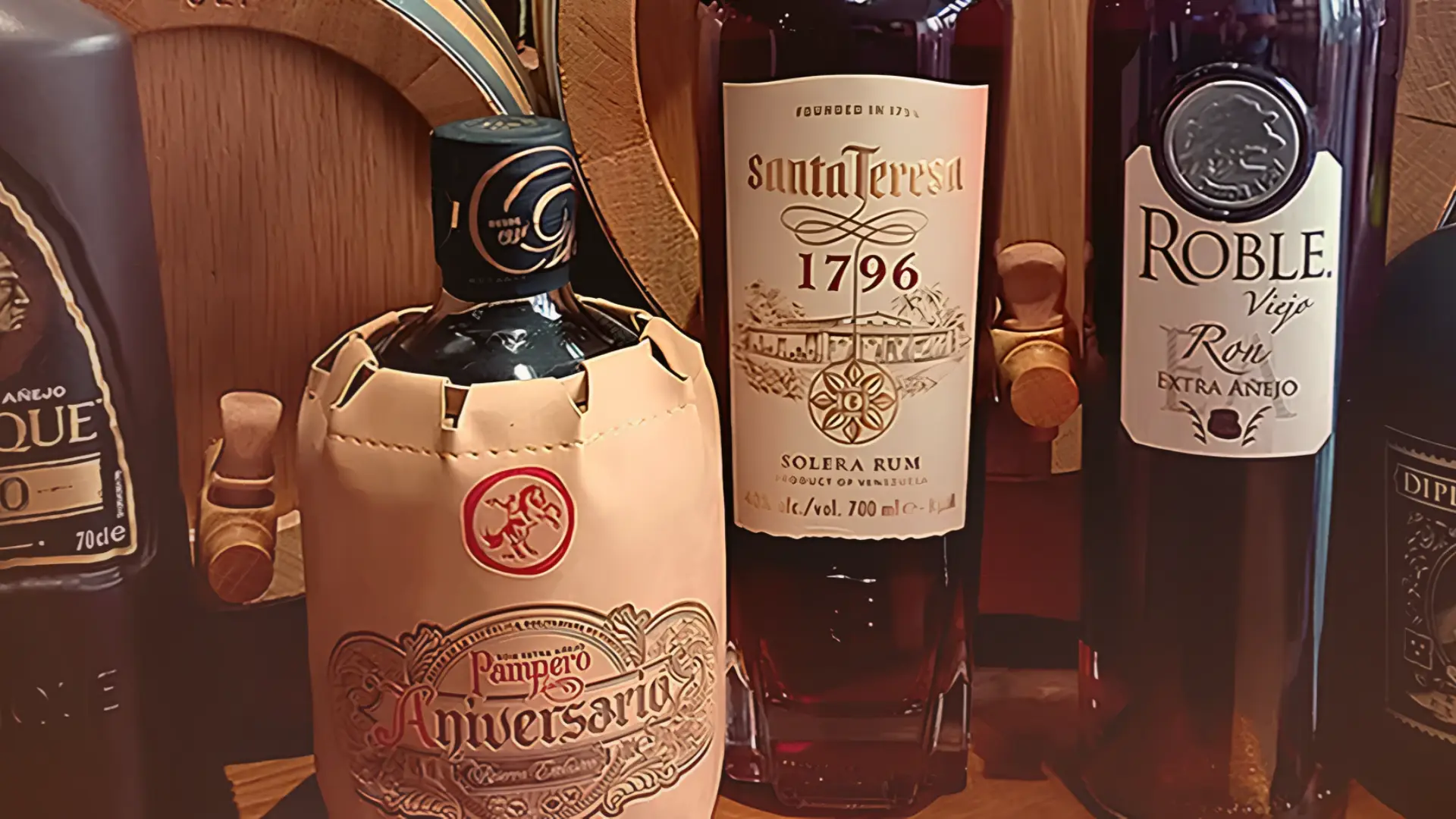
Venezuela’s Rum identity grew from sugarcane, climate, trade, and the long conversion of cane byproducts into aged spirit. The country’s geography offered heat, sunlight, fertile cane areas, and a tropical maturation environment that gave rum a different economic and cultural role from wine spirits, grain spirits, or orchard spirits.
Ron de Venezuela became legally important because Venezuelan Rum was not only a style made by individual companies. It became a national production identity that the state chose to protect through a Denominación de Origen. The protected name links rum to Venezuelan territory, cane-based raw material, ageing expectations, regulatory control, and a collective reputation built over generations.
The category should not be described as a European AOC. Its legal vocabulary belongs to Venezuela. Ron de Venezuela is a Denominación de Origen Controlada recognised by the Servicio Autónomo de la Propiedad Intelectual, with its control and promotion system connected to Fonpronven and the Consejo Regulador.
Cane Agriculture and the Origins of Venezuelan Rum
Sugarcane became part of Venezuela’s agricultural economy during the colonial period. Over time, cane cultivation, sugar production, molasses, distillation, and ageing formed a linked system. Rum emerged from this chain because cane could generate fermentable material and because aged spirit could carry value beyond the immediate agricultural cycle.
The official declaration connects Ron de Venezuela with a long tradition of sugarcane cultivation and systematic rum production. It identifies human skill and production continuity as part of the justification for legal recognition. That is important because the Denominación de Origen does not protect a newly invented category. It protects a national tradition that had already developed a reputation.
Venezuelan rum identity is also shaped by climate. Heat, sunlight, and tropical ageing conditions influence maturation and make time in wood behave differently from cooler climates. The protected system gives legal structure to this relationship between cane, climate, ageing, and reputation.
A Denomination of Origin Granted in 2003
The legal turning point came in 2003. SAPI declared Ron de Venezuela a Denominación de Origen of the Venezuelan State through Resolution 798, published in Boletín de la Propiedad Industrial 459 on November 4, 2003.
The declaration states that the name Ron de Venezuela may be applied to rum within the exact concept of rum established by Venezuelan COVENIN standards and the additional rules established through the control body. It also states that use of the denomination requires authorisation.
This matters for the project because Ron de Venezuela should not be treated as a loose national style. It is a legally protected origin name. The state owns the denomination, and producers must comply with the rules and authorisation process to use it.
The protection was updated in 2019. SAPI’s current listing identifies Ron de Venezuela as a protected indication, granted in 2003 and renewed in 2019. This confirms that the name remains part of Venezuela’s protected origin framework.
A National Territory With Defined Production Areas
Ron de Venezuela is national in identity, but the legal declaration defines specific areas connected with the product and its raw material.
The original 2003 declaration identifies a broad delimited territory including central, western and eastern states associated with production, extraction, or elaboration. The 2019 recognition confirms areas including Miranda, Aragua, Carabobo, Cojedes, Lara, Yaracuy, Barinas, Portuguesa, Táchira, Trujillo, Sucre, and Monagas.
SAPI’s current geographical indications page lists the delimited geographic area as Aragua, Lara, Miranda, Monagas, Sucre, Portuguesa, and Yaracuy. Because official public summaries and original legal documents show some differences in presentation, the safest editorial approach is to explain that the denomination is nationally held and tied to Venezuelan delimited production zones as defined by SAPI and the governing resolutions.
This avoids a common error. Ron de Venezuela is not a single valley appellation. It is a Venezuelan Denominación de Origen built around a defined national production system and authorised areas.
Molasses, Cane, and the Venezuelan Rum Base
The official declaration identifies molasses from sugarcane as a key raw material in the Ron de Venezuela system. This places the category within the wider world of cane spirits, but not in the same legal structure as agricole rum systems based only on fresh cane juice.
Molasses matters because it ties rum production to the sugar industry. Cane is cultivated, processed, and transformed, leaving a fermentable material that can become the basis for rum. In Venezuela, that relationship between cane agriculture, industrial sugar production, distillation, and ageing became part of the protected identity.
The Denominación de Origen protects more than a raw material. It protects a chain of production and reputation. The spirit must belong to the Venezuelan system, not simply use the word Venezuela as a label image.
Ageing as the Core of Legal Identity
One of the most important features of Venezuelan rum law is ageing. Ron de Venezuela is associated with a minimum ageing requirement, and the protected category is strongly defined by the expectation that rum is aged before it carries the name.
The minimum two year aging rule is central to how Venezuelan rum distinguishes itself from many other rum traditions. It gives the category a baseline of maturity and ensures that the protected identity is connected to time in wood rather than only to distillation.
Ageing in a tropical climate is not neutral. Heat and humidity accelerate interaction between spirit, wood, oxygen, and evaporation. This makes Venezuelan rum’s legal ageing requirement especially important because the maturation environment is part of the category’s character.
For this article, the key editorial point is not to describe drinking style or flavour preference. The point is that ageing functions as a legal boundary. It helps turn cane spirit into a regulated Venezuelan origin product.
Control, Authorisation, and Fonpronven
The 2019 SAPI resolution confirms the role of the Consejo Regulador and Fonpronven in the modern control structure. Fonpronven is identified as the civil association connected to the promotion and control of the denomination, and the Consejo Regulador verifies compliance for use authorisations.
This institutional framework is essential. A protected origin name cannot depend only on reputation. It requires verification, authorisation, and a body responsible for protecting the denomination over time.
The SAPI resolution confirms that the Venezuelan State remains the holder of the denomination and that use depends on authorisation through the proper process. The Consejo Regulador provides the technical and legal filter before authorisation is granted.
This creates a structure similar in purpose to other protected origin systems, even though the vocabulary and legal foundation are Venezuelan.
Maestros Roneros and Technical Continuity
The 2019 renewal document identifies technical roles within the Consejo Regulador, including maestros roneros. Their presence in the control structure is important because it shows that Ron de Venezuela is not only a legal certificate. It is also a production culture with recognised human expertise.
The maestro ronero tradition connects raw material, distillation, ageing, selection, and blending knowledge. In an appellation context, the important point is not brand personality. It is continuity of technical judgement within a regulated system.
Venezuelan rum became protected because law, industry, and craft knowledge converged around a shared national identity. The maestro ronero is part of that structure because the category depends on maintaining quality and consistency across authorised producers.
A Protected Name in a Wider Rum World
Rum is one of the world’s most diverse spirit categories. It can be made from molasses, cane syrup, or fresh cane juice, and different countries regulate it in different ways. Some systems emphasise raw material. Others emphasise distillation method, ageing, geographic origin, or national standards.
Ron de Venezuela belongs to this wider rum world, but its legal identity is specific. It is a Venezuelan Denominación de Origen Controlada, not a generic Latin American rum style and not a French AOC.
This distinction matters because rum writing often uses broad language that weakens legal meaning. A protected origin article must name the system correctly. Ron de Venezuela is protected through Venezuelan industrial property law, SAPI recognition, a delimited production framework, and a control body.
A National Cane Spirit Written Into Law
Ron de Venezuela shows how a national rum tradition can become a protected production system. Its identity comes from sugarcane, molasses, Venezuelan territory, tropical ageing, legal recognition, and institutional control.
The denomination protects the relationship between origin and reputation. It prevents the name from becoming a vague country reference and gives the category a legal structure that producers must respect.
This is why Ron de Venezuela belongs in an appellation series. It shows that protected origin systems are not limited to European wine spirits. They can also emerge from cane, climate, industry, and national identity when a country decides that a spirit name carries cultural and economic value worth protecting.

Renowned freelance spirits consultant, award-winning author, and international spirits judge, recognized globally as a leading authority on spirits selection, historical distillates, and market innovation.


Spirit
Rum Nation Venezuela XO 25th Anniversary Edition Rum
Rum Nation Venezuela XO 25th Anniversary Edition is a prestigious rum that pays homage to the 25-year journey…

Spirit
Bristol Classic Venezuela 12 YO Rum
Bristol Classic Venezuela 12 YO Rum is a remarkable expression that showcases the exceptional craftsmanship synonymous with Venezuelan…

Spirit
C.A.D.C. SA Distillery 16 Year Old Venezuelan Rum is a rare expression of craftsmanship that showcases the unique…
Spirit
The Nectar of the Daily Drams 16 YO Venezuelan Rum
The Nectar of the Daily Drams 16 YO Venezuelan Rum is a distinguished spirit celebrated for its exceptional…
Spirit
Ron Roble Viejo Maestro 6 YO Venezuelan Rum
Ron Roble Viejo Maestro 6 yo Anejo is a premium rum that embodies the soul and passion of…
Partnership
Jamaica Rum and the Sugar Estate Landscape Behind a Protected GI
Jamaica’s Rum story begins with sugar estates, limestone water, heavy fermentations, coastal trade, and a landscape where cane became both wealth and memory. The island’s reputation was not made by one house or one parish. It grew across estates, distilleries, ports, and rural communities where sugar production and rum making became inseparable from the country’s […]
September 13, 2026

Partnership

From Porto da Cruz to Calheta: The Distilleries That Define Madeiran Rum
Madeiran rum exists within a narrow technical and geographic framework that resists abstraction. Unlike Caribbean or Latin American rum traditions shaped by scale and export, rum production on Madeira remains tied to fresh sugarcane juice, seasonal distillation, and localised milling. From the northern coast at Porto da Cruz to the southern town of Calheta, a […]
September 9, 2026
Partnership
Technical Divide in Madeiran Rum Production: Pot Stills, Column Stills Distillation
Madeiran Rum production has always been defined less by volume than by method. Unlike Caribbean regions shaped by plantation scale and colonial export markets, Madeira developed a rum culture rooted in small agricultural units, seasonal cane harvests, and legally enforced technical choices. The island’s modern rum identity is structured around a clear technical divide between […]
September 2, 2026