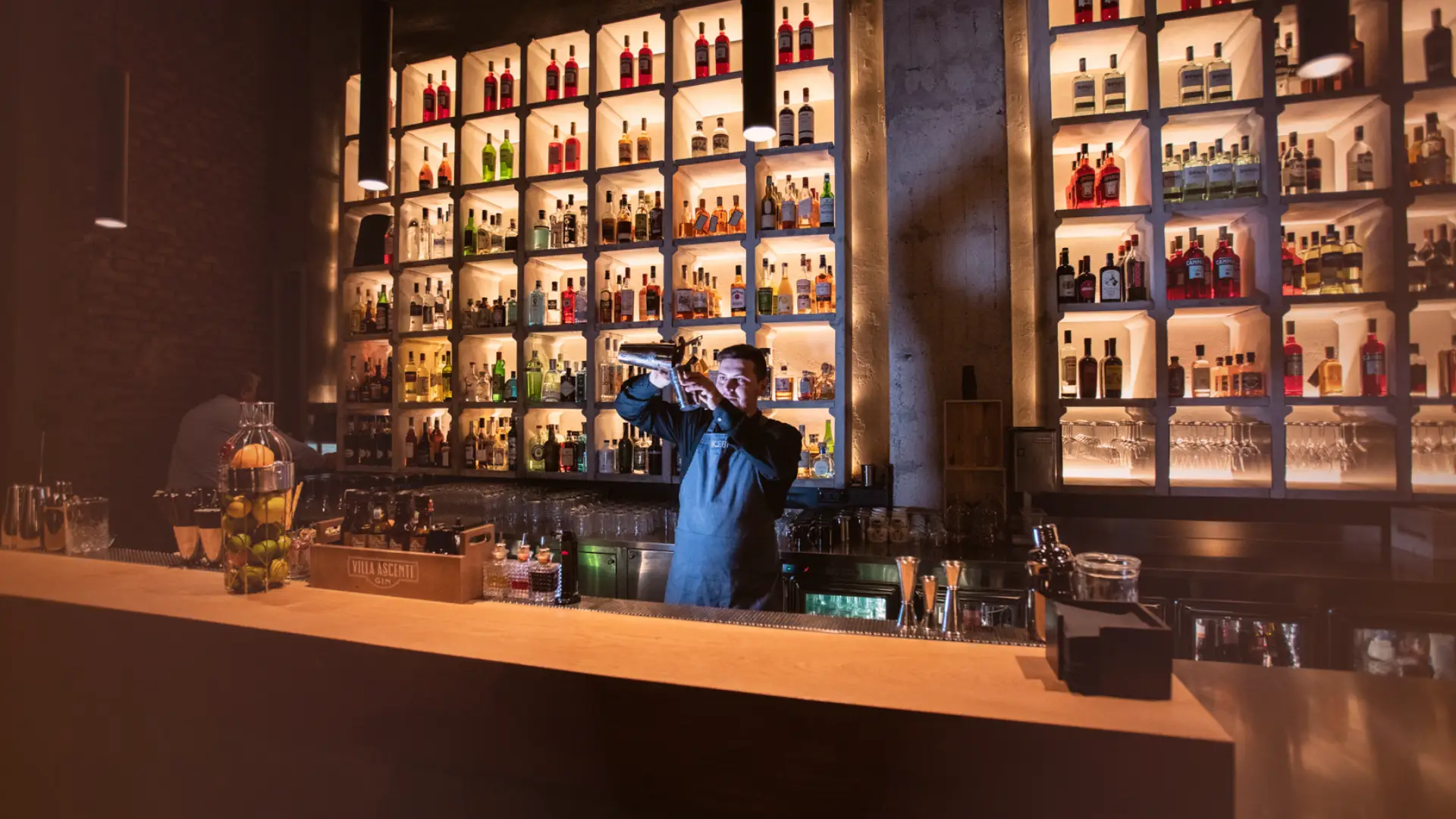
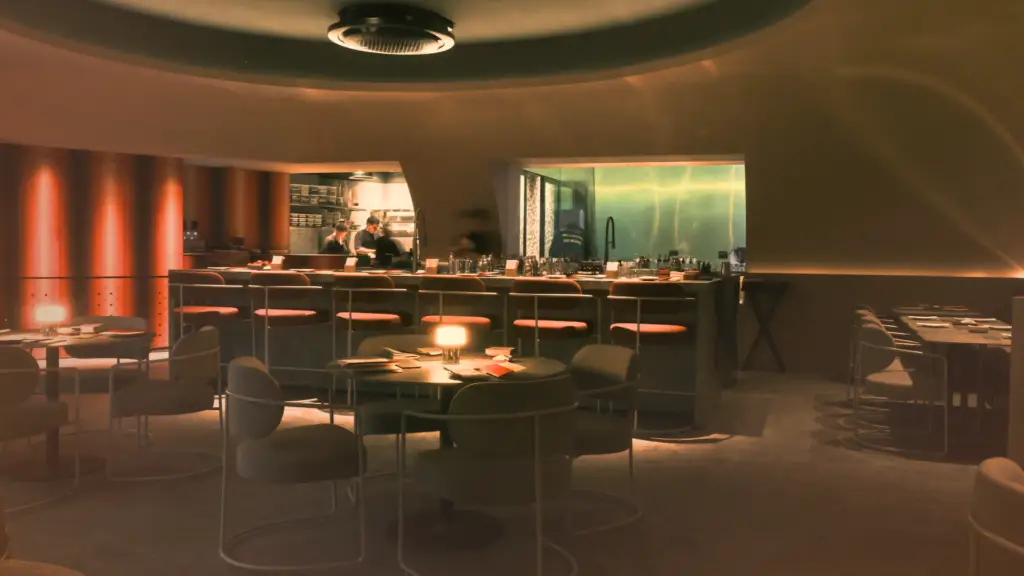
Space is the first thing that defines Moebius Milano. Not just size, but how it is used. Set within an expansive industrial interior in Milan, the venue unfolds as a layered environment where bar, dining room, and social space operate simultaneously. It does not follow the familiar rhythm of a cocktail bar. Instead, it moves with the logic of a larger system, where scale, movement, and structure shape the experience as much as the drinks themselves.
The project is closely associated with chef Enrico Croatti, whose culinary direction informs the space’s identity. Moebius is not conceived as a bar with food, or a restaurant with drinks, but as a unified concept where gastronomy and cocktail culture develop in parallel. This integration allows the venue to operate across different moments of the day and night, shifting seamlessly between dining and drinking without losing coherence.
A Space Designed for Movement and Interaction
Unlike traditional cocktail bars that centre around a single counter, Moebius distributes its activity across the room. The bar is present, but it does not dominate. Guests move between areas, engaging with different parts of the space depending on time and intention.
This layout creates a sense of flow that feels closer to a contemporary cultural venue than a conventional bar. Tables, standing areas, and the bar itself are all positioned to support flexibility and interaction, allowing the experience to evolve naturally rather than follow a fixed sequence.
The design reflects Milan’s ongoing dialogue between industrial heritage and modern refinement. Materials, lighting, and spatial proportions are carefully balanced, creating an environment that feels structured without rigidity, and expansive without losing focus.
Cocktails Within a Culinary Framework
Drinks at Moebius are shaped by the same thinking that defines the kitchen. Ingredients, seasonality, and balance are approached with a culinary perspective, resulting in cocktails that feel integrated rather than separate from the food programme.
Classic structures remain present, but they are often adapted through ingredient-driven adjustments and textural considerations. A drink may draw from the framework of a Negroni or another established format, yet the final composition reflects a dialogue between bar and kitchen.
This approach allows the menu to evolve alongside the culinary offering, maintaining a level of coherence that is difficult to achieve when food and drinks are developed independently. The result is a cocktail programme that feels contextual, responsive, and grounded in flavour.
Signature Direction Through Integration
Moebius does not position a single cocktail as its defining signature. Instead, its identity emerges from the way drinks interact with the broader experience of the space.
Signature serves often highlight the bar’s ability to translate culinary ideas into liquid form. Techniques such as infusion, clarification, and controlled dilution are used to create cocktails that carry depth, texture, and a clear structural backbone.
In this context, the “signature” of Moebius lies in its integration. Each drink is part of a larger system, designed to work within the rhythm of the room and alongside the food being served. This creates a form of consistency that is not tied to repetition of a single drink, but to a unified approach across the entire menu.
Precision Across Scale
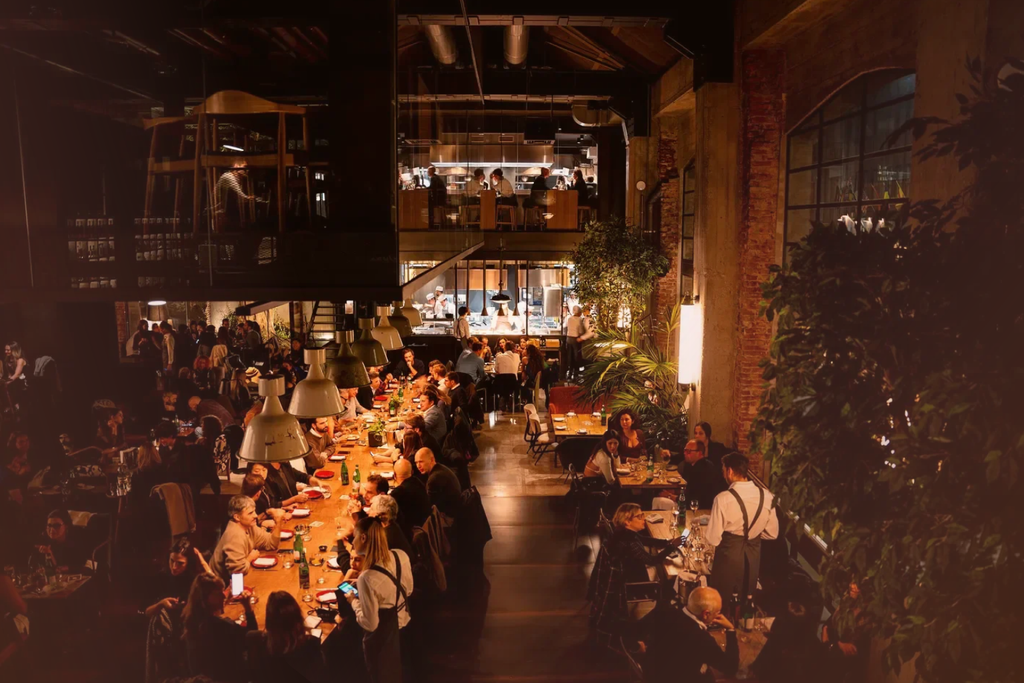
Operating at scale introduces challenges that smaller bars do not face. At Moebius, these are addressed through systems that ensure consistency without limiting creativity.
Preparation, storage, and service are organised to maintain control over key variables such as temperature and dilution. This allows the bar to deliver drinks that remain balanced and stable, even within a high-volume environment.
The ability to sustain this level of precision across a large and dynamic space is central to the bar’s identity. It demonstrates how structure can support creativity, rather than restrict it.
Recognition and Milan’s Evolving Bar Scene
Moebius Milano has become part of a broader movement that is reshaping Milan’s position within global cocktail culture. Its recognition, including distinctions such as the Nikka Highest Climber Award within The World’s 50 Best Bars, reflects both its rapid ascent and its influence.
This momentum signals a shift in how Italian bars are perceived internationally. Rather than focusing solely on tradition, venues like Moebius are exploring new formats that combine design, gastronomy, and contemporary cocktail techniques.
The Environment as a Working System
Every element within Moebius contributes to a larger operational framework. The layout supports movement, the bar supports production, and the service adapts to different moments throughout the day.
Guests may arrive for a structured dining experience or for drinks alone, yet the transition between these modes feels seamless. This flexibility is not accidental. It is the result of a design that treats the space as a living system rather than a fixed setting.
Where Structure Shapes Creativity
Moebius Milano presents a model of modern hospitality built on integration, scale, and disciplined creativity. It shows how a bar can expand beyond its traditional boundaries without losing clarity or control.
By aligning cocktails with culinary thinking and embedding them within a larger spatial framework, it offers a perspective on what contemporary bars can become when they operate as complete environments rather than isolated concepts.
In Milan, a city defined by design and innovation, Moebius stands as a reflection of that identity, not through spectacle, but through a sustained commitment to structure, balance, and the continuous interplay between food, drink, and space.

Renowned international hospitality consultant, founder of Barpartners, and IBA Vice President of Classic Mixology, bringing over 25 years of luxury hotel bar operations.

In partnership with International Bartenders Association
The International Bartenders’ Association stands at the crossroads of exchange between new and established generations of professionals.
Bar
Negroni Cocktail Bar is a distinguished venue in Barcelona renowned for its dedication to precise mixology and refined…
Bar
Moebius Milano opened in 2019 as one of the most ambitious hospitality projects in Milan, transforming a vast…
Cocktail
The Negroni Sbagliato is a lighter and more effervescent variation of the classic Negroni, replacing gin with sparkling…
Cocktail
The Negroni is one of Italy’s most celebrated cocktails, a symbol of refinement and balance that has remained…
Partnership
Lady Bee: Structure, Scale, and the Quiet Discipline of Contemporary Peruvian Bartending
There are bars that announce themselves through concept, and others that build recognition through repetition. Lady Bee belongs firmly to the latter. Located in Lima, the bar has developed its reputation not through spectacle, but through consistency, technical control, and a steady refinement of classic structures within a contemporary Peruvian context. Since opening in 2017, […]
September 26, 2026
Partnership
Superbueno in New York: Precision, Identity, and the Return of Clarity in Cocktail Design
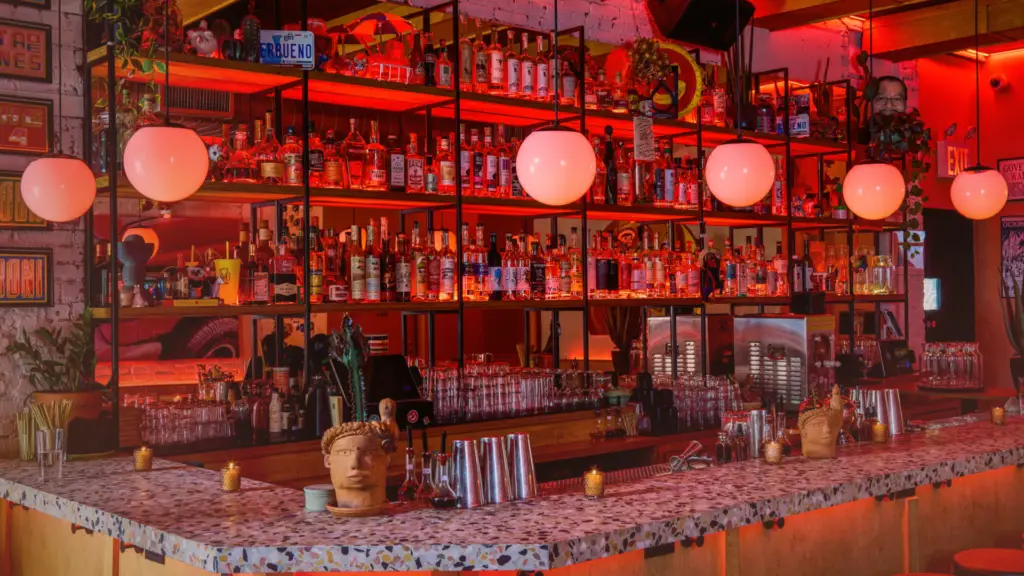
Not every bar in New York needs to announce itself loudly to be noticed. Superbueno opened in 2023 with a smaller room, a focused menu, and a level of clarity that quickly separated it from the noise. Within a year, it had already entered The World’s 50 Best Bars list, a rare trajectory that says […]
September 19, 2026
Partnership
French Guiana Rum: Discovering Pure Cane Juice Spirits Beyond the Caribbean Spotlight
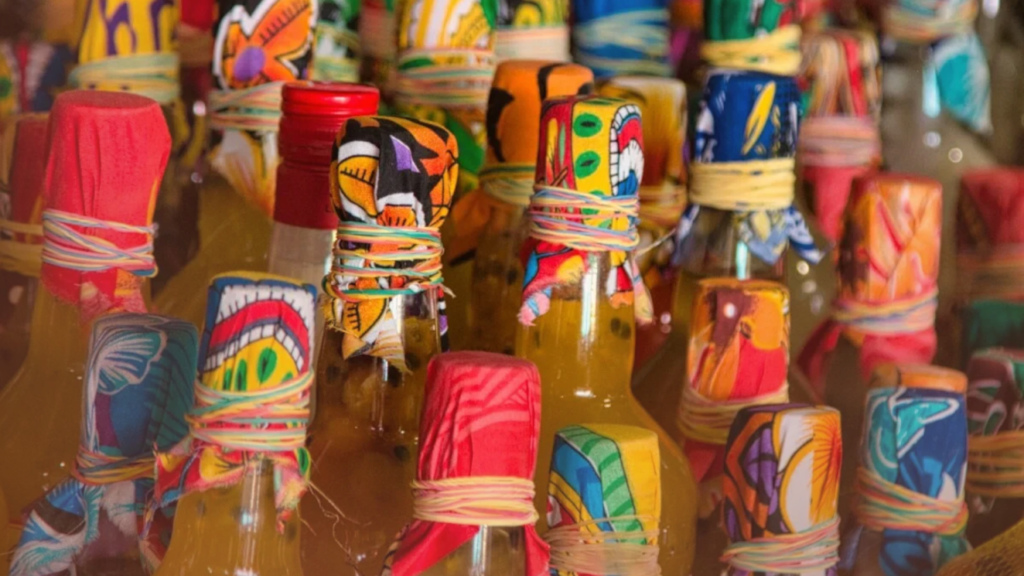
French Guiana is often overlooked in discussions of rum. It does not belong to the Caribbean island chain, and its production is far smaller than that of Martinique or Guadeloupe. Yet its cane-juice tradition holds a distinct place within the French overseas rum world. Located on the north-eastern coast of South America, French Guiana is […]
September 18, 2026