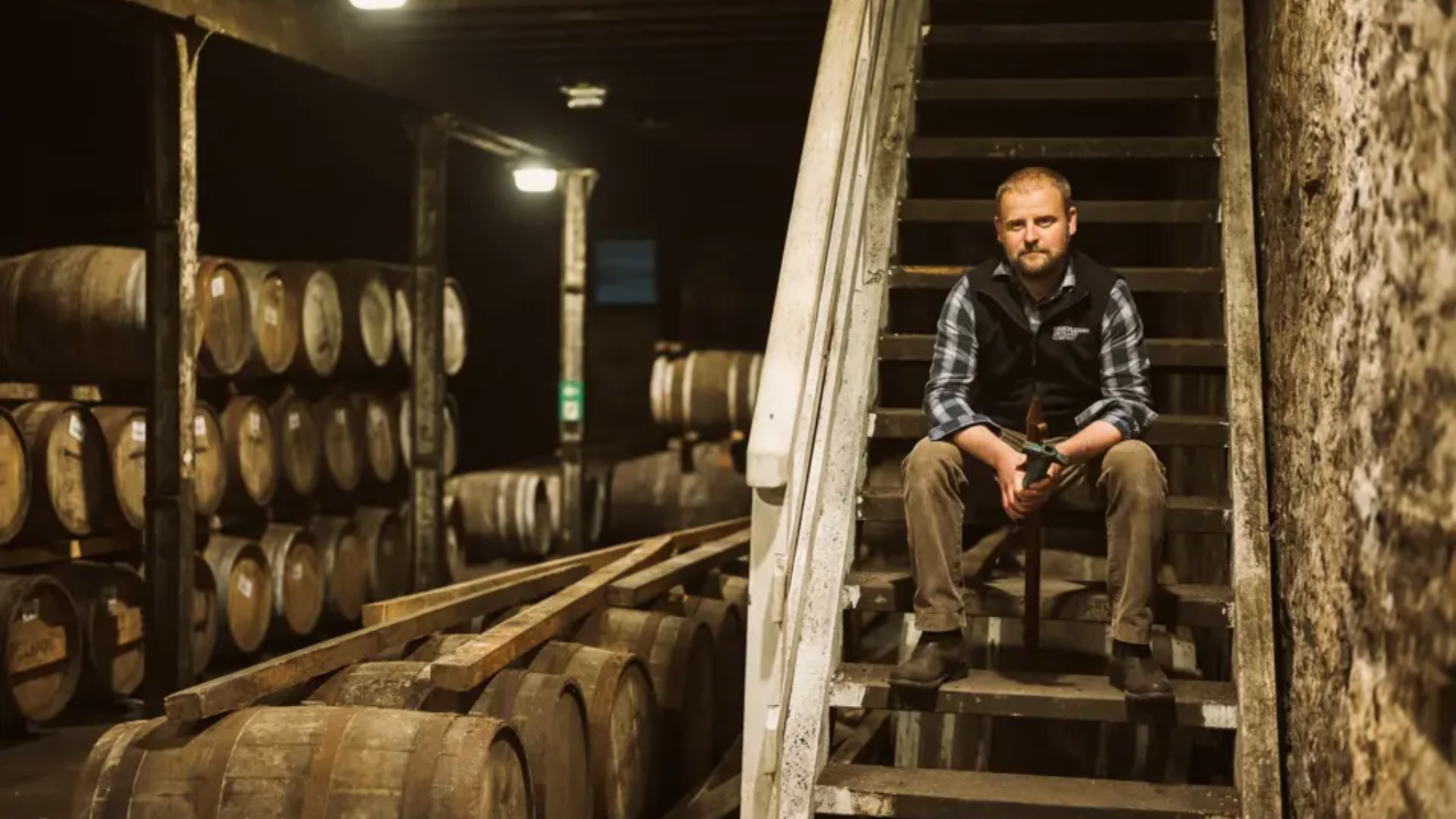
On the western edge of Scotland, the island of Islay has long been defined by whisky. Not as abstraction, but as daily labour, agricultural rhythm, and community memory. For Adam Hannett, this landscape was not something discovered later in life. It was home.
His appointment as Master Blender at Bruichladdich Distillery in September 2025 did not signal the arrival of an outsider. It marked the recognition of an island native whose understanding of whisky had developed gradually, through two decades of work inside the same distillery.
Bruichladdich occupies a distinctive position on Islay. While the island is often reduced to peat smoke and maritime intensity, the distillery has consistently resisted singular definition. Its modern identity rests on transparency, experimentation, and the belief that whisky should be explained through decisions rather than mystique. Hannett’s professional journey mirrors that philosophy.
Learning Whisky From the Periphery
Adam Hannett joined Bruichladdich in 2004 as a guide in the visitor centre. At that time, the distillery was redefining itself following its reopening in the late nineteen nineties. Production unfolded in public view, inviting scrutiny and demanding clarity.
Visitors repeatedly asked structured questions:
Why this barley? Why this fermentation length? Why this style on Islay?
Working at the boundary between production and perception shaped Hannett’s early education. He learned how whisky was spoken about before learning how it was physically produced. This distinction mattered. The gap between process and narrative is often where misunderstanding enters whisky culture.
After a brief departure, he returned and moved into operational roles across warehouses, mash tuns, and the stillhouse. Whisky ceased to be something to interpret. It became something to manage through temperature, timing, and repetition.
Inheriting Responsibility Rather Than Style
The modern revival of Bruichladdich is closely associated with Jim McEwan, whose leadership shaped both spirit and values. McEwan championed openness about process and rejected reducing Islay to a single flavour identity.
When Hannett succeeded him as Head Distiller in 2015, the responsibility extended beyond technique. It required custodianship of philosophy.
McEwan’s instruction was direct- Do not imitate. Develop your own voice within the structure.
This guidance defined Hannett’s approach. The role was not about enforcing sameness. It was about ensuring that variation remained intentional, explainable, and consistent with the principle.
His later elevation to Master Blender in 2025 formalised authority built through experience rather than spectacle.
A Distillery Defined by Choice
At Bruichladdich, ingredients and methods are treated as commitments, not defaults.
The distillery foregrounds: Barley provenance, Fermentation transparency, Cask clarity.
These decisions are not always efficient. They are not always fashionable. They reflect an understanding of whisky as both an agricultural product and a cultural expression.
In May 2020, Bruichladdich became a certified B Corporation, placing legal accountability behind its environmental and social commitments. Sustainability was not framed as branding. It was formalised as an operational principle.
Under Hannett’s leadership, sustainability and flavour are inseparable. Environmental responsibility is treated as part of the flavour’s origin, not an external concern.
Spirits as Arguments
Bruichladdich’s portfolio operates less as a hierarchy and more as a series of philosophical statements.
The Classic Laddie asserts that Islay identity does not require peat smoke. Port Charlotte expresses peat through structure and balance rather than intensity alone. Octomore explores extreme peat levels as a controlled study rather than a spectacle.
As Master Blender, Hannett’s role is editorial. He ensures that these spirits speak coherently within a shared philosophy, even when stylistically divergent.
Here, consistency does not mean sameness. It means integrity across differences.
Leadership Formed by Place
What distinguishes Hannett’s story is its rootedness in Islay itself. His leadership was not imported. It was formed within a small island community where production decisions carry visible consequences.
On Islay, employment, agriculture, and tourism intersect on a daily basis. Distillery choices affect more than inventory. They affect land and livelihood.
By appointing someone who began as a local guide in 2004, became Head Distiller in 2015, and rose to Master Blender in 2025, Bruichladdich reaffirmed its belief in continuity, accountability, and earned authority.
Adam Hannett’s professional evolution illustrates how a distillery can be shaped from within through patience, observation, and responsibility to place.
His rise reflects a broader truth about enduring whisky culture. It is not sustained through spectacle or acceleration, but through careful decisions repeated over time.
On Islay, where whisky remains inseparable from land and community, that kind of leadership carries meaning beyond title.
Spirit
Bruichladdich The Classic Laddie Islay Single Malt Scotch Whisky
Bruichladdich The Classic Laddie is a quintessential Islay single malt that embodies the region's rich heritage while introducing…
Spirit
Bruichladdich Port Charlotte Islay 18 YO Single Malt Scotch Whisky
Bruichladdich Port Charlotte Islay Single Malt 18 Year Old is a distinguished expression celebrated for its rich peaty…
Spirit
Bruichladdich Octomore 14.3 Islay Single Malt Scotch Whisky
Bruichladdich Octomore 14.3 is an exceptional Islay single malt Scotch whisky known for its intense peating level and…
History
Oktoberfest: Where Beer, History, and Bavarian Tradition Meet
Every autumn, the city of Munich undergoes a remarkable transformation. The streets become filled with traditional music, the aroma of Bavarian cuisine spreads through the city, and millions of visitors gather at Theresienwiese for a celebration unlike any other. Known around the world as Oktoberfest, this festival represents much more than beer. It is a […]
September 25, 2026
People & Innovation
San Diego Spirits Festival: A Celebration of Craft, Creativity, and Connection
Along the coastline of Southern California, where creativity meets hospitality, the world of spirits comes together through one of America’s most recognised celebrations of cocktails and craftsmanship. The San Diego Spirits Festival has become a gathering place for spirits enthusiasts, bartenders, producers, and industry professionals who share a passion for discovering new flavours and celebrating […]
September 22, 2026
Distilleries & Producers
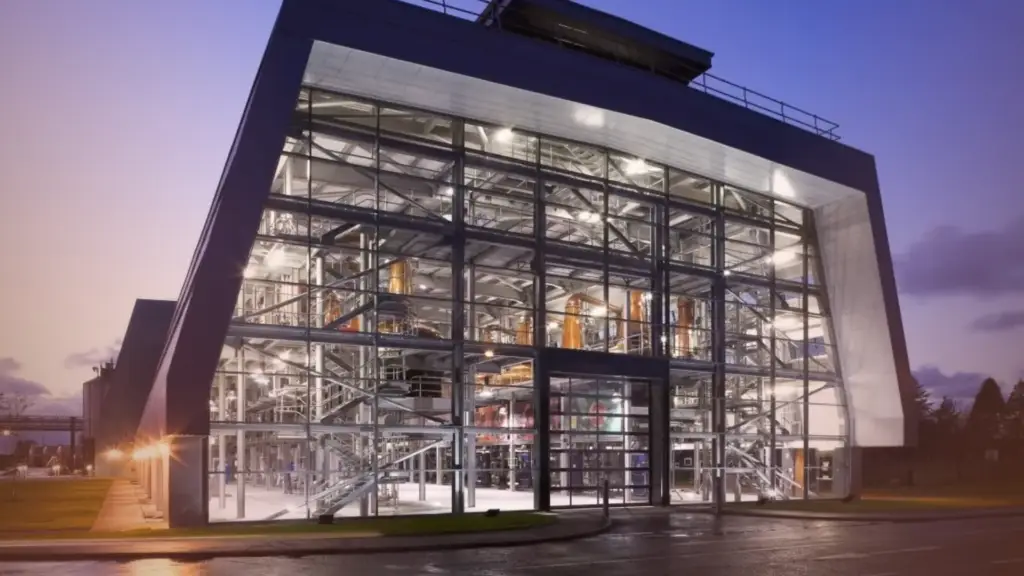
Roseisle Distillery: The High-Tech Speyside Giant Behind a New Generation of Whisky
In Speyside, where whisky is often associated with generations of tradition, Roseisle Distillery represents something very different. Built by Diageo near Elgin and officially opened in 2010, Roseisle was designed as a modern, large-scale malt whisky distillery, combining traditional pot-still production with advanced engineering, energy recovery and unusual flexibility in how its spirit can be […]
September 2, 2026