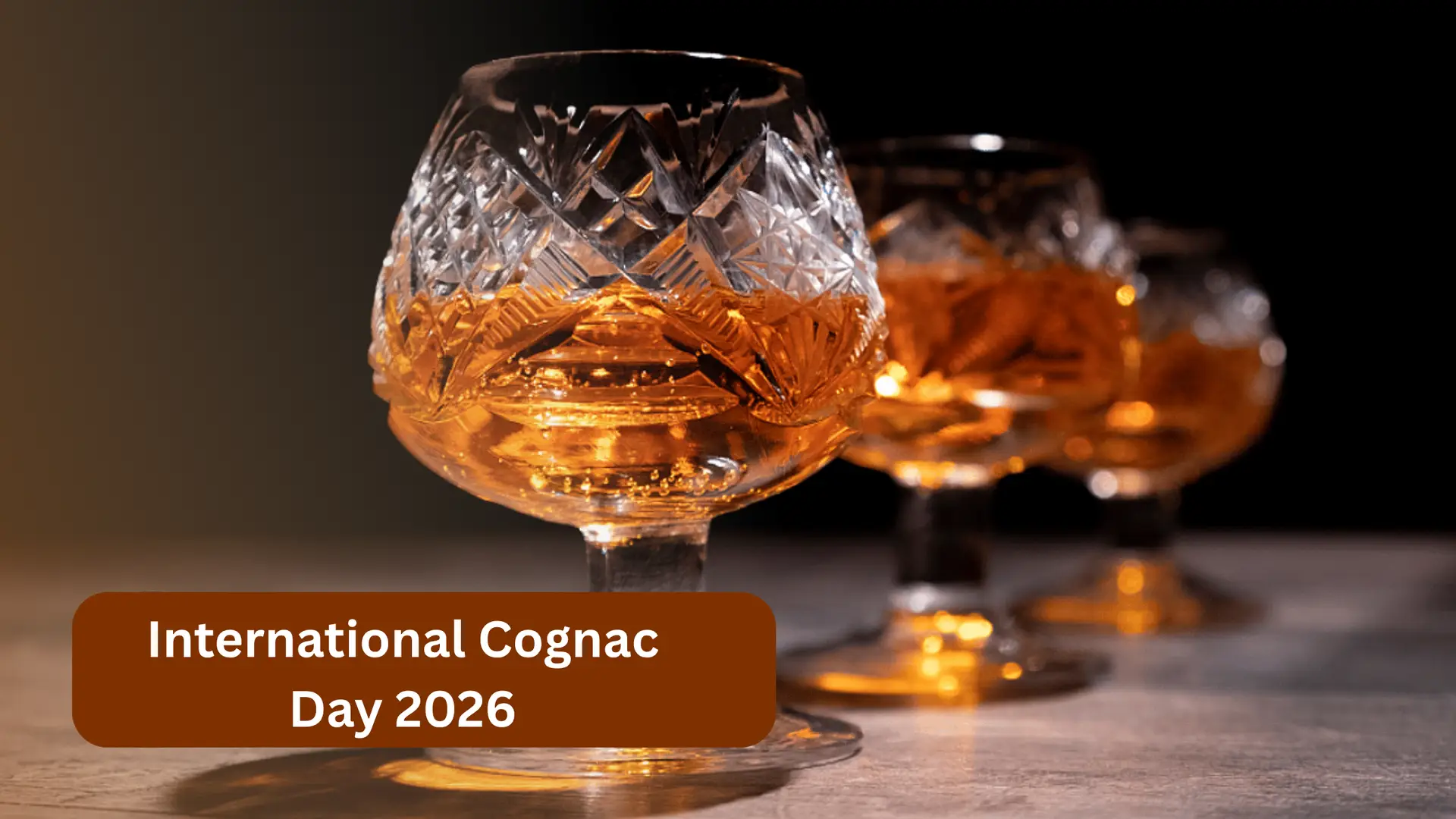
International Cognac Day is observed each year on June 4, but the spirit it recognizes belongs to a much longer calendar. Cognac is shaped by harvests, distillation seasons, oak maturation, and a legal framework that has turned a regional wine distillate into one of France’s most carefully protected spirits.
Its identity begins in the Charente, where wine, river trade, maritime access, and distillation gradually formed a production system unlike ordinary brandy. Cognac is not defined by age labels alone, nor by luxury positioning, nor by the reputation of its major houses. It is defined by place, law, grape variety, distillation method, maturation, and blending discipline.
To understand Cognac properly, International Cognac Day 2026 should be treated less as a promotional date and more as an opportunity to examine how a spirit becomes a legally protected cultural system.
From Charente Wine to Distilled Identity
The story of Cognac begins with wine. In the early modern period, the Charente region supplied wine to northern European markets through Atlantic trade routes. Dutch merchants were central to this exchange. They sought wines that could survive transport, and distillation became a practical answer to spoilage and shipping instability.
The word brandy itself comes from the Dutch brandewijn, meaning burnt wine. In the Charente, the repeated distillation of local wine gradually created a spirit with its own identity. What began as a method of preservation became a category defined by refinement, aging, and regional reputation.
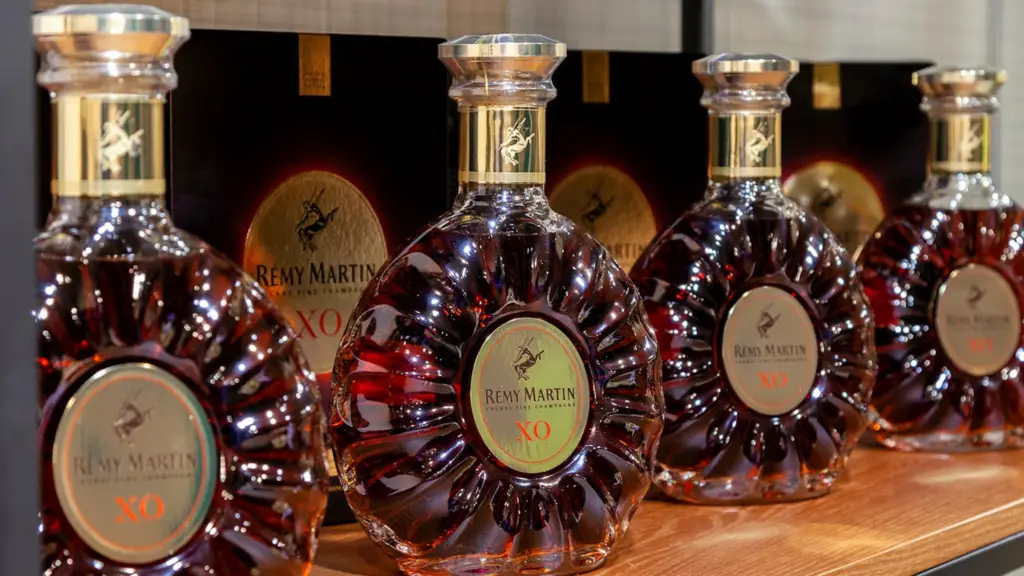
The town of Cognac, positioned on the Charente River, became a commercial center through which eaux de vie moved toward ports and export markets. Over time, names such as Hennessy, Martell, Rémy Martin, Courvoisier, Hine, Delamain, Camus, Frapin, and Otard helped carry Cognac from a regional production system into global circulation.
International Cognac Day 2026: The Legal Structure of Cognac
Cognac is protected under the Appellation d’Origine Contrôlée system. This means that the name Cognac can only be used for spirits produced within the designated region and according to defined rules.
The production zone covers parts of Charente, Charente Maritime, and nearby areas in western France. Within that zone, six crus structure the region’s identity: Grande Champagne, Petite Champagne, Borderies, Fins Bois, Bons Bois, and Bois Ordinaires. These are not decorative terms. They reflect differences in soil, climate, maturation potential, and eau de vie character.
Grande Champagne and Petite Champagne are especially associated with long aging potential, while Borderies is known for its smaller scale and distinctive aromatic profile. Fins Bois produces rounder and often earlier maturing eaux de vie, while Bons Bois and Bois Ordinaires reflect more peripheral growing areas with different maritime and soil influences.
This cru system gives Cognac a geographic grammar. The label may carry a house name, but the foundation remains agricultural.
Ugni Blanc and the Wine Made for Distillation
Most Cognac begins with Ugni Blanc, a grape valued not for table wine richness, but for distillation suitability. Its high acidity and relatively neutral aromatic profile make it well-suited to producing base wine that can withstand the transformation into eau de vie. The wine used for Cognac is generally light, acidic, and not designed as a finished drinking wine. Its purpose is technical. It must ferment cleanly, retain freshness, and provide a stable base for distillation.
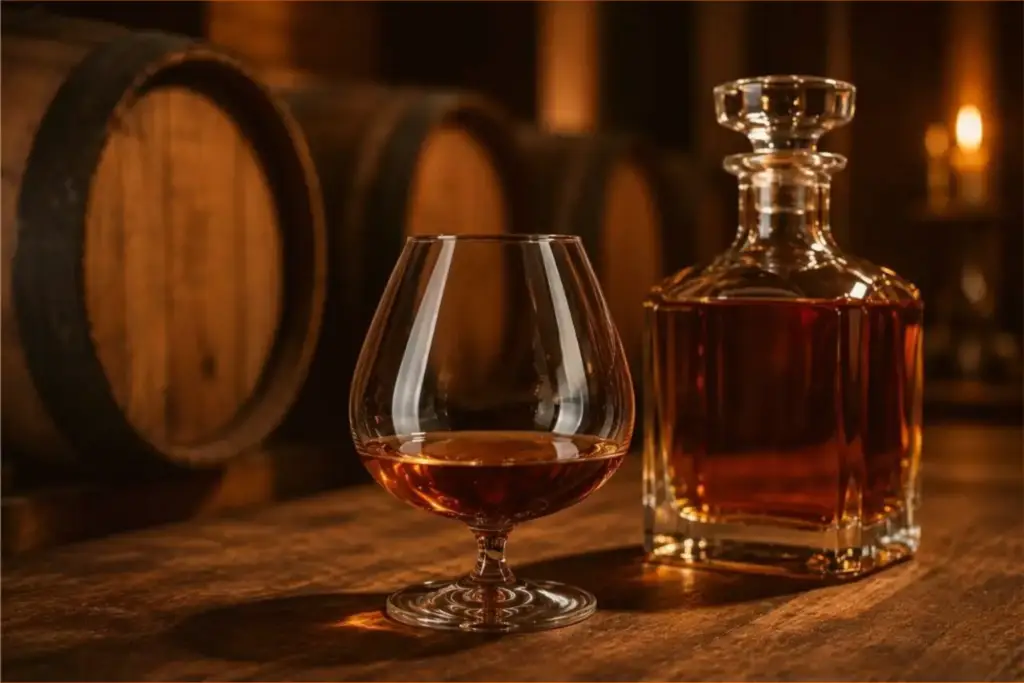
This is one of Cognac’s central paradoxes. A refined spirit begins with a wine that is valuable precisely because it is not overly expressive. Distillation concentrates the structure. Aging and blending later build complexity.
Double Distillation in Charentais Pot Stills
Cognac must be double-distilled in copper Charentais pot stills. The process traditionally takes place during the winter distillation season after harvest and fermentation.
The first distillation produces brouillis, a low-strength distillate. The second distillation, known as bonne chauffe, separates the spirit more precisely, allowing distillers to isolate the heart cut that will become eau de vie for maturation.
Copper plays an important role in removing unwanted sulfur compounds and shaping aromatic cleanliness. The pot still method also preserves enough character to give Cognac depth after aging. Unlike neutral spirit production, Cognac distillation is not designed to erase origin. It is designed to refine it. This technical requirement is one of the defining differences between Cognac and broader brandy categories.
Oak, Time, and the Meaning of Age Statements
After distillation, Cognac must mature in oak casks for at least two years. Traditionally, Limousin and Tronçais oak have been important sources, each influencing tannin structure and aromatic development differently. The familiar age categories are based on the youngest eau de vie in the blend. VS requires at least two years of aging, VSOP at least four years, and XO now requires at least ten years for the youngest component. These designations describe minimum maturation, not total blend age or absolute quality.
This distinction matters. A house may include much older eaux de vie in a younger category, but the label follows the youngest element. Cognac is a blended spirit, and its identity depends on cellar management, not single-cask individuality.
The cellar master’s role is therefore central. Across houses such as Hennessy, Rémy Martin, Martell, Courvoisier, Camus, Hine, Delamain, and Frapin, blending maintains continuity between harvests, crus, casks, and generations of house style.
The Houses That Carried Cognac Worldwide
Cognac’s global identity owes much to its historic houses. Martell was founded in 1715, Rémy Martin in 1724, Hennessy in 1765, and Courvoisier became strongly associated with 19th-century luxury culture. These houses helped transform Cognac from a regional eau de vie into an export-driven category.
Trade routes mattered. Cognac moved through ports, across the Atlantic, into British, American, Asian, and European markets. Its reputation developed through commerce as much as production.
Smaller and family-associated houses also remain essential to the category’s depth. Delamain, Frapin, Hine, Camus, and Ferrand each reflect different approaches to sourcing, aging, blending, and presentation. Their presence reminds readers that Cognac is not only a luxury brand category, but a region of producers, growers, distillers, blenders, and merchants.
Cognac in Cocktail and Bar History
Although often discussed as a contemplative aged spirit, Cognac has deep roots in cocktail history. Before American whiskey became dominant in many classic drinks, brandy and Cognac were central to 19th-century mixing culture.
Cocktails such as the Sidecar, Sazerac, Brandy Crusta, Vieux Carré, Stinger, and Between the Sheets show Cognac’s historical role in the bar. These drinks connect the spirit to hotels, cafés, New Orleans cocktail culture, European service, and early 20th-century transatlantic drinking habits.
This history matters because it prevents Cognac from being reduced to a single serving image. It has moved through formal dining rooms, merchant cellars, cocktail bars, and global luxury markets while retaining its protected production identity. International Cognac Day offers a useful entry point into a category that is often simplified by age labels and brand prestige. Cognac is far more structured than that.
It is a spirit of law, land, distillation, and memory. Its character begins with acidic white wine in the Charente, passes through copper stills, matures in oak, and is shaped by blending decisions that may draw on decades of cellar history.
The date of June 4 may be modern, but the system behind Cognac is centuries old. That is what gives the category its weight. Cognac is not only a French brandy. It is a legally defined production culture built around place, patience, and continuity.
Cocktail
The Sazerac is one of the oldest and most storied cocktails in American history, a drink deeply tied…
Cocktail
The Stinger is a classic cocktail that exudes sophistication, simplicity, and a crisp, refreshing character. Known for its…
Cocktail
The Sidecar is a cornerstone of classic cocktail culture, a refined balance of brandy, orange liqueur, and lemon…
Distillery
Hennessy Cognac is renowned as the world's leading producer of cognac, representing a harmonious blend of tradition and…
Distillery
Cognac Courvoisier is one of the most esteemed names in the world of cognac, representing centuries of excellence,…
Distillery
Delamain Cognac is a prestigious house nestled in the heart of Jarnac, France, with a reputation for crafting…
Distillery
Maison Martell, established in 1715, stands as the oldest of the prestigious cognac houses located in the heart…
Spirit
Cognac Frapin Château Fontpinot XO Cognac
Cognac Frapin Château Fontpinot XO is a distinguished offering from the renowned Frapin distillery, celebrated for its exceptional…
Spirit
Cognac Des Paysans Charentais Brandy
Cognac des Paysans Charentais represents a traditional craftsmanship deeply rooted in the Charente region of France. This cognac…
Spirit
Cognac Leyrat Xo Elite Brandy is a distinguished spirit that exemplifies the artistry of traditional Cognac production. It…
Cocktail
The Sazerac is one of the oldest and most storied cocktails in American history, a drink deeply tied…
Cocktail
The Stinger is a classic cocktail that exudes sophistication, simplicity, and a crisp, refreshing character. Known for its…
Cocktail
The Sidecar is a cornerstone of classic cocktail culture, a refined balance of brandy, orange liqueur, and lemon…
Distillery
Hennessy Cognac is renowned as the world's leading producer of cognac, representing a harmonious blend of tradition and…
Distillery
Cognac Courvoisier is one of the most esteemed names in the world of cognac, representing centuries of excellence,…
Distillery
Delamain Cognac is a prestigious house nestled in the heart of Jarnac, France, with a reputation for crafting…
Distillery
Maison Martell, established in 1715, stands as the oldest of the prestigious cognac houses located in the heart…
Spirit
Cognac Frapin Château Fontpinot XO Cognac
Cognac Frapin Château Fontpinot XO is a distinguished offering from the renowned Frapin distillery, celebrated for its exceptional…
Spirit
Cognac Des Paysans Charentais Brandy
Cognac des Paysans Charentais represents a traditional craftsmanship deeply rooted in the Charente region of France. This cognac…
Spirit
Cognac Leyrat Xo Elite Brandy is a distinguished spirit that exemplifies the artistry of traditional Cognac production. It…
Partnership
Cognac: The Legal and Geographic Identity of France’s Most Structured Spirit
The story of Cognac begins with a practical problem. The white wines of the Charente region travelled through river ports and Atlantic trade routes, but they were not naturally suited to long commercial journeys. They were often light, acidic, and fragile. Distillation changed their future. By concentrating wine into eau-de-vie, merchants and producers found a […]
August 2, 2026
Partnership
Balance and the Structural Language of the Cocktail
Balance is one of the central ideas in bartending, yet it is rarely experienced as a single flavour or technique. It is recognised through the way a drink holds together: strength does not suppress aroma, sweetness does not obscure acidity, bitterness remains purposeful, and water gives the ingredients room to unfold. For the bartender, balance […]
July 7, 2026
Spirits
Pricing and Taxation in 19th-century European Spirits Consumption
In the early decades of the nineteenth century, the cost of a glass of spirits in London, Paris, or Warsaw was rarely determined by the distiller. It was determined by the state. A measure of whisky, Cognac, or vodka carried within it a structure of duties, controls, and transport costs that defined not only its […]
April 7, 2026