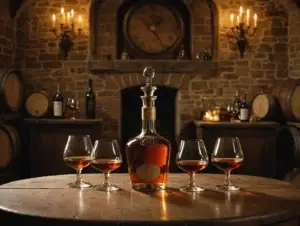
In the 18th century, whisky in the Scottish Highlands was not a commercial product in the modern sense. It was an agricultural necessity, a social bond, and a means of survival. When the British state attempted to tax Highland distillation, it did not simply provoke resistance. It reshaped the physical and cultural map of Scotland. Hills, glens, rivers, and passes became logistical infrastructure, drawing smuggling routes that would influence the future of Scotch whisky long after legality returned.
The whisky tax did not suppress distillation. It forced it underground, where skill, secrecy, and geography became inseparable.
Taxation After Union and the Highlands Reality
The roots of the conflict lie in the 1707 Acts of Union, which brought Scotland under the fiscal authority of Westminster. English excise systems were extended north with little regard for Highland conditions. Whisky production in the Highlands was small-scale, seasonal, and tied to surplus grain. Taxation assumed industrial capacity that did not exist.
The situation escalated in 1725 with the introduction of the Malt Tax in Scotland. Barley, the backbone of whisky production, was now directly taxed. For Highland communities already operating on narrow margins, legal distillation became economically impossible.
Resistance was immediate. Riots broke out in Glasgow and rural areas alike. In the Highlands, distillation did not stop. It adapted. By the mid 18th century, illicit whisky production was widespread and socially accepted.
Geography Becomes a Smuggling Network
The Highlands offered something taxation could not overcome. Terrain. Remote glens, narrow passes, peat bogs, and fast-flowing burns provided ideal conditions for concealment. Distillation sites were hidden near water sources, often dismantled after use to avoid detection.
Regions such as Glenlivet, Strathspey, and the fringes of the Cairngorms became centres of illicit activity. Whisky moved at night by pack horse and on foot, guided by local knowledge rather than maps. Routes were memorised, passed down within families, and adjusted as excise patrols shifted.
These were not chaotic paths. They were organised corridors linking production sites to markets in Aberdeen, Perth, and Edinburgh. Smuggling became an integrated part of the rural economy.
Excise Officers and Community Resistance
The British government responded by expanding the excise service. By 1790, hundreds of officers were deployed across the Highlands. Still, sizes were regulated, production sites targeted, and seizures intensified.
Yet enforcement struggled. Excise officers were outsiders. Smugglers were neighbours. Communities used signals such as church bells and smoke to warn of patrols. Magistrates often refused to prosecute. Juries declined to convict.
Rather than reducing whisky production, taxation improved its secrecy. Smugglers refined techniques, diversified routes, and increased coordination. The tax created an arms race between state authority and local knowledge.
Reputation Built in Illegality
Some of the most respected whisky-producing regions built their reputations during this illegal era. Whisky from Glenlivet was widely regarded as cleaner and more consistent than much of what was legally produced elsewhere.
One figure became central to this reputation. George Smith, an illicit distiller operating in Glenlivet, produced whisky that commanded premium prices despite its illegal status. His spirit travelled widely through smuggling networks, developing recognition long before branding existed.
Quality mattered because reputation travelled faster than law. Buyers knew which whisky was worth the risk.
The Spirit of the Smuggling Era
Whisky produced during this period was typically distilled in small copper pot stills, often holding less than 100 litres. Fermentation was short, and maturation was minimal. Most whisky was consumed new.
Despite this, a regional character emerged. Water sources, barley types, and distillation techniques produced recognisable differences. What would later be described as Highland and Speyside character was forged under pressure, not regulation.
The Turning Point of 24th June, 1823
By the early 19th century, the system was unsustainable. Illicit distillation dominated production, and tax revenue remained unreliable. The British government reversed course with the Excise Act of 1823, passed on 24th June, 1823.
The act reduced licensing fees to £10 per year and lowered duties to viable levels. Crucially, it offered legal protection to those who registered their stills. The objective shifted from punishment to incorporation.
The response was immediate. Hundreds of illicit distillers came forward.
From Smuggler to Distiller
In 1824, George Smith became one of the first to legalise his operation, founding The Glenlivet Distillery. His whisky, already respected, now gained legal standing. Smith reportedly carried pistols for protection, such was the resentment from rivals who remained illicit.
Other producers followed. Cardhu Distillery transitioned from illicit production into licensed operation, bringing with it generations of accumulated knowledge.
Smuggling routes did not disappear. They became roads. Skills learned in secrecy became industry standards.
The whisky tax did more than provoke resistance. It etched knowledge into the Highland landscape. Smuggling routes trained producers in logistics, discretion, and quality under threat. When legality finally arrived, it did not replace tradition. It absorbed it.
Modern Scotch whisky was not born in legality. It was shaped by pressure, geography, and defiance. The Highlands did not forget the routes drawn by taxation. They simply repurposed them.