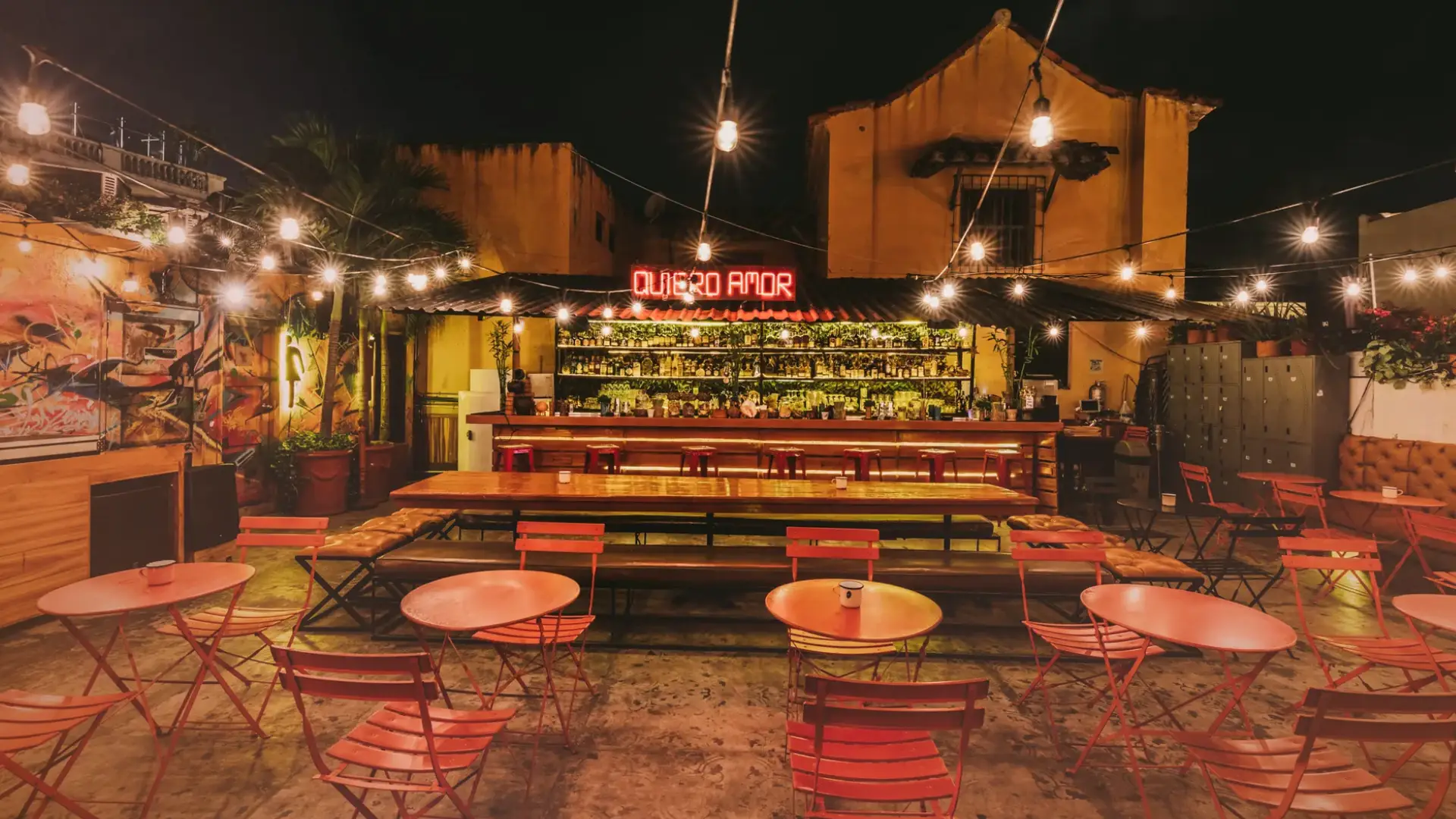
Within the historic walled city of Cartagena, Alquímico occupies a restored three-storey colonial building that has, since its opening in 2016, evolved into one of the most structurally complex cocktail operations in the world. What appears as a high-energy nightlife destination is, in practice, a fully integrated system combining agriculture, production, and service at scale, regularly handling 800 to 1,000 guests per night without sacrificing technical consistency.
The project was founded by Jean Trinh, a French-Vietnamese bartender who relocated to Colombia in 2013 before developing the concept over several years. His work at Alquímico reframed the role of a cocktail bar from a point of service into a networked production model, one that now extends beyond Cartagena into farms, supply chains, and community partnerships across Colombia.
Founders, Leadership, and Operational Team Structure
The leadership of Alquímico is built around a structured, multi-layered team rather than a single visible figure behind the bar. While Jean Trinh remains the creative director, execution depends on a system that distributes responsibility across departments.
Multiple senior bartenders and floor leaders oversee menu implementation across each level of the bar, supported by specialists focused on fermentation, batching, and ingredient preparation. Operationally, several bartender teams work simultaneously on each floor, backed by runners, prep staff, and service coordinators.
This decentralised structure ensures consistency through process rather than individual interpretation, allowing the bar to operate at scale while maintaining precision.
A Three-Floor Concept Built on Distinct Systems
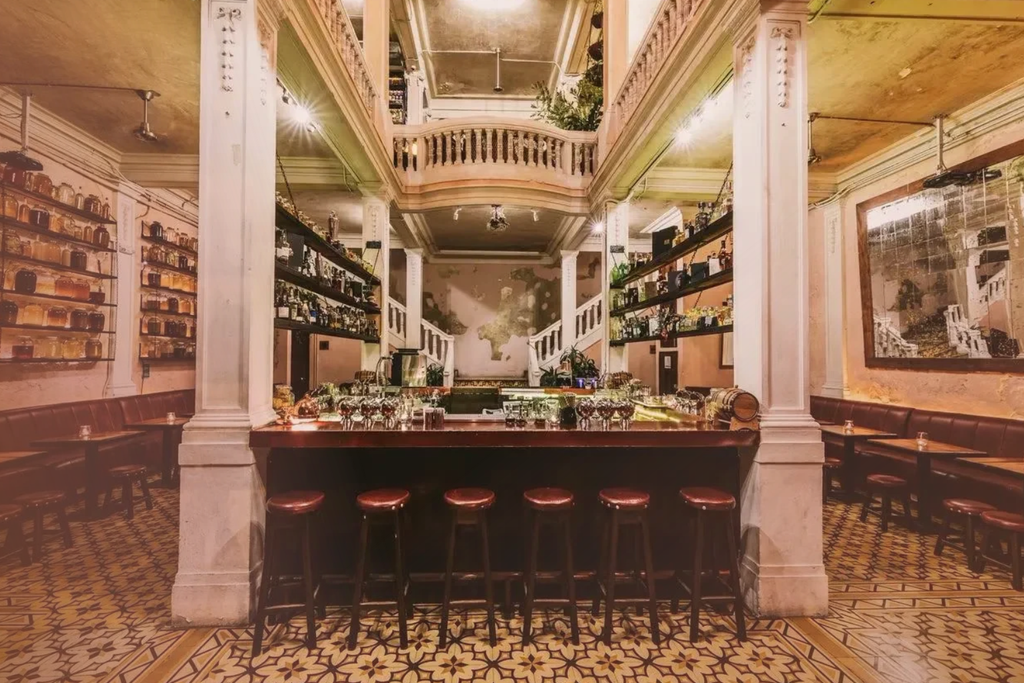
Alquímico functions as three interconnected bars, each with a defined role. The ground floor, La Mansión, is designed for high-volume service. Drinks are direct, flavour-driven, and built for speed, allowing the team to handle heavy traffic without compromising balance.
On the second floor, El Balcón, the program shifts toward reinterpretations of established structures. Familiar formats are rebuilt using Colombian ingredients, creating drinks that remain recognisable while introducing regional character.
The rooftop, La Terraza, carries the most experimental approach. Here, fermentation-driven cocktails and ingredient-focused compositions dominate, supported by longer preparation cycles and deeper technical involvement. This vertical segmentation lets the bar run different levels of intensity at once, aligning drink complexity with the pace and energy of each space.
Signature Identity Without a Single Cocktail
Alquímico does not define itself through a single signature cocktail.
Instead, its identity is built on a signature system, where every drink reflects direct farm sourcing, ingredient transformation, and structured pre-production. Menus evolve constantly, but the underlying approach remains consistent.
A typical cocktail is constructed around a single ingredient presented in multiple forms. Fresh, fermented, and processed versions are combined to create depth while maintaining clarity. This approach allows the bar to achieve complexity without relying on excessive layering.
Examples across menu cycles include mango-based drinks combining fresh juice, fermented mango, and house vermouth, honey-driven cocktails using in-house mead, and cacao- or coffee-based serves tied directly to Colombian agricultural regions.
Agricultural Infrastructure and Ingredient Supply
A major shift in the bar’s evolution occurred during 2020, when the closure of hospitality venues led Jean Trinh and his team to establish a farm in Colombia’s coffee region.
That farm now forms a core part of the operation. More than 200 crops are cultivated directly, alongside beehives that produce honey used in fermentation and mead production. Approximately 25 per cent of ingredients are sourced from this farm, with the remainder coming from a controlled network of local farmers connected to the project.
This structure transforms Alquímico into a producer within its own supply chain, allowing control over quality, seasonality, and flavour development.
Technical Program Built on Preparation and Control
The bar’s technical approach is defined by preparation that takes place before service begins. Fermentation plays a central role, with both lacto-fermentation and wild fermentation used to build acidity and complexity. Clarification techniques are applied to stabilise texture and improve consistency, while maceration and infusion processes allow controlled extraction of flavour.
The team produces its own vermouths, cordials, and fermented bases, often derived from farm-grown ingredients. These components are integrated into cocktails that are largely pre-constructed in stages, ensuring that final service remains efficient and controlled.
This system allows the bar to maintain consistency across hundreds of drinks per night, even under high-pressure conditions.
Cocktail Structures and Recognisable Formats
Despite its experimental reputation, Alquímico maintains a clear structural foundation by working within established cocktail frameworks.
Variations of the Negroni appear throughout the menu, often incorporating house-made bitters and local botanicals. Highball formats are reinterpreted using fermented bases and precise carbonation, while Sour structures rely on fermentation-derived acidity rather than traditional citrus. This approach ensures that drinks remain accessible while introducing technical depth and regional identity.
Awards and Global Recognition
Alquímico’s rise within the industry is clearly documented through its performance in The World’s 50 Best Bars. The bar entered the list in 2020 at position 47 and progressed steadily, reaching the global Top 10 by 2023. In 2024, it ranked number 8 in the world, further reinforcing its position among the most influential cocktail bars globally.
In the same year, Alquímico was named World’s Best Bar at the Spirited Awards. Individually, Jean Trinh received the Altos Bartenders’ Bartender Award in 2022, voted by industry peers. These recognitions reflect not only drink quality, but the broader impact of the bar’s operational model.
Service, Flow, and Guest Experience
Service at Alquímico is shaped by both scale and structure.
On the ground floor, interactions are fast-paced and direct, matching the energy of the room. As guests move to higher levels, service becomes more deliberate, often including explanations of ingredients, sourcing, and production methods.
Operationally, the bar relies on decentralised service stations, batching systems, and coordinated teams to maintain flow. Despite the volume and intensity, drinks are delivered with consistent balance and temperature control, supported by the extensive pre-production system.
A Bar Defined by Its System
Alquímico represents a shift in how cocktail bars are structured and evaluated.
By integrating agriculture, production, and high-volume service into a single framework, it demonstrates that control over a drink begins at the source rather than at the point of service. Each cocktail reflects a chain of decisions that extends from cultivation to final presentation.
Rather than relying on a single defining drink, the bar establishes its identity through repeatable systems that operate consistently under pressure. In doing so, it presents a model where scale, sustainability, and precision reinforce each other, redefining what a modern cocktail bar can achieve.

Renowned international hospitality consultant, founder of Barpartners, and IBA Vice President of Classic Mixology, bringing over 25 years of luxury hotel bar operations.

In partnership with International Bartenders Association
The International Bartenders’ Association stands at the crossroads of exchange between new and established generations of professionals.
Bar
Craftroom in Osaka has quickly earned a reputation as a destination for cocktail enthusiasts seeking quality, sophistication, and…
Bar
Bar Cobra occupies a relaxed, industrial‑chic space in one of Prague’s most dynamic neighbourhoods, offering a blend of…

Bar
In the heart of Cartagena’s historic walled city stands Alquímico, a bar that has quietly transformed itself into…
Cocktail
The Negroni Sbagliato is a lighter and more effervescent variation of the classic Negroni, replacing gin with sparkling…
Cocktail
The Negroni Bianco is a lighter and more delicate variation of the classic Negroni, offering a fresh and…
Cocktail
The Negroni is one of Italy’s most celebrated cocktails, a symbol of refinement and balance that has remained…

Partnership
Tres Monos in Buenos Aires: The High-Energy Bar Redefining Cocktail Craft
Volume comes first. Not just music, but movement, conversation, the rhythm of a room that rarely settles. At Tres Monos in Buenos Aires, energy is not an accessory to the experience; it is the structure that holds everything together. What appears spontaneous is, in reality, tightly controlled, with every drink, every gesture, and every interaction […]
September 5, 2026
Partnership
Boban Lazarević: Built in a Training Room, Proven on a World Stage in 20224
Before Boban Lazarević won the title, before the stage lights, there was repetition. In Belgrade, bartending doesn’t always begin behind a busy counter. For many, it begins in a classroom. Inside Bar Central Belgrade, run by the Bartenders Association of Serbia, drinks are broken down long before they are served. Recipes are practised until they […]
August 17, 2026
Partnership
Jigger and Pony: The Craft of Hospitality Behind Asia’s Most Consistent Cocktail Bar
Energy carries the room at Jigger and Pony. Not noise, not spectacle, but a steady, deliberate rhythm shaped by people who understand that a bar lives or dies by how it makes guests feel. Set within Amara Singapore in Singapore, the bar has built its reputation not on a single defining drink or concept, but […]
August 15, 2026